.webp&w=384&q=75)

Loading, please wait...
Loading, please wait...
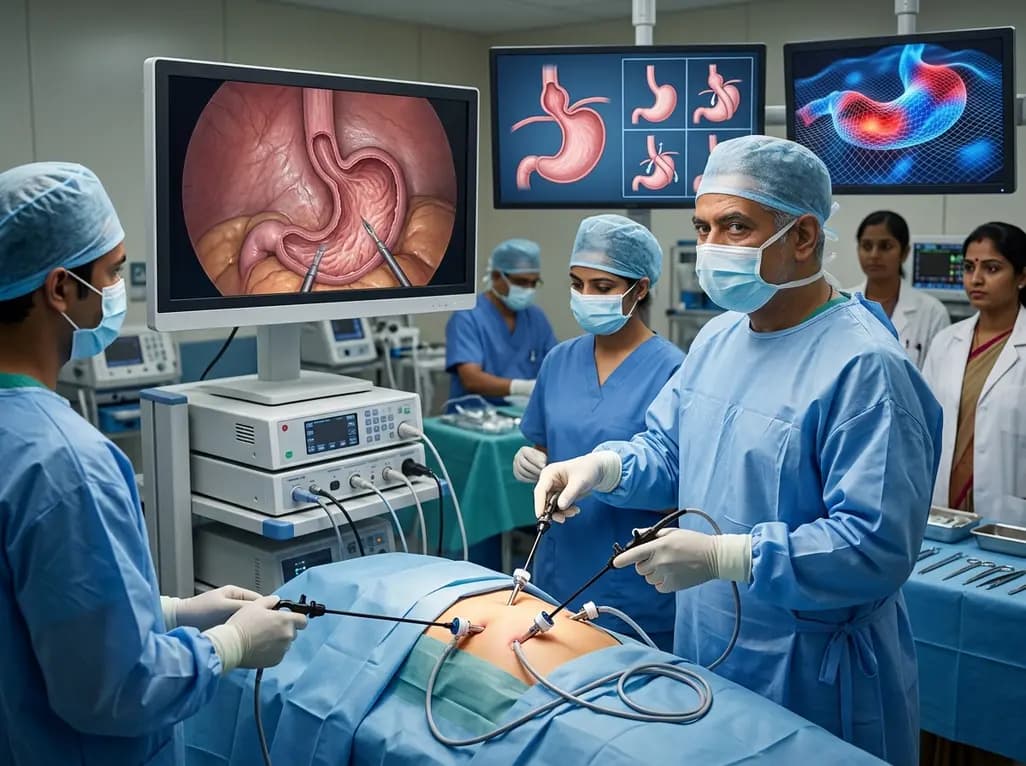
Gastro-oesophageal reflux disease (GERD) poses significant therapeutic challenges in patients with connective tissue disorders (CTDs) such as systemic sclerosis. Due to widespread esophageal smooth muscle atrophy and lower esophageal sphincter incompetence, these individuals frequently develop severe reflux refractory to routine medical management. While traditional medical therapy relies heavily on high-dose proton pump inhibitors, many patients continue to experience distressing regurgitation and progressive mucosal damage. Consequently, laparoscopic anti-reflux surgery has emerged as an important therapeutic option for long-term symptom control and anatomical correction.
However, clinicians historically expressed caution regarding surgical intervention in CTD cohorts. The primary concern stems from underlying esophageal dysmotility or complete aperistalsis, which increases the theoretical risk of severe postoperative dysphagia. Moreover, esophageal fibrosis in scleroderma often leads to shortening of the tubular esophagus, thereby complicating surgical mobilization. Despite these technical challenges, ongoing clinical evaluations demonstrate that surgical intervention significantly improves gastrointestinal symptoms when performed by experienced teams. Therefore, establishing clear patient selection criteria remains essential for optimizing post-surgical outcomes and minimizing operative complications in this vulnerable patient group.
A comprehensive systematic review of clinical outcomes provides valuable insights into the efficacy of laparoscopic anti-reflux surgery for connective tissue disorders. Analyzing data across nine clinical studies involving 129 laparoscopic procedures reveals substantial therapeutic benefits. Systemic sclerosis represented approximately 78% of all CTD diagnoses in the evaluated cohort. Overall, surgical repair achieved complete heartburn resolution in 87% of symptomatic patients, while regurgitation symptoms improved in 74% of cases. Furthermore, overall patient satisfaction reached 93% at five years postoperatively, highlighting durable long-term benefits.
In addition, modern minimally invasive techniques allow surgeons to minimize tissue trauma and expedite postoperative recovery. Although open procedures were once common, laparoscopic approaches now represent the clinical standard of care. Recent investigations also demonstrate that robotic-assisted anti-reflux procedures yield safety profiles comparable to standard laparoscopic operations. Consequently, minimally invasive surgery offers a reliable pathway for symptom alleviation in patients who fail maximal medical therapy. Surgeons can effectively restore the anti-reflux barrier while preserving overall patient quality of life.
Selecting the optimal fundoplication wrap type remains a crucial decision when planning laparoscopic anti-reflux surgery in CTD patients. Traditionally, total Nissen fundoplication (a 360-degree wrap) serves as the standard operation for typical GERD. However, constructing a full 360-degree wrap in patients with impaired esophageal peristalsis frequently creates an excessive outflow obstruction. As a result, partial fundoplications, including posterior Toupet or anterior Dor wraps, constituted 68% of operative procedures across the reviewed literature.
Clinical findings strongly favor partial wraps over total wraps in this patient population. Specifically, partial fundoplication maintains effective reflux control while significantly decreasing resistance at the gastroesophageal junction. Furthermore, partial wraps accommodate underlying esophageal weakness far better than rigid complete wraps. Research indicates that partial fundoplication provides sustained symptomatic relief without compromising esophageal clearance. Therefore, surgical consensus increasingly supports partial fundoplication as the preferred intervention for patients suffering from scleroderma-associated reflux disease.
Postoperative dysphagia represents one of the most critical adverse events following anti-reflux procedures. Across cohorts with documented dysphagia data, postoperative swallowing difficulty occurred in approximately 24% of patients in the early postoperative period. Notably, higher dysphagia rates occurred predominantly in patient cohorts that underwent total Nissen fundoplication. In contrast, surgical studies favoring partial fundoplication consistently demonstrated markedly lower dysphagia rates alongside excellent reflux suppression.
Additionally, transient dysphagia often resolves as tissue edema subsides during the initial healing phase. However, persistent dysphagia can severely impact nutritional intake and overall quality of life. By choosing a partial wrap, surgeons successfully balance the necessity of mechanical reflux blockage with the preservation of bolus transit. Patient satisfaction metrics reflect this delicate balance, as 93% of patients reported satisfaction at five-year follow-up intervals. Consequently, tailored surgical planning directly correlates with higher long-term patient satisfaction and lower symptom recurrence.
The overall safety profile of laparoscopic fundoplication in connective tissue disorders appears highly favorable when managed by experienced surgical specialists. Clinical reviews demonstrate an overall surgical complication rate of 12%, with zero reported procedure-related mortality across analyzed studies. Common minor complications included temporary gas-bloat syndrome, mild wound infections, and transient swallowing difficulty. Furthermore, reoperation rates remained low when surgeons performed appropriate preoperative esophageal motility evaluations.
Despite these encouraging outcomes, several clinical knowledge gaps persist. Currently, insufficient comparative data exist to definitively recommend anterior partial wraps over posterior partial wraps in CTD patients. Multicenter prospective studies are necessary to evaluate specific wrap geometry and long-term esophageal function. Nevertheless, existing evidence confirms that laparoscopic anti-reflux surgery is both safe and effective for medically refractory GERD in connective tissue disease. Multidisciplinary collaboration between rheumatologists, gastroenterologists, and foregut surgeons ensures optimal patient selection and superior clinical outcomes.
Laparoscopic anti-reflux surgery demonstrates high clinical efficacy in scleroderma patients with severe gastro-oesophageal reflux disease. Clinical studies show that heartburn symptoms resolve in approximately 87% of patients, while regurgitation improves in 74% of cases. Furthermore, long-term follow-up data indicate that 93% of patients remain highly satisfied with their surgical outcomes at five years post-surgery. Consequently, surgical intervention provides a reliable and durable solution for patients unresponsive to conventional high-dose proton pump inhibitor therapy.
Connective tissue disorders frequently cause severe esophageal dysmotility or absent peristalsis. Performing a total 360-degree Nissen fundoplication in these patients creates excessive mechanical outflow resistance, leading to high rates of postoperative dysphagia. Conversely, partial fundoplication (such as a 270-degree Toupet wrap) provides an effective anti-reflux barrier while allowing food boluses to pass more easily. Clinical evidence confirms that partial wraps significantly lower dysphagia risk while maintaining excellent heartburn and regurgitation symptom control.
Overall surgical complications occur in approximately 12% of connective tissue disorder patients undergoing laparoscopic fundoplication, with zero mortality reported in clinical reviews. The most common adverse effect is early postoperative dysphagia, affecting roughly 24% of patients overall, particularly those receiving complete wraps. Other minor complications include transient gas-bloat syndrome and superficial wound issues. Proper preoperative motility testing and selecting partial fundoplication wraps substantially reduce long-term adverse events and reoperation rates.
Disclaimer: This content is for informational and educational purposes only and should not be construed as medical advice. Refer to the latest local and national guidelines for clinical practice.
References

Read summarized clinical updates, watch expert medical content, and earn CME certifications right from your smartphone.
Open your smartphone camera to scan and install.





A review of laparoscopic anti-reflux surgery in connective tissue disorders shows 87% reflux resolution and 93% 5-year satisfaction, with partial fundoplication offering lower dysphagia rates.
2 months ago

As monsoon seasons elevate arboviral disease threats, Tamil Nadu has initiated an ICMR-monitored evaluation of the tetravalent dengue vaccine in Tenkasi district. Clinicians emphasize clinical monitoring, public prevention, and high-quality early pediatric care to reduce disease morbidity across endemic regions.
Today

A comparative cohort study evaluates vNOTES vs TLH hysterectomy for benign conditions, demonstrating shorter operative duration, faster return to daily activities, and equivalent female sexual function scores without increased dyspareunia.
Today

Review how tailored exercise programs benefit frail older patients with heart failure. Explore pathophysiological mechanisms, individualized training prescriptions, and strategies to overcome adherence barriers in clinical practice.
Today

This comparative study evaluates posterior labral tears with and without glenohumeral instability, highlighting distinct demographic patterns, MRI underestimation in stable shoulders, and successful arthroscopic repair outcomes.
Yesterday

A clinical study demonstrates that early intervention with tocilizumab, either as monotherapy or bridged with corticosteroids, achieves significant proptosis reduction and resolves active inflammation in treatment-naive thyroid eye disease.
Today
