.webp&w=384&q=75)

Loading, please wait...
Loading, please wait...
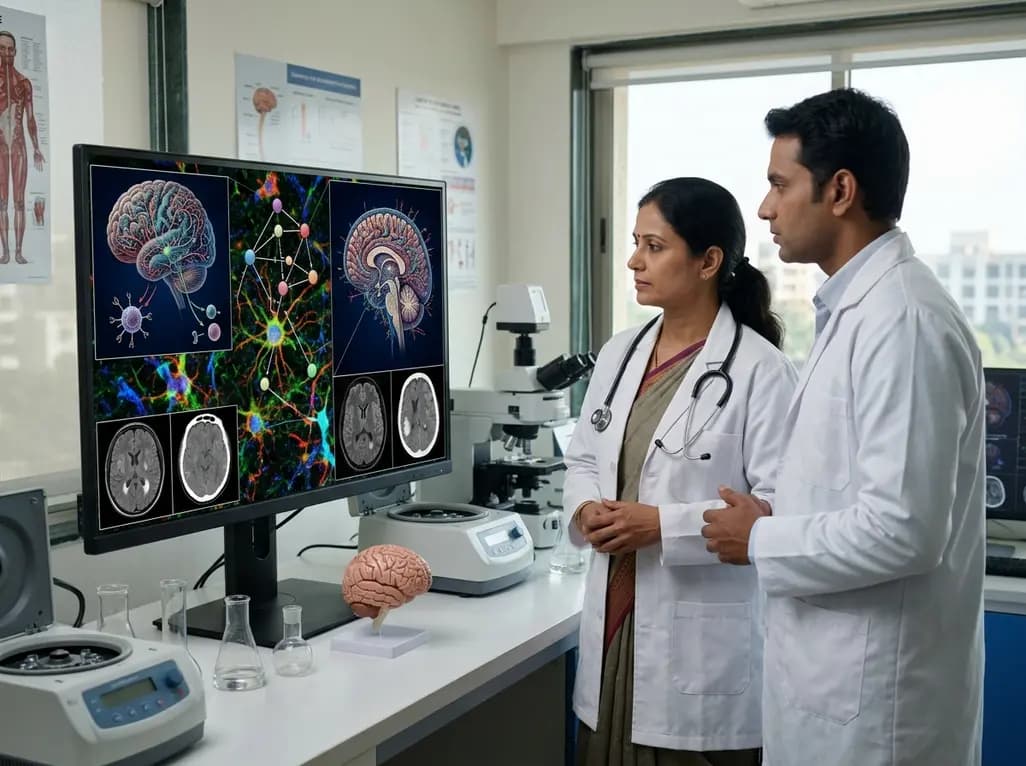
Glial cells, specifically microglia and astrocytes, act as vital players in the central nervous system's immune response. Recent research reveals that complex kinase signaling networks meticulously govern neuroinflammatory glial phenotypes. These networks regulate critical functions such as cell activation, migration, and tissue remodeling after injury. While oncology has long utilized kinome screening, similar systematic studies in neurobiology are only now uncovering powerful therapeutic opportunities.
Researchers recently utilized a kinome-wide screening platform to identify 623 kinases involved in glial behavior. This large-scale analysis showed that signaling pathways often have opposing effects depending on the glial state. Most significantly, the screening identified interleukin-2-inducible T-cell kinase (ITK) as a primary regulator of microglial activation. Previously considered a T-cell-specific kinase, ITK now emerges as a pivotal hub in brain innate immunity.
In mouse models of traumatic brain injury (TBI), microglial ITK drove neuroinflammation and subsequent behavioral deficits. This process occurs through the Vav1-PLC-γ-NF-κB signaling axis. Beyond TBI, researchers also confirmed these findings in human chronic traumatic encephalopathy (CTE) tissues. Similarly, Bruton's tyrosine kinase (BTK) has gained traction as a target for multiple sclerosis (MS). These discoveries highlight the Tec kinase family as a significant signaling hub in neuroinflammatory disorders.
Multiple kinase cascades, including the JAK-STAT and PI3K-Akt-mTOR pathways, converge to shape gene expression in the brain. Understanding these neuroinflammatory glial phenotypes helps researchers develop more precise medications. Specifically, targeting kinases like ITK could offer a way to modulate neuroinflammation without causing broad immunosuppression. Therefore, these systematic screenings continue to reshape our understanding of neurodegenerative and neuroinflammatory diseases.
They are the functional and morphological states that microglia and astrocytes adopt during an immune response in the brain, ranging from inflammatory activation to tissue repair.
ITK regulates microglial inflammatory responses through the Vav1-PLC-γ-NF-κB signaling pathway, which controls the expression of pro-inflammatory genes in the central nervous system.
Yes, Bruton's tyrosine kinase (BTK) is currently being investigated as a therapeutic target in MS because it regulates both B-cell activity and microglial-driven neuroinflammation.
Disclaimer: This content is for informational and educational purposes only. It does not constitute medical advice or a substitute for professional healthcare. Refer to the latest local and national guidelines for clinical practice.
References

Read summarized clinical updates, watch expert medical content, and earn CME certifications right from your smartphone.
Open your smartphone camera to scan and install.





New research identifies ITK and the Tec kinase family as central regulators of neuroinflammatory glial phenotypes. This discovery offers promising therapeutic targets for traumatic brain injury and multiple sclerosis, moving beyond traditional peripheral immune models to brain-specific immunity pathways.
4 months ago

Following Nigeria's first recorded Ebola case linked to regional travel, the Africa CDC has convened an emergency ministerial summit. This alert underscores critical clinical priorities for healthcare professionals, including differentiating early viral infection from malaria, implementing barrier nursing, and triage.
Today

Leucine Rich Bio has introduced South Asia's first comprehensive vaginal microbiome test, BugSpeaks. By profiling microbial dysbiosis, pathogens, and antimicrobial resistance, this next-generation diagnostic platform provides clinicians with deeper insights into recurrent infections, fertility, and reproductive health.
Today

Review how tailored exercise programs benefit frail older patients with heart failure. Explore pathophysiological mechanisms, individualized training prescriptions, and strategies to overcome adherence barriers in clinical practice.
Today

This comparative study evaluates posterior labral tears with and without glenohumeral instability, highlighting distinct demographic patterns, MRI underestimation in stable shoulders, and successful arthroscopic repair outcomes.
Today

A clinical study demonstrates that early intervention with tocilizumab, either as monotherapy or bridged with corticosteroids, achieves significant proptosis reduction and resolves active inflammation in treatment-naive thyroid eye disease.
Today
