.webp&w=384&q=75)

Loading, please wait...
Loading, please wait...
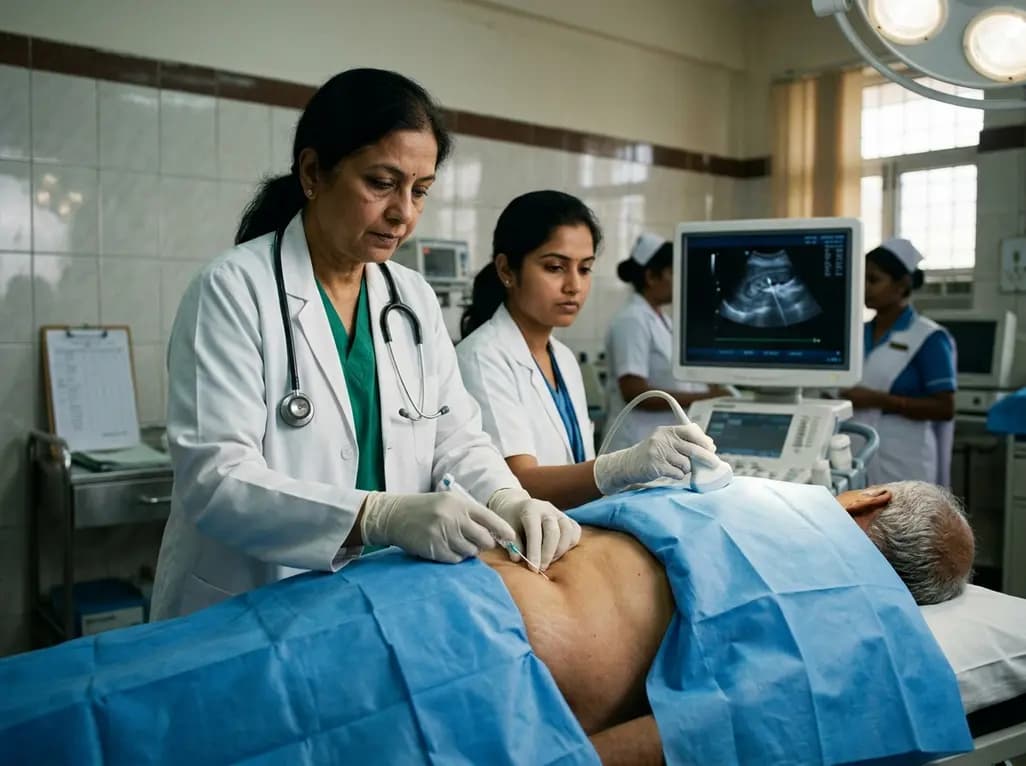
Percutaneous biopsy serves as a vital diagnostic tool for nephrologists today. However, clinicians must understand potential kidney biopsy complications when managing patients with diabetes. This population often faces unique challenges, such as vascular stiffness and hypertension. Recently, the TRIDENT study analyzed procedural safety in this cohort to provide better clinical guidance.
The researchers prospectively studied 408 native kidney biopsies across 21 sites in the United States. They used standardized definitions to ensure consistency in reporting. Consequently, the findings provide a clear picture of the safety profile for diabetic kidney disease. Overall, the study reported complications in 20% of cases. Notably, minor events like localized hematomas comprised most of these cases. Only 5% of procedures required intense resources like transfusions or surgical intervention.
The data highlighted several modifiable risk factors for practitioners to consider. For instance, an 18-gauge needle significantly reduced the odds of severe events compared to larger needles. Additionally, the operator's experience played a critical role in patient safety. Attending physicians maintained lower risk levels than fellows or hybrid teams. Interestingly, patients using renin-angiotensin system inhibitors (RAASi) showed fewer complications during the follow-up period.
However, certain non-modifiable factors also emerged from the analysis. Female sex correlated with a higher risk of major bleeding. Furthermore, the presence of a post-biopsy hematoma predicted more significant bleeding events later. While the number of needle passes led to hematoma formation, it did not affect adjusted major bleeding risk. In conclusion, kidney biopsies remain safe for adults with diabetes when performed with precision. Clinicians should focus on procedural optimization, smaller needles, and experienced oversight to improve patient safety.
The most common complication is the formation of a localized hematoma, occurring in about 15% of cases. Most of these events are minor and do not require intensive medical intervention.
Yes, research shows that using an 18-gauge needle significantly reduces the risk of resource-intense complications compared to a 16-gauge needle. Choosing a smaller gauge can improve the overall safety profile of the biopsy.
Experienced attending physicians are associated with significantly lower complication rates. Procedures led by trainees or hybrid teams often show a higher risk of bleeding and other adverse events.
Disclaimer: This content is for informational and educational purposes only. It is not a substitute for professional medical advice, diagnosis, or treatment. Always seek the advice of your physician or other qualified health provider with any questions you may have regarding a medical condition. Refer to the latest local and national guidelines for clinical practice.
References
Mohandes S et al. Percutaneous Native Kidney Biopsy Complications in Diabetic Patients in the TRIDENT Cohort. Clin J Am Soc Nephrol. 2026 Jun 15. doi: 10.2215/CJN.0000001083. PMID: 42295857.
Hogan JJ, Owen JG, Blady SJ et al. The feasibility and safety of obtaining research kidney biopsy cores in patients with diabetes: an interim analysis of the TRIDENT Study. Clin J Am Soc Nephrol. 2020; 15(7):1024-1026.
Corapi KM et al. Bleeding complications of native kidney biopsy: a systematic review and meta-analysis. Am J Kidney Dis. 2012; 60(1):62-73.

Read summarized clinical updates, watch expert medical content, and earn CME certifications right from your smartphone.
Open your smartphone camera to scan and install.





A prospective analysis of the TRIDENT cohort reveals that while 20% of diabetic patients experience kidney biopsy complications, most events are minor. Key safety factors include using 18-gauge needles, ensuring experienced operators, and monitoring female patients more closely for major bleeding risks.
4 months ago

A retrospective cohort study of 7,716 ICU patients from the MIMIC-IV database demonstrates that Gradient Boosting Decision Trees significantly outperform traditional SOFA scores in predicting in-hospital mortality among patients with sepsis and diabetes, with SHAP analysis providing clinical interpretability.
Today

Occult maternal malignancy accounts for 3.82% of persistent unreportable NIPT results with genomic noise. Multiple chromosomal aberrations, notably on chromosome 18, warrant thorough oncological evaluation and whole-body MRI to ensure timely maternal diagnosis while preserving fetal care.
Today

This article reviews the forensic and clinical complexities of acute myocarditis arising on left ventricular hypertrophy in children, highlighting early diagnostic red flags and multidisciplinary postmortem autopsy protocols.
Today

This comparative study evaluates posterior labral tears with and without glenohumeral instability, highlighting distinct demographic patterns, MRI underestimation in stable shoulders, and successful arthroscopic repair outcomes.
Yesterday

A clinical study demonstrates that early intervention with tocilizumab, either as monotherapy or bridged with corticosteroids, achieves significant proptosis reduction and resolves active inflammation in treatment-naive thyroid eye disease.
Yesterday
