.webp&w=384&q=75)

Loading, please wait...
Loading, please wait...
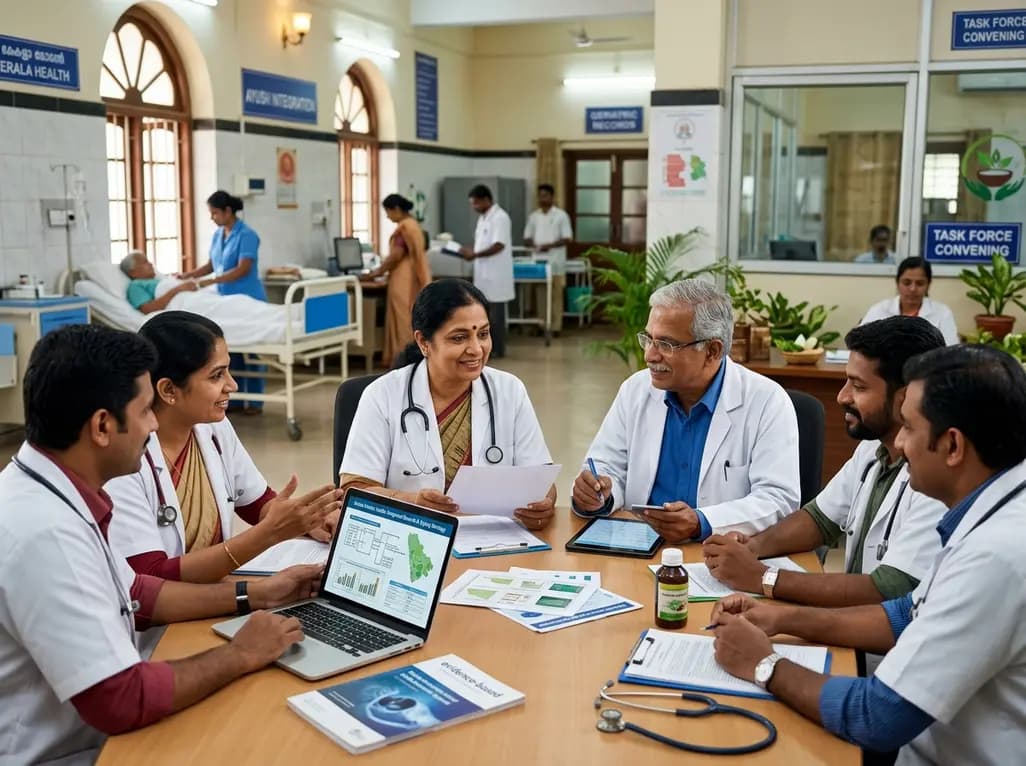
The Government of Kerala has initiated a landmark shift in public health governance by establishing a high-level expert panel. This initiative formally establishes the Kerala holistic health model to drive longevity, disease prevention, and wellness across the state. Rather than focusing solely on hospital treatment after disease manifestation, the administration emphasizes proactive health preservation. Therefore, this ambitious framework seeks to restructure healthcare delivery across primary, secondary, and tertiary tiers. Consequently, medical professionals in India are watching these developments with significant interest.
Public health strategies in India frequently prioritize acute crisis management over long-term prevention. However, the newly formulated roadmap aims to reverse this conventional dynamic through structured institutional interventions. The primary mandate focuses on architecting an evidence-based framework for phased disease prevention and early detection. Furthermore, the task force will formulate protocols for prompt treatment, longitudinal rehabilitation, and restorative palliative care.
In addition, health authorities intend to transform everyday clinical practice by targeting asymptomatic risk factors early. Chronic lifestyle illnesses, including diabetes, hypertension, and cardiovascular diseases, place immense strain on local infrastructure. By identifying metabolic deviations early, clinical teams can intervene well before irreversible end-organ damage occurs. Moreover, the state envisions a comprehensive community strategy that cultivates wellness habits across all population cohorts. As a result, primary healthcare facilities will assume a decisive frontline role in active surveillance.
Importantly, the framework does not treat wellness as an abstract lifestyle concept. Instead, administrative leaders ground every proposed clinical intervention in measurable epidemiological indicators. Therefore, physicians will gain standardized guidance to deliver proactive screening during routine patient visits. Consequently, state leaders expect this model to set an international public health benchmark.
A successful public health transformation demands cohesive collaboration between medical scientists, clinical practitioners, and executive administrators. To ensure decisive leadership, Chief Minister V D Satheesan directly chairs this sixteen-member task force. Meanwhile, state Health Minister K Muraleedharan serves as the vice-chairman of this influential policy group. Additional senior government functionaries provide essential administrative and budgetary support across several related departments.
Notably, the panel includes Finance Additional Chief Secretary K Jyothilal and Health Principal Secretary Dr Sharmila Mary Joseph. Dr Rathan Kelkar, Secretary to the Chief Minister, also joins this high-level policy team. In addition, prominent medical practitioners and public health specialists contribute frontline clinical experience to the committee. The order explicitly permits the task force to co-opt external technical experts as specialized invitees whenever needed.
Furthermore, the committee will establish focused sub-working groups to evaluate distinct medical domains. These specialized working panels will analyze clinical feasibility, laboratory screening logistics, and economic sustainability. Thus, the governing structure ensures that clinicians guide policy formulation alongside financial and administrative decision-makers. Importantly, regular consultative sessions will incorporate feedback from public health researchers and community organizations. Consequently, this coordinated governance model will prevent bureaucratic bottlenecks during statewide rollout.
Kerala currently undergoes an unprecedented demographic transition marked by rapid population ageing and increased longevity. Historically, falling fertility rates and expanding life expectancy have accelerated this shift across all districts. Recent demographic projections suggest that older adults will constitute over twenty percent of the state population shortly. Consequently, the government previously created a dedicated department for senior citizens to coordinate elderly welfare programs.
However, increased chronological longevity does not automatically guarantee healthspan or high functional independence. Senior citizens frequently endure chronic degenerative conditions, cognitive decline, osteoarthritis, and complex multimorbidity. Therefore, the task force directly links clinical health services to healthy ageing and long-term functional well-being. Modern geriatric medicine stresses the preservation of cognitive vitality, muscle mass, and daily self-care capacity.
Additionally, the panel examines family caregiver shortages and community-based assisted living infrastructure. Many older residents live alone due to youth outmigration, which creates widespread psychological and social vulnerabilities. To address these vulnerabilities, the state seeks to build structured home-care networks and day-care respite centers. Ultimately, this approach will help clinicians manage chronic diseases while preserving individual dignity and quality of life.
A distinctive feature of the new initiative involves evaluating complementary traditional healing modalities alongside allopathic standards. Specifically, Kerala possesses a deeply rooted, globally celebrated heritage in Ayurveda and holistic wellness. The state order authorizes the task force to examine the feasibility of integrating traditional medicine with modern healthcare. Nevertheless, clinical educators emphasize that any integration must rest strictly upon rigorous, evidence-based methodologies.
In clinical practice, allopathic interventions excel at acute resuscitation, surgical care, and intensive antimicrobial therapy. Conversely, traditional AYUSH systems offer valuable adjunctive strategies for chronic lifestyle management, rehabilitation, and gentle palliative relief. By fostering interdisciplinary dialogue, the committee aims to eliminate harmful drug-herb interactions and unsafe self-medication practices. Furthermore, structured integration ensures that certified practitioners deliver standardized therapies in accredited public facilities.
Effective population-level disease management requires modern data architecture and seamless health informatics across institutions. Accordingly, the committee plans to design a unified digital health system to consolidate patient records safely. This secure digital platform will bring diagnostic reports, screening histories, and prescription data under one digital umbrella. However, administrators must enforce strict data privacy standards and robust encryption protocols to safeguard patient confidentiality.
For treating physicians, an integrated digital record eliminates redundant testing and highlights previous adverse drug reactions. Additionally, digital registries facilitate proactive automated alerts for routine cancer screenings, immunization booster schedules, and annual diabetic evaluations. Public health officials can also analyze anonymized regional data to detect emerging non-communicable disease clusters rapidly. Consequently, clinical epidemiology will directly inform government resource distribution and clinic staffing.
Meanwhile, the government established strict timelines for the task force to present its formal recommendations. The panel must submit a detailed report within two months following its inaugural working session. Specifically, the document will outline two or three actionable pilot projects alongside a three-year phased implementation plan. The report will also calculate precise budgetary requirements and allocate clear departmental responsibilities. Thus, the administration ensures rapid transition from strategic policy planning to tangible community execution.
Q1: What is the primary purpose of the newly formed health task force in Kerala?
The primary purpose of the task force is to create an evidence-based roadmap for disease prevention, early detection, and healthy longevity across Kerala. Rather than waiting for individuals to fall ill before providing curative care, the state establishes proactive screening protocols. Furthermore, the initiative develops frameworks for comprehensive treatment, physical rehabilitation, and healthy ageing to enhance overall quality of life.
Q2: How will the state integrate modern medicine with traditional systems like Ayurveda?
The task force will rigorously assess the scientific feasibility of combining modern medical practice with certified traditional disciplines, including Ayurveda. By establishing standardized clinical guidelines and strong pharmacovigilance mechanisms, healthcare authorities aim to leverage the rehabilitative benefits of traditional medicine safely. Consequently, this collaborative approach prevents adverse drug interactions, supports chronic disease management, and ensures that patients receive coordinated, evidence-based care.
Q3: When will the task force submit its recommendations, and what will the report include?
The task force must submit its formal report to the state government within two months of its first official meeting. The comprehensive document will detail two or three actionable pilot projects and outline a three-year phased implementation plan. In addition, the report will provide accurate cost estimates, explore sustainable fundraising avenues, and delineate specific departmental responsibilities to monitor progress effectively.
Disclaimer: This content is for informational and educational purposes only. It does not constitute medical advice or replace professional judgment. Refer to the latest local and national guidelines for clinical practice.
References

Read summarized clinical updates, watch expert medical content, and earn CME certifications right from your smartphone.
Open your smartphone camera to scan and install.





Kerala has constituted a 16-member task force to establish an evidence-based roadmap for disease prevention, early detection, and healthy ageing. The initiative unites modern clinical medicine with traditional AYUSH practices while building unified digital health records and elderly care systems.
Today

Subcutaneous infliximab provides stable steady-state pharmacokinetics and reduces immunogenicity in inflammatory bowel disease. This clinical review explores pivotal trial evidence, therapeutic drug monitoring recalibration, immunomodulator de-escalation, and real-world switching strategies.
Today
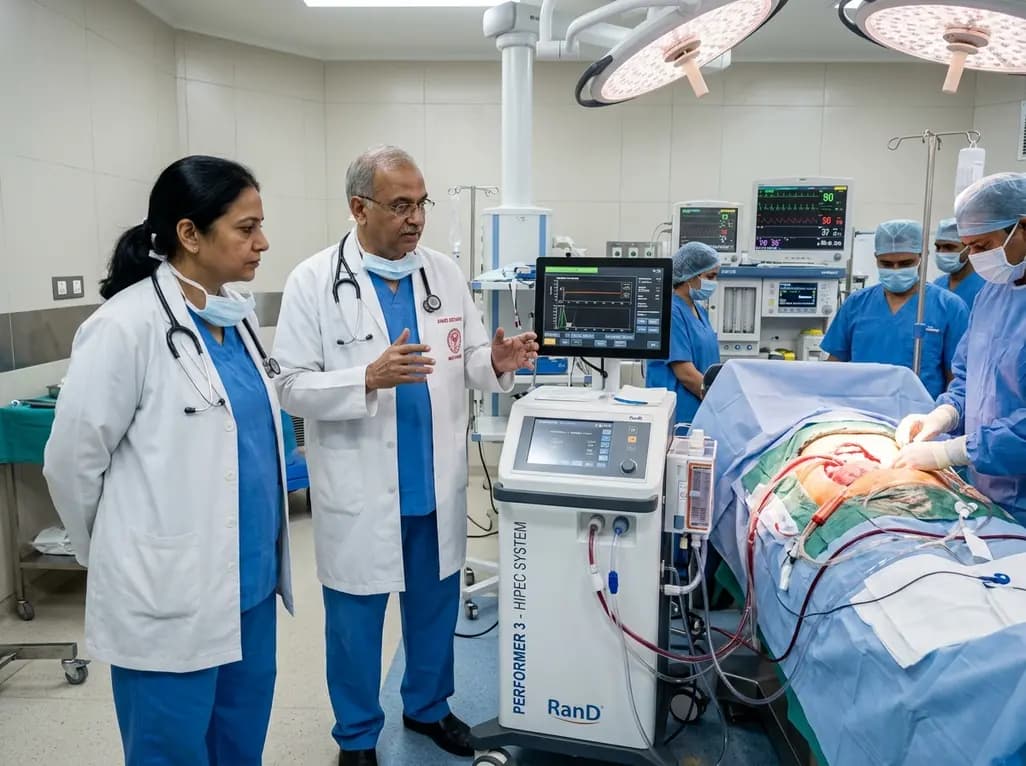
AIIMS Bathinda has inaugurated a specialized peritoneal oncology service featuring the RanD Performer 3 HIPEC platform. The facility offers cytoreductive surgery alongside hyperthermic intraperitoneal chemotherapy, transforming regional management for advanced ovarian, colorectal, and appendiceal malignancies.
Today
A cross-sectional study reveals that hypertension knowledge, illness perceptions, depression, and substance use significantly predict self-care behaviors. Addressing mental health and cognitive beliefs in primary care is crucial for optimal blood pressure control and cardiovascular disease prevention.
Today
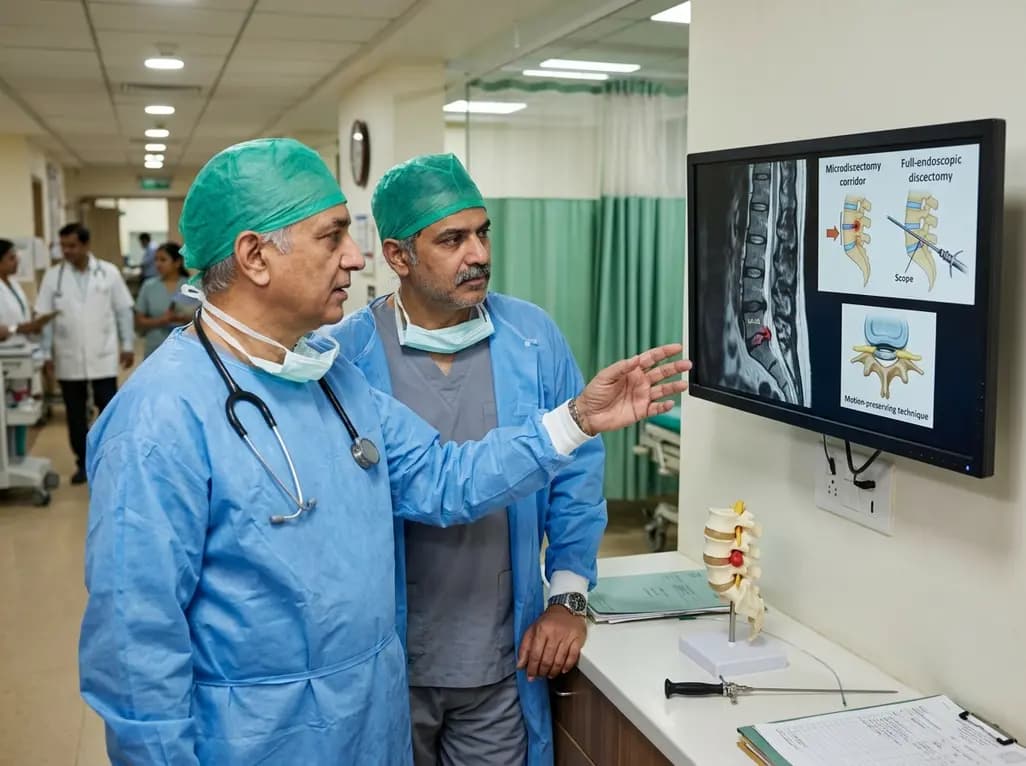
This clinical overview examines recent advancements in lumbar disc herniation surgery, comparing microscopic and full-endoscopic discectomy while highlighting biportal techniques and emerging motion-preserving innovations for spine specialists.
Today
A breakthrough study reveals that loss of SELENOT in hypothalamic POMC neurons triggers premature cellular senescence, ATF6α stress activation, and ER calcium depletion, linking neuroendocrine decay to metabolic disease.
Today
