.webp&w=384&q=75)

Loading, please wait...
Loading, please wait...

Recent reports from the Kerala State Disaster Management Authority (KSDMA) indicate a significant rise in ultraviolet levels across the state. Consequently, health professionals must emphasize UV radiation safety to protect the public from severe health complications. Several districts, including Pathanamthitta and Idukki, recorded UV indices above eight, which triggered orange alerts. This high radiation poses substantial risks, particularly during peak daylight hours.
Prolonged exposure to high UV rays poses several dermatological and ocular risks. Specifically, it can lead to sunburn, chronic skin diseases, and potentially skin cancer. Therefore, individuals must avoid direct sunlight between 10 am and 3 pm when intensity peaks. Moreover, high-altitude and tropical regions like Kerala naturally experience higher radiation levels even on cloudy days. Because surfaces like water and sand reflect these rays, total exposure increases for outdoor workers. Thus, seeking shade and planning outdoor tasks strategically are essential components of preventive care.
Medical experts recommend specific precautions for vulnerable populations to ensure safety. For instance, individuals with albinism or weakened immunity require extra vigilance. Similarly, fishermen and bike riders should wear full-body cotton clothing and use sunglasses. Protective gear like wide-brimmed hats and umbrellas further reduces direct impact from the sun. Additionally, outdoor workers should take frequent breaks in shaded areas to minimize cumulative damage. Real-time monitoring stations now provide index data to help the public plan their activities safely.
Q1: Which hours pose the highest risk for UV exposure in Kerala?
The highest UV levels typically occur between 10 am and 3 pm. People should limit outdoor activities during this window to reduce health risks significantly.
Q2: What clothing provides the best protection against high UV levels?
Health authorities recommend wearing full-body cotton clothing. Additionally, individuals should use wide-brimmed hats and UV-protected sunglasses for optimal safety.
Disclaimer: This content is for informational and educational purposes only. It does not constitute medical advice or replace professional judgment. Refer to the latest local and national guidelines for clinical practice.
References

Read summarized clinical updates, watch expert medical content, and earn CME certifications right from your smartphone.
Open your smartphone camera to scan and install.





Kerala issues high UV alerts (Index 8+). Learn essential UV radiation safety measures, risks for specific groups, and KSDMA guidelines for public health....
5 months ago

Review how tailored exercise programs benefit frail older patients with heart failure. Explore pathophysiological mechanisms, individualized training prescriptions, and strategies to overcome adherence barriers in clinical practice.
Today
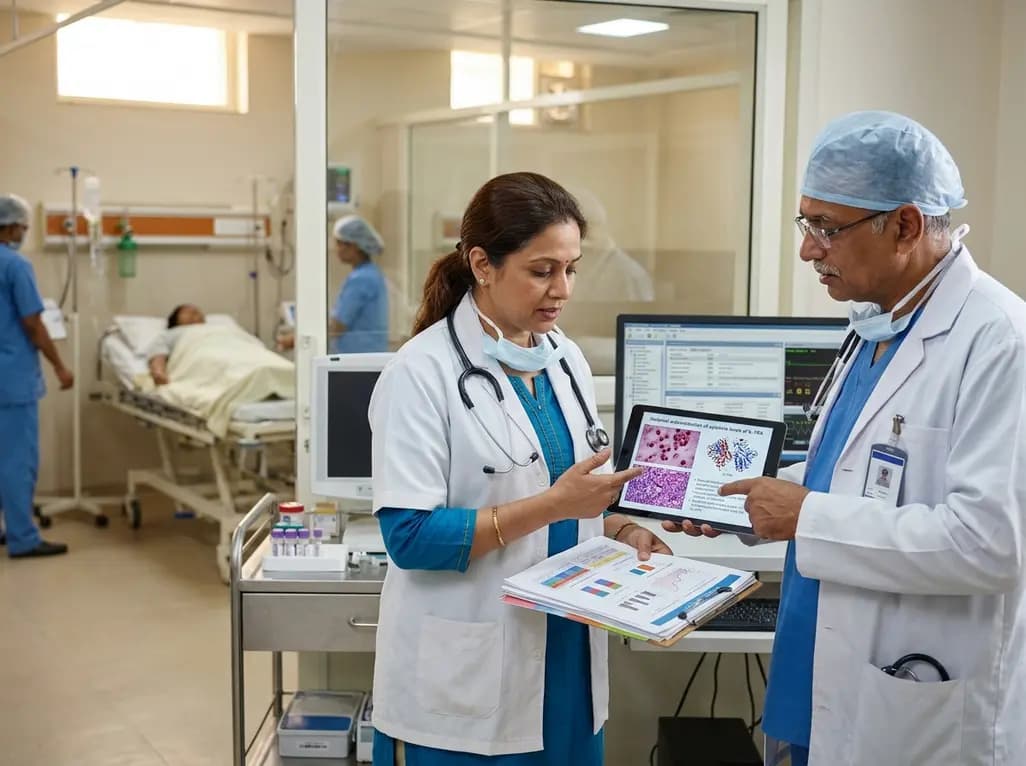
Recent clinical studies reveal maternal autoantibodies targeting IL-1RA as potential triggers for preterm labor, opening avenues for targeted cytokine therapies. Concurrently, new perioperative findings show inhaled cannabis increases propofol requirements during upper endoscopy compared to oral edible consumption.
Today

In high-risk pulmonary embolism complicated by severe anemia and active uterine bleeding, systemic thrombolysis is contraindicated. Large-bore aspiration thrombectomy provides rapid hemodynamic rescue without fibrinolysis, supported by inferior vena cava filter placement and multidisciplinary critical care.
Today

This comparative study evaluates posterior labral tears with and without glenohumeral instability, highlighting distinct demographic patterns, MRI underestimation in stable shoulders, and successful arthroscopic repair outcomes.
Today

A clinical study demonstrates that early intervention with tocilizumab, either as monotherapy or bridged with corticosteroids, achieves significant proptosis reduction and resolves active inflammation in treatment-naive thyroid eye disease.
Today
