.webp&w=384&q=75)

Loading, please wait...
Loading, please wait...
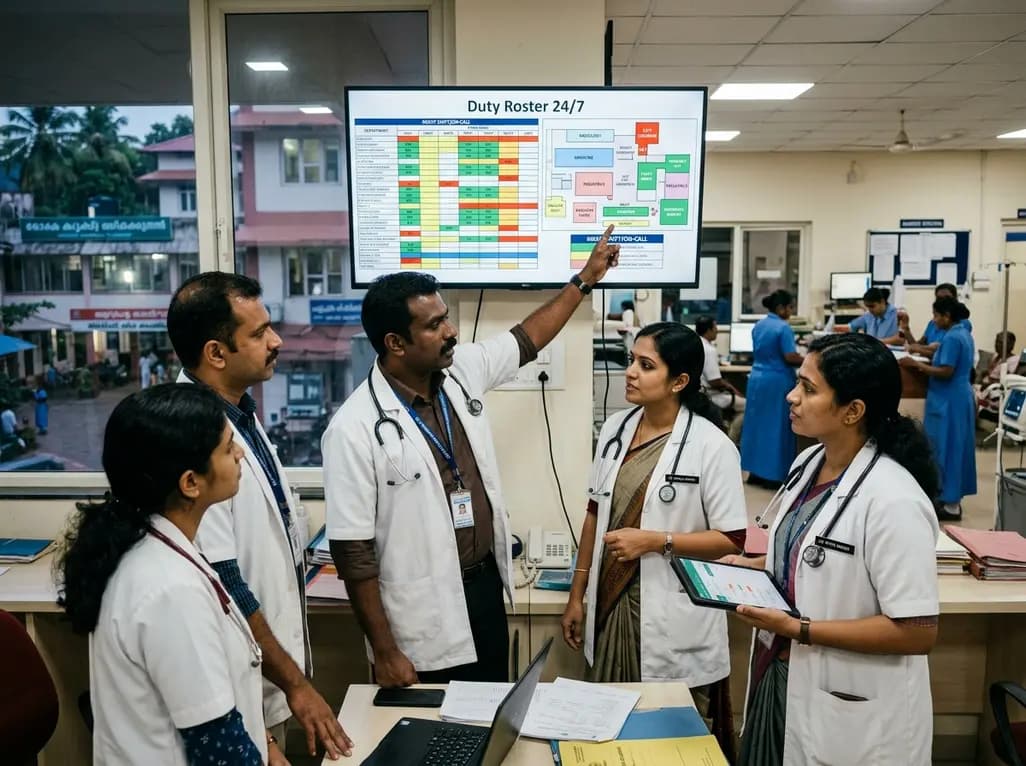
The Kerala health department has achieved a major milestone by establishing a consensus with government medical officers. This landmark agreement aims to roll out comprehensive 24/7 specialist services across district and general hospitals throughout the state. Previously, intense negotiations occurred between health administrators and the Kerala Government Medical Officers’ Association (KGMOA). Consequently, both parties agreed on a balanced operational roadmap. The strategic blueprint balances immediate patient needs with the welfare of frontline physicians. Furthermore, this cooperative initiative marks a vital transformation in public healthcare delivery. It promises to optimize emergency response times and improve patient outcomes statewide.
The consensus follows weeks of constructive deliberations between Health Minister K Muraleedharan and KGMOA leadership. Initially, the doctors' association expressed strong reservations about the rapid introduction of round-the-clock specialty duties. Specifically, KGMOA highlighted the severe workforce deficit across peripheral healthcare institutions. Medical officers warned that hasty redeployments without creating new posts would strain primary healthcare centers and compromise routine care. In response, the health minister engaged directly with physician representatives to address their core administrative grievances. Therefore, the administration gave formal assurances regarding the timely recruitment of specialists and accelerated departmental promotions. Moreover, the government agreed to consult doctors before issuing transfer orders from peripheral clinics. This collaborative approach helped resolve earlier public disagreements between health authorities and medical officers. Additionally, the state agreed to examine special financial incentives and allowances for redeployed medical officers. As a result, both sides established common ground to strengthen public secondary care without destabilizing rural outposts. State president Dr Sunil P K confirmed that the doctors' body welcomed the balanced compromise. Consequently, healthcare staff can now prepare for structural reforms with greater confidence and institutional backing.
Under the newly negotiated framework, participating district and general hospitals will adopt a structured dual-tier service model. Specialists will provide direct on-site consultations and procedural care from 8:00 AM to 8:00 PM every day. Subsequently, from 8:00 PM to 8:00 AM, hospitals will transition to emergency teleconsultation and dedicated on-call systems. This hybrid arrangement guarantees continuous clinical coverage while preventing physician fatigue during grueling night shifts. Furthermore, the health department committed to deploying at least nine specialist doctors per designated specialty in each facility. The primary departments covered under this scheme include general medicine, general surgery, obstetrics and gynecology, pediatrics, and orthopedics. Additionally, otorhinolaryngology and emergency casualty units will receive targeted workforce reinforcements to handle severe trauma cases. By establishing robust on-call rosters, secondary hospitals can manage complex emergencies effectively throughout the night. Consequently, duty doctors in casualty units can rapidly escalate critical cases to experienced specialists without delay. In addition, hospitals will establish structured triage protocols to streamline patient flow during peak daytime and nighttime hours. Therefore, this model establishes a sustainable balance between continuous emergency coverage and physician well-being.
Workforce availability remained the primary contention between the government and medical representatives during preliminary discussions. Earlier, KGMOA had pointed out that nearly 800 medical officer vacancies persisted within the state health system. Approximately 300 of these unfilled posts belonged directly to the critical specialty cadre. Consequently, redeploying existing physicians without hiring replacements threatened to compromise primary health centers and rural clinics. To address this legitimate concern, the state government pledged to fast-track promotion lists and clear departmental backlogs promptly. Furthermore, the administration assured that contractual doctors will immediately backfill vacancies at primary health centers. Thus, rural outposts will retain adequate staffing while specialist doctors transition to general and district hospitals. Additionally, the government agreed to make specialist redeployment voluntary by requiring prior physician consent before transfers. The state health directorate is also drafting a comprehensive proposal to sanction permanent new posts across taluk hospitals. These systemic reinforcements will prevent undue burdens on existing staff while expanding tertiary capabilities at secondary centers. Therefore, structured workforce planning protects primary healthcare integrity while advancing secondary hospital capacities across every district.
Following the policy consensus, the government designated Punalur Taluk Headquarters Hospital as the initial pilot center for implementation. The facility will immediately offer daytime specialist coverage across orthopedics, gynecology, pediatrics, internal medicine, and general surgery. After 8:00 PM, specialists will remain available on call to attend to urgent surgeries and acute trauma admissions. Success at Punalur will provide crucial operational insights before the government expands the model statewide within six months. Furthermore, expanding specialist availability at the district level directly alleviates the severe overcrowding at state medical colleges. Currently, tertiary care centers face immense pressure from routine specialty referrals from peripheral areas. In many instances, tertiary outpatient departments handle over five hundred patients daily, limiting consultation time per patient. By strengthening district hospitals, patients can receive definitive, high-quality care much closer to home without unnecessary travel. Consequently, medical colleges can refocus their resources on complex interventions, super-specialty care, and academic medical research. Moreover, this decentralized care model reduces transportation burdens and direct out-of-pocket financial expenses for vulnerable patient populations.
The implementation of round-the-clock specialty coverage represents a structural leap forward for Kerala's public healthcare architecture. By decentralizing specialty care, district hospitals can manage acute obstetric emergencies, pediatric crises, and surgical conditions without delays. Therefore, timely interventions will significantly lower maternal and infant morbidity across peripheral and semi-urban regions. Furthermore, immediate access to orthopedic and surgical teams improves outcomes during the critical golden hour for trauma patients. In addition to improving acute outcomes, the model establishes stronger continuity of care for chronic non-communicable diseases. Secondary centers will now manage complex cases of cardiovascular disease, diabetes, and chronic respiratory ailments locally. Consequently, patient trust in the state-funded healthcare system will grow substantially over the coming years. Meanwhile, the collaborative consensus between policymakers and medical associations highlights the necessity of physician-led health governance. Sustainable healthcare delivery requires addressing administrative bottlenecks and staffing deficits alongside clinical requirements. Ultimately, Kerala’s collaborative model serves as a progressive blueprint for other Indian states seeking to modernize district healthcare infrastructure.
Q1: What are the designated operating hours for specialist doctors under the new Kerala healthcare agreement?
Under the new consensus framework, specialist doctors will provide active on-site outpatient and inpatient consultations from 8:00 AM to 8:00 PM daily. During the overnight window from 8:00 PM to 8:00 AM, specialty care will function through dedicated on-call systems and structured teleconsultations to manage emergencies effectively without causing severe physician burnout.
Q2: How will the Kerala state government protect rural primary healthcare centers during specialist redeployment?
The state government has assured medical associations that rural healthcare delivery will remain fully protected. Before specialists transfer to district hospitals, administrators must secure their individual consent. Furthermore, the health department will deploy temporary contract medical officers to backfill every vacated post at primary health centers until permanent appointments are finalized through regular recruitment.
Q3: Which clinical specialties are prioritized for round-the-clock services across district and general hospitals?
The government and KGMOA have prioritized five essential clinical disciplines for the initial phase: general medicine, general surgery, obstetrics and gynecology, pediatrics, and orthopedics. Additionally, otorhinolaryngology and emergency casualty departments will receive enhanced manpower to support comprehensive emergency surgeries, trauma interventions, and acute critical care management across district-level facilities.
Disclaimer: This content is for informational and educational purposes only. It does not constitute medical advice or replace professional judgment. Refer to the latest local and national guidelines for clinical practice.
References

Read summarized clinical updates, watch expert medical content, and earn CME certifications right from your smartphone.
Open your smartphone camera to scan and install.





The Kerala government and the KGMOA have resolved their dispute regarding round-the-clock specialty care across district and general hospitals. The state agreed to fast-track promotions, fill vacancies, and implement an 8 AM to 8 PM duty model paired with overnight teleconsultation and on-call specialist cover.
4 weeks back

This clinical review examines the dangerous intersection of climate change and antimicrobial resistance (AMR). It highlights thermal selection, altered transmission pathways, and the imperative for One Health and Planetary Health adaptation frameworks to preserve therapeutic efficacy.
Today
Discover the crucial distinctions between mesonephric and mesonephric-like proliferations of the female genital tract. Learn the key histomorphologic, immunohistochemical, and molecular differences essential for accurate diagnosis and clinical management.
Today
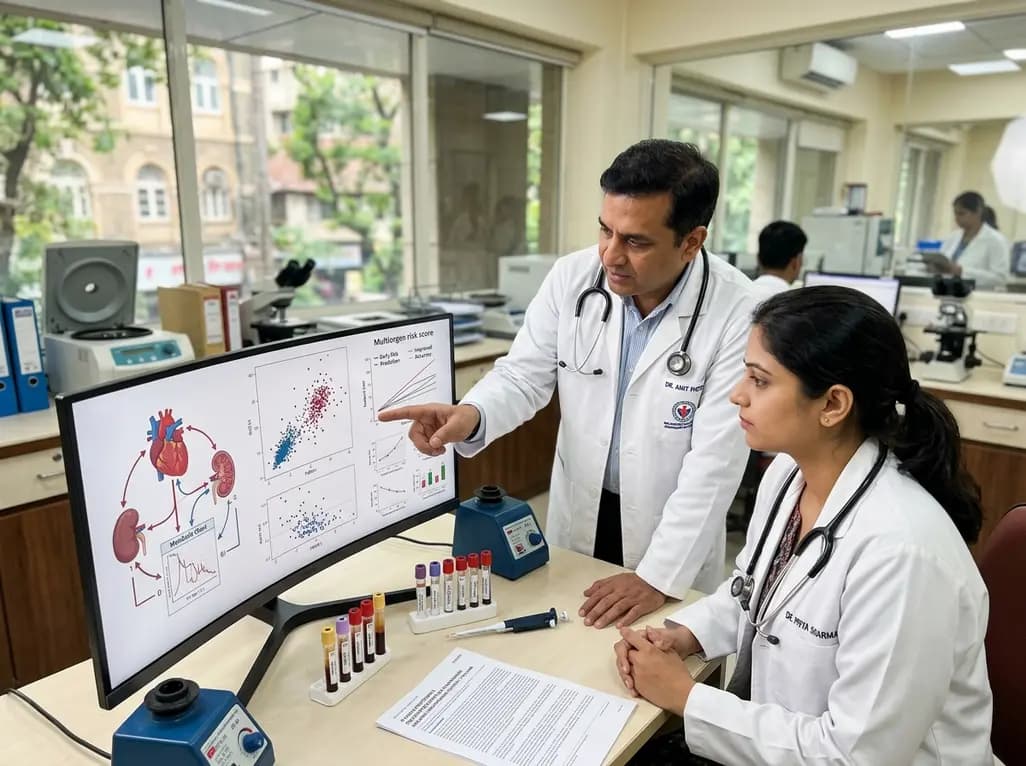
A large UK Biobank study reveals that plasma proteomic signatures capture preclinical organ damage and improve multiorgan risk prediction across early CKM syndrome stages 0 to 2 beyond traditional PREVENT clinical models.
Today
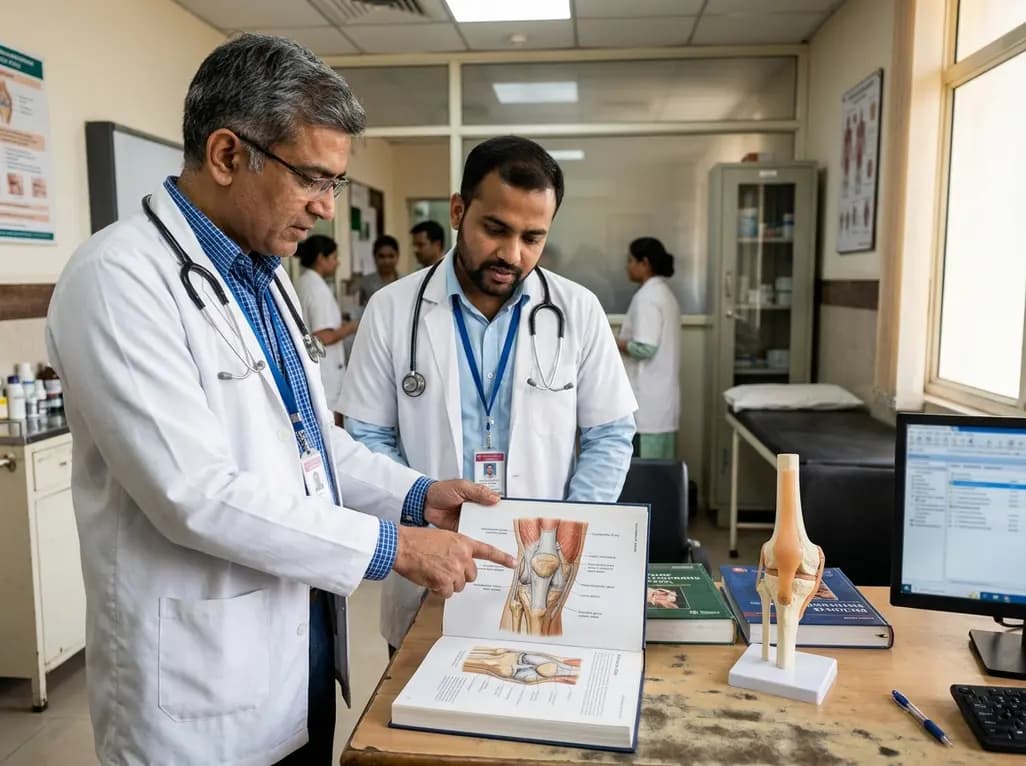
A narrative review investigates whether the articularis genus muscle functions as an independent anatomical entity or blends with the vastus intermedius. We evaluate its morphology, role in retracting the suprapatellar bursa, and direct clinical significance in anterior knee pain and arthroplasty.
Today

A Bayesian multilevel meta-analysis reveals that aerobic training combined with moderate carbohydrate restriction modestly lowers HbA1c in type 2 diabetes. However, sparse data and very low certainty leave incremental benefits over exercise or diet alone unproven, highlighting the need for individualized care.
Today
