.webp&w=384&q=75)

Loading, please wait...
Loading, please wait...

With the monsoon season approaching, national capital authorities are rapidly escalating their vector-borne disease control strategies. Consequently, Union Health Minister JP Nadda recently chaired a high-level meeting to review the state of dengue preparedness in Delhi. This crucial review evaluated the epidemiological trends, municipal actions, and hospital readiness across the region. Since seasonal transmission peaks during and after the monsoon, proactive systemic preparation remains highly essential. Therefore, the central government is working in close coordination with the Delhi government to execute a robust clinical and preventive roadmap. Healthcare professionals must remain vigilant as clinical vigilance and early detection are vital to reducing the national disease burden.
To establish a comprehensive and systematic response against vector-borne threats, India actively implements the National Strategy for Prevention and Control of Dengue. This strategic framework, popularly known as the Octalogue, rests on eight foundational pillars. Specifically, these pillars include disease surveillance, clinical case management, integrated vector management, and rapid outbreak response. Additionally, the guidelines emphasize capacity building, behavior change communication, inter-sectoral coordination, and continuous monitoring. By implementing this multi-pronged approach, public health departments aim to standardize preventive measures across all administrative levels. Consequently, healthcare institutions are aligning their clinical management protocols with these established pillars. Moreover, the strategy ensures that local municipal bodies, railways, and cantonment boards operate in complete synchronization. This structured coordination helps eliminate administrative gaps and enhances resource mobilization during sudden spikes. Therefore, understanding the Octalogue is crucial for clinicians who participate in local outbreak management and reporting. Ultimately, this framework provides a robust blueprint to minimize transmission risks and optimize patient outcomes throughout the national capital.
A critical aspect of the reviewed dengue preparedness is the immediate reinforcement of medical infrastructure. Health Minister JP Nadda has directed hospitals to maintain dedicated dengue wards and ensure adequate clinical resources. Specifically, healthcare facilities must secure sufficient beds, blood components, diagnostic kits, and supportive medications. Furthermore, Sentinel Surveillance Hospitals are on high alert to monitor admissions and coordinate responses. Since severe dengue can progress rapidly to shock, early clinical identification is paramount. Thus, clinicians must strictly adhere to updated fluid resuscitation protocols. In addition, Rapid Response Teams remain on standby to assist facilities during sudden patient surges. Hospitals must report all cases in real time through the Integrated Health Information Platform for Vector-Borne Diseases (IHIP-VBD). Consequently, this digital reporting ensures immediate epidemiological visibility, allowing authorities to deploy resources efficiently. Ultimately, robust clinical readiness will significantly reduce mortality rates and safeguard patient populations.
Active epidemiological surveillance forms the backbone of any successful vector control campaign. Therefore, municipal bodies are heavily intensifying vector surveillance in areas reporting high numbers of fever cases. Workers are conducting thorough inspections to identify and eliminate Aedes mosquito breeding sites. Moreover, local administrations are deploying targeted chemical control measures, such as fogging and spraying, in designated hotspots. Additionally, the government has established a centralized control room to monitor daily surveillance reports. This real-time tracking enables epidemiologists to predict outbreaks and implement localized control measures. Consequently, timely vector management directly disrupts the transmission cycle, preventing sporadic cases from turning into full-scale epidemics. Clinicians can support these efforts by encouraging patients to report persistent fevers early and by facilitating diagnostic testing. Thus, a well-coordinated surveillance network remains the primary defense against the rapid spread of mosquito-borne pathogens.
Public participation is vital for the success of vector control programs, as government efforts alone cannot eliminate mosquito breeding. Emphasizing the message of 'Jan Chetna through Jan Bhagidari,' the Health Minister called for active community engagement. Specifically, local authorities are mobilizing Resident Welfare Associations (RWAs), market associations, youth clubs, and schools to lead local cleanliness drives. July has been designated as 'Anti Dengue Month' to launch aggressive information, education, and communication campaigns. Furthermore, these public awareness drives encourage citizens to empty stagnant water, use mosquito nets, and wear full-sleeved clothing. By educating students and local workers, the campaign aims to instill long-term behavioral changes. Consequently, increased public awareness directly correlates with reduced larval density in residential zones. Additionally, elected representatives are supervising these localized campaigns to ensure maximum participation. Ultimately, collective responsibility is the most sustainable way to protect neighborhoods from seasonal outbreaks.
Achieving long-term control over vector-borne diseases requires seamless collaboration among diverse administrative bodies. Therefore, the ministry is driving stronger coordination among municipal corporations, railways, public health engineering, and local health departments. This unified approach ensures that sanitation and vector control measures are consistently executed across public infrastructures. For instance, railway stations and public construction sites are frequently audited to prevent water logging. Moreover, the administration is organizing regular district-level review meetings to monitor regional outbreaks and coordinate immediate responses. While the current dengue mortality rate remains low at 0.11 percent, authorities must remain highly vigilant. Proactive planning helps civic bodies anticipate potential surges and allocate resources for emergency clinical supplies. As the peak transmission season approaches, this collective vigilance will determine the capital's resilience. Consequently, the combination of administrative discipline, clinical excellence, and civic participation forms a powerful shield. Through these sustained efforts, Delhi is paving the way for a safer monsoon season.
Q1: What is the 'Octalogue' in the context of national dengue control?
The 'Octalogue' represents India's National Strategy for Prevention and Control of Dengue, built upon eight core pillars. These pillars comprise surveillance, clinical case management, integrated vector management, rapid outbreak response, capacity building, behavior change communication, inter-sectoral coordination, and rigorous monitoring. By implementing this comprehensive framework, public health authorities standardize preventive and therapeutic guidelines across the nation, ensuring a highly coordinated and efficient response to seasonal epidemics.
Q2: How should hospitals prepare for the upcoming peak dengue season?
Hospitals must optimize their preparedness by establishing dedicated wards with adequate beds, diagnostic kits, and essential medicines. Furthermore, facilities must maintain a steady supply of blood components, particularly platelets, and keep Sentinel Surveillance Hospitals on high alert. Clinicians should receive training on updated fluid management protocols, while administrative staff must ensure real-time reporting of cases through the Integrated Health Information Platform to facilitate immediate epidemiological tracking.
Q3: What role does the community play during the designated 'Anti Dengue Month'?
During 'Anti Dengue Month' in July, community members are encouraged to actively participate in 'Jan Chetna through Jan Bhagidari' initiatives. Residents should inspect their homes weekly to eliminate stagnant water, use mosquito nets, and wear protective clothing. By collaborating with Resident Welfare Associations, schools, and market groups, citizens help scale up vector control and awareness, significantly reducing local mosquito breeding sites and preventing transmission.
Disclaimer: This content is for informational and educational purposes only. It does not constitute medical advice or replace professional judgment. Refer to the latest local and national guidelines for clinical practice.
References

Read summarized clinical updates, watch expert medical content, and earn CME certifications right from your smartphone.
Open your smartphone camera to scan and install.





Union Health Minister JP Nadda chaired a high-level review on dengue preparedness in Delhi. He directed authorities to scale up clinical readiness, vector surveillance, and local community mobilization through 'Jan Bhagidari' and the national 'Octalogue' framework to prevent seasonal outbreaks.
3 months ago

A retrospective cohort study of 7,716 ICU patients from the MIMIC-IV database demonstrates that Gradient Boosting Decision Trees significantly outperform traditional SOFA scores in predicting in-hospital mortality among patients with sepsis and diabetes, with SHAP analysis providing clinical interpretability.
Today
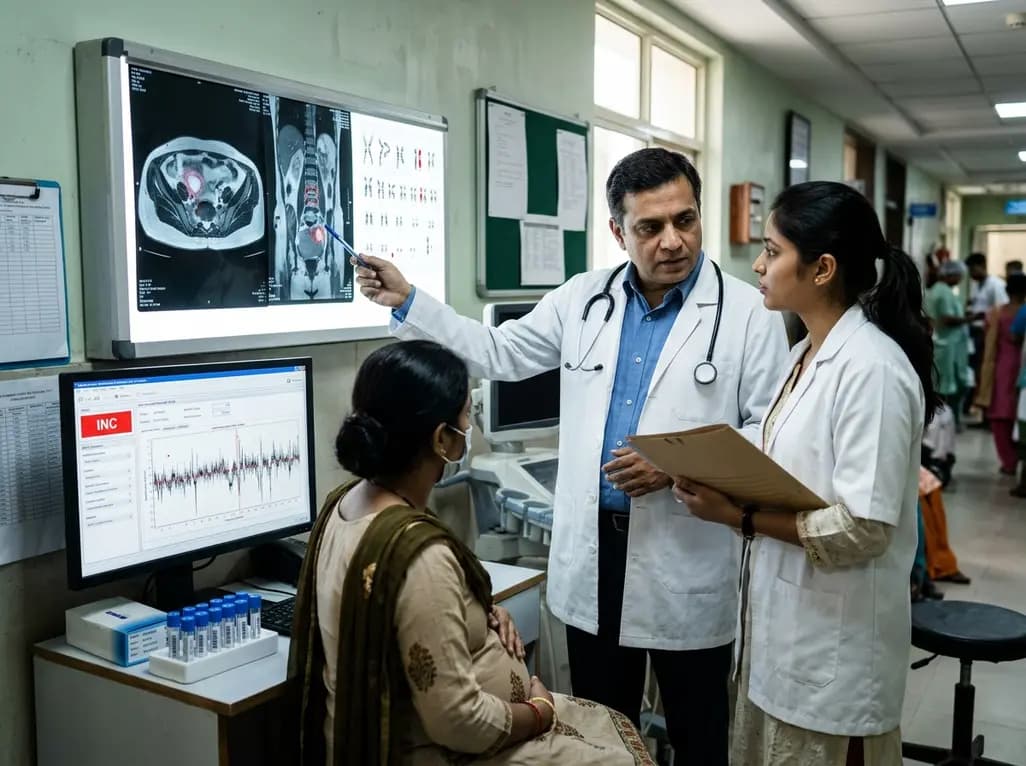
Occult maternal malignancy accounts for 3.82% of persistent unreportable NIPT results with genomic noise. Multiple chromosomal aberrations, notably on chromosome 18, warrant thorough oncological evaluation and whole-body MRI to ensure timely maternal diagnosis while preserving fetal care.
Today

This article reviews the forensic and clinical complexities of acute myocarditis arising on left ventricular hypertrophy in children, highlighting early diagnostic red flags and multidisciplinary postmortem autopsy protocols.
Today

This comparative study evaluates posterior labral tears with and without glenohumeral instability, highlighting distinct demographic patterns, MRI underestimation in stable shoulders, and successful arthroscopic repair outcomes.
Yesterday

A clinical study demonstrates that early intervention with tocilizumab, either as monotherapy or bridged with corticosteroids, achieves significant proptosis reduction and resolves active inflammation in treatment-naive thyroid eye disease.
Yesterday
