.webp&w=384&q=75)

Loading, please wait...
Loading, please wait...

Simultaneous ipsilateral shoulder and elbow dislocation is an exceptionally rare clinical occurrence in orthopedic practice. Most reported cases in medical literature usually involve anterior shoulder dislocations paired with posterior elbow dislocations. However, a recent case report highlights a unique presentation involving posterior dislocations of both joints in a healthy 28-year-old male. This injury occurred during a softball incident without any accompanying fractures. Therefore, this specific case adds a new dimension to our understanding of multi-joint trauma.
Furthermore, clinicians must maintain a high index of suspicion when evaluating patients with upper extremity trauma. The intense pain from an elbow dislocation often masks underlying shoulder pathology. Consequently, many secondary dislocations are frequently missed during the initial emergency assessment. In this specific case, the patient was successfully managed through conservative means. This involved bedside reduction of the elbow followed by the shoulder and subsequent sling application. Moreover, the patient achieved a positive outcome due to prompt recognition of the dual injury.
The standard treatment protocol for such injuries emphasizes urgent closed reduction. Traditionally, many experts recommend reducing the elbow joint first to ensure better control. This approach provides a more stable lever arm for subsequent shoulder manipulation. Afterward, physicians typically apply a sling or splint to ensure joint stability during the healing process. Fortunately, this patient recovered well without the need for surgical intervention. However, long-term follow-up is necessary to monitor for potential joint instability.
Additionally, diagnostic imaging is vital for identifying these dual injuries accurately. Orthopedic surgeons and emergency physicians should routinely screen adjacent joints in cases of high-energy trauma. Furthermore, thorough neurovascular examinations before and after reduction are essential to rule out complications. For instance, clinicians should always check for brachial plexus or ulnar nerve injury. Early recognition significantly improves the long-term functional prognosis for the patient. Therefore, comprehensive physical exams remain the cornerstone of trauma care.
This injury is extremely rare. While anterior shoulder and posterior elbow dislocations are occasionally documented, a simultaneous posterior-posterior pattern without fracture had not been previously recorded in major medical databases until this case.
The intense and localized pain from an elbow dislocation often masks symptoms in the shoulder. Additionally, the deformity of the elbow is frequently more obvious to the clinician, leading to focused attention on the distal joint while overlooking the proximal structure.
Disclaimer: This content is for informational and educational purposes only. It does not constitute medical advice or establish a doctor-patient relationship. Always seek the advice of a qualified healthcare provider regarding any medical condition. Refer to the latest local and national guidelines for clinical practice.
References
Egan SJ et al. Ipsilateral Shoulder and Elbow Dislocation Without Fracture: A Case Report. Mil Med. 2026 May 04. doi: undefined. PMID: 42081275.
Meena S et al. Ipsilateral Shoulder and Elbow Dislocation: A Case Report. Malaysian Orthopaedic Journal. 2012; 6(1): 43-45.
Zhang MR et al. Ipsilateral elbow and shoulder dislocations in older people: Which joint should be reduced first?: A rare case report and literature review. Medicine (Baltimore). 2025 Apr 4; 104(14): e42080.

Read summarized clinical updates, watch expert medical content, and earn CME certifications right from your smartphone.
Open your smartphone camera to scan and install.





A case report of a 28-year-old male with rare simultaneous posterior shoulder and elbow dislocations successfully managed with conservative bedside reductio...
5 months ago
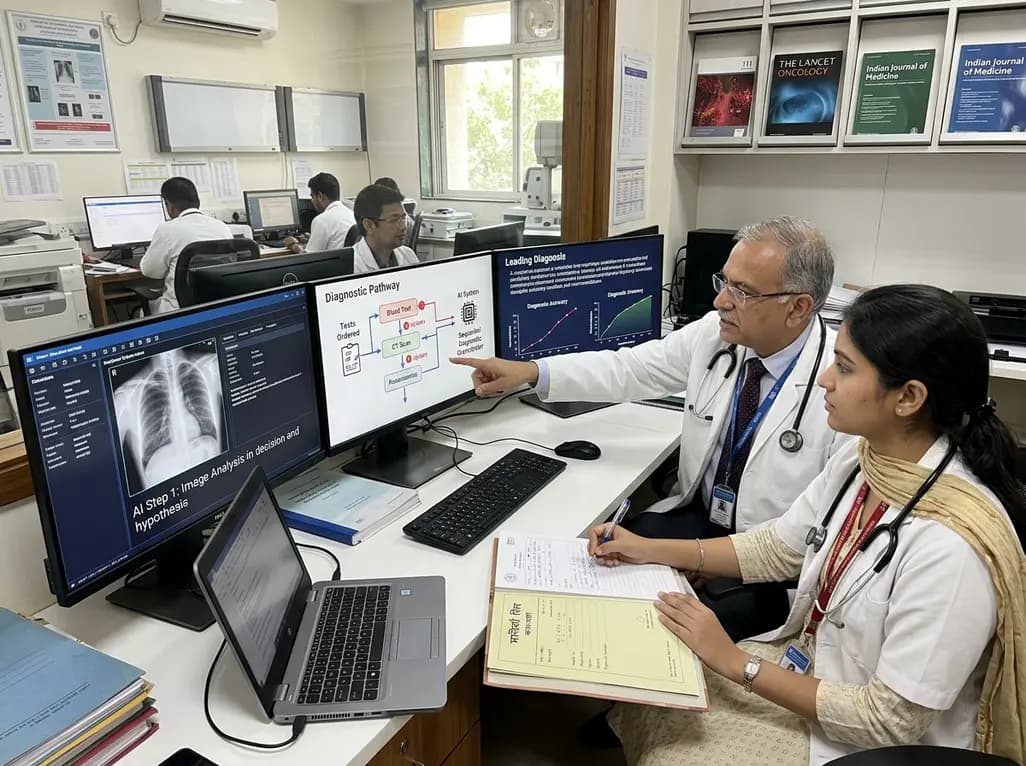
A breakthrough peer-reviewed study demonstrates that a sequential AI diagnosis system can mirror real-world clinical reasoning. By ordering stepwise tests and updating hypotheses dynamically, this multi-agent orchestrator achieved superior diagnostic accuracy while reducing investigative costs.
Today

A prenatal case highlights severe glutaric acidemia type II presenting as bilateral hyperechoic cystic kidneys at 18 weeks. Whole-exome sequencing revealed a novel homozygous ETFDH frameshift variant, demonstrating the power of rapid genetic testing in fetal renal anomalies.
Today

Review how tailored exercise programs benefit frail older patients with heart failure. Explore pathophysiological mechanisms, individualized training prescriptions, and strategies to overcome adherence barriers in clinical practice.
Yesterday

This comparative study evaluates posterior labral tears with and without glenohumeral instability, highlighting distinct demographic patterns, MRI underestimation in stable shoulders, and successful arthroscopic repair outcomes.
Yesterday

A clinical study demonstrates that early intervention with tocilizumab, either as monotherapy or bridged with corticosteroids, achieves significant proptosis reduction and resolves active inflammation in treatment-naive thyroid eye disease.
Yesterday
