.webp&w=384&q=75)

Loading, please wait...
Loading, please wait...

Intestinal Behçet’s disease (BD) represents a rare but severely debilitating subtype of systemic vasculitis. It often presents with deep ileocecal ulcers that mimic Crohn’s disease (CD), making accurate clinical diagnosis exceptionally challenging. Consequently, a deeper understanding of intestinal Behçet's disease pathogenesis is necessary to improve long-term patient outcomes. A recent landmark study has finally constructed the first single-cell transcriptomic atlas of this disorder. By profiling 98,119 high-quality cells, researchers identified distinct cellular programs that differentiate BD from other common inflammatory bowel conditions.
The study reveals that robust stromal compartment activation and significant extracellular matrix (ECM) remodeling drive the development of intestinal BD. Specifically, the analysis identified 20 distinct cell populations and 41 functionally defined subtypes within the ileum. Unlike Crohn’s disease, which typically shows prominent epithelial barrier dysfunction and interferon-driven immune activation, BD displays unique epithelial antimicrobial signatures. Moreover, researchers identified critical pathogenic crosstalk between endothelial cells and neutrophils. This interaction primarily flows through the collagen/laminin-CD44 axis. Therefore, these findings suggest that the vascular and stromal environments play a more central role in BD than previously suspected.
Differentiating between intestinal BD and Crohn’s disease remains a common clinical hurdle for gastroenterologists and rheumatologists in India. While both conditions involve significant intestinal inflammation, their molecular landscapes are quite distinct. For instance, the parallel comparison framework used in this study highlights that BD lacks the intense interferon-driven immune signatures found in CD. Additionally, the identification of the CD44-mediated endothelial-neutrophil axis offers a potential new target for precision therapies. Consequently, these molecular markers may eventually serve as diagnostic tools to reduce the high rate of misdiagnosis in refractory cases.
While Crohn’s disease is often characterized by epithelial barrier failure and heavy interferon-driven immune responses, significant stromal activation and extracellular matrix remodeling mark intestinal Behçet’s disease. Furthermore, BD shows a unique interaction between blood vessel cells and neutrophils that is less prominent in Crohn’s.
The research points toward the collagen/laminin-CD44 signaling axes as potential therapeutic targets. By disrupting this crosstalk between endothelial cells and neutrophils, clinicians might be able to better manage the vasculitic components of intestinal Behçet’s disease.
Single-cell RNA sequencing allows scientists to examine individual cells rather than bulk tissue. This precision is vital for rare diseases because it helps identify rare cell populations and specific pathogenic pathways that would otherwise remain hidden in traditional analysis.
Disclaimer: This content is for informational and educational purposes only. It does not constitute medical advice or establish a doctor-patient relationship. Always seek the advice of a qualified healthcare provider regarding any medical condition. Refer to the latest local and national guidelines for clinical practice.
References

Read summarized clinical updates, watch expert medical content, and earn CME certifications right from your smartphone.
Open your smartphone camera to scan and install.





New scRNA-seq research maps the transcriptomic landscape of intestinal Behçet's disease, identifying unique stromal and vascular drivers distinct from Crohn...
5 months ago

Researchers at IIT Bombay have engineered an automated, cost-effective point-of-care device that diagnoses anaemia and sickle cell disease from a single drop of blood. By measuring blood smear spreading length, this portable tool assesses blood viscosity to offer rapid screening in resource-limited healthcare centers.
Today

A multicenter study evaluates whether standardized simulation training reduces cup detachment during vacuum-assisted vaginal birth. Evidence-based simulation equips obstetricians to improve cup placement, reduce maternal-fetal trauma, and optimize clinical decision-making during operative deliveries.
Today
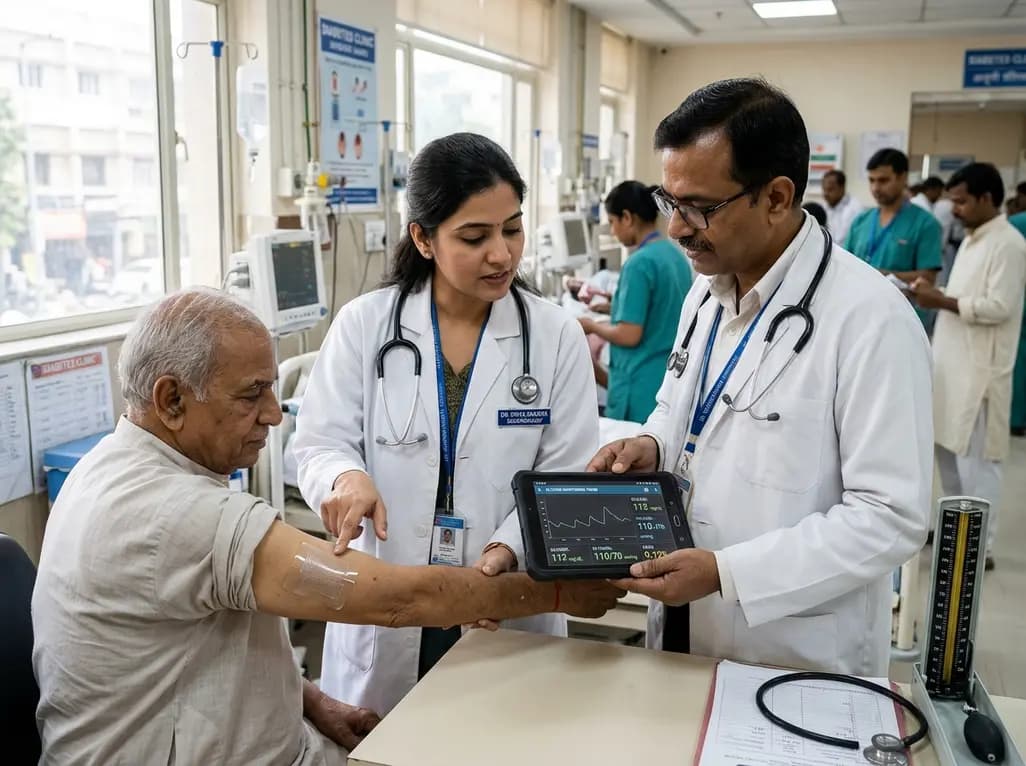
A breakthrough ultrathin multimodal sensor decouples physical hemodynamic monitoring from disposable electrochemical calibration, achieving long-term wearable glucose prediction with 81.36% accuracy and a 9.12% MARD. This offers a robust, drift-free solution for outpatient metabolic surveillance.
Today

A comparative review of tension band wiring and intramedullary screw fixation in thumb metacarpophalangeal arthrodesis, evaluating union rates, hardware complications, and clinical outcomes.
Today

Following regulatory scrutiny from FSSAI regarding promotional representations and lean muscle preservation claims, Dr. Reddy's Laboratories and Nestlé Health Science are currently reviewing the branding and marketing strategy for their joint nutritional supplement Celevida GLP+.
Today
