.webp&w=384&q=75)

Loading, please wait...
Loading, please wait...

Effective healthcare delivery increasingly relies on collaborative practice across diverse medical and allied health disciplines. Fostering interprofessional identity development among trainees provides a sustainable foundation for shared decision-making, patient safety, and team cohesion. When healthcare professionals cultivate a dual professional identity, they gain intrinsic motivation to collaborate effectively across clinical boundaries. However, measuring how learners evolve from disciplinary novices into collaborative practitioners remains a persistent challenge in health professions education. Recent psychometric and qualitative investigations demonstrate that early interprofessional awareness serves as the true catalyst for this evolutionary shift.
Interprofessional identity represents an internalized sense of belonging to an extended, collaborative healthcare team. Consequently, it complements a clinician's specific vocational identity, such as being a physician, nurse, or pharmacist. Therefore, educational institutions strive to cultivate pro-diversity beliefs early in undergraduate training to alleviate perceived threats to professional autonomy. When healthcare trainees value the distinct expertise of other disciplines, they experience less intergroup friction during high-stress clinical transitions. Furthermore, longitudinal growth in collaborative values supports patient safety by encouraging transparent communication and mutual respect among team members. Nevertheless, initial workplace exposures and rigid traditional hierarchies can disrupt this delicate balance. If trainees encounter unsupportive workplace cultures, their openness toward other disciplines often declines rapidly. For this reason, educators must systematically monitor and reinforce collaborative attitudes throughout undergraduate and postgraduate curricula. Nurturing an inclusive learning climate ensures that emerging clinicians sustain their intrinsic motivation for integrated practice. By establishing clear reflective opportunities, academic medical centers can actively protect learners against cynicism and siloed thinking.
For decades, researchers relied heavily on the Readiness for Interprofessional Learning Scale (RIPLS) to evaluate educational interventions. However, accumulating psychometric evidence has revealed significant structural deficiencies in the instrument. Specifically, the original subscales frequently exhibit statistical overlap, inconsistent factor loadings, and poor construct validity across diverse cultural cohorts. In a comprehensive mixed-methods evaluation involving over 3,300 participants, researchers critically evaluated the utility of the translated Dutch RIPLS. Content analysis from qualitative interviews with trainees and clinical educators highlighted that RIPLS items conflate baseline awareness with true behavioral readiness. As a result, both unidimensional and four-dimensional models of the RIPLS yielded poor to mediocre goodness-of-fit parameters during structural testing. Trainees often express positive sentiments toward collaborative concepts on paper without possessing the practical agency required for clinical change. Consequently, educators who base curricular decisions on conventional RIPLS scores risk misinterpreting superficial agreement as genuine collaborative readiness. This fundamental psychometric mismatch underscored the urgent necessity for a refined, validated assessment framework.
To address the structural limitations of legacy instruments, researchers developed the Awareness of Interprofessional Learning Scale (AIPLS). Through exploratory factor analysis, investigators identified a robust one-factor model comprising eight tightly focused items. This parsimonious model accounted for 35.35% of the total variance, with strong individual factor loadings ranging from .512 to .697. Subsequently, a confirmatory factor analysis conducted on posttest data demonstrated exceptional model fit, characterized by a Standardized Root Mean Square Residual of .018, a Comparative Fit Index of .969, and a Tucker-Lewis Index of .957. Furthermore, the AIPLS demonstrated a high coefficient omega of .81, confirming excellent internal consistency across multidisciplinary undergraduate cohorts. Test-retest evaluations established moderate longitudinal stability, confirming that the scale captures meaningful developmental shifts rather than random testing fluctuations. In addition, convergent validity assessments confirmed that the eight-item tool accurately reflects early cognitive appraisal of interprofessional dynamics. By paring away ambiguous subconstructs, the AIPLS offers health sciences faculties a precise instrument for benchmarking collaborative learning interventions.
The transition from the RIPLS to the AIPLS reflects an essential theoretical advancement in medical education theory. Awareness of collaborative practice represents the indispensable starting point for cognitive, emotional, and behavioral change. Thus, developing interprofessional awareness precedes the emergence of self-efficacy, openness, and active behavioral commitment. When students recognize the interdependence of modern healthcare delivery, they actively seek opportunities to understand adjacent professional scopes of practice. Moreover, this heightened awareness acts as a psychological buffer against intergroup bias and defensive territoriality. As trainees progress through clinical clerkships, this cognitive foundation encourages constructive inquiry and speaking-up behaviors during multidisciplinary rounds. Therefore, interprofessional awareness transforms routine team interactions into productive educational encounters. Ultimately, academic faculty can utilize the AIPLS to identify learners who require targeted guidance before entering complex hospital settings. Reinterpreting historical literature through the lens of awareness provides clearer insights into why simple classroom exposure does not always translate into immediate clinical readiness.
Integrating the AIPLS framework into medical and health sciences curricula provides actionable advantages for faculty and healthcare leaders. First, program directors can deploy the eight-item instrument as a rapid formative evaluation tool before and after clinical simulations. Second, the scale provides a quantitative metric to assess how community-based rotations or interdisciplinary case discussions influence student perceptions. In addition, health systems can adapt these metrics to assess interprofessional orientation among new resident physicians and allied healthcare recruits. Because modern patient care demands rapid coordination among doctors, nurses, dietitians, and physiotherapists, tracking awareness helps institutions target team-building initiatives effectively. Furthermore, longitudinal tracking allows institutions to detect periods of professional socialization where collaborative values are most vulnerable to erosion. By embedding validated assessments into routine programmatic evaluation, academic health centers ensure that interprofessional competencies receive the same rigorous scrutiny as individual clinical skills.
The AIPLS is a validated, eight-item, single-factor scale that specifically assesses interprofessional awareness rather than premature collaborative readiness. Unlike the traditional RIPLS, which suffers from overlapping subscales and poor model fit across diverse cohorts, the AIPLS demonstrates exceptional psychometric reliability and structural fit. Consequently, it provides medical educators with a focused, robust metric for tracking early cognitive shifts in collaborative learning environments.
Interprofessional awareness serves as the essential foundational precursor to behavioral change, self-efficacy, and professional commitment. Before healthcare trainees can demonstrate mature collaborative readiness or navigate complex interdisciplinary hierarchies, they must first recognize the roles, values, and interdependencies of complementary health disciplines. Thus, cultivating baseline awareness directly enhances learner openness and mitigates defensive interprofessional attitudes in high-stakes clinical settings.
Medical colleges can administer the eight-item AIPLS before and after interprofessional simulation modules, integrated community postings, and multi-specialty case conferences. Because the scale is concise and psychometrically sound, faculty can rapidly gauge educational impact without inducing survey fatigue. Furthermore, tracking AIPLS scores over time helps curriculum committees identify training phases where collaborative identity requires structured reinforcement and reflective mentorship.
Disclaimer: This content is for informational and educational purposes only and should not be considered medical advice. Always consult a qualified healthcare professional regarding any medical condition or treatment. Refer to the latest local and national guidelines for clinical practice.
References

Read summarized clinical updates, watch expert medical content, and earn CME certifications right from your smartphone.
Open your smartphone camera to scan and install.





A landmark study introduces the Awareness of Interprofessional Learning Scale (AIPLS), replacing RIPLS to assess interprofessional identity development, healthcare collaboration, and clinical readiness among health sciences trainees.
4 weeks back

Explore the therapeutic promise of TLR7 and TLR8 inhibitors in managing systemic lupus erythematosus and monogenic autoimmune diseases. Learn how targeting endolysosomal single-stranded RNA sensing and regulatory checkpoints like UNC93B1 and PLD4 offers precision treatment without broad immunosuppression.
Today

A pharmacometric and machine learning study reveals that specific vaginal bacteria alter cervical antiretroviral exposure, highlighting the need for precision HIV PrEP strategies.
Today
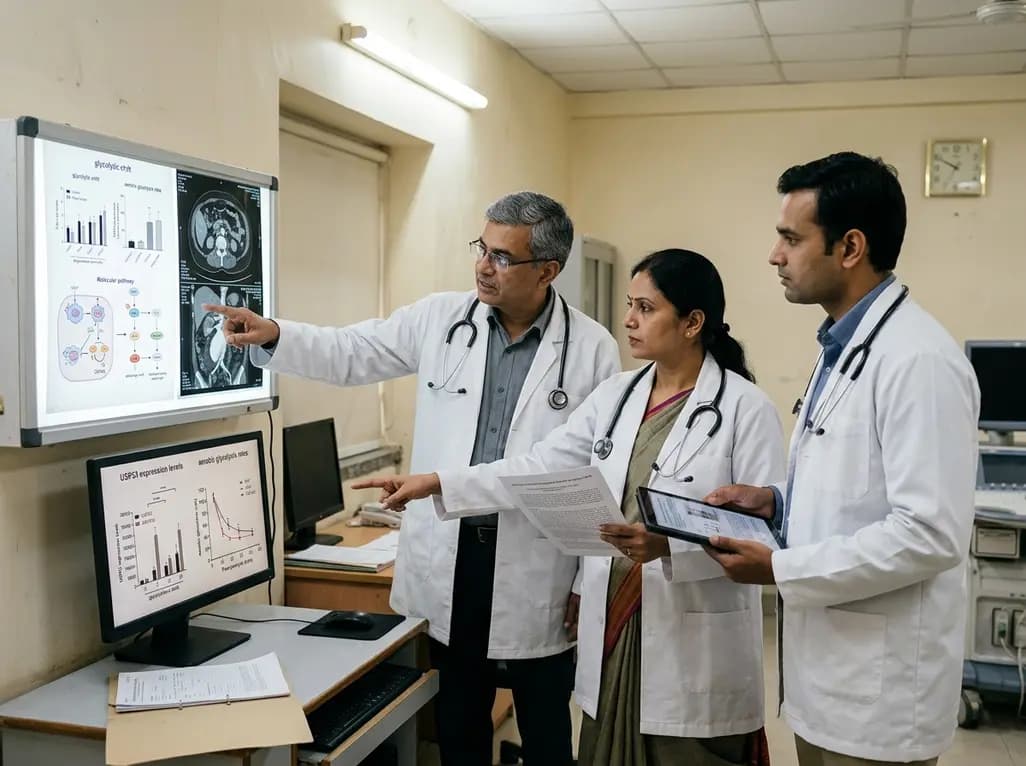
Abdominal aortic aneurysm rupture remains a catastrophic vascular emergency. Groundbreaking research reveals that USP53 accelerates aneurysm progression by reprogramming smooth muscle cell metabolism toward aerobic glycolysis, highlighting a promising target beyond conventional diameter-based surveillance.
Today
A breakthrough study leverages natural language processing to accurately identify incident medication-related osteonecrosis of the jaw and track antiresorptive drug holidays from clinical narratives in electronic health records, advancing osteoporosis pharmacovigilance and dental safety.
Today
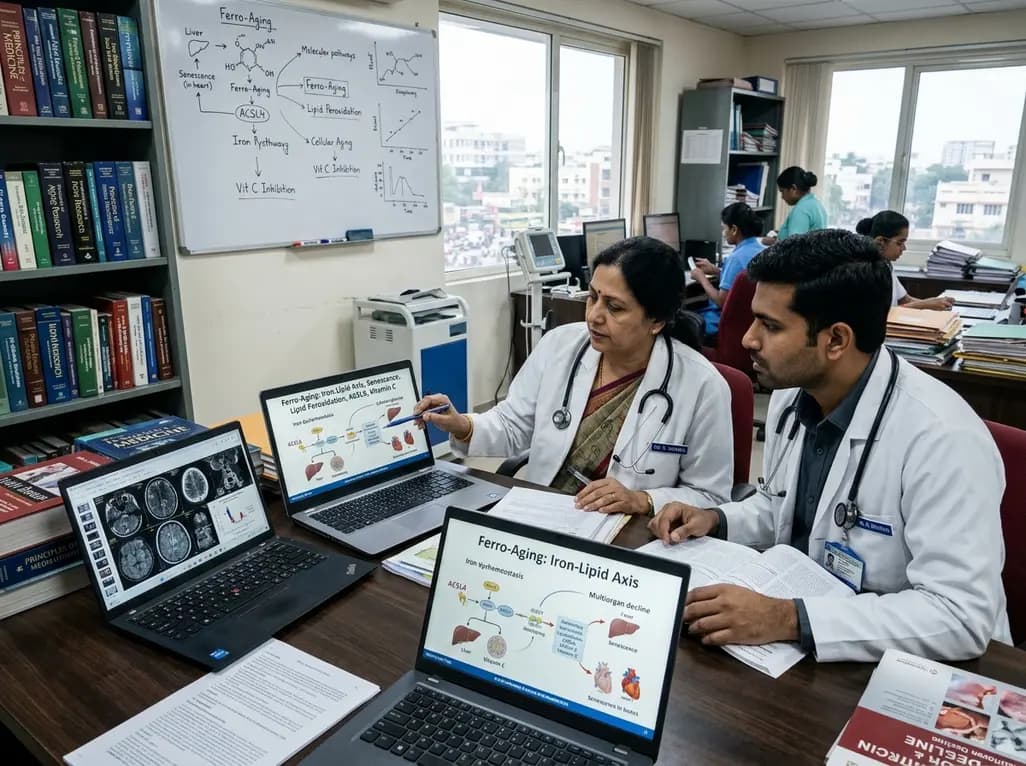
Recent research defines ferro-aging as a conserved iron-lipid axis driving organ decline across primates. Age-related iron dyshomeostasis stimulates ACSL4-mediated lipid peroxidation, promoting cellular senescence. Notably, vitamin C directly inhibits ACSL4, suppressing phospholipid oxidation and multi-organ decay.
Today
