.webp&w=384&q=75)

Loading, please wait...
Loading, please wait...

Primary care providers often face significant challenges when managing chronic spinal pain and other musculoskeletal disorders. Consequently, many health systems are now exploring integrated musculoskeletal care models that include chiropractic services. These models aim to reduce the burden on general practitioners while improving patient access to non-pharmacologic treatments. By embedding chiropractors within primary care teams, clinics can offer specialized spine care that aligns with global clinical guidelines.
Musculoskeletal (MSK) conditions are a leading cause of disability and a primary driver of opioid prescriptions. Therefore, shifting toward multidisciplinary teams is essential for sustainable healthcare. Chiropractors are well-positioned to manage acute and chronic pain. Moreover, they support primary care providers by offering expert assessment and manual therapy interventions. This collaboration ensures that patients receive the most appropriate care without unnecessary delays.
Research consistently shows that integrated musculoskeletal care leads to fewer opioid prescriptions and lower diagnostic imaging rates. Furthermore, patients often experience high satisfaction levels because they receive timely, specialized interventions. Since chiropractors focus on manual therapies and exercise, they effectively bridge the gap between initial consultation and specialized orthopedic surgery. This proactive approach helps prevent acute issues from transitioning into chronic, disabling conditions.
In addition to clinical benefits, integration can lead to significant cost savings. Specifically, when patients access chiropractic services early, the need for expensive downstream interventions like spinal injections or surgeries often decreases. This is particularly vital in safety-net settings like Federally Qualified Health Centers (FQHCs), where resources are often limited. Medicaid and Medicare policies are increasingly evolving to support these payment pathways, including capitation and shared savings models.
Despite the clear benefits, the adoption of chiropractic services remains uneven across different regions. However, successful models from dentistry and optometry provide a roadmap for integration. These fields demonstrate how embedded specialists can function effectively within a broader primary care framework. To achieve sustainability, health systems must prioritize supportive reimbursement policies and interprofessional education. By doing so, they can create a more resilient and patient-centered healthcare environment.
Integrating chiropractic care provides patients with immediate access to non-pharmacologic pain management. By addressing MSK pain through manual therapy and exercise early on, providers can reduce the initial need for opioid prescriptions.
Yes, studies indicate that adding chiropractic services reduces the utilization of high-cost services like MRIs, emergency department visits, and specialty surgeries, leading to overall system savings.
Chiropractors act as MSK specialists who perform physical examinations, provide manual adjustments, and guide rehabilitative exercises, allowing primary care doctors to focus on complex medical management.
Disclaimer: This content is for informational and educational purposes only and does not constitute medical advice. It is not intended to be a substitute for professional medical advice, diagnosis, or treatment. Always seek the advice of your physician or other qualified healthcare provider with any questions you may have regarding a medical condition. Refer to the latest local and national guidelines for clinical practice.
References
1. Benjamin L et al. Integrating Chiropractic Care into Federally Qualified Health Centers: Policy, Payment, and Pathways for Sustainable Spine and Musculoskeletal Care. J Integr Complement Med. 2026 Apr 20. doi: 10.1177/27683605261444627. PMID: 42009623.
2. Farabaugh R, et al. New Systematic Review Shows Chiropractic Care Leads to Lower Healthcare Costs for Spinal Pain. Chiropractic & Manual Therapies. 2024.
3. Schut SM. Collaborative musculoskeletal care: The role for chiropractors. Cleveland Clinic Journal of Medicine. 2025; 92(9): 550-554.

Read summarized clinical updates, watch expert medical content, and earn CME certifications right from your smartphone.
Open your smartphone camera to scan and install.





A look at how integrating chiropractic care into primary care settings like FQHCs can improve MSK outcomes and reduce healthcare utilization costs....
6 months ago

A retrospective cohort study of 7,716 ICU patients from the MIMIC-IV database demonstrates that Gradient Boosting Decision Trees significantly outperform traditional SOFA scores in predicting in-hospital mortality among patients with sepsis and diabetes, with SHAP analysis providing clinical interpretability.
Today
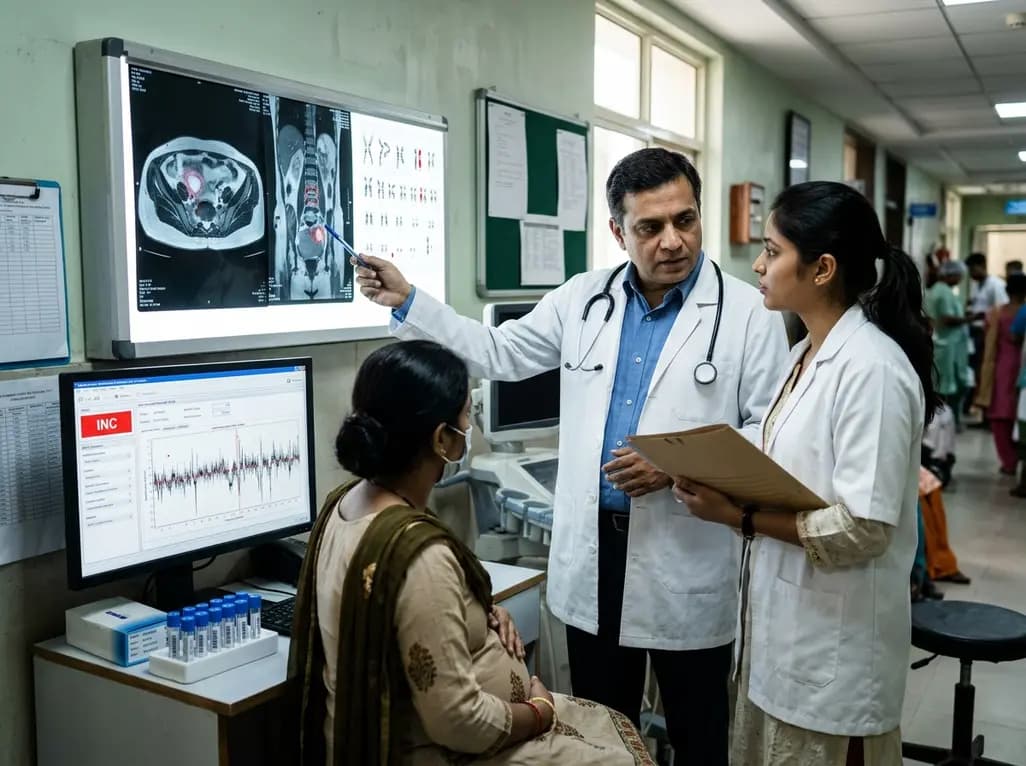
Occult maternal malignancy accounts for 3.82% of persistent unreportable NIPT results with genomic noise. Multiple chromosomal aberrations, notably on chromosome 18, warrant thorough oncological evaluation and whole-body MRI to ensure timely maternal diagnosis while preserving fetal care.
Today

This article reviews the forensic and clinical complexities of acute myocarditis arising on left ventricular hypertrophy in children, highlighting early diagnostic red flags and multidisciplinary postmortem autopsy protocols.
Today

This comparative study evaluates posterior labral tears with and without glenohumeral instability, highlighting distinct demographic patterns, MRI underestimation in stable shoulders, and successful arthroscopic repair outcomes.
Yesterday

A clinical study demonstrates that early intervention with tocilizumab, either as monotherapy or bridged with corticosteroids, achieves significant proptosis reduction and resolves active inflammation in treatment-naive thyroid eye disease.
Yesterday
