.webp&w=384&q=75)

Loading, please wait...
Loading, please wait...

The deployment of groundbreaking medical products often requires more than one party to shoulder the risk of potential failure. Recently, innovative malaria vaccine financing has emerged as a critical tool to bridge the gap between product development and large-scale implementation. The case of GSK's RTS,S/AS01 malaria vaccine highlights this necessity. Although the vaccine received a positive scientific opinion from the European Medicines Agency, the World Health Organization (WHO) required further evidence before recommending broad use. Consequently, this delay created significant uncertainty regarding procurement and market demand.
To address these challenges, creative risk-sharing solutions can accelerate access to essential medical products. Specifically, where risks are intolerably high for manufacturers, innovative finance providers deploy specialized products to maintain the development pathway. MedAccess, Gavi, and GSK structured a risk-sharing arrangement to support the continued manufacturing of the RTS,S antigen. This strategic partnership ensured that production did not stall while waiting for final WHO policy recommendations and funding decisions. Because of this agreement, the global health community successfully maintained the vaccine supply chain during a high-risk period.
The benefits of this financial collaboration are substantial for pediatric health. Projections indicate that sustained vaccine manufacturing will avert approximately 8.7 million malaria cases and 36,300 deaths in children. Moreover, the partnership demonstrates how tailored capital can meet individual market needs to achieve health benefits in high-need populations. Notably, Indian manufacturers like Bharat Biotech are now joining this ecosystem through technology transfers, which will further lower costs and increase doses by 2026. By identifying gaps in risk coverage early, stakeholders can secure financing to prevent market failures and ensure timely access to life-saving innovations.
Risk-sharing arrangements provide a financial safety net for manufacturers. They ensure that production continues even when future demand or regulatory timelines remain uncertain, thereby preventing supply shortages.
MedAccess and similar providers use financial tools like guarantees to reduce the risk for private companies. This encourages them to enter or stay in markets that serve low-income populations where traditional commercial incentives might be lacking.
With the involvement of Indian manufacturers and new financing deals, the supply of malaria vaccines is expected to reach 15-25 million doses annually by 2026, significantly reducing the price per dose for endemic regions.
Disclaimer: This content is for informational and educational purposes only. It does not constitute medical advice or a substitute for professional clinical judgment. Refer to the latest local and national guidelines for clinical practice.
References
Perez T et al. The role of innovative financing to bridge the gap between implementation and commercialisation. Malar J. 2026 Apr 07. doi: 10.1186/s12936-026-05888-y. PMID: 41947130.
Gavi, the Vaccine Alliance. Malaria vaccine market shaping roadmap. 2026 Feb 17. Available from: https://www.gavi.org
GSK plc. Price of world's first malaria vaccine (RTS,S) for children in endemic countries to be reduced by more than half. 2025 Jun 25. Available from: https://www.gsk.com

Read summarized clinical updates, watch expert medical content, and earn CME certifications right from your smartphone.
Open your smartphone camera to scan and install.





Explore how creative risk-sharing solutions and innovative financing are bridging the gap between malaria vaccine implementation and commercialisation....
6 months ago
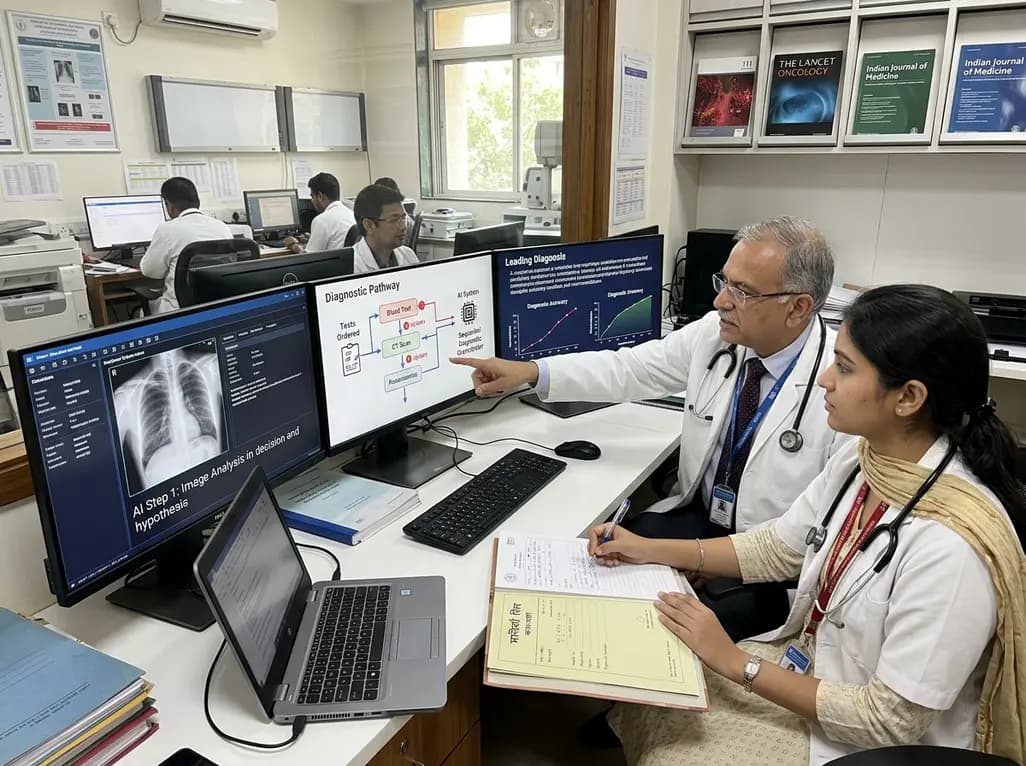
A breakthrough peer-reviewed study demonstrates that a sequential AI diagnosis system can mirror real-world clinical reasoning. By ordering stepwise tests and updating hypotheses dynamically, this multi-agent orchestrator achieved superior diagnostic accuracy while reducing investigative costs.
Today

A prenatal case highlights severe glutaric acidemia type II presenting as bilateral hyperechoic cystic kidneys at 18 weeks. Whole-exome sequencing revealed a novel homozygous ETFDH frameshift variant, demonstrating the power of rapid genetic testing in fetal renal anomalies.
Today

Review how tailored exercise programs benefit frail older patients with heart failure. Explore pathophysiological mechanisms, individualized training prescriptions, and strategies to overcome adherence barriers in clinical practice.
Yesterday

This comparative study evaluates posterior labral tears with and without glenohumeral instability, highlighting distinct demographic patterns, MRI underestimation in stable shoulders, and successful arthroscopic repair outcomes.
Yesterday

A clinical study demonstrates that early intervention with tocilizumab, either as monotherapy or bridged with corticosteroids, achieves significant proptosis reduction and resolves active inflammation in treatment-naive thyroid eye disease.
Yesterday
