.webp&w=384&q=75)

Loading, please wait...
Loading, please wait...

Inherited platelet function disorders (IPFDs) represent a diverse and rare group of conditions that frequently complicate clinical practice. While well-defined syndromes like Glanzmann thrombasthenia (GT) and Bernard-Soulier syndrome (BSS) are well-documented, many patients remain unclassified. Recently, a retrospective cohort study using the national ATHNdataset provided deep insights into these conditions. Specifically, the researchers analyzed clinical outcomes for over 2,300 individuals. Consequently, this data offers a better understanding of the diagnostic landscape. Therefore, healthcare providers can now appreciate the true breadth of treatment patterns across the country.
The research highlighted that a staggering 81.6% of patients fell into the \"IPFD-other\" category. This finding underscores the residual diagnostic uncertainty prevalent in modern medicine. Regarding clinical manifestations, the most common symptom was epistaxis, which affected 42.8% of patients. Furthermore, soft tissue and oral bleeding occurred in a significant portion of the cohort. Notably, the study recorded severe events such as intracranial hemorrhage and joint bleeds. These findings demonstrate that patients with Inherited Platelet Function Disorders face substantial morbidity. Additionally, the ISTH-BAT scores showed significant elevation across all subtypes. Similarly, morbidity levels remained high even in unclassified cases. However, the severity often varied between GT and granule defects.
Hemostatic management varies depending on the specific subtype and the severity of the bleeding event. For instance, clinicians utilized antifibrinolytics in more than half of the patient population. Conversely, they applied desmopressin and platelet transfusions less frequently. Although diagnostic precision remains a challenge, identifying these patterns is vital for improving patient care. Moreover, modern laboratory data helps specialists move beyond unclassified diagnoses toward targeted therapies. Thus, improving diagnostic precision remains a primary goal for the medical community. Besides therapeutic intervention, routine follow-up is essential for long-term health. Finally, the study highlights the importance of multidisciplinary care in managing these heterogeneous disorders. Overall, the findings encourage a shift toward more precise diagnostic tools.
The most frequent symptoms include epistaxis (nosebleeds), soft tissue bleeding, and oral bleeding. However, some patients may also experience severe complications like joint bleeds or intracranial hemorrhage.
Antifibrinolytics are the most widely used treatment option for these patients. Other therapies include desmopressin and platelet transfusions, though clinicians typically reserve these for more specific or severe cases.
Disclaimer: This content is for informational and educational purposes only and does not constitute professional medical advice, diagnosis, or treatment. Always seek the advice of your physician or other qualified health provider with any questions you may have regarding a medical condition. Refer to the latest local and national guidelines for clinical practice.
References
1. Citla-Sridhar D et al. Bleeding Phenotypes in Inherited Platelet Function Disorders: Insights From the ATHNdataset. J Pediatr Hematol Oncol. 2026 May 19. doi: 10.1097/MPH.0000000000003213. PMID: 42154520.
2. Gresele P et al. Diagnosis and management of inherited platelet disorders. Haemophilia. 2014;20(Suppl 4):39-47.
3. Orsini S et al. Inherited platelet function disorders: Recommendations for clinical and laboratory management. Blood Transfus. 2021;19(1):15-29.

Read summarized clinical updates, watch expert medical content, and earn CME certifications right from your smartphone.
Open your smartphone camera to scan and install.





A review of the ATHNdataset study on 2,302 patients with inherited platelet function disorders, focusing on bleeding phenotypes and management strategies....
5 months ago

Following regulatory scrutiny from FSSAI regarding promotional representations and lean muscle preservation claims, Dr. Reddy's Laboratories and Nestlé Health Science are currently reviewing the branding and marketing strategy for their joint nutritional supplement Celevida GLP+.
Today

A comprehensive scoping review synthesises evidence linking prenatal maternal mental health to long-term offspring neurodevelopment, evaluating neuroendocrine, inflammatory, and epigenetic pathways while highlighting clinical screening and future research priorities.
Today

The Directorate General of Health Services directs Indian states to halt the hazardous reuse and reprocessing of single-use medical devices. Discover regulatory implications under the Drugs and Cosmetics Act, critical infection risks, legal liabilities, and operational changes required across clinical specialties.
Today
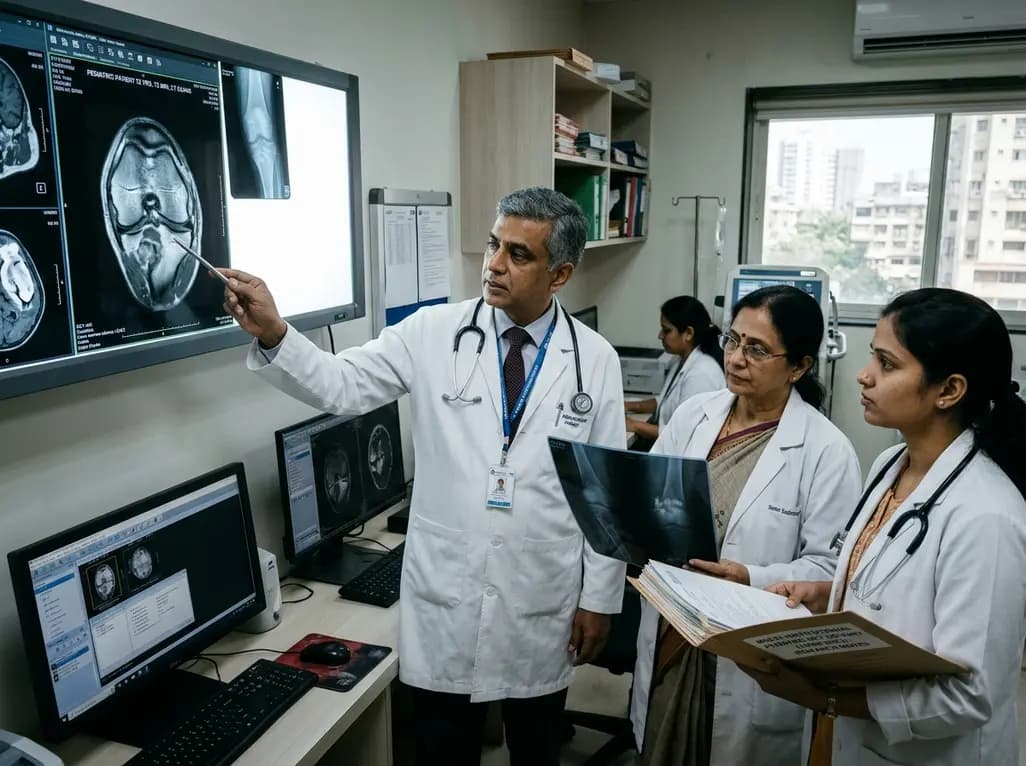
A 25-year multi-institutional cohort reveals high recurrence rates in pediatric giant cell tumor of bone, particularly in patients with open physes and bone marrow edema on preoperative MRI. Early surveillance and careful balance between growth plate preservation and tumor clearance are essential.
Today

India is advancing preventive healthcare by integrating genomics, artificial intelligence, and quantum technologies. With the SANGAM programme sequencing one million Indian genomes, clinicians can unlock personalized therapies, detect cardiometabolic risks early, and curb the burden of diabetes and heart disease.
Today
