.webp&w=384&q=75)

Loading, please wait...
Loading, please wait...
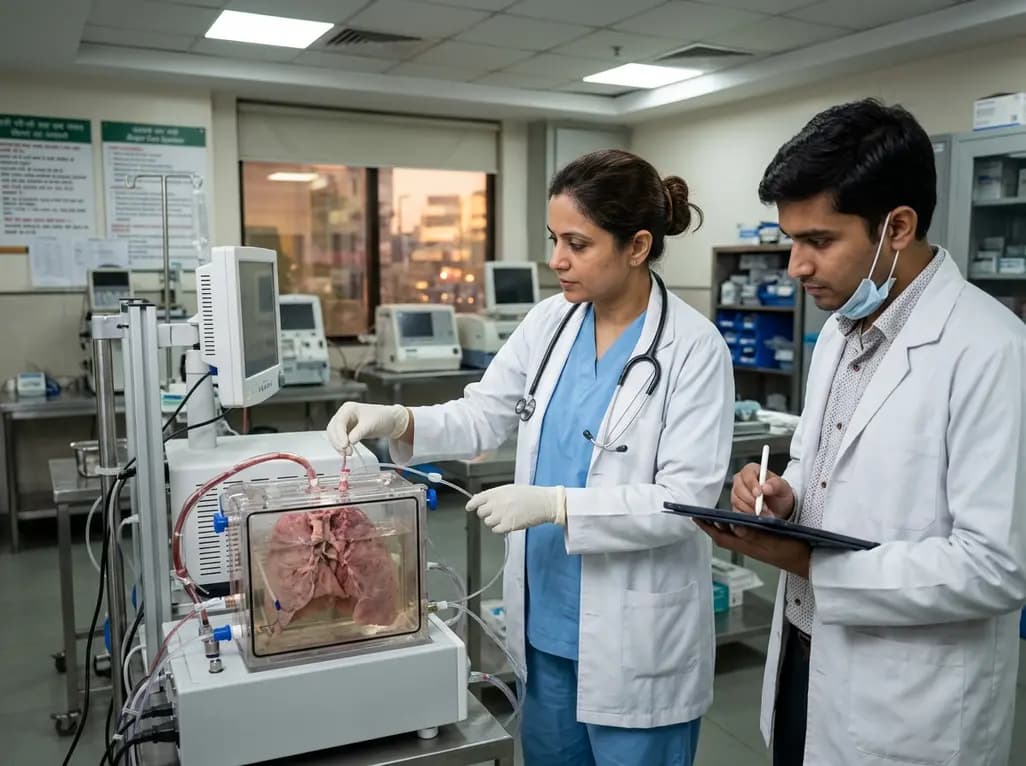
Bacterial contamination of donor organs poses a severe challenge in pulmonary transplantation medicine. Specifically, Pseudomonas aeruginosa represents a formidable pathogen associated with high post-transplant morbidity, severe pneumonia, and acute graft dysfunction. Antimicrobial resistance further complicates conventional antibiotic regimens administered during donor evaluation and organ preservation. Consequently, transplant clinicians urgently require targeted anti-infective strategies that clear recalcitrant pathogens without inducing systemic toxicity or structural organ damage. Ex vivo lung perfusion provides a unique physiological platform for reconditioning marginal lungs and assessing organ viability prior to transplantation. Furthermore, this technique creates an isolated window for localized therapeutic interventions directly into airway tissues. Recent experimental evidence highlights inhaled sphingosine as an innovative candidate for targeted airway decontamination during perfusion. When administered directly through the ventilator circuit during perfusion protocols, this endogenous lipid base neutralizes bacterial burden rapidly and effectively. Researchers now evaluate whether local delivery can overcome traditional pharmacological barriers in donor organ care. Furthermore, optimizing organ quality before implantation remains vital for improving long-term recipient outcomes globally.
To evaluate localized therapy, researchers utilized a porcine ex vivo lung perfusion model subjected to acute airway contamination. The experimental framework categorized lungs into three distinct groups: uninfected controls, infected lungs receiving normal saline, and infected lungs treated with active lipid therapy. This structured approach permitted precise comparison of physiological parameters and microbiological outcomes under controlled conditions. During perfusion, acute infection with Pseudomonas aeruginosa triggered noticeable declines in dynamic and static lung compliance compared to uninfected lungs. However, other physiological markers including pulmonary artery pressure, peak airway pressure, and oxygen-exchange capacity showed no significant deterioration across groups. Additionally, parameters like lactate accumulation, lung weight gain, and histological damage scores remained stable throughout the evaluation window. These findings confirm that acute airway contamination primarily impacts mechanical lung compliance during normothermic perfusion. Consequently, isolated organ platforms offer ideal settings to test novel antimicrobial agents without confounding systemic physiological variables. Therefore, ex vivo perfusion provides invaluable mechanistic insights before clinical translation into transplantation medicine.
The primary endpoint focused on bacterial clearance following aerosolized intervention. Administering inhaled sphingosine caused a rapid and statistically significant reduction in bronchial Pseudomonas aeruginosa colony-forming units. In contrast, administration of vehicle control 0.9% sodium chloride failed to decrease bacterial counts within the respiratory tract. Crucially, lipid administration did not compromise pulmonary physiological integrity, airway compliance, or oxygenation capacity during perfusion. Moreover, parameters such as tissue lactate accumulation, histological injury scores, and pulmonary edema formation remained completely unchanged compared to untreated controls. Thus, localized application achieves robust antibacterial activity without triggering short-term tissue toxicity or vascular compromise. These findings demonstrate that exogenous sphingosine acts rapidly on airway pathogens while fully preserving microvascular cellular architecture. Furthermore, the absence of local inflammatory spikes underscores its favorable safety profile during ex vivo ventilation protocols. Consequently, this intervention represents a safe, organ-sparing approach for clearing high-risk bacterial pathogens from donor tissue. Therefore, localized lipid delivery offers a practical solution to persistent donor organ decontamination challenges.
Understanding the precise biochemical mechanism of action is essential for translational success. Advanced analytical techniques revealed a direct association between exogenous sphingosine and bacterial cardiolipin located within outer bacterial membranes. Additionally, confocal microscopy demonstrated increased spatial colocalization between the administered lipid base and Pseudomonas aeruginosa cells. This membrane-associated antibacterial mechanism disrupts bacterial lipid integrity, leading to rapid cell membrane permeabilization, intracellular acidification, and bacterial death. Importantly, because sphingosine utilizes a physical membrane-targeted mechanism, it circumvents classic antimicrobial resistance pathways that impede conventional antibiotics. Furthermore, mass spectrometry assays confirmed that inhaled sphingosine alters local lipid metabolic pathways within lung parenchyma. Concentrations of related metabolites, including sphingosine-1-phosphate, ceramide, and sphingomyelin, shifted predictably following therapeutic nebulization. These metabolic alterations indicate active cellular uptake and biological processing within bronchial epithelial tissues. Consequently, host tissue integrates the therapeutic lipid base effectively while maintaining structural stability. Overall, these mechanistic insights validate the unique bactericidal profile of lipid-based therapeutics against drug-resistant gram-negative pathogens.
To validate translation toward clinical practice, researchers conducted exploratory studies using four explanted human recipient lungs. Inhalation of the active compound successfully elevated lipid levels across both bronchial and parenchymal tissue compartments. Furthermore, histological analysis of human airway samples revealed no acute cellular damage, epithelial sloughing, or structural disintegration following nebulization. Interestingly, one explanted human lung exhibited natural baseline bacterial colonization prior to intervention. Following lipid inhalation, clinicians observed a marked reduction in detectable bacterial growth within this human specimen. Although preliminary, this hypothesis-generating observation aligns closely with porcine experimental outcomes. Consequently, tissue delivery data confirm that aerosolized lipids penetrate human airway structures effectively without inducing acute local toxicity. Future clinical studies must establish standardized dosing regimens, optimal nebulization timing, and long-term post-transplant recipient outcomes. Ultimately, integrating localized antimicrobial therapy into standard donor perfusion protocols could significantly expand the viable donor organ pool and mitigate post-transplant infectious complications globally.
Inhaled sphingosine interacts directly with bacterial cardiolipin in outer cellular membranes, disrupting physical structural integrity and inducing rapid bacterial lysis. Because host pulmonary epithelial cells naturally process and metabolize endogenous sphingolipids into ceramide and sphingosine-1-phosphate, mammalian tissues tolerate therapeutic aerosol concentrations without acute histological injury or physiological impairment. Consequently, this localized lipid-targeted mechanism effectively eliminates multi-drug resistant pathogens while completely preserving donor lung compliance, vascular resistance, and gas exchange function.
Ex vivo lung perfusion isolates donor organs in a controlled normothermic circuit, enabling clinicians to deliver high localized concentrations of antimicrobial agents directly to airway tissues. This isolated delivery method avoids systemic drug exposure, preventing nephrotoxicity or systemic side effects in potential recipients. Furthermore, perfusion circuits allow continuous real-time monitoring of organ compliance, vascular pressure, and oxygenation capacity, ensuring that therapeutic interventions eradicate persistent pulmonary pathogens effectively without compromising overall tissue viability prior to transplantation.
Beyond donor organ decontamination, aerosolized sphingosine holds substantial therapeutic potential for treating severe pulmonary infections in critically ill patients, including ventilator-associated pneumonia and cystic fibrosis exacerbations. Because sphingosine concentrations are frequently depleted in vulnerable respiratory epithelia, topical replacement restores natural innate immune defenses. Clinical translation could offer an effective antibiotic-sparing strategy against multi-drug resistant bacterial strains, although further clinical trials are necessary to validate human safety, precise dosing protocols, and patient efficacy.
Disclaimer: This content is for informational and educational purposes only... Refer to the latest local and national guidelines for clinical practice.
References
Liu Y et al. Inhaled sphingosine reduces bronchial Pseudomonas aeruginosa burden during porcine ex vivo lung perfusion and shows tissue delivery in explanted human lungs. Sci Rep. 2026 Aug 06. doi: undefined. PMID: 42562866.

Read summarized clinical updates, watch expert medical content, and earn CME certifications right from your smartphone.
Open your smartphone camera to scan and install.





A breakthrough study demonstrates that inhaled sphingosine significantly reduces bronchial Pseudomonas aeruginosa load in ex vivo lung perfusion models without causing acute tissue toxicity, opening new therapeutic possibilities for donor organ preservation and transplantation medicine.
last month

Integrating prompt medical nutrition therapy into ICU protocols prevents muscle wasting, decreases secondary infections, and accelerates recovery. Leading intensivists urge healthcare teams to treat targeted feeding as an indispensable therapy that curbs downstream hospitalization expenses.
Today

A multicentre RCT in China shows that the PAICS AI system significantly boosts sonographer sensitivity in detecting fetal intracranial malformations by 8.7% without compromising specificity, offering promising diagnostic support for prenatal neurosonography.
Today

A recent study highlights the utility of two-dimensional speckle tracking echocardiography in assessing right atrial mechanics in OSAHS. Progressive reductions in reservoir and conduit strain, coupled with elevated contraction strain, signal early right heart remodeling correlated with apnea severity.
Today

A premature neonate developed upper limb compartment syndrome after uterine rupture extruded the arm through a scar defect. Conservative management with continuous monitoring yielded complete functional recovery and normal limb growth at 10-year follow-up, highlighting non-operative safety in selected cases.
Yesterday

A propensity-matched study shows ultrasound-guided pulsed radiofrequency of the lumbar sympathetic ganglion is non-inferior to fluoroscopy for painful diabetic neuropathy, reducing needle passes, procedure time, and radiation exposure while achieving equal pain relief.
Today
