

Loading, please wait...
Loading, please wait...
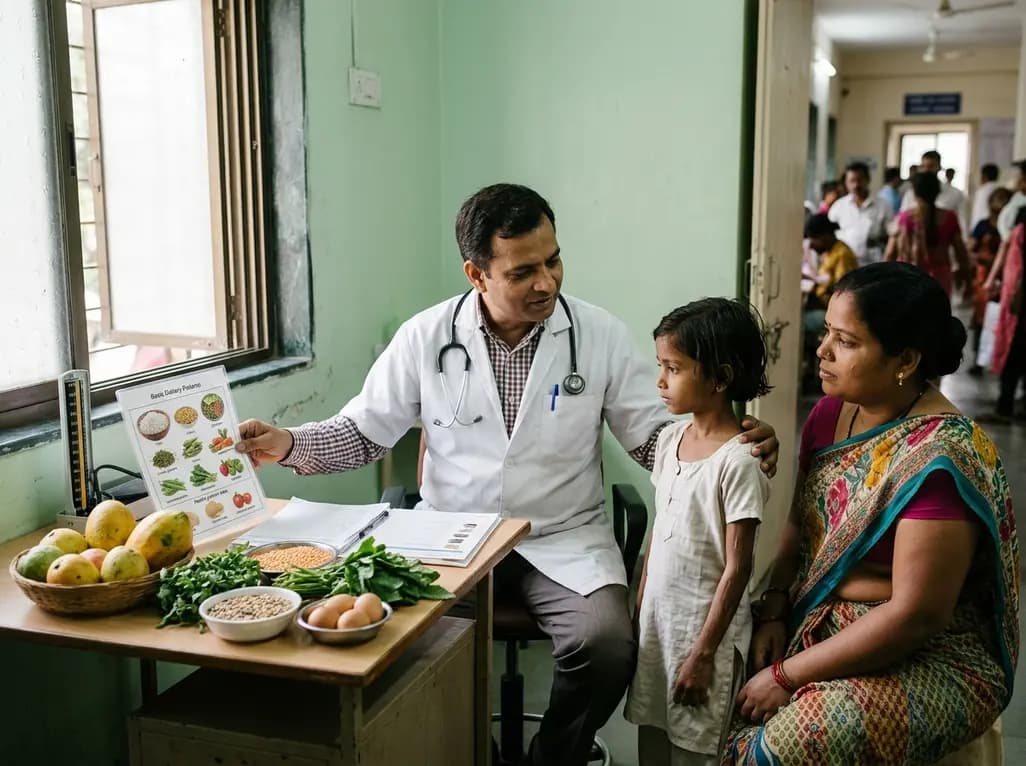
Modern urban centers across India display unprecedented caloric abundance through ubiquitous quick-commerce grocery deliveries and dining options. However, clinical outpatient departments reflect a sharply contradictory reality characterized by rising metabolic disorders and widespread micronutrient deficiencies. This profound epidemiological conflict represents India's nutrition paradox, where individuals consume excess energy while starving their bodies of critical nutrients. Consequently, clinicians must recognize that caloric sufficiency does not guarantee cellular health. Addressing this crisis requires an urgent paradigm shift across primary and specialized healthcare.
For decades, undernutrition defined public health challenges across the country. Data from the National Family Health Survey demonstrate that one-third of children under five experience persistent stunting. Furthermore, more than half of women of reproductive age suffer from chronic anaemia. Nevertheless, an alarming secondary public health crisis has accelerated alongside these long-standing deficiencies.
According to the landmark ICMR-INDIAB study, India now houses over 100 million individuals diagnosed with diabetes. Additionally, an even greater population lives with prediabetes and undiagnosed metabolic syndrome. The core dilemma lies in the simultaneous coexistence of these contrasting conditions within the exact same patient. For example, an overweight individual frequently presents with severe iron, folate, and vitamin D deficiencies.
Clinicians describe this widespread presentation as hidden hunger. In this state, an individual consumes sufficient or excessive dietary calories yet remains starved of essential micronutrients. Therefore, caloric intake and cellular nourishment represent entirely distinct physiological entities. Urban food environments heavily promote refined carbohydrates and saturated fats while depleting trace elements. Consequently, this double burden of malnutrition overwhelms clinical practice, requiring healthcare providers to screen for micronutrient deficits regardless of patient body habitus.
Traditional dietary patterns across Indian states historically offered remarkable metabolic balance. For generations, the classic thali thoughtfully incorporated unpolished grains, protein-rich lentils, seasonal vegetables, fermented curd, and healthy fats. However, rapid commercialization and modern convenience have steadily dismantled this nutritional architecture.
During the past two decades, polished white rice and refined wheat flour largely replaced traditional coarse millets. Furthermore, ultra-processed snacks, instant noodles, and sugar-sweetened beverages have shifted from occasional indulgences to daily dietary staples. These hyper-palatable formulations provide high caloric density while lacking essential dietary fibre, protective phytochemicals, and bioavailable vitamins. Consequently, individuals consume substantial energy without achieving true satiety or biological nourishment.
Moreover, hectic urban routines severely exacerbate poor dietary habits. Busy professionals frequently skip wholesome breakfasts, replacing them with commercial biscuits and sweetened milky tea. Similarly, lunches often consist of polished carbohydrates paired with thin, nutrient-poor gravies. In addition, evening snacks generally feature fried namkeen rather than antioxidant-rich fruits or nuts. Thus, daily meals supply excessive glycemic loads while failing to provide basic micronutrient requirements, accelerating cellular inflammation and premature metabolic dysfunction across age groups.
South Asian populations exhibit unique anthropometric characteristics that amplify vulnerability to chronic metabolic diseases. Specifically, Indians frequently present with the classic thin-fat phenotype. This distinct body composition features low skeletal muscle mass alongside excessive visceral and abdominal adiposity. Consequently, an Indian patient can display a conventional normal body mass index while harboring profound insulin resistance.
Furthermore, typical Indian diets contain inadequate protein quality and quantity. Because meals predominantly revolve around refined cereals, daily protein intake remains strikingly low. This chronic deficit impairs skeletal muscle synthesis, weakens immune defenses, and compromises glycemic regulation. In addition, low dietary protein undermines satiety, which drives higher carbohydrate overconsumption.
Meanwhile, severe micronutrient gaps compound these metabolic vulnerabilities across all socioeconomic classes. For instance, vitamin D deficiency remains hyper-endemic despite abundant regional sunlight. Sedentary indoor desk jobs and traditional clothing patterns limit meaningful ultraviolet dermal synthesis. Similarly, widespread vegetarianism and compromised gut absorption foster pervasive vitamin B12 and ferritin deficits. When sedentary routines combine with these dietary deficits, patients experience systemic oxidative stress and accelerated non-alcoholic fatty liver disease at remarkably young ages.
A widespread clinical misconception presumes that nutritional deficits afflict only low-income populations. However, clinical evidence shows that malnutrition crosses all socioeconomic strata through distinct mechanisms. In affluent households, excessive availability of ultra-processed items, aggressive marketing, and poor nutritional literacy drive unhealthy consumption.
Conversely, lower-income households face severe economic barriers that restrict regular access to diverse, nutrient-dense foods. Because fresh produce, dairy, and lean proteins carry higher costs, low-income families frequently rely on cheap, energy-dense refined carbohydrates. Therefore, both demographic groups suffer from physiological malnutrition, albeit driven by contrasting socioeconomic determinants.
Additionally, nutritional literacy remains disproportionately low across both cohorts. Patients often track total calories without understanding micronutrient adequacy, dietary fibre, or protein biological value. Consequently, families mistakenly equate satiety with optimal nourishment. Furthermore, maternal undernutrition during the critical first 1,000 days of life programs permanent fetal metabolic adaptations. When these nutritionally deprived infants subsequently encounter calorie-dense foods in later childhood, their metabolic pathways fail to adapt appropriately. As a result, this early programming drastically accelerates adult-onset adiposity, hypertension, and diabetes.
Reversing this escalating nutritional crisis requires targeted, food-based interventions within clinical practice. First, physicians must actively advocate the reconstructed healthy plate model. In this framework, non-starchy seasonal vegetables and salads comprise half the plate. Whole grains should occupy one quarter, while diverse protein sources fill the remaining quarter.
Second, practitioners must encourage patients to replace polished cereals with traditional millets like ragi, jowar, and bajra. These indigenous grains provide essential dietary fibre, iron, and magnesium. Furthermore, clinicians must emphasize adequate protein distribution across every daily meal. Prescribing legumes, eggs, paneer, and curd enhances satiety and blunts postprandial glucose excursions.
Additionally, healthcare providers must counsel patients to treat packaged convenience foods as rare treats rather than daily staples. Teaching families to scrutinize food labels for hidden sugars and industrial fats builds lasting health literacy. Finally, medical institutions must integrate structured nutritional counseling into standard chronic disease management. Incorporating routine laboratory screening for ferritin, vitamin D, and glycated hemoglobin identifies occult deficits before clinical disease manifests. Ultimately, transforming daily dietary quality remains the most potent disease-modifying therapy available.
Q1: What defines the thin-fat phenotype in Indian patients?
The thin-fat phenotype describes individuals who exhibit a normal body mass index but possess elevated percentages of body fat. Specifically, Indian patients accumulate significant visceral and abdominal adiposity while maintaining reduced skeletal muscle mass. Consequently, these individuals face high risks of insulin resistance, dyslipidemia, and non-alcoholic fatty liver disease. Thus, clinicians cannot rely exclusively on standard BMI cutoffs to gauge cardiovascular or metabolic vulnerability in South Asian populations.
Q2: Why does micronutrient deficiency occur in individuals who consume excess calories?
This paradox arises because modern dietary patterns often emphasize ultra-processed foods, refined grains, and added sugars. While these items provide dense caloric energy, they lack bioavailable vitamins, minerals, and dietary fibre. Consequently, an individual can easily exceed their daily energetic needs while simultaneously starving tissues of iron, folate, and vitamin B12. Therefore, high caloric intake frequently coexists with cellular malnutrition, creating the widespread clinical phenomenon known as hidden hunger.
Q3: How do the first 1,000 days of life influence adult metabolic disease in India?
The window from conception to a child's second birthday establishes permanent metabolic and immunological programming. When early intrauterine or infant undernutrition occurs, the body adapts through thrifty epigenetic modifications designed for survival. However, when these individuals subsequently consume energy-dense, nutrient-poor modern diets in later childhood or adulthood, metabolic mismatch occurs. As a result, this discordance accelerates the rapid onset of visceral adiposity, hypertension, and type 2 diabetes.
Disclaimer: This content is for informational and educational purposes only. It does not constitute medical advice or replace professional judgment. Refer to the latest local and national guidelines for clinical practice.
References

Read summarized clinical updates, watch expert medical content, and earn CME certifications right from your smartphone.
Open your smartphone camera to scan and install.





Explore how India's shifting food landscape fuels a dual burden of micronutrient deficiency and metabolic disease. Learn practical dietary frameworks, the clinical impact of the thin-fat phenotype, and why physicians must prioritize nutrient density over caloric intake in routine patient care.
Today

The GESS-AEEM consensus establishes a clear clinical implementation framework for testosterone therapy in postmenopausal women with hypoactive sexual desire disorder, focusing on transdermal dosing, precise laboratory monitoring, and safety communication.
Today

A Bayesian component network meta-analysis of 130 RCTs reveals that self-monitoring and gamification provide the clearest positive effects in mHealth physical activity interventions, while social comparison may have adverse psychological trade-offs.
Today

A paired cadaveric study compared triple and quintuple percutaneous Achilles tendon lengthening. While quintuple hemisection showed numerically greater elongation, differences were not statistically significant.
2 days back
A recent ASCI review revealed that all 60 evaluated nutraceutical ads violated advertising codes by making unsubstantiated health claims. Explore why treating food supplements as prescription alternatives poses severe clinical hazards and how physicians can guide patients away from deceptive wellness promotions.
Today
