.webp&w=384&q=75)

Loading, please wait...
Loading, please wait...
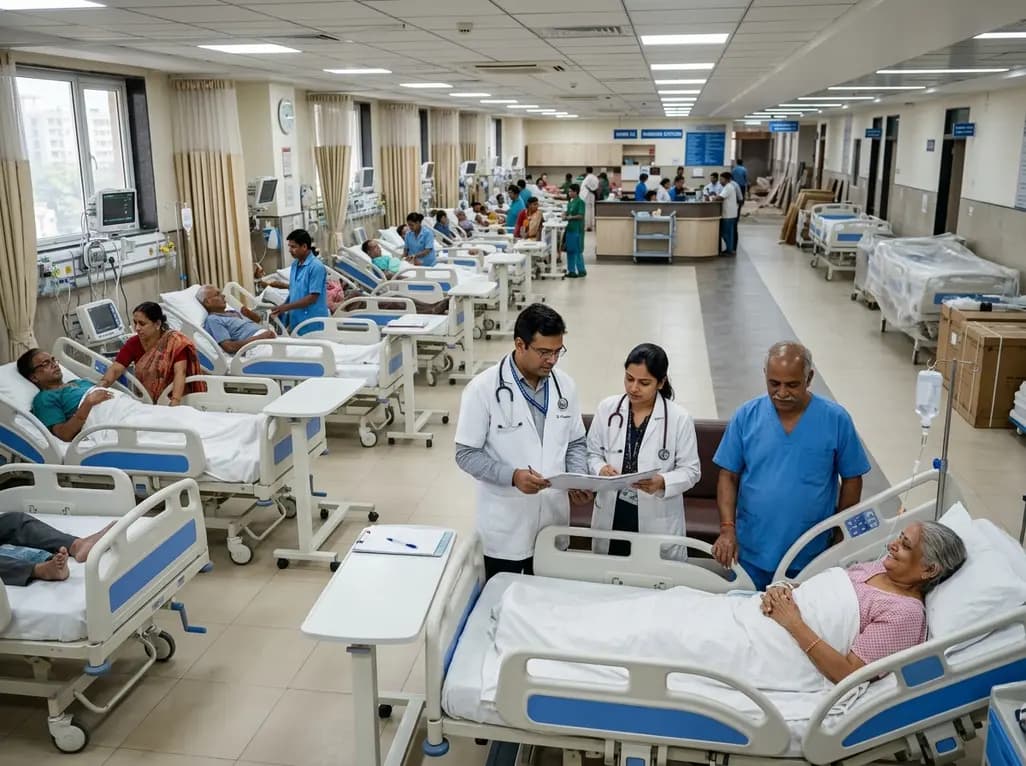
The India healthcare services outlook demonstrates remarkable resilience and sustained growth momentum across hospital networks and diagnostic chains. Institutional equity analysts report substantial top-line gains driven by robust inpatient volumes, capacity expansion, and improving operational realisations. Consequently, leading corporate hospital operators have posted impressive double-digit revenue growth. Although initial capital expenditure and new facility gestation periods temporarily compress operating margins, rising occupancy rates continue to bolster the industry's underlying financial health.
During the first quarter of the fiscal year, premier hospital chains recorded an aggregate twenty-one percent year-on-year revenue increase. Furthermore, operating earnings before interest, taxes, depreciation, and amortisation expanded by twenty-two percent. This financial performance reflects a structural transition toward institutionalised tertiary and quaternary medical care across urban and semi-urban clusters. Major healthcare systems have successfully converted growing outpatient footfalls into stable inpatient admissions, thereby maximizing bed utilisation rates.
Leading hospital brands have demonstrated particularly robust financial trajectories. For instance, Apollo Hospitals achieved a hospital revenue increase of twenty-two percent, while Aster DM Healthcare and Medanta recorded gains of twenty-two percent and twenty-seven percent, respectively. Similarly, Rainbow Children's Medicare registered an impressive thirty-three percent growth. Notably, Krishna Institute of Medical Sciences posted a thirty-five percent surge, propelled by aggressive facility ramp-ups across Maharashtra, Kerala, and Karnataka. These figures underscore the robust demand for advanced, multi-specialty clinical infrastructure throughout the country.
To address the persistent deficit in hospital infrastructure, leading healthcare providers are rapidly expanding their footprint. Recent sector evaluations indicate that operational beds across covered hospital networks grew by fifteen percent year-on-year, while total capacity beds rose by sixteen percent. However, these aggressive additions carry inherent financial trade-offs. The initial gestation period of newly commissioned facilities incurs substantial pre-operating costs, high clinician recruitment expenses, and transitional overheads.
Consequently, the aggregate hospital operating margin remained broadly flat at twenty-three percent. Nevertheless, industry analysts emphasize that this margin compression is purely transitory. As new regional medical centers attract patient volume, fixed cost absorption will accelerate naturally. Therefore, hospital networks will likely experience notable margin expansion as bed occupancy stabilizes above sixty-five to seventy percent over the next few quarters.
Average revenue per occupied bed, a key industry efficiency metric, rose between five and fourteen percent across major providers. This growth stems from an evolving case mix that prioritizes complex, high-acuity therapeutic interventions. Hospitals are increasingly focusing on specialized domains such as cardiac sciences, oncology, neurosciences, gastrointestinal surgery, and organ transplantation. Because these clinical subspecialties require advanced technology, intensive care monitoring, and surgical precision, they yield higher financial realisations per patient day.
In addition, healthcare providers have successfully optimized their operational efficiency by reducing the average length of stay. By deploying minimally invasive surgical modalities, enhanced recovery protocols, and streamlined discharge pathways, clinicians expedite patient recovery safely. Thus, beds turn over more rapidly, enabling hospitals to accommodate higher procedural volumes without expanding physical capacity proportionally. This balance of clinical excellence and operational discipline protects underlying institutional cash flows.
Alongside tertiary hospital care, India's organised diagnostic sector has delivered outstanding performance. Diagnostic companies registered eighteen percent sales growth and twenty-nine percent earnings expansion. This surge reflects sustained business-to-consumer traction, broadening routine wellness testing, and wider adoption of specialized genomic and molecular pathology assays. Organised chains continue to capture substantial market share from fragmented, standalone laboratories by offering superior accuracy, digital reporting, and convenient home sample collection.
Prominent diagnostic operators have capitalized on these favorable market tailwinds effectively. Dr. Lal PathLabs reported nineteen percent sales growth, while Metropolis Healthcare recorded seventeen percent expansion with sixteen percent organic growth. Furthermore, diagnostic chains are actively penetrating Tier-2 and Tier-3 cities through regional reference laboratories and localized collection hubs. As preventative health screenings become standard clinical practice, diagnostic volume will remain a vital growth engine for Indian healthcare.
The convergence of bed expansion, diagnostic proliferation, and steady pricing power presents valuable opportunities for clinical leaders and healthcare administrators. Expanding private insurance coverage and government health protection schemes continue to convert out-of-pocket healthcare expenses into formal institutional treatments. Consequently, clinical departments must align operational capacity with clinical quality to meet rising expectations.
Moreover, modern healthcare systems must prioritize integrated clinical pathways, interdisciplinary coordination, and digital health records. By investing in scalable medical technologies and maintaining strict clinical governance, hospitals can ensure sustainable clinical outcomes alongside robust operational returns. As the sector matures, institutions that successfully balance compassionate clinical care with disciplined financial stewardship will dominate India's rapidly expanding medical delivery ecosystem.
Q1: What factors are currently driving the Indian healthcare services sector's revenue growth?
The sector's growth is driven by rising patient footfalls, aggressive bed capacity expansions, improved operational realisations, and steady growth in average revenue per occupied bed. Furthermore, widening health insurance penetration and high-acuity tertiary care demand contribute significantly to revenue momentum.
Q2: Why are hospital operating margins temporarily flat despite strong sales expansion?
Operating margins remain rangebound because rapid bed additions generate upfront costs, clinician onboarding expenses, and early-stage operating losses at newly commissioned facilities. However, analysts expect these margin pressures to ease as bed occupancy rates increase across newer centers.
Q3: How are diagnostic companies performing compared to tertiary hospital networks?
Diagnostic chains are performing robustly, posting eighteen percent sales growth and twenty-nine percent earnings growth. This performance is supported by strong direct-to-consumer demand, routine preventative health checkups, expanded digital logistics, and increased adoption of advanced molecular pathology testing.
Disclaimer: This content is for informational and educational purposes only. It does not constitute medical advice or replace professional judgment. Refer to the latest local and national guidelines for clinical practice.
References

Read summarized clinical updates, watch expert medical content, and earn CME certifications right from your smartphone.
Open your smartphone camera to scan and install.





India's healthcare sector is witnessing rapid expansion driven by aggressive bed capacity additions, strong patient volumes, and rising ARPOB. While new facility ramp-up costs keep near-term margins steady, operational maturity and expanding diagnostic networks promise sustained long-term financial growth.
last month

Explore the therapeutic promise of TLR7 and TLR8 inhibitors in managing systemic lupus erythematosus and monogenic autoimmune diseases. Learn how targeting endolysosomal single-stranded RNA sensing and regulatory checkpoints like UNC93B1 and PLD4 offers precision treatment without broad immunosuppression.
Today

A pharmacometric and machine learning study reveals that specific vaginal bacteria alter cervical antiretroviral exposure, highlighting the need for precision HIV PrEP strategies.
Today
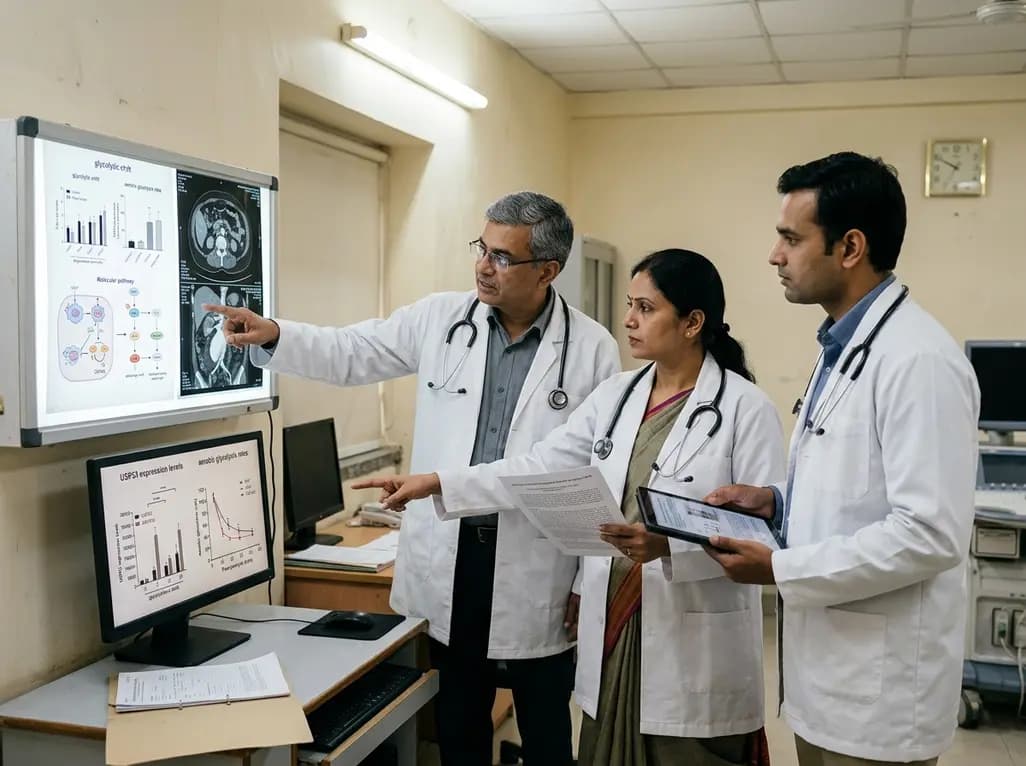
Abdominal aortic aneurysm rupture remains a catastrophic vascular emergency. Groundbreaking research reveals that USP53 accelerates aneurysm progression by reprogramming smooth muscle cell metabolism toward aerobic glycolysis, highlighting a promising target beyond conventional diameter-based surveillance.
Today
A breakthrough study leverages natural language processing to accurately identify incident medication-related osteonecrosis of the jaw and track antiresorptive drug holidays from clinical narratives in electronic health records, advancing osteoporosis pharmacovigilance and dental safety.
Today
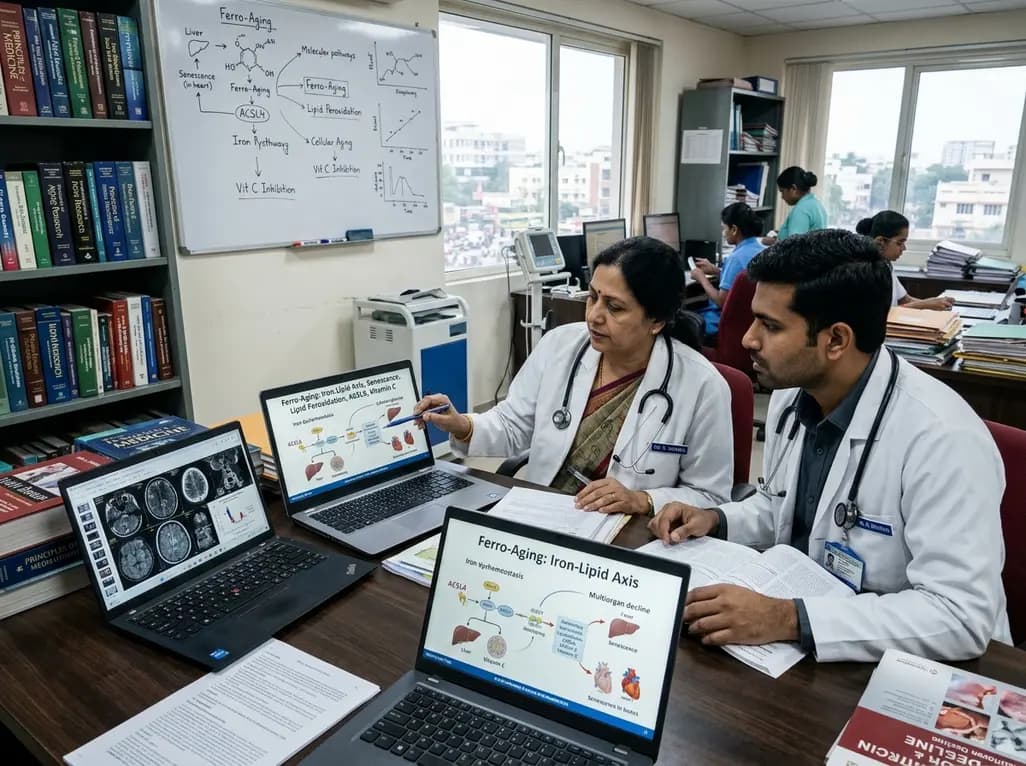
Recent research defines ferro-aging as a conserved iron-lipid axis driving organ decline across primates. Age-related iron dyshomeostasis stimulates ACSL4-mediated lipid peroxidation, promoting cellular senescence. Notably, vitamin C directly inhibits ACSL4, suppressing phospholipid oxidation and multi-organ decay.
Today
