.webp&w=384&q=75)

Loading, please wait...
Loading, please wait...
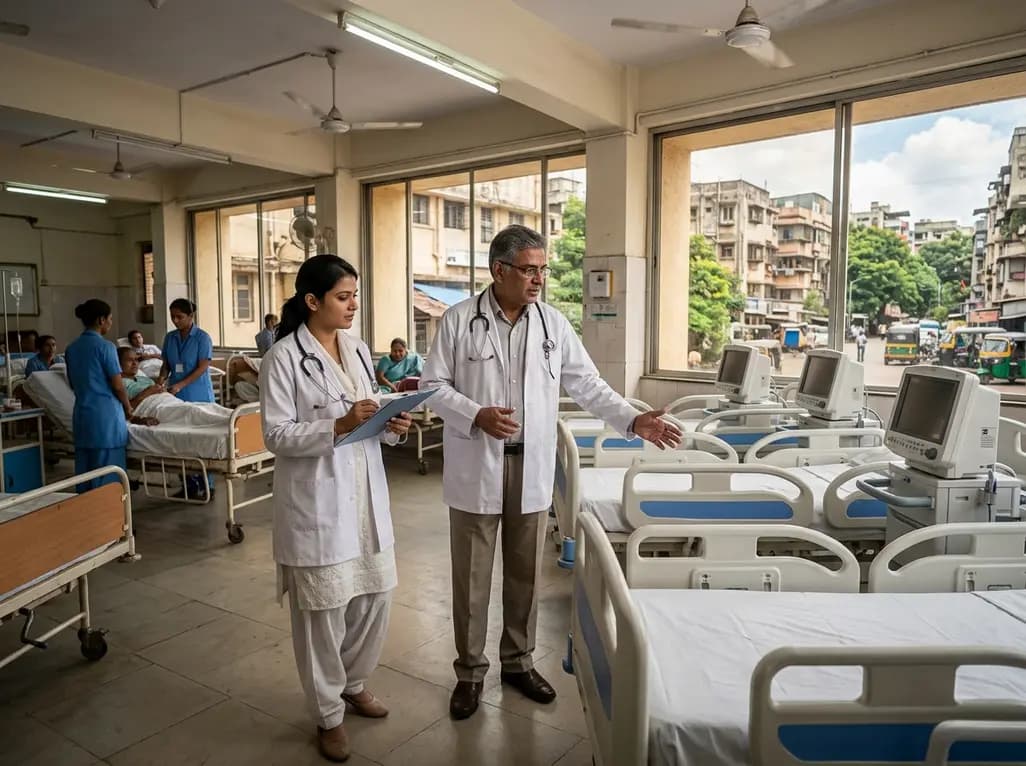
The Central Government of India is preparing a major healthcare compliance overhaul to reduce regulatory burdens on hospital administrators and clinical establishments. Furthermore, this ambitious reform package aims to simplify licensing processes, eliminate redundant annual clearances, and decriminalize non-safety procedural violations. Consequently, policymakers intend to unlock private capital and accelerate hospital expansion in tier-2 and tier-3 cities across the nation.
Currently, running a medical facility in India requires navigating a complex web of central, state, and municipal regulations. Hospital administrators must comply with more than 600 distinct legal obligations across nearly 100 separate licenses and permits. Additionally, healthcare facilities must manage roughly 950 recurring annual compliance requirements simply to maintain standard clinical operations. Consequently, this heavy administrative load consumes immense time and financial resources that could otherwise support clinical innovation and patient care.
Because health remains a state subject under the Indian Constitution, multi-state hospital chains face duplicate regulatory hurdles in every new jurisdiction. Furthermore, varying state-level rules complicate corporate expansion strategies for emerging clinical networks. Healthcare practitioners must register with their respective state medical councils before their credentials can be verified on national platforms. Therefore, these regulatory bottlenecks significantly slow down facility rollouts and increase capital expenditures for new hospitals.
Moreover, overlapping departmental jurisdictions create extended approval timelines and arbitrary requirements that elevate project costs. Small and medium clinical establishments in regional areas suffer most from these operational hurdles. Consequently, many private healthcare providers hesitate to build new facilities outside metropolitan hubs, directly worsening regional health disparities across India.
The Central Government plans to release a detailed consultation paper outlining sweeping reform measures for hospital administration. Specifically, this upcoming consultation paper will target the elimination of overlapping permits while introducing uniform guidelines across states. Furthermore, the proposed framework integrates regulatory workflows into the National Single Window System to simplify hospital operations. By digitizing regulatory submissions, government authorities aim to establish complete operational transparency and reduce administrative delays.
Another central pillar of this healthcare compliance overhaul is the decriminalization of non-safety regulatory violations. Historically, minor documentation errors or procedural delays could trigger severe criminal penalties for healthcare providers. Under the proposed framework, administrative fines will replace criminal prosecution for non-safety infractions. Consequently, this policy shift offers much-needed legal clarity, protecting healthcare administrators from disproportionate litigation while preserving rigorous standards for patient safety.
Additionally, streamlined licensing will enable hospital management to focus on clinical excellence rather than administrative bureaucracy. Standardized approval workflows across districts will allow healthcare chains to deploy standardized operating procedures nationwide. Consequently, these structural improvements will lower operational risks and create a far more predictable investment environment for healthcare operators expanding into secondary markets.
Healthcare infrastructure in India remains heavily concentrated in primary metropolitan centers, creating stark regional disparities. For example, major metropolitan cities boast an estimated 2.7 to 3.0 hospital beds per 1,000 residents. In contrast, tier-2 and tier-3 towns manage with only 0.8 to 1.2 beds per 1,000 individuals. Additionally, nearly 65% of the national population resides in smaller urban hubs and rural regions. However, advanced tertiary and quaternary medical care remains heavily centralized in tier-1 metropolises.
As a result of this geographic imbalance, millions of regional patients travel long distances for specialized medical consultations. Consequently, families endure severe financial burdens, travel fatigue, and dangerous delays in critical medical care. Expanding modern multi-specialty hospitals in smaller towns will significantly ease the burden on overburdened metropolitan centers. Furthermore, establishing accessible regional medical facilities ensures that patients receive timely care within their local communities.
Moreover, localized secondary and tertiary care facilities improve overall public health resilience and chronic disease management. Early diagnosis of cardiovascular diseases, diabetes, and oncology conditions becomes far more accessible to regional residents. Therefore, bridging the bed density gap is essential for building an equitable healthcare ecosystem across all Indian states.
Beyond hospital facility licensing, the medical device sector faces distinct regulatory hurdles that affect equipment procurement. Currently, medical devices are regulated under the Drugs and Cosmetics Act of 1940 despite parliamentary recommendations for separate legislation. Industry representatives from the Association of Indian Medical Device Industry (AiMeD) highlight that overlapping approvals significantly elevate medical device costs. Therefore, industry leaders advocate for risk-proportionate regulations that balance clinical safety with business flexibility.
Parliamentary committees have repeatedly recommended creating a dedicated regulatory body specifically tailored for medical technologies. Furthermore, progressive global jurisdictions maintain separate statutory frameworks to evaluate medical devices rather than treating them like pharmaceutical drugs. Simplifying device approval processes will significantly reduce the capital costs associated with acquiring advanced diagnostic equipment. Consequently, hospital administrators in smaller cities can invest in modern technology without facing prohibitive expenses.
Additionally, risk-based classifications help streamline compliance for low and moderate-risk diagnostic tools. Faster approval timelines ensure that cutting-edge medical technologies reach regional hospitals without unnecessary delays. Consequently, regional healthcare providers can offer high-precision diagnostic and therapeutic procedures that rival metro-based clinical centers.
Expanding high-quality medical services into smaller cities requires overcoming substantial financial and human resource barriers. Private healthcare providers frequently encounter high capital costs when developing greenfield hospital projects in non-metropolitan areas. Furthermore, recruiting and retaining specialized medical professionals, including cardiologists and oncologists, remains difficult outside major metropolitan centers. Many clinical specialists prefer urban practice environments due to established professional networks and higher patient volumes.
However, reducing compliance burdens dramatically improves the financial sustainability of tier-2 hospital ventures. Lower administrative overhead allows healthcare networks to allocate more funds toward competitive compensation packages for specialists. Additionally, savings from streamlined regulatory processes can be reinvested into advanced clinical infrastructure and staff training programs. Consequently, working in regional hospitals becomes far more attractive to skilled physicians and nursing professionals.
Furthermore, predictable regulatory environments encourage private equity firms and institutional investors to fund regional hospital projects. Public-private partnerships can flourish when bureaucratic bottlenecks and policy uncertainties are systematically removed. Ultimately, these regulatory reforms will foster self-sustaining clinical ecosystems that retain talented health professionals and deliver superior outcomes.
Q1: What are the main goals of the proposed healthcare compliance overhaul in India?
The primary goals of the overhaul are reducing administrative compliance burdens on medical facilities, eliminating redundant licenses, and decriminalizing non-safety procedural violations. Furthermore, the government aims to integrate approvals into the National Single Window System and establish uniform state guidelines. Ultimately, these regulatory changes intend to attract private investment and accelerate the development of world-class hospital infrastructure in tier-2 and tier-3 cities across India.
Q2: How will these regulatory reforms benefit tier-2 and tier-3 healthcare facilities?
Tier-2 and tier-3 hospitals will benefit from reduced operational costs, faster licensing approvals, and lower administrative complexity. Additionally, decriminalizing minor procedural errors protects hospital management from unnecessary legal disputes and administrative litigation. By establishing a business-friendly regulatory framework, the reforms encourage private investors to fund regional hospital projects while helping clinical establishments recruit and retain skilled medical specialists.
Q3: Why is medical device regulation reform important for regional healthcare expansion?
Medical devices are currently regulated under pharmaceutical laws, creating overlapping approvals and increasing procurement costs for hospitals. Industry leaders recommend risk-proportionate, separate legislation for medical devices to ensure clinical safety while streamlining market access. Simplifying device regulations lowers capital expenditures for hospital chains, enabling regional facilities to acquire advanced diagnostic and therapeutic technologies much more affordably and quickly.
Disclaimer: This content is for informational and educational purposes only. It does not constitute medical advice or replace professional judgment. Refer to the latest local and national guidelines for clinical practice.
References

Read summarized clinical updates, watch expert medical content, and earn CME certifications right from your smartphone.
Open your smartphone camera to scan and install.





The Centre is preparing a major regulatory shift to streamline hospital licensing, eliminate redundant annual permits, and decriminalize minor procedural lapses. This initiative aims to accelerate private healthcare investments and improve hospital bed density in underserved tier-2 and tier-3 cities across India.
Today

The Food Safety and Standards Authority of India (FSSAI) has rejected industry appeals and directed beverage manufacturers to remove the term 'energy drink' and unapproved therapeutic claims within 90 days. This regulation aims to curb misbranding and ensure clear labeling across commercial food products.
Today

Johnson & Johnson announced a $5.5 billion settlement to resolve nearly 69,000 lawsuits alleging its talc-based baby powder caused ovarian cancer. This comprehensive deal covers 99.75% of active claims. Read about the legal strategy, scientific evidence on talc exposure, and clinical counseling for patients.
Today

A cross-sectional study evaluates post-intensive care syndrome in cardiac patients 2-4 weeks post-ICU discharge, highlighting cognitive, psychological, and functional impairments and the need for structured multidisciplinary rehabilitation.
4 days back
Anterior cruciate ligament reconstruction failure lacks uniform definition. A narrative review proposes an integrative framework incorporating objective and subjective instability, persistent pain, restricted motion, graft rupture, and secondary meniscal injury to standardize clinical reporting.
3 days back
A UK Biobank study of 471,540 participants reveals that metabolic syndrome increases incident gastric cancer risk by 36% (HR=1.36). A positive trend was observed with accumulating metabolic components, with waist circumference showing the strongest association, highlighting modifiable risk targets.
4 days back
