

Loading, please wait...
Loading, please wait...
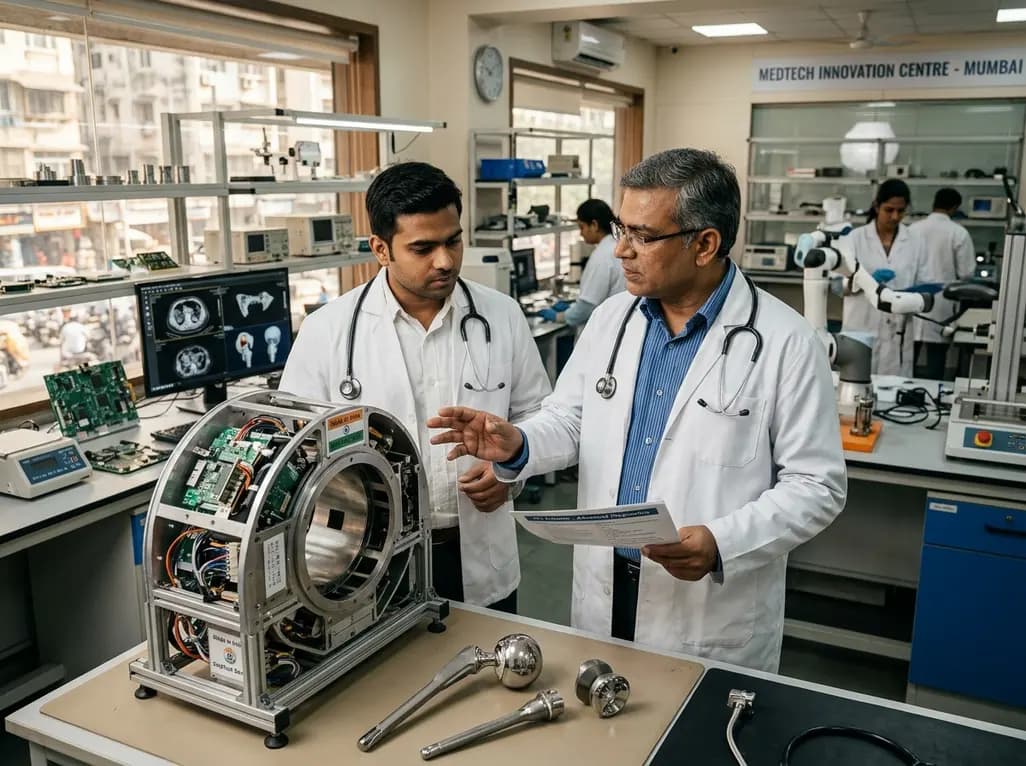
The Department of Pharmaceuticals has announced a major policy reboot by extending the medical device PLI scheme through fiscal year 2035–2036. This ambitious expansion, termed PLI-MD 2.0, utilizes an unspent outlay of approximately Rs 2,700 crore to fortify indigenous manufacturing. Consequently, policymakers seek to transform India from a device-importing destination into an autonomous global medtech hub. Furthermore, the updated scheme dismantles legacy bureaucratic hurdles that previously hindered small and medium enterprises. As a result, healthcare institutions and clinicians across India anticipate broader access to domestically produced diagnostic and therapeutic technologies.
Initially launched during fiscal year 2020–2021, the first phase stimulated significant production in basic medtech equipment. For instance, the original policy supported domestic manufacturing of over 60 high-end devices and critical assemblies. These products included computed tomography scanners, 1.5T magnetic resonance imaging units, and mammography suites. Additionally, the initiative catalyzed local output of linear accelerators, cardiac catheterization laboratories, dialyzers, and orthopedic implants. Overall, the program generated production valued at more than Rs 16,000 crore across multiple manufacturing clusters.
However, complex administrative barriers restricted wide industrial participation during that initial phase. Many eligible manufacturers struggled to satisfy strict baseline metrics and rigid revenue milestones. Consequently, nearly 79 percent of the initial budgetary allocation remained unutilized by early 2026. Therefore, the Ministry of Chemicals and Fertilizers restructured the entire regulatory architecture. Under the new PLI-MD 2.0 guidelines, the department eliminated the rigid minimum sales threshold required for incentive claims. Moreover, authorities substantially trimmed minimum capital expenditure requirements. In addition, officials established an open-ended application window accessible through an intuitive digital portal. These decisive policy revisions dramatically lower entry barriers for prospective investors and existing device fabricators alike.
Previously, MedTech firms faced dual financial prerequisites that severely constrained agile market entry. Applicants had to commit substantial initial capital investments while simultaneously guaranteeing rapid annual sales spikes. Consequently, many innovative domestic manufacturers could not fulfill these burdensome criteria during volatile supply periods. Thus, promising research and development programs frequently stalled before achieving commercial scale and regulatory clearance.
Under the restructured framework, the government completely discontinued the punitive minimum sales threshold requirement. Furthermore, authorities trimmed initial capital investment benchmarks to encourage wider participation from specialized medium enterprises. Applicants now receive a supportive three-year incubation timeline to establish their advanced production facilities without facing premature penalties. In addition, the revised rules allow companies to submit multiple applications across distinct target segments. Therefore, agile manufacturers can diversify product development across both hardware instruments and disposable consumables simultaneously. Industry leaders have warmly welcomed these pragmatic adjustments. Rajiv Nath from the Association of Indian Medical Device Industry highlighted that these reforms strengthen self-reliance. Similarly, Poly Medicure leadership emphasized that regulatory simplification will accelerate capital inflows and operational flexibility. Ultimately, these measures align regulatory frameworks directly with modern commercial manufacturing realities.
Historically, India has relied on foreign imports for more than 75 percent of its high-tech medical machinery. Specifically, tertiary hospitals frequently depend on imported components for advanced radiological imaging and nuclear medicine suites. To solve this vulnerability, PLI-MD 2.0 intentionally redirects fiscal subsidies toward complex high-end equipment. The scheme targets domestic manufacturing of 3T magnetic resonance imaging systems, advanced PET-CT scanners, and high-throughput IVD analyzers. Additionally, the guidelines incentivize indigenous production of specialized ultrasound consoles and ergonomic probes.
Moreover, the revamped scheme prioritizes the production of critical sub-assemblies and raw technological inputs. For example, local facilities will receive enhanced incentives to produce specialized X-ray vacuum tubes and digital flat-panel detectors. Industry experts note that component supply chains represent the true backbone of sustainable healthcare ecosystems. Consequently, establishing domestic component manufacturing prevents global supply bottlenecks during regional geopolitical disruptions. Under the revised incentive matrix, component manufacturers receive an attractive average incentive of approximately 9 percent. Meanwhile, assembled finished equipment attracts around 6 percent, and basic medical consumables receive roughly 5 percent. Thus, the restructured framework actively cultivates comprehensive, end-to-end industrial depth across India.
From a clinician's viewpoint, the expansion of domestic MedTech manufacturing carries profound practical benefits. For many years, public institutions and rural hospitals encountered prohibitive procurement costs for imported diagnostic machinery. Consequently, patients often traveled hundreds of kilometers to metropolitan tertiary centers simply to undergo advanced magnetic resonance scans. Local manufacturing of high-throughput analyzers and advanced imaging units will substantially lower capital acquisition costs. Therefore, diagnostic laboratories can expand testing capabilities within Tier-2 and Tier-3 healthcare centers.
Furthermore, domestic component manufacturing directly addresses the chronic problem of delayed equipment maintenance and repair. Currently, biomedical engineers often wait weeks or months for imported spare parts to repair malfunctioning linear accelerators or catheterization systems. This operational downtime delays critical oncological treatments and emergency cardiovascular interventions. Conversely, local component fabrication guarantees rapid access to essential replacement assemblies. As a result, hospital administrators can achieve higher equipment uptime and ensure continuous patient throughput. In addition, lower maintenance overhead allows hospital networks to offer diagnostic scans at more affordable price points. Ultimately, indigenous production enhances clinical workflow efficiency and widens patient access to timely, high-quality healthcare interventions.
While financial incentives provide vital industrial momentum, lasting technological independence demands a comprehensive supportive policy ecosystem. Notably, industry leaders emphasize that tariff rationalization must accompany domestic production subsidies to discourage predatory foreign dumping. In addition, healthcare authorities must enact a modernized, dedicated medical device legislative framework. Standardizing regulatory approvals through transparent mechanisms will inspire greater global investor confidence and spur domestic clinical trials.
Furthermore, public procurement systems should offer preferential evaluation criteria to genuine domestic manufacturers over overseas assemblers. Such policy harmony will ensure sustainable market demand for newly commissioned indigenous factories across various healthcare sectors. Additionally, domestic manufacturers must invest heavily in collaborative clinical research with medical colleges and engineering institutes. Clinicians can provide invaluable feedback regarding ergonomic design, intuitive software interfaces, and specific tropical diagnostic challenges. By uniting industrial capital, academic research, and supportive central policy, India can build a globally competitive MedTech corridor. Therefore, the extension through 2036 establishes a reliable decade-long runway for sustained technological advancement, industrial self-sufficiency, and clinical healthcare resilience.
Q1: What are the primary structural modifications introduced under the revised PLI-MD 2.0 guidelines?
The updated guidelines eliminate the mandatory minimum sales threshold that previously hindered incentive claims. Additionally, the government reduced the baseline capital investment requirement and granted manufacturers three years to commission operational facilities. Furthermore, applicants can submit multiple proposals across distinct medtech segments through a streamlined digital portal, fostering greater operational flexibility for both large enterprises and growing manufacturers.
Q2: Which specific advanced medical devices and critical components are targeted under the extended scheme?
PLI-MD 2.0 explicitly prioritizes sophisticated medical hardware currently imported into India, such as 3T MRI units, advanced PET-CT scanners, and high-throughput IVD analyzers. In addition, the scheme strongly incentivizes the fabrication of critical core components, including specialized X-ray tubes, flat-panel digital detectors, ultrasound consoles, advanced ultrasound probes, and vital cardio-respiratory assemblies to ensure domestic self-reliance.
Q3: How does domestic manufacturing of high-end medical equipment benefit clinical healthcare delivery in India?
Domestic manufacturing dramatically reduces equipment acquisition capital costs for hospitals and diagnostic laboratories across rural and urban centers. Moreover, ready access to locally fabricated replacement parts mitigates prolonged equipment downtime for critical systems like linear accelerators and cath labs. Consequently, diagnostic scans become more accessible and affordable, directly improving clinical turnaround times and overall patient outcomes nationwide.
Disclaimer: This content is for informational and educational purposes only. It does not constitute medical advice or replace professional judgment. Refer to the latest local and national guidelines for clinical practice.
References

Read summarized clinical updates, watch expert medical content, and earn CME certifications right from your smartphone.
Open your smartphone camera to scan and install.





The Centre has revamped the incentive program for medical devices until 2036 with a Rs 2,700 crore outlay. By dropping minimum sales thresholds and lowering capital expenditure barriers, the initiative supports local manufacturing of advanced imaging tools, critical implants, and diagnostic systems.
Today

A large retrospective cohort study demonstrates that explainable machine learning models, notably XGBoost, accurately predict hospital admission at emergency triage. By analyzing routine triage parameters, hospitals can streamline bed allocation, decrease boarding times, and alleviate acute care overcrowding.
Today

A new quality-improvement initiative reveals that universal maternal mental health screening in the NICU increased screening rates from 29.5% to 95.0%, with nearly 60% of screened mothers requiring psychosocial referrals, highlighting the urgent need for embedded mental health resources.
Today

The Department of Pharmaceuticals has extended the medical devices PLI scheme to 2035-36 with a Rs 2,700 crore outlay. Featuring relaxed investment barriers and eliminated sales thresholds, the revised framework targets deep manufacturing, high-end diagnostics, critical MedTech components, and supply resilience.
Today
A metabolomic study reveals that aging delays glutathione synthesis and gamma-glutamylcysteine accumulation following muscle injury. Although precursor supplementation targets this enzymatic bottleneck, in vitro tests show no immediate effect on myogenesis, highlighting the complexity of muscle repair in older adults.
Today

A systematic review evaluates psychological interventions for smoking cessation in diabetes, showing short-term success but highlighting challenges in long-term abstinence.
Today
