.webp&w=384&q=75)

Loading, please wait...
Loading, please wait...
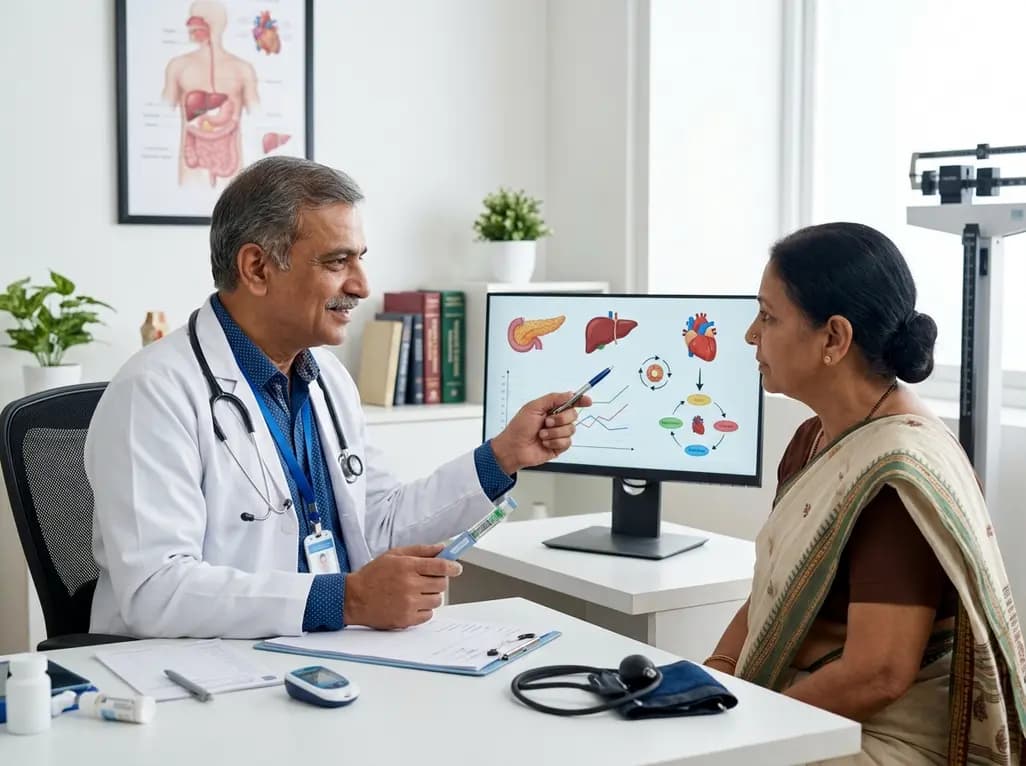
Type 2 diabetes (T2D) remains a significant health concern globally, especially within the Indian population. Because the disease prevalence is rising, clinicians are focusing on therapies that address both insulin resistance and impaired secretion. Incretin-based therapies, including glucagon-like peptide 1 (GLP-1) and glucose-dependent insulinotropic polypeptide (GIP) receptor agonists, have emerged as vital tools. These medications not only regulate glucose but also offer remarkable benefits for weight management. Consequently, they are now central to modern diabetes care strategies.
Modern research highlights that these agents offer more than just glycemic control. Additionally, they provide significant cardiovascular protection and facilitate substantial weight reduction. While the first GLP-1 receptor agonist was approved in 2005, the field has evolved rapidly. Today, clinicians can prescribe once-weekly injectables or daily oral formulations. Furthermore, dual agonists that target both GLP-1 and GIP receptors demonstrate superior metabolic outcomes compared to older treatments. As a result, patients at high cardiovascular risk can achieve better long-term health outcomes.
Despite their efficacy, these therapies frequently cause gastrointestinal side effects such as nausea or constipation. However, doctors can easily mitigate these issues through slow dose titration and comprehensive patient counseling. Encouraging smaller meals and proper hydration also helps improve patient adherence. Meanwhile, ongoing trials into triple-receptor agonists suggest even greater weight-loss potential in the future. Nevertheless, ensuring wider access to these advanced treatments remains a priority for healthcare systems.
Dual agonists provide enhanced glycemic control and more significant weight loss than single GLP-1 receptor agonists by utilizing synergistic hormonal pathways.
Gradual dose escalation over several weeks is the most effective strategy. Clinicians should also advise patients to eat smaller portions and avoid high-fat foods during drug initiation.
Disclaimer: This content is for informational and educational purposes only. It does not constitute medical advice or a professional relationship. Always seek the advice of a qualified healthcare provider for any medical condition or treatment. Refer to the latest local and national guidelines for clinical practice.
References
Min E et al. Incretins for Type 2 Diabetes. Can J Physiol Pharmacol. 2026 Jun 06. doi: 10.1139/cjpp-2025-0142. PMID: 42250284.
Gao X et al. Cardiovascular Outcomes and Safety of GLP-1 Receptor Agonists in Elderly Patients with Type 2 Diabetes. PubMed. 2026 Mar 23. doi: 10.1111/jdi.14231.
Refaeli R et al. Gastrointestinal side effects of incretin-based Obesity Management Medications. Int J Obes. 2025 Aug 28. doi: 10.1038/s41366-025-01887-2.

Read summarized clinical updates, watch expert medical content, and earn CME certifications right from your smartphone.
Open your smartphone camera to scan and install.





Discover how GLP-1 and GIP agonists transform T2D management by improving glycemia, aiding weight loss, and lowering cardiovascular risks....
3 months ago

A study of over 340,000 Medicare beneficiaries shows that hospital artificial intelligence tools, particularly risk prediction algorithms, significantly lower readmissions and acute care utilization in older adults with Alzheimer's disease and dementia without driving up total healthcare spending.
Today

A comprehensive meta-analysis of over 278,000 women demonstrates that maternal atopic dermatitis significantly increases risks of premature rupture of membranes and low birth weight. Discover essential clinical insights on disease mechanisms, serial antenatal growth monitoring, and safe therapeutic interventions.
Today

Over 60 international public health researchers have advised FSSAI to mandate front-of-pack warning labels for any packaged product high in even one critical nutrient: sugar, saturated fat, or sodium. This reform counters phased rollouts to accelerate consumer protection and address India's chronic disease burden.
Today

India's premier scientific bodies have joined the Armed Forces Medical Services to solve unique physiological and operational challenges faced by soldiers. The national collaboration covers combat casualty care, artificial intelligence diagnostics, bionic prosthetics, and extreme-environment physiological resilience.
Today

A cross-sectional study reveals that elevated METS-IR is independently associated with higher myopia odds in adolescents, showing biological synergy with obesity and highlighting the need for metabolic screening in pediatric eye care.
Yesterday
