

Loading, please wait...
Loading, please wait...

In modern athletic medicine, distinguishing true doping from accidental contamination presents an unprecedented clinical and regulatory dilemma. Technological advances allow anti-doping laboratories to detect trace xenobiotics at picogram and femtogram concentrations. Furthermore, these heightened analytical capabilities substantially increase the probability of detecting minute substance residues resulting from non-performance-enhancing environmental contact. Consequently, this complex reality places athletes at risk of inadvertent doping in sports, requiring physicians and sports medicine specialists to thoroughly understand contamination vectors and risk assessment strategies.
Modern chromatographic and mass spectrometric assays exhibit extraordinary detection power. Laboratorians can now identify banned substances in urine or blood down to parts-per-trillion levels. However, this profound analytical capability introduces significant interpretive challenges for clinical toxicologists and results management authorities. In past decades, testing methods only identified pharmacological quantities capable of conferring an ergogenic advantage. In contrast, high-resolution instruments readily identify infinitesimal molecular remnants.
Furthermore, these trace concentrations frequently bear no functional relationship to athletic performance enhancement. When an athlete provides a sample with trace metabolites, distinguishing between an intentional micro-dose and accidental environmental contact becomes exceptionally challenging. Strict liability rules under the World Anti-Doping Code place the legal burden on the athlete to prove how the compound entered their system. Therefore, clinicians working with competitive athletes must recognize that even minuscule trace residues can trigger an adverse analytical finding. Accordingly, understanding analytical thresholds and pharmacokinetic excretion patterns helps medical practitioners evaluate laboratory results properly.
Dietary supplements represent the most prevalent source of accidental substance ingestion in athletic cohorts. Many sports persons consume multivitamins, protein powders, pre-workout formulations, and herbal remedies to support intense training regimens. However, supplement manufacturing practices across the globe vary widely regarding quality assurance and safety standards. For example, shared production lines frequently introduce cross-contamination with banned androgens, selective androgen receptor modulators, and stimulants.
Moreover, unscrupulous manufacturers deliberately adulterate products with unlisted synthetic analogues to produce noticeable physiological benefits. Even when athletes scrupulously inspect ingredient labels, undeclared banned substances remain invisible to the naked eye. Consequently, in international and domestic markets, over-the-counter dietary formulations often lack rigorous batch testing. As a result, athletes unknowingly ingest prohibited compounds that trigger regulatory sanctions. Therefore, sports physicians and general practitioners must counsel athletes to avoid multi-ingredient, proprietary blends. Instead, clinicians should encourage a "food first" nutritional philosophy. Additionally, when athletes require specific supplementation, physicians should recommend only third-party certified products to minimize chemical exposure risks.
Beyond dietary supplements, conventional pharmaceuticals and environmental exposure routes present persistent contamination hazards. For instance, pharmaceutical compounding errors or shared commercial tableting equipment can introduce trace diuretics or anabolic agents into standard prescription drugs. Additionally, topical formulations and transdermal preparations utilized by household contacts can transfer prohibited compounds through simple skin-to-skin touch.
Furthermore, food supply contamination remains a documented vector for inadvertent exposure. In certain global regions, agricultural industries utilize beta-2 agonists like clenbuterol or ractopamine to accelerate livestock growth. Consequently, when athletes consume meat sourced from these regions, gastrointestinal absorption leads to detectable urinary excretion. Similarly, consumption of food products containing poppy seeds can lead to urinary morphine levels exceeding testing cutoffs. Clinicians must recognize these environmental pathways during clinical assessments. Therefore, when an athlete develops unexpected analytical results, reviewing recent travel histories, dietary habits, household exposures, and commercial meat sourcing provides vital forensic clues. Ultimately, this rigorous epidemiological approach helps sports authorities differentiate unintentional contamination from calculated pharmacological manipulation.
Evaluating an adverse analytical finding requires a thorough physiological and pharmacokinetic risk assessment. Several host-dependent variables determine how an athlete absorbs, metabolizes, and clears prohibited molecules. Specifically, factors such as renal clearance, hydration status, urinary pH, and hepatic cytochrome enzyme polymorphisms significantly alter excretion dynamics. Consequently, two athletes who ingest the identical trace impurity may exhibit vastly different urinary drug concentrations.
Furthermore, longitudinal monitoring and athlete biological passports assist toxicologists in establishing baseline biological parameters. When an athlete tests positive for an endogenous steroid or threshold substance, experts often conduct chiral analysis or isotope ratio mass spectrometry. Indeed, these advanced analytical methods identify whether the molecule originated from synthetic chemical processes or natural physiological production. In addition, sports physicians play an essential role in documenting valid medical treatments. Maintaining detailed clinical charts, prescribing records, and formal Therapeutic Use Exemptions protects athletes from unjust sanctions. Thus, by collaborating closely with accredited anti-doping laboratories, physicians help substantiate authentic medical scenarios and inadvertent exposures.
Protecting competitive athletes requires proactive multidisciplinary risk management across sports organizations and clinical practices. Sports physicians, general practitioners, and dietitians must implement structured protocols to prevent inadvertent exposure. First, clinicians should educate athletes regarding strict liability regulations and the perils of unverified commercial products. Furthermore, physicians must audit every prescription drug, over-the-counter formulation, and topical preparation against the current Prohibited List.
Additionally, healthcare providers should establish clear documentation procedures for every administered therapy. Specifically, when an athlete requires a prohibited medication for a legitimate illness, clinicians must submit a Therapeutic Use Exemption before therapy commences. Moreover, teams should maintain retain samples of consumed supplements to allow retrospective chemical analysis if an adverse analytical finding occurs. In addition, sports organizations must work with regulatory agencies to implement harmonized minimum reporting limits for known environmental contaminants. Consequently, by combining comprehensive athlete education, cautious prescribing, third-party product verification, and transparent laboratory reporting, sports medicine professionals safeguard clean competition while preventing wrongful disciplinary action.
Modern testing laboratories utilize advanced liquid chromatography and high-resolution mass spectrometry capable of detecting picogram concentrations. While these technologies successfully catch sophisticated dopers, they also detect infinitesimal impurities from food, pharmaceuticals, and environmental transfer. Because standard anti-doping regulations apply strict liability regardless of substance concentration, these minute trace quantities frequently trigger adverse analytical findings even when the athlete gained zero performance advantage.
Clinicians must thoroughly check every active ingredient and excipient against the latest World Anti-Doping Agency Prohibited List before prescribing. If an athlete requires a prohibited compound to manage a verified medical condition, the physician must submit a timely Therapeutic Use Exemption application. Furthermore, doctors should avoid multi-ingredient elixirs, verify batch testing of supportive therapies, and document all clinical justifications meticulously in medical records.
Yes, consuming meat from regions where farmers illegally administer growth-promoting beta-agonists can trigger positive anti-doping tests. Compounds such as clenbuterol accumulate in animal muscle and organ tissues, which athletes then inadvertently ingest. Regulatory authorities now recognize clenbuterol food contamination scenarios, allowing laboratories to apply specific investigative protocols and concentration thresholds when athletes provide plausible dietary exposure evidence from high-risk travel regions.
Disclaimer: This content is for informational and educational purposes only. It is not intended to be a substitute for professional medical advice, diagnosis, or treatment. Refer to the latest local and national guidelines for clinical practice.
References

Read summarized clinical updates, watch expert medical content, and earn CME certifications right from your smartphone.
Open your smartphone camera to scan and install.





Discover how high-sensitivity testing detects trace drug residues in athletes, differentiating deliberate doping from unintentional exposure through food, supplements, and environmental contamination.
Today

A large cohort study demonstrates that fetal growth restriction in a first pregnancy raises maternal cardiovascular risk within five years postpartum, including elevated rates of heart failure, stroke, and myocardial infarction. Clinicians must initiate proactive postpartum screening and cardiovascular prevention.
Today
An NHANES analysis reveals that meeting 24-hour movement guidelines significantly lowers the odds of cardiovascular disease, obesity, hypertension, and diabetes among adults with disabilities, emphasizing the power of combined physical activity, sleep, and limited sedentary time.
Today

A paired cadaveric study compared triple and quintuple percutaneous Achilles tendon lengthening. While quintuple hemisection showed numerically greater elongation, differences were not statistically significant.
Today
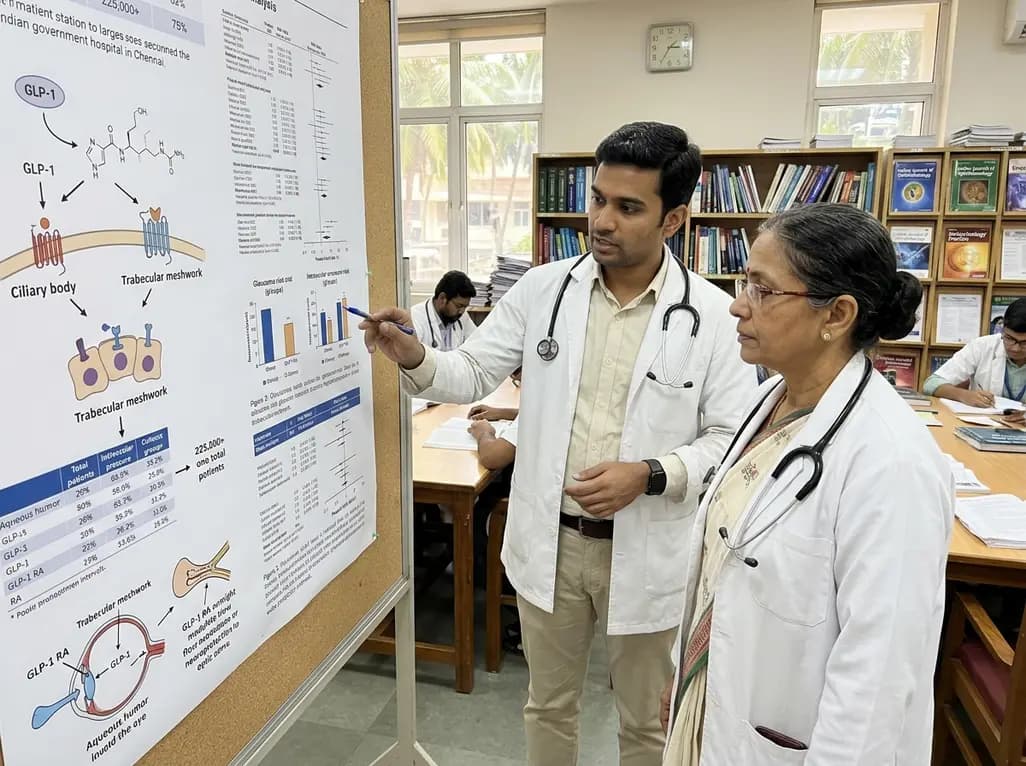
A systematic review and meta-analysis of over 225,000 patients explores whether GLP-1 receptor agonists reduce the risk of glaucoma and ocular hypertension. While pooled data show a 31% lower risk, low certainty and wide prediction intervals urge cautious optimism and further randomized trial evaluation.
Today
