.webp&w=384&q=75)

Loading, please wait...
Loading, please wait...

The application of CyTOF in orthopaedic diseases is revolutionizing our understanding of the complex immune mechanisms driving musculoskeletal (MSK) health. Historically, researchers relied on conventional flow cytometry to analyze cellular components. However, this method often faces technical hurdles like spectral overlap, which limits the depth of multidimensional characterization. Mass cytometry by time-of-flight (CyTOF) solves this issue by using metal-tagged antibodies instead of fluorescent dyes. Consequently, scientists can now measure over 40 distinct proteins per cell with exceptional precision. This high-dimensional profiling provides a granular view of the immune landscape in various inflammatory conditions.
Specifically, CyTOF offers unique advantages for analyzing the heterogeneous tissues found in joints and bones. Conventional methods frequently struggle with autofluorescence in damaged tissues, yet mass cytometry bypasses these optical limitations. Furthermore, this technology enables the identification of rare cell subsets that might remain hidden during routine analysis. Notably, a recent narrative review analyzed 22 studies covering diseases such as rheumatoid arthritis (RA), osteoarthritis (OA), and psoriatic arthritis. The findings highlight that CyTOF effectively identifies disease-specific cytokine profiles and signatures for treatment response. Moreover, these insights help clinicians move toward more personalized patient stratification strategies.
Additionally, researchers identified eight recurrent markers that appear across various musculoskeletal disorders. These markers include PD-1, ICOS, CXCR5, CXCR4, pSTAT3, TNFRII, p16INK4a, and CD180. Importantly, these specific proteins reflect shared biological pathways related to inflammation, cellular senescence, and tissue damage. Resultantly, focusing on these markers can help standardize research panels across different medical centers. Therefore, establishing an eight-marker backbone may enhance future multicenter translational studies in orthopaedic immunology. Such harmonization is essential for validating findings across diverse patient populations.
However, the acquisition of bone tissue remains a significant technical challenge for immune profiling. Current research lacks sufficient data on conditions like osteoporosis or osteonecrosis due to low immune-cell density in these samples. Future studies must address these gaps to expand the clinical utility of mass cytometry. Eventually, the broader application of this technology will likely lead to better diagnostic tools and targeted therapies. Consequently, staying informed about these high-dimensional techniques is vital for specialists in orthopaedics and rheumatology who seek to improve patient outcomes through precision medicine.
CyTOF uses metal-tagged antibodies rather than fluorochromes, which eliminates spectral overlap and autofluorescence. This allows for the simultaneous measurement of over 40 markers per single cell, providing much deeper immune phenotyping than conventional methods.
Research has extensively applied CyTOF to rheumatoid arthritis, osteoarthritis, and psoriatic arthritis. It is also used in monitoring post-surgical immune responses and studying juvenile idiopathic arthritis to identify specific cell subsets and treatment signatures.
The eight-marker backbone (including PD-1, ICOS, and CXCR5) represents shared inflammatory and damage pathways across diseases. Standardizing these markers in research panels allows for better data comparison and supports large-scale multicenter clinical trials.
Disclaimer: This content is for informational and educational purposes only... Refer to the latest local and national guidelines for clinical practice.
References

Read summarized clinical updates, watch expert medical content, and earn CME certifications right from your smartphone.
Open your smartphone camera to scan and install.





Mass cytometry (CyTOF) offers deep immune phenotyping for orthopaedic diseases, identifying 8 key markers to guide future research and treatment....
5 months ago

Explore why official drug package inserts fail to reflect modern evidence for clozapine prescribing. Learn how legal standards of care, case law, slow titration, and vital adverse event monitoring empower clinicians to prioritize evidence-based medical practice over outdated manufacturer labeling.
Today
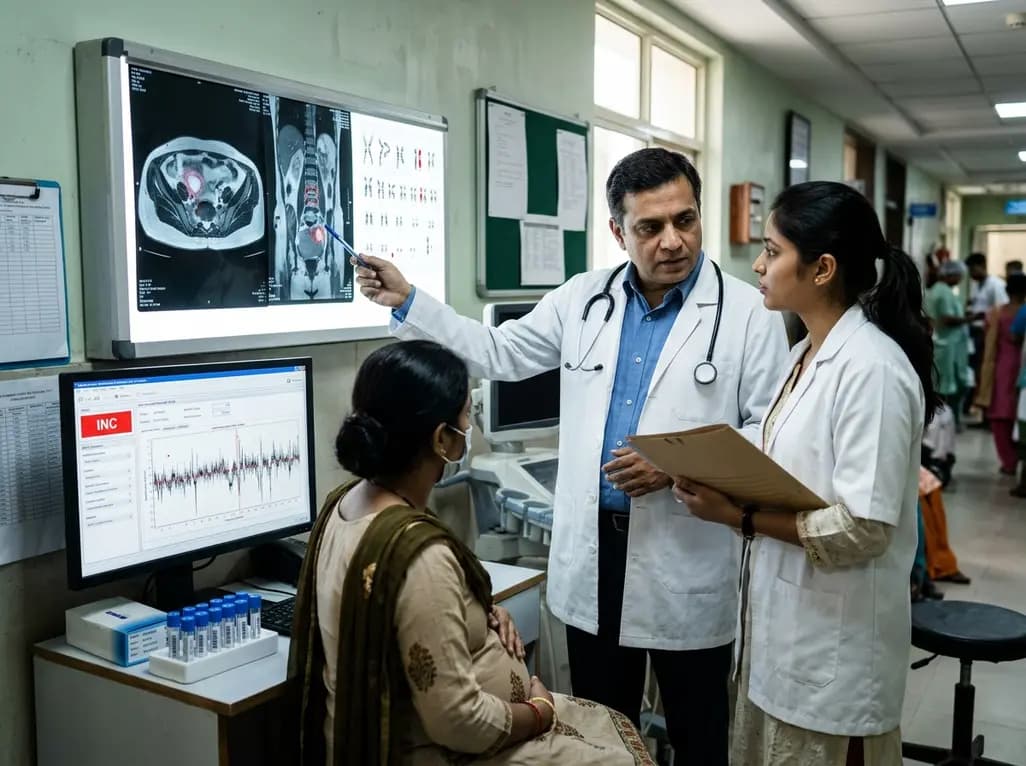
Occult maternal malignancy accounts for 3.82% of persistent unreportable NIPT results with genomic noise. Multiple chromosomal aberrations, notably on chromosome 18, warrant thorough oncological evaluation and whole-body MRI to ensure timely maternal diagnosis while preserving fetal care.
Today

This article reviews the forensic and clinical complexities of acute myocarditis arising on left ventricular hypertrophy in children, highlighting early diagnostic red flags and multidisciplinary postmortem autopsy protocols.
Today
A randomized controlled trial demonstrates that an eight-week dual-task training intervention significantly improves static and dynamic postural control over standard balance exercises in individuals with chronic ankle instability, addressing critical neurocognitive deficits during athletic and daily activities.
Today

A retrospective cohort study of 7,716 ICU patients from the MIMIC-IV database demonstrates that Gradient Boosting Decision Trees significantly outperform traditional SOFA scores in predicting in-hospital mortality among patients with sepsis and diabetes, with SHAP analysis providing clinical interpretability.
Today
