.webp&w=384&q=75)

Loading, please wait...
Loading, please wait...
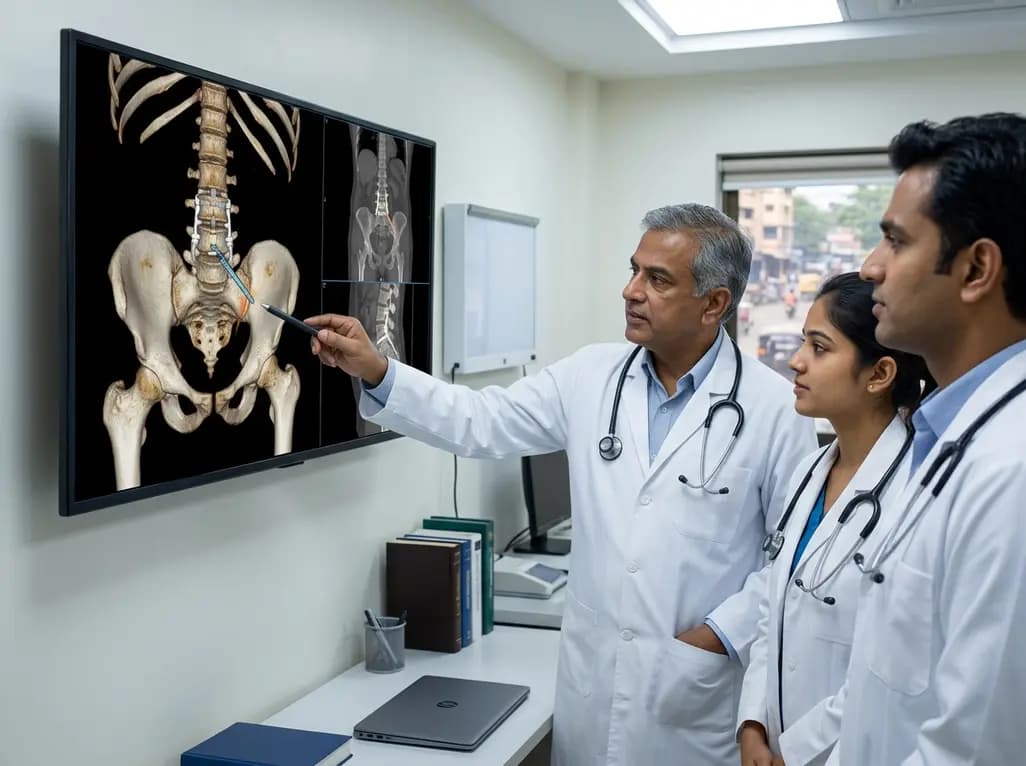
Adult spinal deformity encompasses a wide range of complex structural issues, including scoliosis and sagittal imbalance. Among these, coronal malalignment remains one of the most difficult challenges for orthopedic surgeons to correct effectively. Historically, surgeons focused heavily on restoring sagittal balance. However, recent evidence highlights that coronal shift significantly impacts patient-reported outcomes and overall quality of life. To address this, the iliac kickstand screw has emerged as a revolutionary tool. This technique provides a powerful method for correcting trunk shift by utilizing distraction forces between the thoracic construct and the pelvis. Unlike traditional methods, the kickstand approach offers a dedicated anchor that facilitates substantial corrective maneuvers. Understanding the precise anatomy of the ilium is essential for the safe implementation of this technique. Therefore, researchers have conducted detailed radiographic analyses to define the specific osseous corridors available for these specialized implants.
The biomechanical foundation of the iliac kickstand screw technique relies on the principle of a fixed base and a mobile lever. By placing an independent screw in the ilium, separate from the primary pelvic fixation, surgeons create a secondary anchor point. This anchor connects to the main spinal construct via a supplementary rod. Consequently, when distraction is applied between the thoracic spine and the iliac screw, the spine is literally pushed back toward the midline. This maneuver is particularly effective for convex-side distraction in rigid coronal curves. Furthermore, the kickstand rod acts as a stabilizer, distributing the load across the pelvic girdle and reducing the risk of rod fracture. This dual-purpose mechanism not only corrects alignment but also enhances the overall strength of the spinal construct. Therefore, this technique is increasingly favored in cases where conventional rod-bending and translation maneuvers fall short of achieving a balanced coronal vertical axis.
A comprehensive CT analysis recently shed light on the anatomical dimensions required for successful placement of the iliac kickstand screw. Researchers evaluated 50 consecutive patients using 3D visualization software to simulate screw trajectories within the ilium. The findings revealed a remarkably consistent and large osseous corridor that can accommodate substantial hardware. On average, the simulated screw length was found to be approximately 119.7 mm, with some trajectories reaching up to 135.3 mm. Moreover, the width of the corridor is equally impressive. The maximum potential screw diameter averaged 17.8 mm in the coronal plane and 20.8 mm in the sagittal plane. These dimensions suggest that the ilium provides a robust bone stock for anchoring the distraction forces necessary for deformity correction. Consequently, surgeons can proceed with confidence, knowing that the anatomical corridor is generally large enough for standard large-diameter pelvic screws.
Precise placement of the iliac kickstand screw requires a clear understanding of pelvic landmarks. The starting point for the screw is typically identified relative to the iliac crest and the midline of the body. According to the recent anatomic study, the optimal starting point is located approximately 66.4 mm lateral to the midline. In addition to this lateral position, the trajectory of the screw must follow specific angles to remain within the safe osseous corridor. The study identified an average caudal angle of 15.9 degrees in the sagittal plane and a lateral angle of 6.1 degrees in the coronal plane. These specific coordinates ensure that the screw stays within the dense cancellous bone of the iliac wing while avoiding the neurovascular structures near the sciatic notch. Furthermore, utilizing these standardized starting points helps reduce the learning curve for surgeons who are new to the kickstand technique. Therefore, pre-operative CT planning is highly recommended to tailor these trajectories to individual patient anatomy.
Safety is a paramount concern in complex spine surgery, especially when involving pelvic fixation. The discovery of a consistent osseous corridor for the iliac kickstand screw significantly enhances the safety profile of the procedure. Because the corridor is predictably large, the risk of cortical breach and subsequent soft tissue injury is minimized. Clinical studies have already begun to show the benefits of this technique in real-world settings. Patients undergoing correction with a kickstand rod often achieve better restoration of the coronal vertical axis compared to those treated with standard techniques. In addition, the improved alignment correlates with reduced back pain and better functional mobility in the postoperative period. Moreover, the technique has shown a low rate of hardware failure, which is a common problem in adult deformity surgery. Consequently, the combination of anatomical precision and biomechanical efficiency makes this an attractive option for modern spinal reconstructive surgery.
As technology continues to advance, the integration of 3D navigation and robotic assistance will likely refine the placement of the iliac kickstand screw even further. Navigated systems allow surgeons to visualize the osseous corridor in real-time, ensuring that every millimeter of the corridor is utilized effectively. This is particularly useful in patients with dysmorphic pelvic anatomy or those who have undergone previous surgeries. Furthermore, the development of patient-specific implants based on CT data could optimize the fit and pull-out strength of the kickstand anchor. Beyond hardware, future research may focus on long-term outcomes, specifically evaluating how the kickstand technique affects the adjacent sacroiliac joints. Nevertheless, the current anatomical data provides a solid foundation for the technique's widespread adoption. Therefore, the iliac kickstand screw is set to remain a cornerstone in the surgical toolkit for addressing severe coronal imbalance.
The primary benefit lies in its specific application for coronal correction. Unlike standard iliac screws used for lumbosacral stability, the kickstand screw acts as an independent anchor. This allows for dedicated distraction on the convex side of a deformity, effectively pushing the trunk back toward the midline for better balance.
Yes, CT analysis indicates that a consistent and large osseous corridor exists within the ilium across various ages and BMIs. The study showed an average width of nearly 18 mm, suggesting that most adult patients have sufficient bone stock to safely accommodate the necessary hardware for this technique.
Successful placement requires careful angling to avoid anatomical hazards. On average, the screw should be directed approximately 15.9 degrees caudally in the sagittal plane and 6.1 degrees laterally in the coronal plane. Adhering to these angles, along with a starting point 66 mm lateral to midline, ensures optimal corridor containment.
Disclaimer: This content is for informational and educational purposes only and does not constitute medical advice or a professional relationship. Always seek the advice of a physician or other qualified health provider with any questions regarding a medical condition. Refer to the latest local and national guidelines for clinical practice.
References
Lee J et al. The iliac kickstand screw: anatomic CT analysis of screw trajectory and osseous corridor for screw placement. Br J Neurosurg. 2025 Aug. doi: 10.1080/02688697.2023.2288590. PMID: 38050370.
Redaelli A et al. Useful and innovative methods for the treatment of postoperative coronal malalignment in adult scoliosis: the "kickstand rod" and "tie rod" procedures. Eur Spine J. 2020 Jan. doi: 10.1007/s00586-019-06285-7.
Makhni MC et al. The "Kickstand Rod" technique for correction of coronal imbalance in patients with adult spinal deformity: theory and technical considerations. J Spine Surg. 2020 Dec. doi: 10.21037/jss-20-456.
"
Read summarized clinical updates, watch expert medical content, and earn CME certifications right from your smartphone.
Open your smartphone camera to scan and install.





New radiographic research defines the anatomical parameters and osseous corridor for the iliac kickstand screw, a novel technique used to correct complex coronal malalignment in adult spinal deformity patients.
3 months ago

Discover the crucial role of glymphatic dysfunction in stroke, where perivascular clearance failure and neuroinflammation exacerbate cerebral edema and post-stroke brain injury.
Today

A prenatal case highlights severe glutaric acidemia type II presenting as bilateral hyperechoic cystic kidneys at 18 weeks. Whole-exome sequencing revealed a novel homozygous ETFDH frameshift variant, demonstrating the power of rapid genetic testing in fetal renal anomalies.
Today

Review how tailored exercise programs benefit frail older patients with heart failure. Explore pathophysiological mechanisms, individualized training prescriptions, and strategies to overcome adherence barriers in clinical practice.
Yesterday

This comparative study evaluates posterior labral tears with and without glenohumeral instability, highlighting distinct demographic patterns, MRI underestimation in stable shoulders, and successful arthroscopic repair outcomes.
Yesterday

A clinical study demonstrates that early intervention with tocilizumab, either as monotherapy or bridged with corticosteroids, achieves significant proptosis reduction and resolves active inflammation in treatment-naive thyroid eye disease.
Yesterday
