.webp&w=384&q=75)

Loading, please wait...
Loading, please wait...

Managing the ILD cancer mortality risk is an increasingly vital component of comprehensive respiratory care. While national cancer deaths continue to decline, recent evidence suggests a concerning upward trend for patients with Interstitial Lung Disease (ILD). Understanding these epidemiological shifts is essential for clinicians aiming to improve long-term outcomes in this vulnerable population.
A major population-based study recently analyzed data from the CDC's multiple cause-of-death database spanning 1999 to 2019. During this period, researchers examined over 511,000 decedents with ILD. Approximately 9.85% of these individuals also carried a concurrent cancer diagnosis. Notably, the age-adjusted mortality rate (AAMR) for ILD-cancer cases rose by 8.2%. Specifically, the rate climbed from 11.415 to 12.347 per million people. Consequently, these findings indicate that cancer-related mortality is not just persistent but escalating within the ILD community.
Furthermore, the data highlights a stark disparity between ILD patients and the general population. Decedents with ILD demonstrated 23-fold higher odds of having cancer recorded as their cause of death compared to control groups. This significant increase occurs even as general oncology outcomes improve nationwide. Therefore, the unique biological interplay between pulmonary fibrosis and malignancy likely contributes to this heightened risk. Moreover, the study emphasizes that gender and racial factors also influence these mortality patterns, requiring tailored clinical approaches.
The persistent rise in the ILD cancer mortality risk underscores a critical need for targeted screening protocols. Currently, most healthcare systems lack standardized guidelines for oncology surveillance specifically for ILD patients. Because early detection significantly improves survival, clinicians should maintain high vigilance. Implementing routine low-dose CT scans or other screening modalities might benefit this high-risk group. Additionally, prospective studies are necessary to determine which specific follow-up interventions yield the best results. Ultimately, addressing this trend is crucial for reducing the burden of lung-related deaths in the coming decades.
One primary reason is the shared pathobiological pathways between ILD and oncogenesis, such as chronic inflammation and tissue repair errors. Additionally, as ILD management improves, patients live longer, thereby increasing their window of exposure to potential malignancies.
Lung cancer remains the most prevalent malignancy among ILD patients. However, the study also identified increased risks across various organ systems, suggesting a systemic link between interstitial diseases and cancer mortality.
Current research suggests a strong benefit for targeted screening in high-risk groups. While universal guidelines are still developing, many experts recommend close surveillance for lung cancer, particularly in those with progressive fibrosis or smoking histories.
Disclaimer: This content is for informational and educational purposes only. It does not constitute professional medical advice, diagnosis, or treatment. Always seek the advice of your physician or other qualified healthcare provider with any questions you may have regarding a medical condition. Refer to the latest local and national guidelines for clinical practice.
References
Vaezi A et al. Escalating cancer mortality in ILD patients: insights from a US population study. BMC Pulm Med. 2026 May 19. doi: 10.1186/s12890-026-04345-5. PMID: 42157055.
Xu H, et al. Interstitial Lung Disease and Risk of Lung Cancer: A Sibling-Controlled Design. JAMA Netw Open. 2025;8(9):e251234.
Karampitsakos T, et al. Lung Cancer in Patients with Interstitial Lung Disease. J Pers Med. 2022;12(12):2053.

Read summarized clinical updates, watch expert medical content, and earn CME certifications right from your smartphone.
Open your smartphone camera to scan and install.





A comprehensive analysis of over 500,000 cases shows that cancer-related deaths are rising in ILD patients, contradicting general national trends....
5 months ago
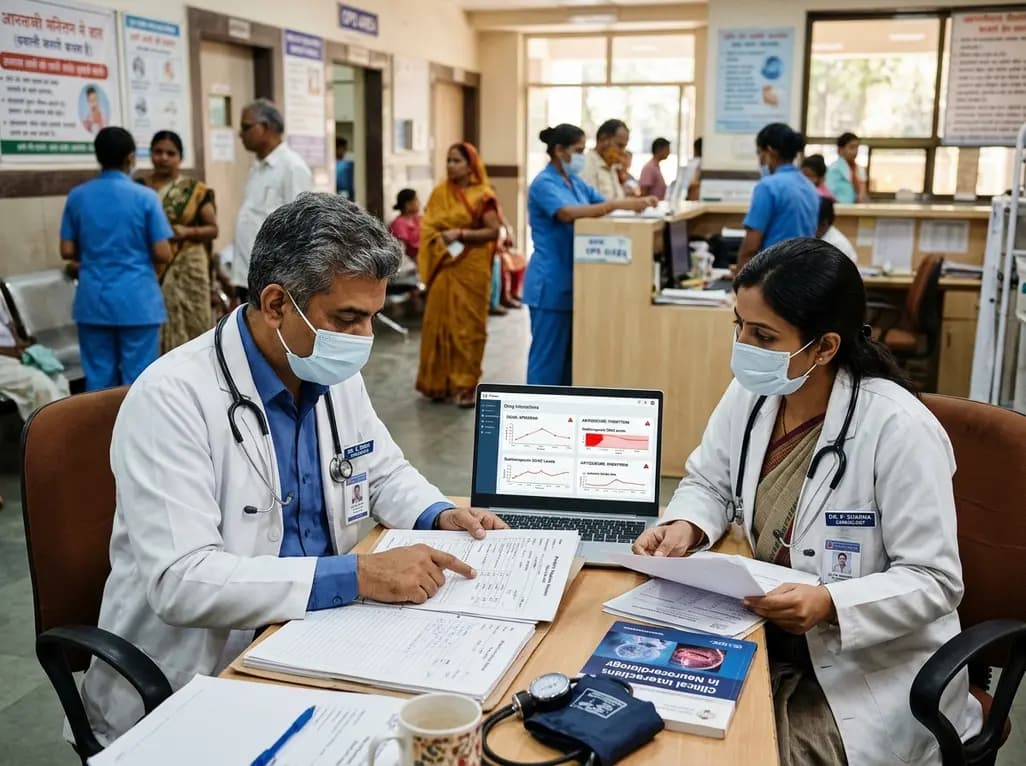
Co-administering antiseizure medications and DOACs frequently causes pharmacokinetic interactions, subtherapeutic drug levels, and thromboembolic failures. This review highlights enzyme induction risks, unpredictable outcomes with levetiracetam, and the vital role of therapeutic drug monitoring.
Today

Demanding exhaustive hormonal profiling can inadvertently discourage clinical studies involving females. Methodological standards must align with the specific scientific question to expand, not restrict, equitable evidence for women.
Today

An elderly man with partially repaired Tetralogy of Fallot presented with STEMI caused by coronary embolism rather than atherosclerosis. Successful treatment with sustained mechanical aspiration thrombectomy underscores the vital need for high clinical vigilance in adult congenital heart disease.
Today

A comparative review of tension band wiring and intramedullary screw fixation in thumb metacarpophalangeal arthrodesis, evaluating union rates, hardware complications, and clinical outcomes.
Today

Following regulatory scrutiny from FSSAI regarding promotional representations and lean muscle preservation claims, Dr. Reddy's Laboratories and Nestlé Health Science are currently reviewing the branding and marketing strategy for their joint nutritional supplement Celevida GLP+.
Today
