

Loading, please wait...
Loading, please wait...

The history of stroke medicine often overlooks the remarkable contributions of the medieval Islamic Golden Age. Most modern historical accounts transition abruptly from Greco-Roman antiquity to early modern European discoveries. However, this narrative neglects pivotal milestones documented across the intervening centuries. In approximately 1025 CE, Persian polymath Ibn Sina completed his monumental medical compendium, the Canon of Medicine. Within this seminal text, he formulated sophisticated clinical observations that fundamentally reshaped ancient neurology.
For centuries, medical historians largely bypassed medieval Islamic treatises when tracing cerebrovascular milestones. Consequently, conventional retrospectives linked the apoplexy of Hippocrates directly to seventeenth-century European pathomorphology. However, a recent analysis of a rare 1276 manuscript of the Canon of Medicine challenges this incomplete narrative. In this text, Ibn Sina articulated a nuanced understanding of acute brain failure. His magnum opus, completed around 1025, served as the principal medical textbook in Europe and Asia for five centuries. Therefore, examining this original preprint Arabic manuscript restores a vital link in the history of stroke medicine. Researchers provide the first direct English translation of the section on al-Saktah, the Arabic term for stroke. Furthermore, this translation demonstrates that Ibn Sina did not merely compile existing Greco-Roman aphorisms. Instead, he critically reorganized medical theory through empirical bedside observation and logical synthesis. Thus, his structured analytical framework provided clarity to complex neurological syndromes.
In the Canon of Medicine, Ibn Sina described al-Saktah as an abrupt impairment of motor, sensory, and cognitive faculties. Furthermore, he presented acute stroke as a sudden deprivation of voluntary action throughout the body. Clinicians of that era relied entirely on direct sensory examination and observational acumen. Accordingly, Ibn Sina outlined hallmark physical signs that clinicians immediately associate with focal neurologic deficits today. He carefully documented hemiplegia, facial paresis, dysarthria, and profound stupor as key features. In addition, he emphasized the critical prognostic significance of abnormal respiratory patterns and stertorous breathing during the acute phase. Patients presenting with sudden stertor and deep coma faced an ominous outcome. Moreover, he identified important warning symptoms that frequently preceded fatal apoplectic attacks. Specifically, he noted that severe cephalalgia and transient visual blackouts often signaled an impending event. He also linked obesity and advancing age to elevated vascular risk. Thus, his semiological descriptions provided an exceptionally accurate depiction of acute neurovascular compromise.
Perhaps the most revolutionary element of Ibn Sina’s treatise concerns his proposed mechanism for brain dysfunction. Ancient Greco-Roman authorities largely attributed apoplexy to humoral stagnation within cerebral ventricles. In contrast, Ibn Sina formulated a distinctly vascular hypothesis for stroke etiology. Specifically, he stated that vascular occlusion directly precipitates cerebral tissue failure. Furthermore, he recognized that arterial obstruction halts the indispensable delivery of life-sustaining blood flow to the brain parenchyma. He specifically implicated the large cervical vessels, highlighting carotid artery blockage as a direct trigger of profound hemispheric apoplexy. Therefore, this remarkable observation represents one of the earliest explicit associations between large-artery disease and ischemic stroke. While he framed these ideas within the humoral terminology of his era, his physiological deduction remains mechanical. He understood that downstream tissue ceases functioning when an upstream conduit suffers blockage. Consequently, this formulation anticipated the core pathophysiology of modern ischemic stroke by several centuries.
Beyond ischemic mechanisms, the eleventh-century scholar identified catastrophic intracranial bleeding as a distinct cause of acute collapse. In his compendium, he documented ventricular hemorrhage, recognizing blood inundation within brain cavities as an exceptionally lethal variant. Furthermore, he observed that massive intraventricular effusion produced instantaneous coma, flaccidity, and rapid respiratory arrest. This acute clinical picture contrasted sharply with more indolent presentations of focal cerebral deficit. Consequently, he established rigorous differential criteria to distinguish stroke from secondary causes of acute weakness. For example, he differentiated full-blown al-Saktah from isolated facial palsy, now known as Bell's palsy, which spares extremity strength. Moreover, he distinguished acute stroke from traumatic head injuries, epileptic convulsions, and toxic stupor. In each scenario, he demanded that physicians meticulously assess limb symmetry, pupillary responsiveness, and pulse characteristics. In addition, his diagnostic algorithm helped clinicians determine whether medical intervention remained feasible. Thus, his differential framework reflects an advanced standard of clinical neuroanatomy.
The therapeutic doctrines in the Canon of Medicine reflected prevailing humoral paradigms while incorporating rational physiological intentions. In managing acute apoplexy, Ibn Sina advocated interventions aimed at relieving vascular engorgement. For instance, he recommended judicious bloodletting and dietary restriction to reduce intravascular congestion. Furthermore, he formulated herbal preparations containing bioactive compounds that exhibited anti-inflammatory and vasodilatory properties. He also emphasized supportive airway maintenance and gentle sensory stimulation to prevent secondary systemic complications. In addition, he emphasized patient rehabilitation following the acute phase, recommending graded physical exercises and limb massage. Today, stroke remains a leading cause of mortality and long-term disability worldwide, particularly in India. Modern clinicians utilize vascular imaging and mechanical thrombectomy to treat the very arterial occlusions that Ibn Sina identified a millennium ago. Therefore, studying his historical treatise reminds physicians that our quest to understand and reverse vascular brain failure has deep historical roots.
Ibn Sina described stroke, termed al-Saktah, as an acute loss of consciousness, sensation, and voluntary movement caused by severe brain dysfunction. Furthermore, he meticulously documented associated clinical signs, including asymmetric facial paralysis, respiratory compromise, and severe sudden headache. He also observed that some patients survived with residual hemiplegia, while others rapidly deteriorated. Consequently, his detailed bedside observations established a comprehensive clinical syndrome that remarkably parallels the presentation of acute cerebrovascular accidents in modern practice.
Ancient medical dogma previously attributed apoplexy primarily to general humoral imbalances or mysterious nervous spirits without identifying specific blood vessels. In contrast, Ibn Sina explicitly proposed an arterial etiology, identifying arterial obstruction and carotid artery blockage as direct triggers of cerebral failure. Therefore, this critical conceptual leap bridged functional deficits with vascular obstruction. As a result, his insight anticipated modern vascular pathology by centuries, fundamentally transforming how physicians conceptualized acute brain ischemia and intracranial tissue damage.
While modern stroke care relies on advanced neuroimaging and acute reperfusion, the Canon of Medicine introduced systematic principles that remain foundational. Specifically, Ibn Sina emphasized immediate clinical assessment, differential diagnosis between destructive hemorrhage and obstruction, and tailored supportive care. Furthermore, he recognized obesity and preceding cephalalgia as major vascular risk factors. Although humoral pharmacotherapy has evolved into modern neuropharmacology, his structured clinical reasoning and prognostic classifications continue to inspire contemporary approaches to neurological education.
Disclaimer: This content is for informational and educational purposes only... Refer to the latest local and national guidelines for clinical practice.
References

Read summarized clinical updates, watch expert medical content, and earn CME certifications right from your smartphone.
Open your smartphone camera to scan and install.





A rare 1276 manuscript translation of Ibn Sina's Canon of Medicine reveals that the Persian physician described stroke clinical semiology, ventricular hemorrhage, and carotid arterial occlusion as early as 1025 CE, anticipating modern vascular neurology by centuries.
Today
A cross-sectional study of 4,862 women highlights how metabolic phenotypes alter female reproductive impairment. Metabolically unhealthy overweight and obesity presented the greatest odds for infertility and impaired fecundity, underscoring the vital need for comprehensive cardiometabolic screening.
Today

A large network analysis of middle-aged and older adults reveals distinct sex-specific dependency pathways between lifestyle factors and cardiometabolic diseases. Physical activity, smoking, and alcohol exhibit divergent bridging roles in men and women, underscoring the need for tailored clinical prevention.
Today
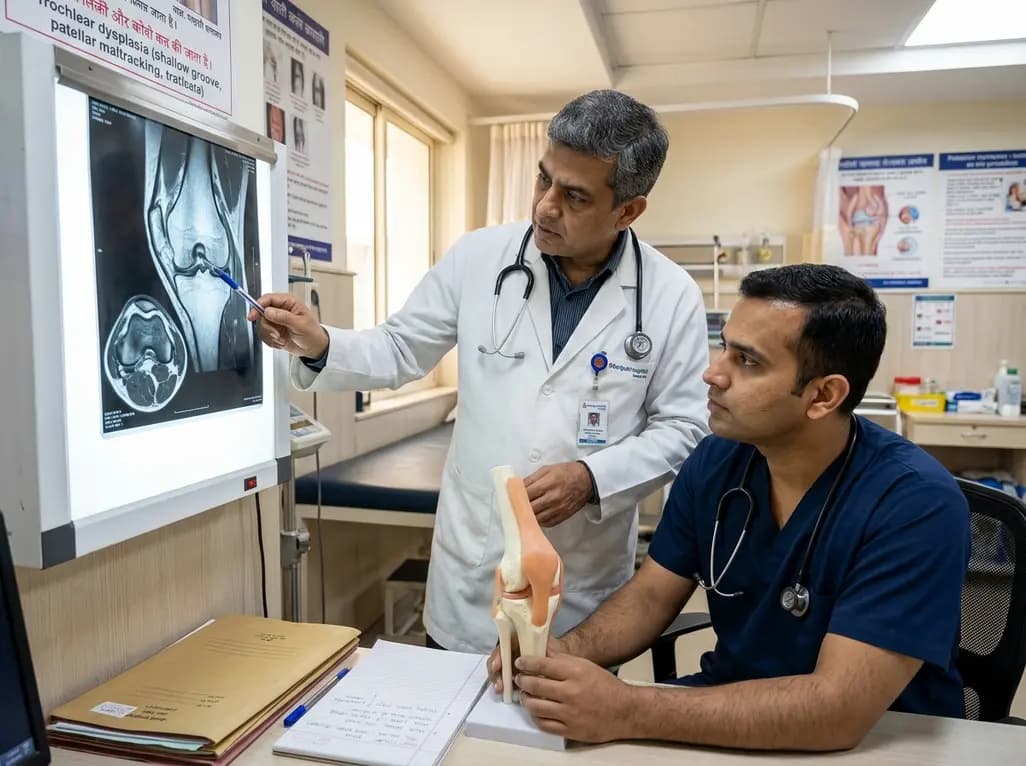
A landmark study reveals that patellofemoral cartilage defects in patients with trochlear dysplasia are primarily driven by patellar maltracking and spur height rather than dislocation frequency or shape mismatch, offering crucial insights for preoperative imaging and surgical stabilization.
Today
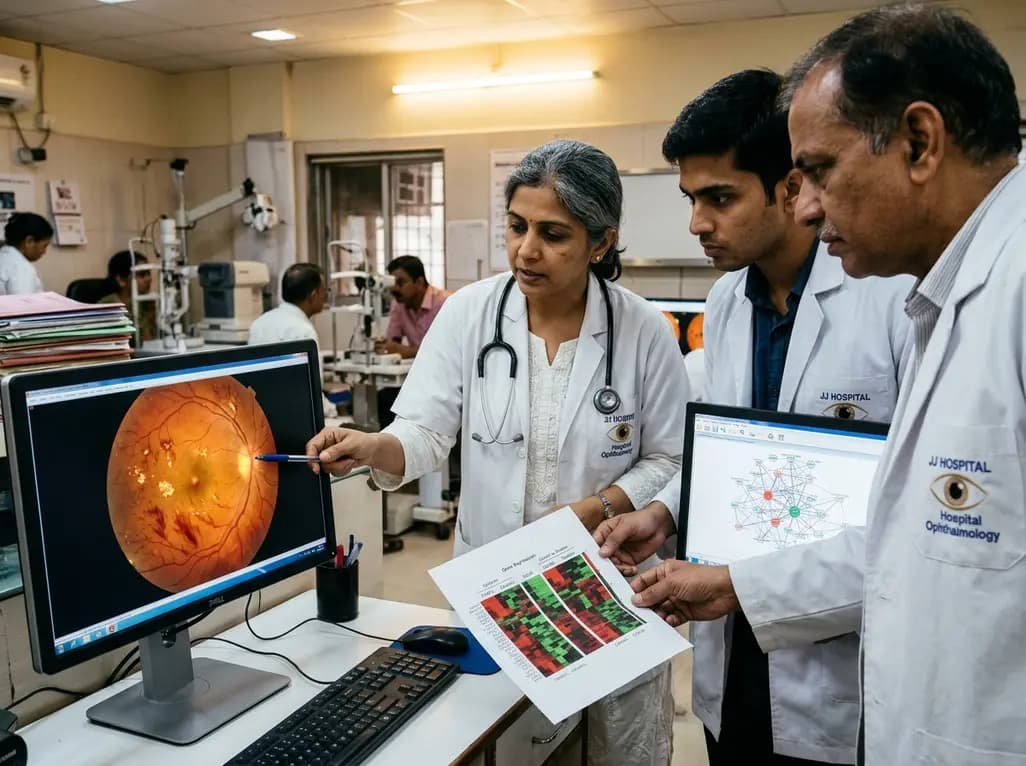
Single-cell transcriptomics reveals that STAP2 promotes retinal endothelial dysfunction in diabetic retinopathy through CXCR4 signaling. In vivo and in vitro studies show STAP2 knockdown reduces capillary drop-out and vascular leakage, uncovering a novel therapeutic target beyond anti-VEGF therapies.
Today
