.webp&w=384&q=75)

Loading, please wait...
Loading, please wait...

Managing respiratory failure in preterm infants often requires supplemental oxygen. While life-saving, this therapy frequently leads to hyperoxia-induced pulmonary vascular injury. Recent evidence published in June 2026 highlights the critical role of vascular damage in the pathogenesis of Bronchopulmonary Dysplasia (BPD).
A systematic review of 55 studies reveals that the injury process is remarkably complex. Instead of a single cause, a multifaceted network drives the damage. Specifically, signaling pathways, epigenetic modifications, and metabolic dysregulation interact to disrupt normal development. Furthermore, these factors cause phenotypic alterations in the pulmonary vasculature. These changes ultimately support the vascular hypothesis, which suggests that impaired vessel growth leads to arrested alveolar development.
Moreover, the study indicates that epigenetic changes play a significant role in how infants respond to oxygen. Additionally, metabolic dysregulation exacerbates the oxidative stress already present in underdeveloped lungs. Consequently, clinicians must recognize BPD as a multi-organ, multi-systemic challenge rather than just a localized lung issue.
Researchers are currently investigating diverse therapeutic strategies. These include targeting specific signaling molecules and using antioxidant interventions. However, the vast majority of these treatments remain in the preclinical phase. Therefore, the most significant gap in the field today is the lack of clinical translation. Moving these promising laboratory findings into neonatal intensive care units is the next vital step for research.
The vascular hypothesis proposes that healthy pulmonary vascular development is essential for alveolar growth. Therefore, any injury to the vessels, such as that caused by hyperoxia, directly prevents the lungs from maturing properly.
Clinical translation is challenging because most studies are currently preclinical. Additionally, the multifactorial nature of BPD makes it difficult to design human trials that isolate specific therapeutic effects in vulnerable preterm populations.
Disclaimer: This content is for informational and educational purposes only. It does not constitute medical advice or establish a doctor-patient relationship. Refer to the latest local and national guidelines for clinical practice.
References
Cai J et al. Hyperoxia and pulmonary vascular injury in bronchopulmonary dysplasia: pathogenic mechanisms and emerging therapies-a systematic review. Pediatr Res. 2026 Jun 08. doi: 10.1038/s41390-026-05150-w. PMID: 42260307.
Jobe AH. Mechanisms of Lung Injury and Bronchopulmonary Dysplasia. Am J Perinatol. 2016 Nov;33(11):1076-1078. doi: 10.1055/s-0036-1586106.
Cosgrove E et al. Recent Advances in the Management of Bronchopulmonary Dysplasia. Curr Treat Options Peds. 2025 Jul. doi: 10.1007/s40746-025-00334-8.

Read summarized clinical updates, watch expert medical content, and earn CME certifications right from your smartphone.
Open your smartphone camera to scan and install.





A systematic review clarifies how hyperoxia-induced pulmonary vascular injury drives BPD through signaling, epigenetic, and metabolic dysregulation....
4 months ago

Novel glucose-responsive mPEG-PSA nanocarriers deliver insulin aspart on demand, achieving dual postprandial and basal glycemic control without hypoglycemia in diabetic models. This biomaterial breakthrough offers promising clinical implications for physiologic diabetes management.
Today

A novel folate-conjugated tecto-dendrimer nanoplatform successfully delivers siRNA to achieve targeted HK2 silencing, disrupting ovarian cancer glycolysis and suppressing lactate output.
Today
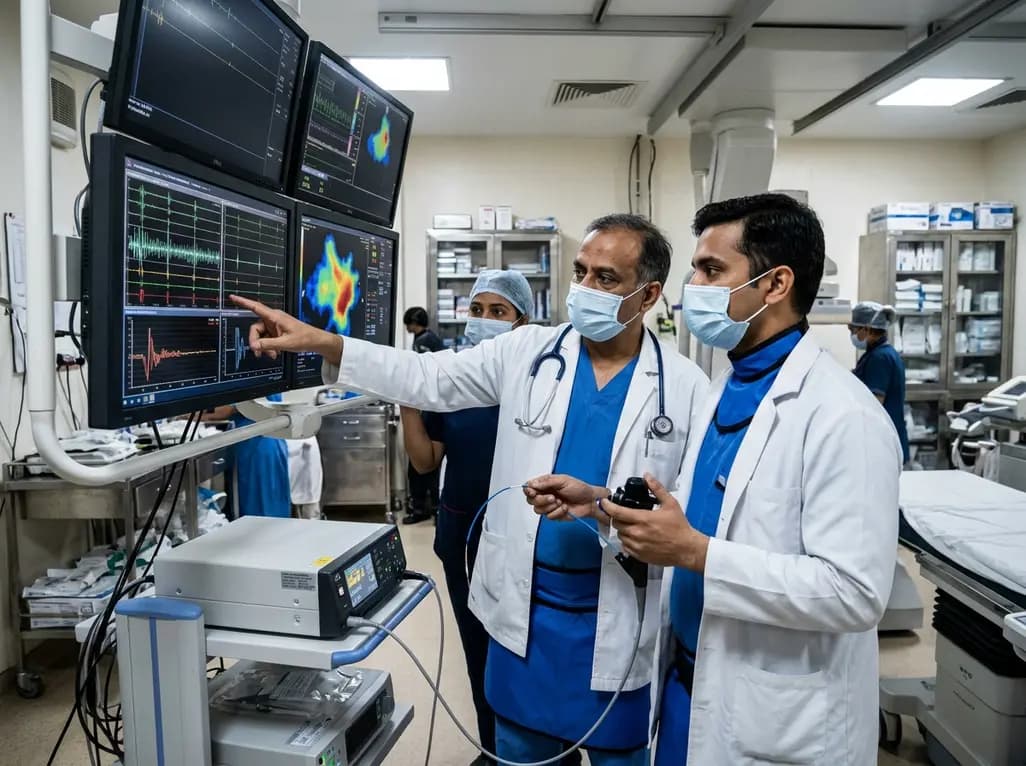
A comparative non-contact study reveals that high-power radiofrequency delivery with the QDOT MICRO catheter induces an artifactual contact force rise. Electrophysiologists must understand this power-dependent thermal and electrical phenomenon to avoid inadvertent catheter withdrawal and ineffective ablation.
Today

A novel proof-of-concept study presents a six-degree-of-freedom articulated manikin neck equipped with linear potentiometers. The system provides real-time kinematic motion feedback during cervical immobilisation, delivering sub-degree tracking accuracy to improve pre-hospital trauma training and patient safety.
Today

A retrospective comparative cohort study evaluated genitourinary safety in HFpEF between dapagliflozin and empagliflozin over six months. Rates of symptomatic UTI and asymptomatic bacteriuria showed no statistically significant differences, supporting comparable safety profiles across both SGLT2 inhibitors.
Today
