.webp&w=384&q=75)

Loading, please wait...
Loading, please wait...

Hyperdiploid multiple myeloma accounts for the most frequent genomic subtype in plasma cell disorders. Clinicians historically categorized this condition as a uniformly favorable, standard-risk disease entity. However, clinical practice repeatedly reveals marked prognostic heterogeneity among these patients. While some individuals achieve prolonged disease control, others experience early therapeutic failure and aggressive relapse. Therefore, refining current risk classification models remains an urgent clinical priority for hematologists. Recently, investigators evaluated 694 newly diagnosed patients using integrated genomic arrays and cytogenetics. Consequently, this comprehensive analysis demonstrated that hyperdiploidy encompasses diverse biological subgroups with vastly different clinical courses. Moreover, secondary chromosomal alterations strongly dictate patient outcomes. Traditional diagnostic approaches frequently fail to capture these intricate genomic differences during baseline evaluation. As a result, clinicians may misjudge disease aggressiveness and select suboptimal induction strategies. Furthermore, deeper genomic characterization clarifies the biological mechanisms underlying divergent treatment responses. Thus, moving beyond broad ploidy categorizations provides essential clarity for contemporary hematologic oncology.
The total modal chromosome count serves as a pivotal determinant of clinical outcomes in hyperdiploid multiple myeloma. Specifically, the study revealed that a modal chromosome count of 49 or greater strongly predicts superior survival metrics. Patients harboring this higher chromosome number achieved significantly improved overall survival compared to those with lower ploidy numbers. Similarly, these individuals demonstrated significantly longer progression-free survival across long-term follow-up. In contrast, patients with lower hyperdiploid chromosome counts experienced inferior survival curves resembling non-hyperdiploid cohorts. Consequently, modal chromosome count outperformed several conventional genomic parameters in multivariate prognostic models. Furthermore, this quantifiable metric offers objective discrimination that standard staging systems frequently miss. Clinicians can therefore utilize chromosomal modal counts to distinguish truly low-risk disease from intermediate-risk variants. In addition, recognizing this cut-off helps physicians anticipate long-term treatment durability. Therefore, modal chromosome assessment represents an indispensable quantitative baseline for newly diagnosed hyperdiploid patients.
Specific trisomies contribute distinct biological influences within hyperdiploid plasma cell clones. In particular, the gain of chromosome 3 emerged as an exceptionally strong independent predictor of favorable survival. Patients possessing trisomy 3 experienced substantially prolonged overall survival and extended progression-free survival. Moreover, this chromosomal gain maintained its favorable prognostic impact even after adjusting for standard baseline clinical variables. In contrast, the absence of chromosome 3 gain identified patients at heightened risk for earlier disease progression. High-resolution single nucleotide polymorphism microarrays accurately detect these whole-chromosome gains across diagnostic samples. However, comprehensive genomic microarray profiling remains expensive and technically challenging for many routine laboratories. Consequently, fluorescence in situ hybridization targeting chromosome 3 offers an appealing, cost-effective alternative for daily practice. Hematopathologists can easily incorporate trisomy 3 probes into standard diagnostic myeloma panels. Thus, evaluating chromosome 3 status provides an accessible method to refine baseline risk stratification.
Co-occurring structural cytogenetic alterations fundamentally alter the favorable baseline biology of hyperdiploid multiple myeloma. For instance, the presence of isolated 1q21 gain presents a unique clinical scenario in this setting. The study demonstrated that hyperdiploidy mitigated the adverse impact of isolated 1q21, yielding significantly improved overall survival. However, hyperdiploidy failed to overcome established high-risk cytogenetic abnormalities. Specifically, patients harboring adverse translocations or deletions experienced poor survival regardless of ploidy status. Furthermore, the prognostic utility of modal chromosome count depended heavily on the presence of these secondary abnormalities. Among patients without high-risk lesions, a modal count of 49 or higher conferred superior survival outcomes. Conversely, in the presence of high-risk abnormalities, higher chromosome counts provided no meaningful survival advantage. Consequently, oncologists must never interpret hyperdiploidy in isolation without comprehensive high-risk cytogenetic screening.
Autologous haematopoietic stem cell transplantation remains a cornerstone of frontline management for eligible myeloma patients. Nevertheless, this study highlights critical variations in transplant efficacy across distinct hyperdiploid subsets. Autologous transplantation delivered significant overall survival benefits exclusively to patients lacking high-risk cytogenetic abnormalities with higher chromosome numbers. Additionally, this specific favorable cohort demonstrated a clear trend toward improved progression-free survival following high-dose therapy. In contrast, patients with high-risk lesions or lower chromosome counts derived no statistically significant survival advantage from upfront transplantation. Consequently, these findings challenge the assumption of uniform transplant benefit across all hyperdiploid presentations. Hematologists must therefore adopt a more nuanced approach when discussing transplantation with their patients. Furthermore, identifying patients who lack high-risk abnormalities and carry high modal counts confirms ideal transplant candidacy. Thus, refined genomic stratification directly informs individualized consolidation planning.
These compelling genomic findings provide actionable insights that transform routine clinical management in multiple myeloma. Historically, clinicians grouped all hyperdiploid patients together under a broad standard-risk umbrella. However, the integration of modal chromosome counts, trisomy 3 detection, and secondary cytogenetic screening dismantles this simplistic view. Hematologists should now incorporate chromosome 3 evaluation via fluorescence in situ hybridization to rapidly capture favorable biology. Moreover, clinicians must carefully differentiate isolated 1q21 gain from multi-hit or adverse translocations before determining therapy. Consequently, this refined approach prevents both undertreatment of aggressive disease variants and overtreatment of genuinely indolent subtypes. In addition, resource-conscious healthcare settings can implement targeted probe panels without requiring immediate high-throughput sequencing platforms. Ultimately, adopting comprehensive ploidy assessment bridges the gap between sophisticated genomic research and meaningful bedside care.
A modal chromosome count of 49 or greater functions as an independent favorable prognostic marker in hyperdiploid multiple myeloma. Patients with this higher ploidy level demonstrate significantly superior overall survival and extended progression-free survival compared to those with lower chromosome counts. However, this protective effect occurs primarily in individuals who lack concurrent adverse cytogenetic lesions. Consequently, assessing modal chromosome numbers helps clinicians distinguish truly indolent disease from more aggressive presentations.
Chromosome 3 gain represents a critical driver of favorable outcomes in hyperdiploid multiple myeloma. Patients possessing trisomy 3 achieve significantly prolonged overall survival and superior progression-free intervals. Because comprehensive microarray profiling is often costly or technically unavailable in routine laboratories, detecting trisomy 3 via targeted fluorescence in situ hybridization offers a rapid, economical alternative. Consequently, this reliable cytogenetic probe empowers hematopathologists to identify standard-risk biology efficiently without requiring expensive genome-wide sequencing.
Autologous haematopoietic stem cell transplantation delivers the greatest clinical benefit to hyperdiploid patients who lack high-risk cytogenetic abnormalities and possess a modal chromosome count of 49 or greater. In this specific subgroup, transplantation significantly extends overall survival and shows strong progression-free survival trends. Conversely, patients with co-occurring adverse lesions, such as deletion 17p or high-risk translocations, do not achieve similar survival advantages, indicating that baseline cytogenetics dictates transplant efficacy.
Disclaimer: This content is for informational and educational purposes only. It should not be used as a substitute for professional medical advice, diagnosis, or treatment. Refer to the latest local and national guidelines for clinical practice.
References

Read summarized clinical updates, watch expert medical content, and earn CME certifications right from your smartphone.
Open your smartphone camera to scan and install.





Recent research demonstrates that hyperdiploid multiple myeloma is heterogeneous. A modal chromosome count of 49 or more and chromosome 3 gain independently predict superior survival, while co-occurring high-risk abnormalities negate this advantage, dictating precise risk stratification and transplant selection.
Today
A large UK Biobank prospective study demonstrates that early-life tobacco smoke exposure significantly increases incident rheumatoid arthritis risk in adulthood. The association is mediated slightly by allostatic load and amplified substantially when combined with high polygenic risk.
Today

An updated systematic review and meta-analysis of 7,875 patients reveals that routine microaxial left ventricular support during nonemergent high-risk PCI does not reduce mortality or ischemic complications, while significantly increasing major bleeding events.
Today
Following Cyclone Chido, a WHO EMT-2 field hospital performed 268 surgeries in Mayotte. While acute trauma is expected initially, 98% of cases were septic wounds of the extremities requiring secondary intention healing, revealing crucial operational insights for disaster surgical preparedness.
Today
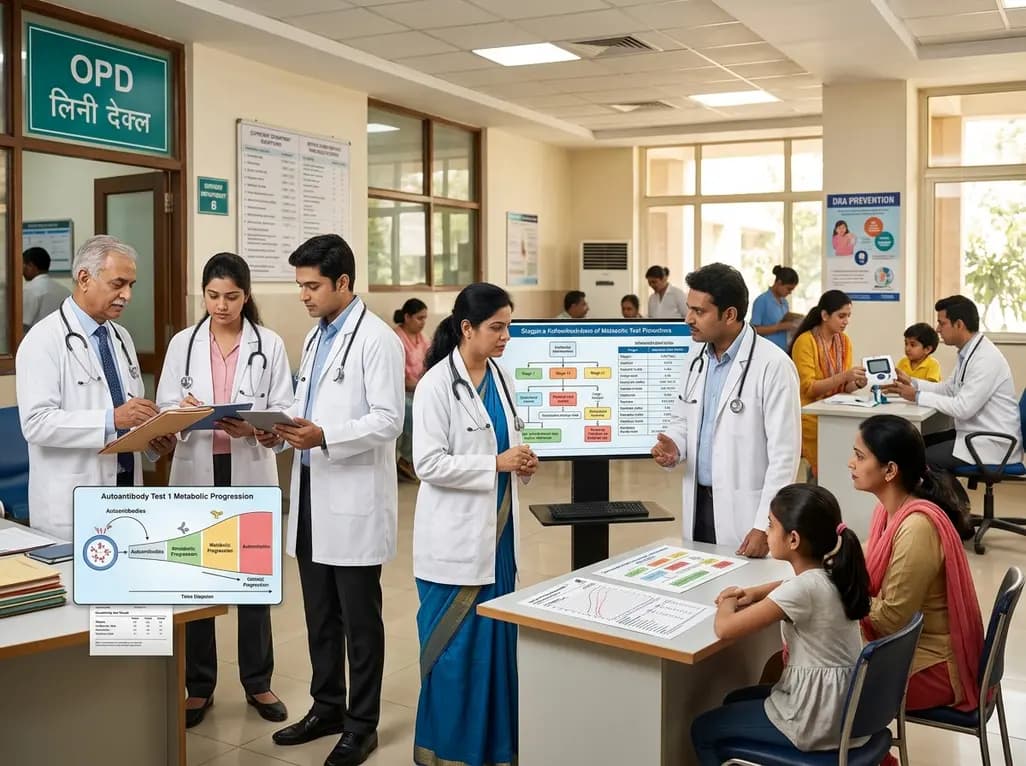
The SED-SEEN-SEEP consensus outlines an Integrated Care Pathway for preclinical type 1 diabetes, structuring target screening, autoantibody confirmation, metabolic staging, and proactive follow-up to prevent diabetic ketoacidosis and facilitate early disease-modifying intervention.
Today
