.webp&w=384&q=75)

Loading, please wait...
Loading, please wait...

Ionizing radiation remains a cornerstone of treatment for thoracic malignancies. However, it also serves as a significant risk factor for cardiovascular complications. This exposure often triggers a cascade of oxidative stress and inflammation that damages the cardiac tissue and vascular endothelium. Emerging research now suggests that hydrogen therapy heart damage can be effectively mitigated through the unique antioxidant properties of molecular hydrogen (H2).
In a recent experimental study involving male Wistar rats, irradiation with a 10 Gy dose of X-rays led to a sharp rise in lactate dehydrogenase (LDH), malondialdehyde, and tumor necrosis factor-alpha. These markers indicate severe oxidative stress and systemic inflammation. Molecular hydrogen acts as a selective antioxidant, neutralizing harmful reactive oxygen species while sparing beneficial ones. Furthermore, H2 administration was found to normalize the Nrf2/Keap1 pathway. This regulator is vital for the body's natural antioxidative response, which radiation typically suppresses.
Researchers evaluated two primary administration routes: drinking hydrogen-rich water (minimum 4 mg/L) and inhaling hydrogen gas (4%). Both methods successfully reduced inflammatory proteins and oxidative stress markers to baseline levels. Although both routes were effective, the inhalation of H2 gas showed a more pronounced trend in mitigating cardiac damage. Consequently, these findings suggest that the delivery method may influence the therapeutic outcome, though further clinical trials are necessary to confirm these observations in humans.
Radiation-induced heart disease presents a long-term challenge for oncology survivors. Current preventive strategies are limited, making the search for non-toxic interventions essential. Molecular hydrogen is highly permeable and can easily cross cell membranes to reach the mitochondria. Because it shows no reported toxicity in clinical settings, it represents a promising adjunctive therapy for patients undergoing thoracic radiotherapy. Moreover, its ability to modulate cell survival signaling molecules like pAKT adds another layer of protection against radiation-induced lipid peroxidation.
Molecular hydrogen acts as a selective antioxidant and anti-inflammatory agent. It neutralizes toxic free radicals and activates the Nrf2/Keap1 pathway, which restores the heart's natural antioxidant defenses after radiation exposure.
In experimental models, both methods are effective. However, gas inhalation often delivers a higher concentration of H2 to the bloodstream more rapidly, which may lead to more pronounced protective effects in acute injury scenarios.
Current clinical research indicates that molecular hydrogen is generally safe and non-toxic. While animal studies are promising, doctors are still awaiting larger human clinical trials to establish standardized protocols for radiation protection.
Disclaimer: This content is for informational and educational purposes only. It does not constitute professional medical advice, diagnosis, or treatment. Always seek the advice of your physician or other qualified healthcare providers with any questions you may have regarding a medical condition. Refer to the latest local and national guidelines for clinical practice.
References

Read summarized clinical updates, watch expert medical content, and earn CME certifications right from your smartphone.
Open your smartphone camera to scan and install.





A study on rats reveals that molecular hydrogen, via inhalation or water, mitigates radiation-induced heart damage by activating the Nrf2/Keap1 pathway....
7 months ago
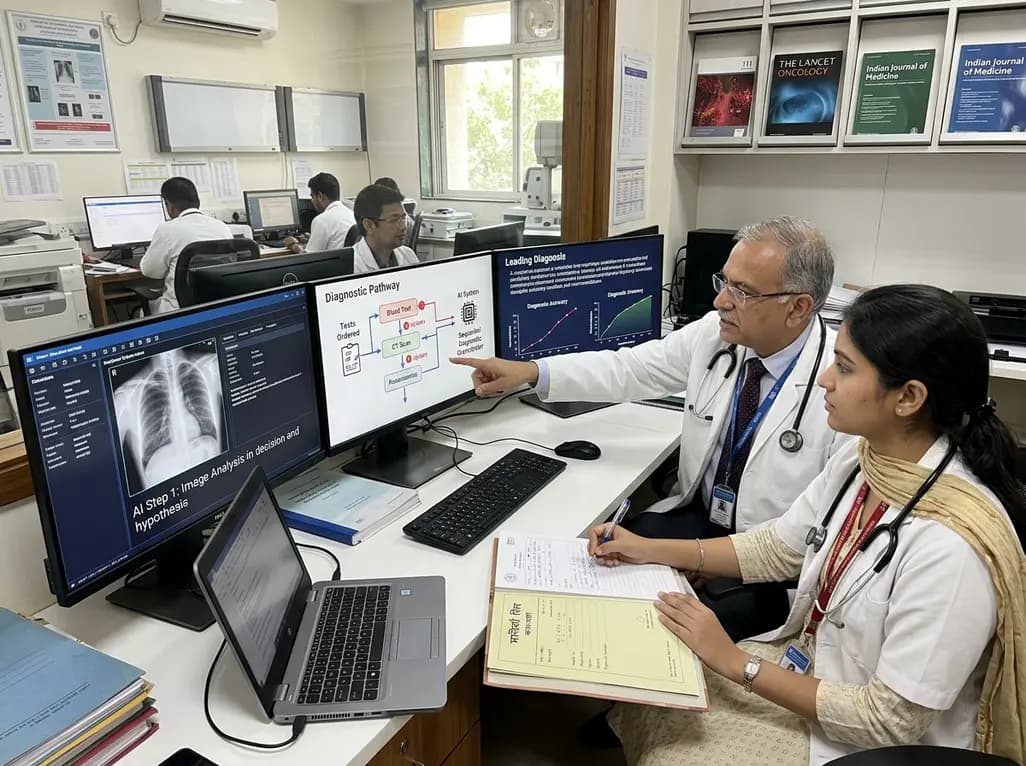
A breakthrough peer-reviewed study demonstrates that a sequential AI diagnosis system can mirror real-world clinical reasoning. By ordering stepwise tests and updating hypotheses dynamically, this multi-agent orchestrator achieved superior diagnostic accuracy while reducing investigative costs.
Today

A prenatal case highlights severe glutaric acidemia type II presenting as bilateral hyperechoic cystic kidneys at 18 weeks. Whole-exome sequencing revealed a novel homozygous ETFDH frameshift variant, demonstrating the power of rapid genetic testing in fetal renal anomalies.
Today

Review how tailored exercise programs benefit frail older patients with heart failure. Explore pathophysiological mechanisms, individualized training prescriptions, and strategies to overcome adherence barriers in clinical practice.
Yesterday

This comparative study evaluates posterior labral tears with and without glenohumeral instability, highlighting distinct demographic patterns, MRI underestimation in stable shoulders, and successful arthroscopic repair outcomes.
Yesterday

A clinical study demonstrates that early intervention with tocilizumab, either as monotherapy or bridged with corticosteroids, achieves significant proptosis reduction and resolves active inflammation in treatment-naive thyroid eye disease.
Yesterday
