.webp&w=384&q=75)

Loading, please wait...
Loading, please wait...
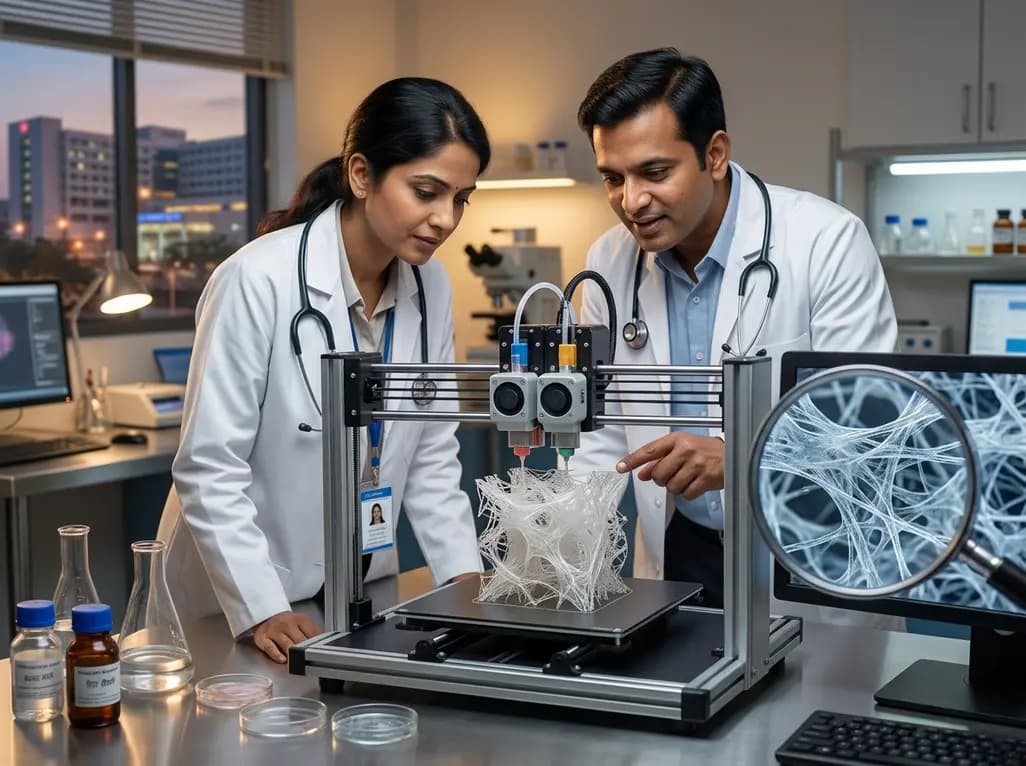
Regenerative medicine researchers recently developed hydrogel microfiber scaffolds to improve tissue engineering outcomes. These innovative materials serve as injectable scaffolds and biomaterial inks for extrusion bioprinting. Consequently, they offer a more permissive system for 3D cell culture than traditional spherical microparticles. Because these hydrogel microfiber scaffolds possess unique physical properties, they represent a significant leap in biofabrication technology. Researchers find that the spatial organization of these fibers allows for better mechanical control compared to standard gel systems.
Each microfiber in these scaffolds has a length of approximately 93 µm and a diameter of 1.6 µm. Due to their high aspect ratios, the fibers interact extensively without the need for chemical crosslinking or annealing. Therefore, the resulting material remains mechanically robust and can stretch significantly without breaking. Furthermore, these materials exhibit tissue-mimetic stress relaxation under constant strain. This property is vital because it mimics the natural extracellular matrix found in human tissues. As a result, the scaffolds provide a stable yet dynamic environment for cellular growth.
The 3D printing process induces shear-induced alignment within the packed fiber filaments. This alignment provides critical topographical cues to embedded cells. For instance, cells align themselves along the fibers, which promotes organized and anisotropic tissue growth. Additionally, the permissive microenvironment allows cells to spread and interact naturally within the three-dimensional structure. This flexibility ensures that the material can support various cell types, including those required for cardiovascular or orthopedic repair. Consequently, this work highlights the strengths of fiber-based systems as printable biomaterials for the future of regenerative medicine.
These scaffolds offer superior viscoelastic properties and high flexibility. They provide topographical cues that promote cellular alignment and spreading without the need for interparticle crosslinking.
The extrusion process during 3D printing causes individual fibers to align. This alignment serves as a guide for cells, helping them grow in specific directions to mimic natural tissue structures.
Disclaimer: This content is for informational and educational purposes only. It does not constitute medical advice or professional services. Consult a qualified healthcare provider for personalized medical decisions. Refer to the latest local and national guidelines for clinical practice.
References
Grewal MG et al. Packed Hydrogel Microfibers as Scaffolds Supporting Dynamic Cellular Behavior and Biomaterial Inks in 3D Printing. Adv Healthc Mater. 2026 Jun 06. doi: 10.1002/adhm.202503969. PMID: 42251477.
Burdick JA, Murphy WL. Moving from 2D to 3D Cell Culture with Hydrogels. Biofabrication. 2023;15(3):032001.
Highley CB, et al. Jammed Microgel Inks for 3D Bioprinting Applications. Adv Healthc Mater. 2019;8(1):e1801076.

Read summarized clinical updates, watch expert medical content, and earn CME certifications right from your smartphone.
Open your smartphone camera to scan and install.





Researchers develop packed hydrogel microfibers (PHM) as scaffolds to support dynamic cellular behavior and enhance 3D printing for regenerative medicine....
4 months ago

A retrospective cohort study of 7,716 ICU patients from the MIMIC-IV database demonstrates that Gradient Boosting Decision Trees significantly outperform traditional SOFA scores in predicting in-hospital mortality among patients with sepsis and diabetes, with SHAP analysis providing clinical interpretability.
Today
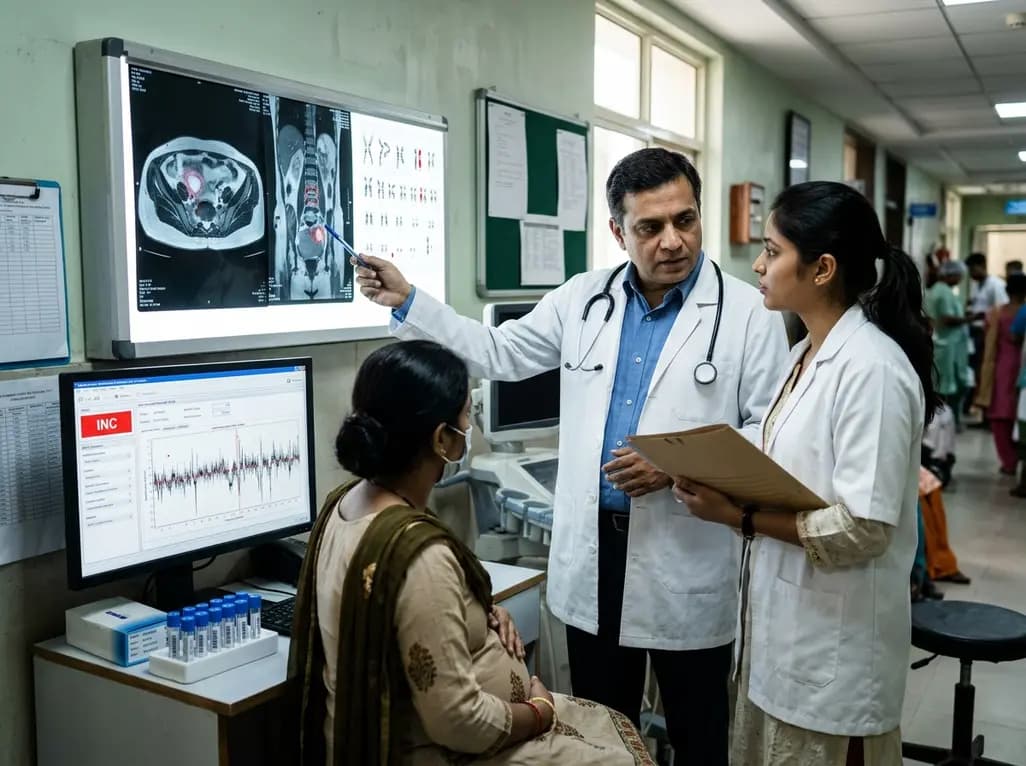
Occult maternal malignancy accounts for 3.82% of persistent unreportable NIPT results with genomic noise. Multiple chromosomal aberrations, notably on chromosome 18, warrant thorough oncological evaluation and whole-body MRI to ensure timely maternal diagnosis while preserving fetal care.
Today

This article reviews the forensic and clinical complexities of acute myocarditis arising on left ventricular hypertrophy in children, highlighting early diagnostic red flags and multidisciplinary postmortem autopsy protocols.
Today

This comparative study evaluates posterior labral tears with and without glenohumeral instability, highlighting distinct demographic patterns, MRI underestimation in stable shoulders, and successful arthroscopic repair outcomes.
Yesterday

A clinical study demonstrates that early intervention with tocilizumab, either as monotherapy or bridged with corticosteroids, achieves significant proptosis reduction and resolves active inflammation in treatment-naive thyroid eye disease.
Yesterday
