.webp&w=384&q=75)

Loading, please wait...
Loading, please wait...

Hydrocephalus represents a complex pathophysiological condition characterized by impaired cerebrospinal fluid dynamics, leading to ventricular enlargement and neurological compromise. Despite historical advances in shunts and neuroendoscopy, systematic insights into global research priorities remain limited. A recent scoping review examining 90 registered studies provides critical clarity regarding the evolving landscape of hydrocephalus clinical trials. Notably, trial activity has accelerated markedly, with nearly half of all registered investigations (47.8%) initiated between 2020 and 2026. This surge reflects growing scientific interest, enhanced registries, and expanding investments in neurosurgical evaluation. However, the overall trial completion rate is 67.5%, with 30.0% completed and 31.1% actively recruiting. Furthermore, clinical trials exhibit distinct methodological profiles: interventional designs represent 60.0% of studies, biomarker and imaging investigations comprise 25.6%, and dedicated device trials account for 14.4%. Understanding these structural patterns helps neurosurgeons and neurologists identify key areas where evidence generation remains robust and where significant therapeutic blind spots persist across modern clinical care.
The demographic distribution across hydrocephalus research demonstrates a striking concentration toward adult disease entities. Adult cohorts account for 84.4% of all analyzed trial entries, with idiopathic normal pressure hydrocephalus representing an overwhelming 71.1% of registrations. This prioritization reflects changing global demographics, as the rising prevalence of geriatric cognitive and gait disorders drives interest in treatable forms of dementia. Normal pressure hydrocephalus presents a uniquely compelling target because timely surgical intervention can reverse classic triad symptoms, including gait apraxia, urinary incontinence, and cognitive decline. Consequently, academic centers frequently channel research capital toward adult neurohydrodynamics. In stark contrast, pediatric hydrocephalus receives surprisingly limited trial representation despite imposing an immense lifelong burden. Congenital hydrocephalus, post-hemorrhagic ventricular dilation of prematurity, and post-infectious hydrocephalus present distinct challenges that adult studies cannot address. Pediatric neurosurgeons often make treatment decisions without high-level randomized evidence, relying instead on historical observational cohorts. Bridging this disparity represents an urgent clinical imperative for modern neuroscience researchers.
Investigational trends across the hydrocephalus landscape demonstrate a heavy reliance on procedural interventions, which comprise 43.3% of registered trials. Because hydrocephalus is traditionally conceptualized as a mechanical disturbance of cerebrospinal fluid circulation, device innovation continues to dominate clinical research. Contemporary trials frequently evaluate adjustable differential-pressure valves, gravitational units, anti-siphon mechanisms, and endoscopic third ventriculostomy techniques. In contrast, pharmacologic therapies account for merely 7.8% of registered trials, underscoring a persistent reliance on mechanical diversion. Medical therapies aimed at modulating choroid plexus secretion, enhancing glymphatic clearance, or preventing post-inflammatory fibrosis remain largely confined to preclinical discovery. Consequently, patients experiencing recurrent shunt failures or catheter obstructions have few non-invasive alternatives. Expanding translational pipelines toward pharmacological agents could provide valuable bridging therapies for fragile neonates or unstable adults awaiting surgery. Additionally, combining pharmacological neuroprotection with surgical decompression may enhance long-term functional recovery. Clinicians must encourage collaborative partnerships between basic neuroscientists and trialists to overcome stagnation in non-surgical hydrocephalus therapeutics.
The global distribution of hydrocephalus clinical trials displays substantial geographic asymmetry. Approximately 46.5% of all registered trials originate in Europe, while North America accounts for 32.3%, establishing high-income Western countries as dominant drivers of research. Conversely, low- and middle-income regions remain severely underrepresented despite carrying the heaviest absolute burden of pediatric and post-infectious hydrocephalus. Furthermore, 91.1% of identified trials operate within a single country, demonstrating a concerning lack of multinational collaboration. This isolationist research model presents major clinical drawbacks. Single-center trials frequently suffer from limited sample sizes, reduced statistical power, and restricted generalizability across ethnically and socioeconomically diverse patient cohorts. Furthermore, expensive programmable shunt systems validated in high-income tertiary centers may prove impractical or cost-prohibitive in resource-constrained environments. For instance, endoscopic third ventriculostomy with choroid plexus cauterization represents a vital strategy in developing regions, yet formal clinical trial evaluation remains scarce. Establishing international collaborative networks is essential to democratize evidence generation and ensure equitable access to validated hydrocephalus interventions.
Biomarker and neuroimaging investigations represent a rapidly expanding domain, accounting for over 25% of all registered hydrocephalus trials. Accurate patient selection remains a formidable clinical challenge, particularly when distinguishing idiopathic normal pressure hydrocephalus from neurodegenerative conditions like Alzheimer disease and vascular parkinsonism. Consequently, investigators increasingly evaluate phase-contrast magnetic resonance imaging, diffusion tensor imaging, and computerized compliance monitoring to predict shunt responsiveness. In addition to advanced structural neuroimaging, molecular biomarkers derived from cerebrospinal fluid and peripheral blood are gaining significant research traction. Ongoing trials explore neurofilament light chain, phosphorylated tau, amyloid-beta isoforms, and inflammatory cytokines as objective measures of neuronal injury and glymphatic function. Integrating these multimodal diagnostic tools allows clinicians to move beyond subjective assessments toward personalized, precision-guided intervention algorithms. Moreover, validated biomarkers provide reliable surrogate endpoints for clinical trials, enabling researchers to monitor therapeutic efficacy without relying exclusively on extended longitudinal assessments. As these investigative techniques mature, they will refine surgical candidacy criteria and optimize postoperative monitoring protocols.
To overcome existing structural limitations, the neurosurgical community must embrace coordinated paradigm shifts across trial design, funding allocation, and global partnership. First, trialists must prioritize prospective, multi-center, pragmatic clinical trials that evaluate comparative effectiveness between alternative shunt technologies and neuroendoscopic strategies. Second, researchers should establish dedicated pediatric clinical trial consortia to address congenital and post-infectious etiologies that have long remained underfunded. Third, academic medical centers must pursue translational investigations evaluating hybrid treatment paradigms, such as combining pharmacological anti-fibrotic agents with primary cerebrospinal fluid diversion to prevent mechanical obstruction. Furthermore, fostering equitable partnerships between high-income trial centers and low-resource neurosurgical units will ensure that novel diagnostic criteria and therapeutic technologies remain adaptable to global healthcare realties. Implementing standardized core outcome sets, including patient-reported quality-of-life metrics, will significantly enhance data synthesis across future systematic reviews. Ultimately, transforming hydrocephalus research requires addressing geographical, demographic, and therapeutic imbalances, ensuring that emerging scientific innovations translate into tangible clinical benefits for all patients.
Normal pressure hydrocephalus represents the most common reversible cause of dementia in older adults. Consequently, trial investigators prioritize this subtype due to an aging global population, high diagnostic demand, and measurable cognitive and gait improvement following cerebrospinal fluid diversion procedures compared to other complex or congenital forms.
Hydrocephalus primarily involves physical cerebrospinal fluid dynamics and mechanical flow obstruction rather than localized biochemical pathways. Therefore, interventional trials predominantly evaluate surgical shunts, endoscopic third ventriculostomies, and programmable valves. Developing targeted pharmacotherapies remains challenging without robust surrogate biomarkers and a deeper understanding of choroid plexus hypersecretion mechanisms.
Most registered hydrocephalus trials occur within single high-income countries, limiting generalizability. Expanding multi-center, international clinical collaborations will help evaluate diverse patient cohorts, standardize surgical protocols, and optimize resource-efficient management strategies for lower- and middle-income nations where pediatric hydrocephalus and infectious etiologies remain critically understudied.
Disclaimer: This content is for informational and educational purposes only and should not be considered medical advice. Always consult certified medical guidelines and expert clinical judgment before making clinical decisions. Refer to the latest local and national guidelines for clinical practice.
References

Read summarized clinical updates, watch expert medical content, and earn CME certifications right from your smartphone.
Open your smartphone camera to scan and install.





A comprehensive scoping review of 90 registered hydrocephalus clinical trials reveals significant growth since 2020, with a heavy focus on normal pressure hydrocephalus, procedural devices, and high-income regions, highlighting critical gaps in pharmacotherapy and pediatric research.
last month

A systematic review of 41 preclinical studies reveals that baicalin dampens systemic inflammation, inhibits NF-κB and NLRP3 pathways, and improves organ preservation in sepsis models. However, substantial study heterogeneity and a complete lack of human clinical trials highlight the need for further translational research.
Today
Discover the crucial distinctions between mesonephric and mesonephric-like proliferations of the female genital tract. Learn the key histomorphologic, immunohistochemical, and molecular differences essential for accurate diagnosis and clinical management.
Today
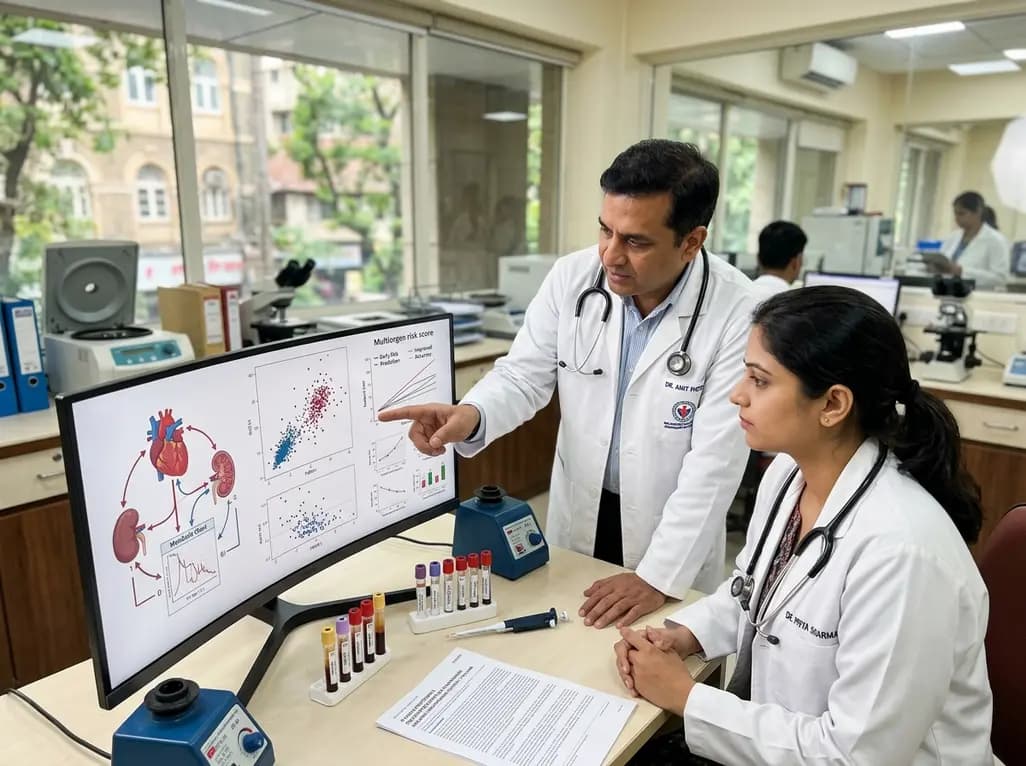
A large UK Biobank study reveals that plasma proteomic signatures capture preclinical organ damage and improve multiorgan risk prediction across early CKM syndrome stages 0 to 2 beyond traditional PREVENT clinical models.
Today
A narrative review investigates whether the articularis genus muscle functions as an independent anatomical entity or blends with the vastus intermedius. We evaluate its morphology, role in retracting the suprapatellar bursa, and direct clinical significance in anterior knee pain and arthroplasty.
Today

A Bayesian multilevel meta-analysis reveals that aerobic training combined with moderate carbohydrate restriction modestly lowers HbA1c in type 2 diabetes. However, sparse data and very low certainty leave incremental benefits over exercise or diet alone unproven, highlighting the need for individualized care.
Today
