.webp&w=384&q=75)

Loading, please wait...
Loading, please wait...
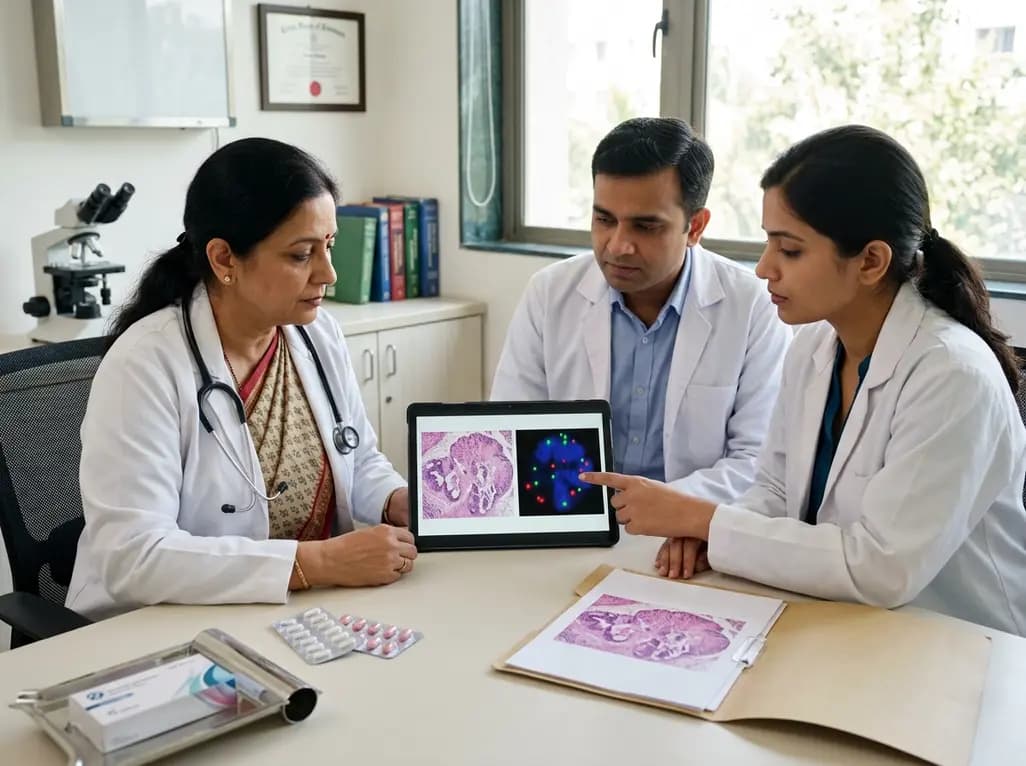
High-grade serous carcinoma (HGSC) represents the most aggressive and prevalent form of ovarian cancer. In recent years, the clinical landscape has shifted significantly toward personalized treatment strategies. Poly (ADP-ribose) polymerase inhibitors, or PARP inhibitors, have emerged as a cornerstone in managing this disease. However, identifying the patients who will benefit most from these therapies remains a challenge for many clinicians. Specifically, HRD testing in HGSC serves as a vital tool for determining homologous recombination deficiency status. This status indicates whether a tumor has impaired DNA repair mechanisms, making it more susceptible to certain targeted drugs. While BRCA1 and BRCA2 mutations are well-known markers, many patients possess "wild-type" BRCA genes yet still exhibit deficiency. Consequently, researchers are exploring additional biomarkers to ensure no patient misses out on life-extending therapies. Understanding the nuances of genomic instability allows oncologists to move beyond a one-size-fits-all approach. This transition is especially important in resource-limited settings where standard testing might not be readily available. Therefore, the search for reliable surrogate markers, such as MYC amplification, has gained significant momentum in the scientific community.
Clinical trials often provide a controlled environment, but real-world data offers a more practical perspective on treatment utility. A recent study conducted in Alberta, Canada, evaluated how clinicians use HRD status to guide the administration of niraparib. The researchers analyzed a cohort of 96 patients with HGSC who underwent specialized testing. Their findings revealed that patients with HRD-positive tumors were 3.5 times more likely to receive niraparib compared to those with HRP (homologous recombination proficient) status. Furthermore, the duration of treatment adherence was notably higher in the HRD group. Specifically, 40% of patients with deficient tumors remained on therapy, whereas only 23% of those with proficient tumors continued treatment. This discrepancy suggests that HRD status not only guides initial prescription but also predicts sustained clinical benefit. However, the study also identified a significant gap: HRD testing is not always available or conclusive. In the Alberta cohort, approximately 4% of tests yielded inconclusive results. This highlight the urgent need for secondary markers that can supplement or replace complex genomic assays. By improving the reliability of patient stratification, we can optimize the allocation of healthcare resources while maximizing therapeutic efficacy for those with advanced ovarian malignancies.
Patients with BRCA1 or BRCA2 mutations are historically the primary candidates for PARP inhibitor therapy. Nevertheless, a substantial proportion of HGSC cases are classified as BRCA wild-type (BRCA-wt). These tumors do not harbor the classic mutations but may still demonstrate a "BRCA-ness" phenotype. Consequently, relying solely on BRCA status can lead to under-treatment. In these instances, HRD testing in HGSC becomes the definitive method for identifying genomic instability. Without these tests, clinicians might assume a tumor is proficient and opt for less effective treatment paths. The Alberta study specifically focused on this wild-type population to understand their unique genetic landscape. It found that even among BRCA-wt patients, a significant percentage exhibited homologous recombination deficiency. This finding underscores the fact that multiple genetic and epigenetic alterations can lead to the same functional defect in DNA repair. Furthermore, the clinical outcomes for BRCA-wt HRD patients are often comparable to those with BRCA mutations when treated with PARP inhibitors. Therefore, expanding our diagnostic toolkit is essential to capture this hidden patient population. Identifying reliable genomic features that correlate with HRD status within the BRCA-wt group remains a top priority for researchers and gynecologic oncologists worldwide.
One of the most promising findings in recent molecular oncology is the association between MYC amplification and HRD status. The MYC oncogene is frequently involved in cell cycle regulation and genomic stability. In the Alberta study, researchers defined MYC amplification as having five or more copies of the gene. They discovered that this amplification was remarkably more common in HRD tumors than in HRP tumors. Specifically, in the main cohort, 43% of HRD tumors showed MYC amplification compared to only 3% of HRP tumors. This strong statistical correlation was further validated in separate cohorts, where 55% of HRD tumors displayed the amplification versus only 11% of HRP tumors. Consequently, MYC amplification could serve as a highly specific surrogate marker for HRD testing in HGSC. Since MYC status can often be determined through simpler and more affordable methods like fluorescence in situ hybridization (FISH) or standard NGS panels, it offers a practical alternative. This is particularly relevant in settings where comprehensive genomic instability scores are too expensive or difficult to obtain. Moreover, the high specificity of MYC amplification allows for confident identification of HRD-positive cases among BRCA-wt patients, potentially streamlining the decision-making process in busy clinical environments.
In India, the burden of ovarian cancer is significant, and access to high-end molecular diagnostics remains uneven. While international guidelines recommend HRD testing in HGSC for all advanced cases, the cost of commercial assays like Myriad MyChoice often exceeds the financial reach of many patients. Therefore, the identification of MYC amplification as a surrogate marker holds profound implications for Indian oncology. Local laboratories can potentially integrate MYC copy number assessment into existing diagnostic workflows more easily than complex genomic scar assays. Additionally, real-world data from Indian centers suggests that while PARP inhibitors are effective, dose reductions are frequent due to toxicity or cost constraints. By utilizing markers like MYC, clinicians can better justify the use of these expensive drugs and identify patients most likely to tolerate and benefit from long-term maintenance. Furthermore, improving the precision of patient selection helps in managing the limited healthcare budget more effectively. Transitioning toward locally validated surrogate markers could bridge the gap between global standards of care and the practical realities of the Indian medical system. Ultimately, this approach empowers Indian doctors to deliver high-quality, personalized medicine to a larger segment of the population suffering from advanced ovarian carcinoma.
The evolution of biomarker-driven therapy has transformed the prognosis for many women with high-grade serous carcinoma. As we move forward, the integration of HRD testing in HGSC with novel surrogate markers like MYC amplification will likely become the standard of care. This hybrid approach ensures that even when primary genomic assays fail or are unavailable, clinicians have reliable data to guide treatment. However, further research is needed to determine if MYC amplification alone is sufficient to predict PARP inhibitor response in the absence of other HRD features. Additionally, the development of standardized protocols for MYC testing will be crucial for its widespread adoption. Moreover, ongoing clinical trials should continue to investigate the efficacy of combination therapies in patients identified through these surrogate markers. By refining our understanding of the molecular drivers of HGSC, we can improve survival rates and quality of life for patients globally. Consequently, the collaboration between molecular pathologists and oncologists will remain essential in navigating the complexities of the tumor genome. As precision medicine becomes more accessible, the hope for curing advanced ovarian cancer moves closer to reality.
HRD testing, or Homologous Recombination Deficiency testing, evaluates a tumor's ability to repair double-strand DNA breaks. When a tumor is HRD-positive, it typically responds much better to platinum-based chemotherapy and PARP inhibitors. This testing is crucial because it helps oncologists identify approximately 50% of high-grade serous carcinoma patients who have these repair defects, allowing for more personalized and effective maintenance therapy plans after initial treatment.
Research indicates that MYC amplification is highly correlated with genomic instability in BRCA wild-type tumors. In clinical studies, tumors with five or more copies of the MYC gene were significantly more likely to be HRD-positive rather than HR-proficient. Because MYC amplification is easier and cheaper to detect than comprehensive genomic instability scores, it serves as a practical surrogate to identify patients who may benefit from PARP inhibitors in restricted settings.
While the greatest benefit of PARP inhibitors like niraparib is seen in HRD-positive patients, some clinical trials have shown a modest progression-free survival benefit in HRP (proficient) patients as well. However, the likelihood of long-term adherence and significant response is much lower in the HRP group. Therefore, clinicians must carefully weigh the potential for minor benefits against the risks of toxicity and the financial costs of the medication for these specific patients.
Disclaimer: This content is for informational and educational purposes only and does not constitute medical advice. It is not intended to be a substitute for professional medical advice, diagnosis, or treatment. Always seek the advice of your physician or other qualified health provider with any questions you may have regarding a medical condition. Refer to the latest local and national guidelines for clinical practice.
References
Maradiya R et al. The real-world utility of homologous repair deficiency testing in BRCA1/2 wild-type high-grade serous carcinoma and the utility of MYC amplification as a potential surrogate marker. Gynecol Oncol. 2026 Jul 13. doi: undefined. PMID: 42442041.
Kanakasetty GB et al. Real-world data of PARP inhibitors in first-line maintenance for BRCA-mutated or HRD-positive advanced ovarian cancer: a multicentre retrospective study from India. Ecancermedicalscience. 2026 May 07. doi: 10.3332/ecancer.2026.1234.
Pramanik R et al. Reporting an Indian multicentric community oncology practice's observation on patterns of homologous recombinant deficiency across various solid cancers evaluated through tumor-DNA-based NGS. J Clin Oncol. 2024;42(16_suppl):e13554.

Read summarized clinical updates, watch expert medical content, and earn CME certifications right from your smartphone.
Open your smartphone camera to scan and install.





New research highlights the clinical utility of HRD testing in BRCA wild-type high-grade serous carcinoma. Discover how MYC amplification can serve as a potential surrogate marker to predict PARP inhibitor benefit and improve patient outcomes in precision oncology.
3 months ago

Explore vital recurrent stroke predictors in lacunar stroke patients managed with intensive blood pressure lowering. This analysis examines trial findings from SPS3 to uncover residual vascular risks, metabolic factors, and targeted secondary prevention strategies for high-risk neurological patients.
Today

A comprehensive scoping review synthesises evidence linking prenatal maternal mental health to long-term offspring neurodevelopment, evaluating neuroendocrine, inflammatory, and epigenetic pathways while highlighting clinical screening and future research priorities.
Today

The Directorate General of Health Services directs Indian states to halt the hazardous reuse and reprocessing of single-use medical devices. Discover regulatory implications under the Drugs and Cosmetics Act, critical infection risks, legal liabilities, and operational changes required across clinical specialties.
Today

Mitochondria-targeted nanoparticles self-assembled from EGCG and L-glutamic acid effectively restore mitochondrial homeostasis, suppress synovial inflammation, and attenuate chondrocyte senescence in osteoarthritis, offering a promising disease-modifying nanotherapy.
Today

India is advancing preventive healthcare by integrating genomics, artificial intelligence, and quantum technologies. With the SANGAM programme sequencing one million Indian genomes, clinicians can unlock personalized therapies, detect cardiometabolic risks early, and curb the burden of diabetes and heart disease.
Today
