.webp&w=384&q=75)

Loading, please wait...
Loading, please wait...

Human papillomavirus (HPV) remains a primary driver of various malignancies globally, necessitating robust preventive strategies through public health channels. Recent evidence emphasizes that HPV vaccination cost-effectiveness is a critical metric for policymakers when deciding on the inclusion of advanced vaccines, such as the 9-valent version, in National Immunization Programs (NIP). A recent landmark study published in Ginekol Pol. utilized the Papillomavirus Rapid Interface for Modeling and Economics (PRIME) framework to project the financial and societal outcomes of 9-valent HPV vaccination. Consequently, the research highlights how proactive immunization can drastically reduce the burden of cervical, anal, penile, and oropharyngeal cancers. In developing healthcare landscapes, these economic evaluations serve as the backbone for sustainable health planning. Therefore, understanding the intersection of clinical efficacy and fiscal responsibility is essential for clinicians and health administrators alike. By preventing persistent infections, these vaccines offer a long-term solution to reducing oncological morbidity and mortality. Moreover, the integration of such vaccines into routine schedules ensures equitable access across diverse demographic cohorts, which is a prerequisite for achieving global cervical cancer elimination goals. Importantly, the analysis confirms that the 9-valent vaccine remains highly cost-effective even when considering only cervical cancer prevention.
The PRIME model is a sophisticated tool developed by the World Health Organization to help countries assess the health and economic impacts of HPV vaccination. Specifically, it simulates the incidence of cervical cancer based on vaccine efficacy, coverage rates, and the specific distribution of HPV types within a population. By applying this model, researchers can estimate crucial outcomes such as deaths averted and disability-adjusted life-years (DALYs) prevented. In the context of recent Turkish data, the model projected that vaccinating a single age cohort could prevent 772 cervical cancer cases and 369 related deaths. Notably, the model's output suggested a cost of US$13,754 per DALY gained, which falls well within the accepted threshold of three times the national GDP per capita. This methodology is particularly valuable because it uses real-world demographic data from sources like the Turkish Statistical Institute and local treatment expenditure records. Furthermore, the framework allows for deterministic sensitivity testing to ensure that findings remain robust despite potential variability in parameters like discount rates or vaccine pricing. Resultantly, PRIME provides a clear, evidence-based pathway for justifying the high initial costs of 9-valent vaccines through significant long-term savings in cancer treatment and palliative care.
When evaluating the financial viability of a new vaccine, the incremental cost-effectiveness ratio (ICER) serves as the primary indicator of value. The 9-valent HPV vaccine, while often more expensive than its bivalent or quadrivalent counterparts, offers broader protection against five additional high-risk HPV types (31, 33, 45, 52, and 58). This expanded coverage translates into a higher number of averted cancer cases and greater DALY gains. In addition to direct healthcare savings, there are substantial societal benefits, including the preservation of life-years and the maintenance of a productive workforce. However, the discount rate applied to future health benefits remains a major driver of baseline estimates in these economic models. Sensitivity analyses consistently show that while the ICER may fluctuate, the overall conclusion of HPV vaccination cost-effectiveness remains stable. For instance, even with variations in vaccine pricing or epidemiological inputs, the 9-valent vaccine frequently stays below the three-times GDP per capita threshold. This stability is vital for long-term policy commitments where budget cycles must account for decades of health outcomes. Consequently, the net costs of the program are frequently offset by the avoided expenses associated with chemotherapy, radiotherapy, and surgical interventions for advanced-stage cancers.
Several factors influence the overall economic success of a national HPV immunization campaign. First and foremost, vaccine coverage rates among adolescent girls before sexual debut are paramount. High coverage ensures maximal population-level protection and can lead to herd immunity, indirectly protecting unvaccinated individuals. Secondly, the price per dose negotiated by the Ministry of Health directly affects the net cost of the NIP. In many regions, the transition from a 2-dose to a single-dose schedule is being explored to further enhance cost-efficiency and simplify logistics. Moreover, the specific HPV genotype distribution in the local population dictates how much additional benefit the 9-valent vaccine provides over the quadrivalent one. In countries with a high prevalence of types 31, 33, or 45, the 9-valent vaccine becomes even more economically attractive. Therefore, local epidemiological data must be integrated with global modeling tools to provide accurate projections. Additionally, the reduction in non-cervical burdens, such as genital warts and head and neck cancers, significantly boosts the total impact. While many models focus solely on cervical outcomes to remain conservative, the inclusion of these other conditions often reveals that the vaccine is even more cost-effective than initially reported.
While the economic argument for HPV vaccination is strong, the clinical implications are equally profound. The 9-valent vaccine protects against approximately 90% of cervical cancers globally. Beyond the cervix, it is highly effective at preventing vaginal, vulvar, and anal cancers, as well as high-grade precancerous lesions. Notably, the prevention of genital warts—caused primarily by HPV types 6 and 11—provides immediate clinical benefits and reduces the burden on dermatology and urology clinics. Furthermore, recent trends show a rising incidence of HPV-related oropharyngeal cancers, particularly in men, making the case for gender-neutral vaccination stronger. In addition to reducing cancer rates, the vaccine decreases the need for invasive screening follow-ups, such as colposcopy and LEEP procedures. This reduction in the "cascade of care" for abnormal cytology results saves both patient anxiety and healthcare resources. Consequently, the clinical impact of the 9-valent vaccine extends far beyond the oncology ward, touching multiple specialties including pediatrics, family medicine, and gynecology. By addressing the root cause of these diverse conditions, the vaccine represents one of the most effective primary prevention tools in modern medicine. Therefore, its role as a cornerstone of women's health cannot be overstated.
In India, the burden of cervical cancer is among the highest in the world, with over 120,000 new cases reported annually. The Indian government has recently prioritized the introduction of HPV vaccination into the NIP, targeting girls aged 9 to 14 years. While the indigenous vaccine, Cervavac, offers a cost-effective alternative for protecting against types 16 and 18, the 9-valent vaccine remains an option for those seeking broader protection in the private sector. Nevertheless, global data on HPV vaccination cost-effectiveness from countries like Türkiye provides a useful benchmark for Indian health authorities. A single-dose strategy is currently being considered in India to overcome logistical barriers and reduce costs. This approach aligns with recent WHO recommendations and could potentially double the reach of existing vaccine supplies. However, the success of the program will depend on overcoming vaccine hesitancy and ensuring consistent supply chains across rural and urban sectors. In addition to vaccination, India must continue to strengthen its screening programs to catch cases among women who are already beyond the vaccination age. Ultimately, a dual approach of high-coverage immunization and robust screening is required to move India toward the goal of cervical cancer elimination. The economic models suggest that such an investment will pay for itself multiple times over in the coming decades.
The PRIME model is a specialized economic tool developed to evaluate the health and financial impacts of HPV vaccination. It calculates the number of cervical cancer cases and deaths prevented by simulating the interaction between vaccine efficacy and local epidemiology. By using disability-adjusted life-years (DALYs) as a primary metric, the model allows researchers to determine if a vaccine provides good value for money relative to a country's economic status.
Although the 9-valent vaccine is more expensive, it covers five additional high-risk HPV types that cause a significant portion of cancers. By preventing a broader range of infections, it averts more cases of cervical, vaginal, and anal cancers than the bivalent or quadrivalent vaccines. When the total savings from avoided cancer treatments and gained life-years are factored in, the 9-valent version often proves to be a more efficient public health investment.
HPV vaccination significantly reduces the prevalence of genital warts and precancerous lesions, which lessens the workload for dermatologists, urologists, and gynecologists. It also prevents oropharyngeal cancers, which are increasingly managed by otolaryngologists. By providing primary prevention in the pediatric and adolescent years, the vaccine reduces the long-term need for invasive diagnostic procedures and chronic disease management across multiple medical fields, thereby improving overall health system efficiency and patient outcomes.
Disclaimer: This content is for informational and educational purposes only and does not constitute medical advice or a professional recommendation. While the economic modeling discussed provides valuable insights into public health strategies, clinical decisions should be based on individual patient needs and the latest evidence-based medicine. Refer to the latest local and national guidelines for clinical practice.
References
1. Ersoy E et al. Evaluating the cost-effectiveness of implementing HPV vaccination in Turkiye's National Immunization Program using the PRIME model. Ginekol Pol. 2026 Jul 17. doi: 10.5603/gpl.104730. PMID: 42464849.
2. Asia-Pacific Journal of Clinical Oncology. Cost-effectiveness analysis of human papillomavirus vaccines for the prevention of cervical cancer in India. 2023 May 3. PubMed ID: 37132041.
3. Bruni L et al. Cervical cancer a preventable disease: the role of HPV vaccination and screening. The Lancet Global Health. 2014;2(7):e406-e417. doi: 10.1016/S2214-109X(14)70237-2.
4. World Health Organization. PRIME Tool: A modelling tool for assessing the economic and human impact of vaccination against human papillomavirus. 2022 guidance.

Read summarized clinical updates, watch expert medical content, and earn CME certifications right from your smartphone.
Open your smartphone camera to scan and install.





A recent study evaluates the cost-effectiveness of including the 9-valent HPV vaccine in Türkiye's National Immunization Program. Using the PRIME model, researchers found that the vaccine significantly reduces cervical cancer cases and deaths while remaining within acceptable financial thresholds.
3 months ago
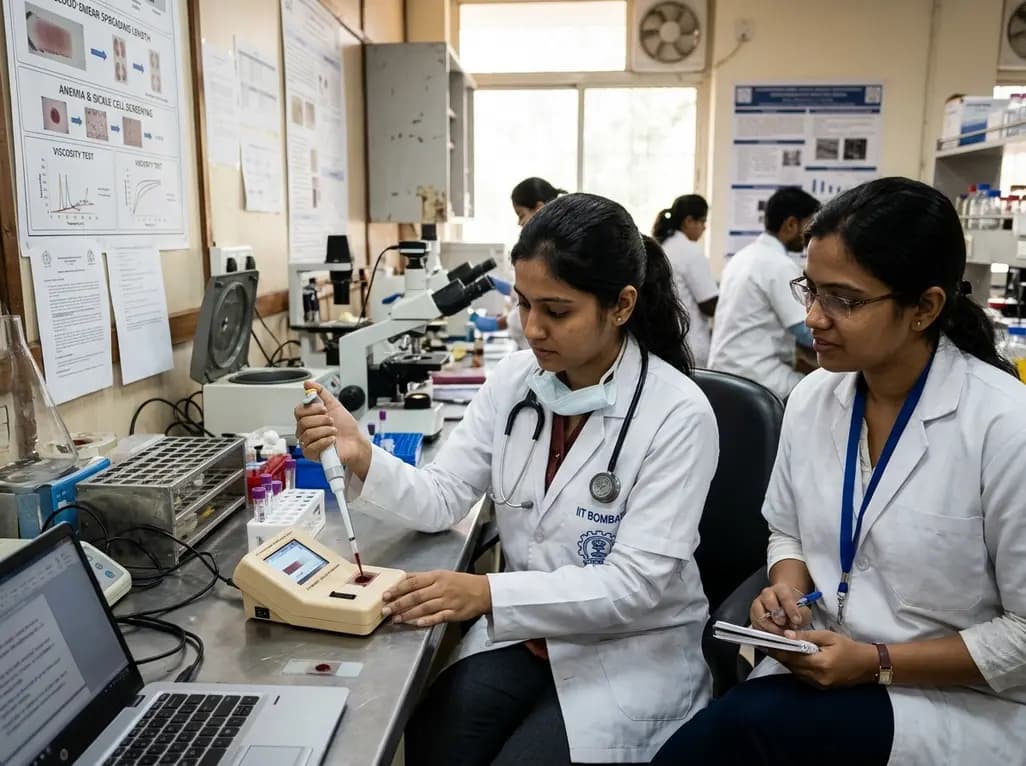
Researchers at IIT Bombay have engineered an automated, cost-effective point-of-care device that diagnoses anaemia and sickle cell disease from a single drop of blood. By measuring blood smear spreading length, this portable tool assesses blood viscosity to offer rapid screening in resource-limited healthcare centers.
Today

A population-based study of 20,928 children reveals that small vulnerable newborns face sex-divergent mental capital outcomes at ages 6-7: term SGA girls show higher behavioral difficulties and lower resilience, while preterm non-SGA boys experience increased behavioral problems.
Today
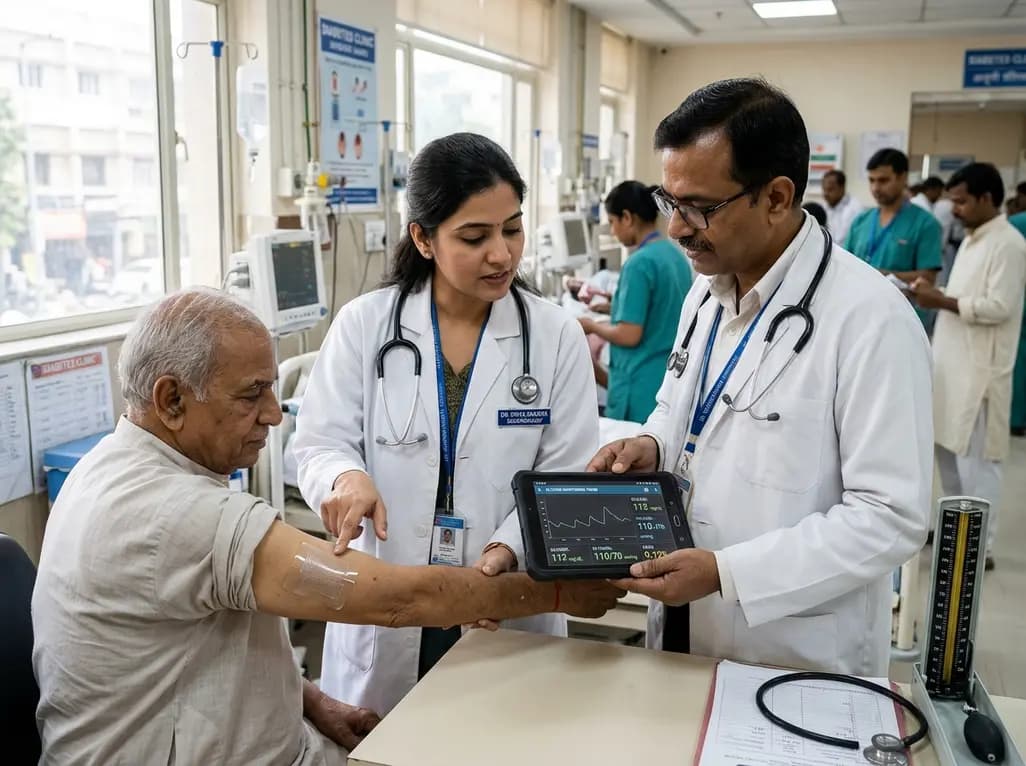
A breakthrough ultrathin multimodal sensor decouples physical hemodynamic monitoring from disposable electrochemical calibration, achieving long-term wearable glucose prediction with 81.36% accuracy and a 9.12% MARD. This offers a robust, drift-free solution for outpatient metabolic surveillance.
Today

A comparative review of tension band wiring and intramedullary screw fixation in thumb metacarpophalangeal arthrodesis, evaluating union rates, hardware complications, and clinical outcomes.
Today

Following regulatory scrutiny from FSSAI regarding promotional representations and lean muscle preservation claims, Dr. Reddy's Laboratories and Nestlé Health Science are currently reviewing the branding and marketing strategy for their joint nutritional supplement Celevida GLP+.
Today
