.webp&w=384&q=75)

Loading, please wait...
Loading, please wait...

Hospital water management programs have become a cornerstone of environmental safety in modern healthcare facilities. A comprehensive study by Yount C et al. reveals that by 2022, 96% of U.S. acute care hospitals successfully implemented these programs. This trend reflects an industry-wide commitment to mitigating healthcare-associated infections (HAIs) caused by waterborne pathogens. Furthermore, the integration of hospital water management programs allows facilities to systematically identify and manage risks associated with complex plumbing systems.
One of the most critical elements of a robust safety strategy is the Water Infection Control Risk Assessment (WICRA). The researchers found that hospitals with a higher volume of ICU beds and significant infection prevention expertise were more likely to conduct these detailed assessments. Consequently, these institutions can better protect vulnerable, immunocompromised patients from bacteria like Legionella and Pseudomonas. However, the data also highlights a significant gap in adoption among smaller, rural hospitals. These facilities often lack the specialized resources required to maintain advanced hospital water management programs and comprehensive risk assessments.
While the study focuses on the United States, the findings offer vital lessons for healthcare systems worldwide, including India. As Indian hospitals pursue NABH accreditation, the implementation of structured water safety protocols remains essential. Effective management involves a multidisciplinary team including clinicians, facility engineers, and microbiologists. Therefore, addressing resource disparities in smaller clinics is a necessary step toward ensuring equitable patient safety across all healthcare settings.
A WICRA is a specialized tool used by healthcare teams to evaluate water sources, modes of transmission, and patient susceptibility. It helps identify specific areas in a hospital where waterborne pathogens might pose a risk during clinical care or construction activities.
ICU patients often have weakened immune systems and are more susceptible to severe waterborne infections. These programs provide the monitoring and disinfection protocols necessary to prevent outbreaks in high-risk environments.
Disclaimer: This content is for informational and educational purposes only. It does not constitute professional medical advice, diagnosis, or treatment. Always seek the advice of your physician or other qualified healthcare provider with any questions you may have regarding a medical condition. Refer to the latest local and national guidelines for clinical practice.
References

Read summarized clinical updates, watch expert medical content, and earn CME certifications right from your smartphone.
Open your smartphone camera to scan and install.





US hospital study shows 96% adoption of water management programs, highlighting the link between ICU capacity and infection control risk assessments....
4 months ago
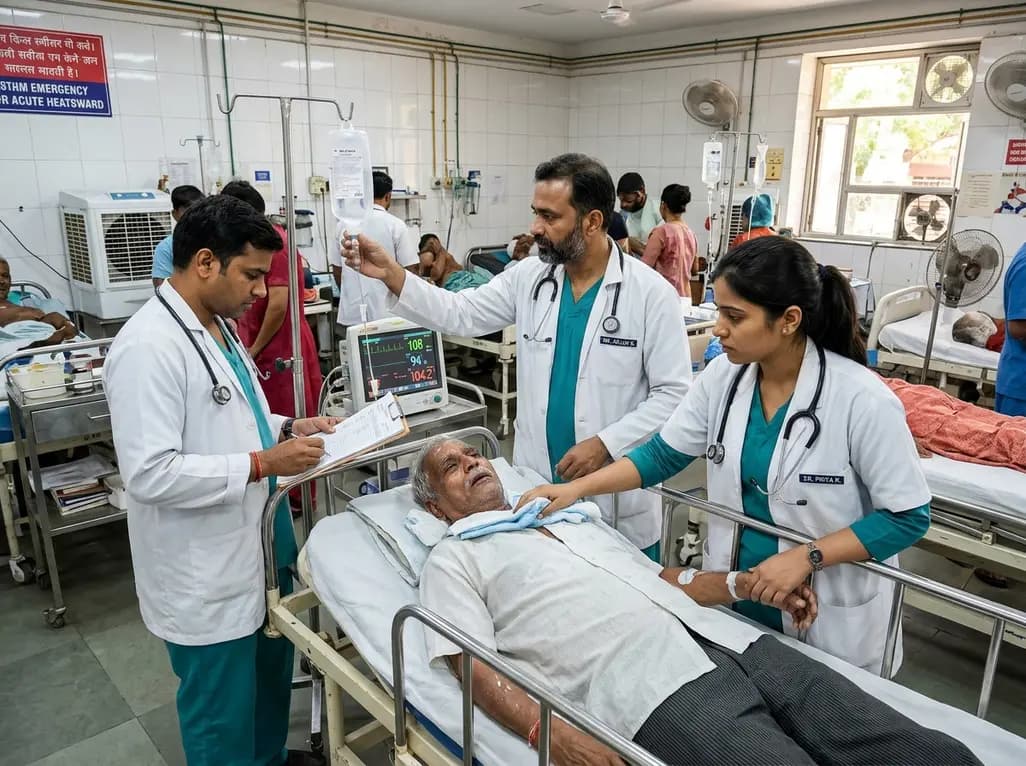
Recent epidemiological data reveals a dramatic surge in summer heat mortality driven by human-induced climate warming. This analysis explores the pathophysiological impacts on cardiac and renal systems, diagnostic dilemmas in death certification, and essential emergency cooling protocols for acute clinical care.
Today

Odisha has established India's first state-level clinical protocol specifically tailored for pregnant women with sickle cell disease. Developed with NHM and UNICEF, the framework provides structured antenatal screening, crisis mitigation, standardized referral pathways, and specialized interdisciplinary care.
Today

India is advancing preventive healthcare by integrating genomics, artificial intelligence, and quantum technologies. With the SANGAM programme sequencing one million Indian genomes, clinicians can unlock personalized therapies, detect cardiometabolic risks early, and curb the burden of diabetes and heart disease.
Today

A randomized controlled trial demonstrates that an eight-week dual-task training intervention significantly improves static and dynamic postural control over standard balance exercises in individuals with chronic ankle instability, addressing critical neurocognitive deficits during athletic and daily activities.
Today

A retrospective cohort study of 7,716 ICU patients from the MIMIC-IV database demonstrates that Gradient Boosting Decision Trees significantly outperform traditional SOFA scores in predicting in-hospital mortality among patients with sepsis and diabetes, with SHAP analysis providing clinical interpretability.
Today
