.webp&w=384&q=75)

Loading, please wait...
Loading, please wait...
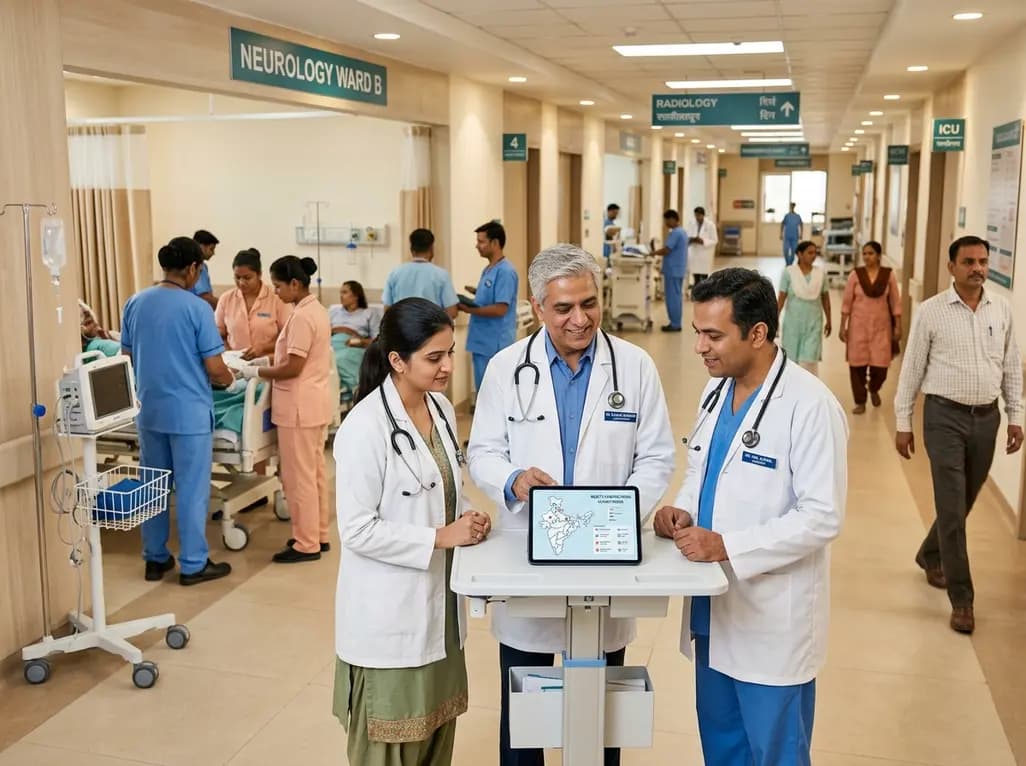
Park Medi World has announced a strategic hospital network expansion across northern India to address the surging demand for tertiary care services. As outlined in its annual report for the 2025-26 financial year, the healthcare provider plans to add 1,450 beds by FY28. This ambitious expansion initiative will increase the organization's existing capacity of 4,290 beds to an impressive 5,740 beds across regional clusters. Consequently, the healthcare provider aims to bridge critical medical infrastructure gaps across Tier 1, Tier 2, and Tier 3 cities. Furthermore, this strategic expansion aligns with growing patient awareness, rising household incomes, and wider health insurance penetration across emerging urban centers in India.
Healthcare demand in non-metropolitan districts is expanding rapidly across India. In particular, smaller cities in Haryana, Punjab, Rajasthan, and Uttar Pradesh require sophisticated multi-specialty care facilities. Historically, patients from these regions traveled long distances to national capitals for complex clinical interventions. However, the current healthcare transition encourages providers to establish robust secondary and tertiary medical centers closer to patient communities.
Park Medi World aims to capture this vital clinical demand by establishing dense regional clusters. Instead of operating fragmented facilities across disparate geographies, the network focuses on state capitals and major district headquarters. Therefore, this cluster-centric model optimizes logistical coordination, diagnostic sharing, and workforce mobility. Clinicians benefit significantly from this structured regional presence because patient referral pathways become much more streamlined.
Moreover, health insurance expansion under national welfare schemes and private insurance products has dramatically increased affordability for semi-urban families. As a result, hospitals located in Tier 2 and Tier 3 cities experience robust patient footfalls. By executing a targeted hospital network expansion, Park Medi World establishes modern infrastructure where clinical shortages are most acute, thereby delivering specialized patient care locally.
The expansion blueprint relies on a balanced combination of organic greenfield developments and inorganic acquisitions. Greenfield projects allow the healthcare provider to design purpose-built clinical infrastructure with modern layouts and specialized operation suites. Consequently, these newly constructed hospitals reinforce long-term operational sustainability and clinical compliance. Meanwhile, strategic acquisitions enable the organization to enter mature markets rapidly without waiting for lengthy construction timelines.
Specifically, the acquisition strategy prioritizes operational hospitals with existing capacities of 200 to 250 beds. The management team then evaluates the structural potential to expand these acquired centers to 300 or 350 beds. So far, the hospital chain has successfully acquired and integrated 11 facilities across North India. This integration method preserves institutional familiarity for local communities while introducing upgraded medical technologies.
Furthermore, acquiring brownfield assets allows the network to leverage existing patient footfalls and clinical teams immediately. Once acquired, these centers undergo substantial modernization, including digital records integration and advanced diagnostic installations. Thus, clinicians practicing in acquired facilities gain rapid access to centralized clinical support systems, standardized clinical protocols, and specialized interventional equipment.
A major hospital infrastructure expansion requires a commensurate investment in clinical talent and advanced medical technologies. Currently, Park Medi World supports an extensive clinical network comprising 1,168 doctors and 6,423 healthcare personnel. As bed capacity expands toward 5,740 beds by FY28, the provider must recruit additional specialists across critical domains. In particular, cardiology, oncology, neurology, orthopedics, gastroenterology, and intensive care will experience substantial team expansions.
Additionally, centralized medical governance ensures uniform clinical quality across all regional hospitals. When smaller district hospitals join a larger network, clinical protocols become standardized across departments. Consequently, multidisciplinary tumor boards, infection control committees, and emergency triage pathways operate with identical precision across all units. This structured oversight directly improves patient safety and minimizes clinical variance between urban flagship centers and regional satellite units.
Furthermore, expanding hospital networks create attractive professional opportunities for specialist physicians in Tier 2 and Tier 3 cities. Rather than migrating exclusively to tier-1 metropolitan areas, specialists can access advanced catheterization labs, linear accelerators, and modular intensive care units in regional hubs. Ultimately, this geographic distribution of medical expertise elevates the quality of healthcare delivery throughout Northern India.
Robust financial performance provides the essential capital required to sustain large-scale healthcare construction and asset integration. For the financial year 2025-26, Park Medi World reported its highest-ever consolidated net profit of Rs 273.6 crore. In addition, total operating revenue reached a record Rs 1,679.4 crore, reflecting steady operational growth. This strong fiscal standing allows the organization to fund infrastructure additions while maintaining a conservative debt profile.
Simultaneously, the healthcare chain is incorporating green building principles and clean energy solutions across its network. The provider has installed extensive rooftop solar panel arrays across multiple hospital campuses to diminish reliance on conventional power grids. Because hospitals operate energy-intensive equipment continuously, adopting renewable energy reduces long-term operating costs significantly. Therefore, these savings can be redirected into clinical research, diagnostic equipment upgrades, and patient amenities.
Moreover, sustainable hospital infrastructure supports long-term disaster resilience and environmental health standards. By implementing advanced water recycling plants and energy-efficient climate control systems, healthcare facilities lower their overall carbon footprint. Consequently, modern hospitals demonstrate that financial viability, environmental stewardship, and high-quality clinical operations can reinforce each other effectively.
The continued expansion of private hospital networks into non-metro regions represents a fundamental structural evolution in Indian healthcare. For practicing clinicians, this decentralization trend offers distinct career advantages and collaborative clinical networks. Specialists can build rewarding clinical practices in emerging cities while remaining connected to larger academic and clinical governance ecosystems. Furthermore, regional centers facilitate cross-specialty clinical audits and joint research initiatives.
At the community level, expanding tertiary infrastructure mitigates the overwhelming clinical load on public teaching hospitals. When private tertiary facilities manage complex elective and acute cases locally, critical transit times decrease substantially for emergencies such as acute coronary syndromes and acute ischemic strokes. Therefore, early intervention during golden hour windows significantly improves long-term patient recovery rates.
Finally, the expansion of regional hospital networks stimulates broader healthcare supply chain developments. Local diagnostic laboratories, emergency transport services, and rehabilitation clinics expand alongside major hospital campuses. Consequently, entire regional healthcare ecosystems mature, fostering better chronic disease management and comprehensive preventive health screening programs across diverse patient populations.
Q1: What is the primary objective of the Park Medi World expansion plan?
The primary objective is to expand tertiary healthcare access across North India by adding 1,450 hospital beds by FY28, reaching a total network capacity of 5,740 beds. By establishing dense regional clusters in Tier 1, 2, and 3 cities, the organization aims to address growing clinical demand, optimize resource sharing, elevate patient experience, and deliver consistent, high-standard medical interventions across regional urban centers.
Q2: How does the hospital network plan to execute its bed addition strategy?
The network executes its expansion through a balanced combination of organic greenfield developments and selective acquisitions. For acquisitions, the management targets established hospitals possessing 200 to 250 beds, with architectural potential to expand to 350 beds. This dual model allows rapid entry into high-potential district headquarters while developing modern, energy-efficient facilities tailored to meet long-term regional healthcare requirements and stringent regulatory standards.
Q3: What clinical specialties will benefit most from this hospital capacity expansion?
The capacity addition will significantly strengthen super-specialty departments across the hospital network. Key clinical domains including cardiology, oncology, neurosurgery, orthopedics, gastroenterology, nephrology, and intensive care will receive upgraded infrastructure. This includes modern catheterization laboratories, advanced linear accelerators, and expanded critical care units, enabling specialists to deliver comprehensive, multidisciplinary clinical care to patients without requiring distant metropolitan transfers.
Disclaimer: This content is for informational and educational purposes only. It does not constitute medical advice or replace professional judgment. Refer to the latest local and national guidelines for clinical practice.
References

Read summarized clinical updates, watch expert medical content, and earn CME certifications right from your smartphone.
Open your smartphone camera to scan and install.





Park Medi World is executing a major multi-city healthcare scale-up across northern India. By adding 1,450 beds through acquisitions and greenfield builds by FY28, the group targets enhanced clinical access in high-demand Tier 2 and Tier 3 markets while modernizing its regional tertiary care infrastructure.
4 weeks back
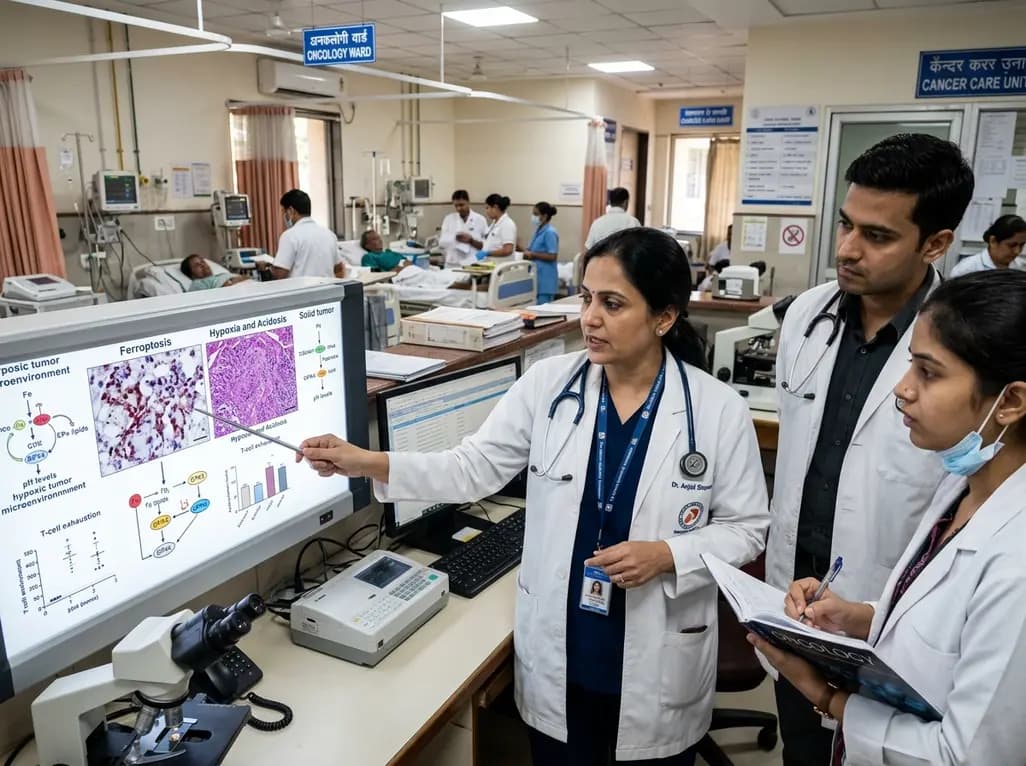
Targeting ferroptosis provides a compelling strategy to dismantle hypoxia- and acidosis-driven immunosuppression in solid tumors, enhancing response to modern immunotherapy.
Today
Findings from Project Viva indicate that sustained postpartum weight retention, rather than excessive gestational weight gain alone, directly worsens women's mid-life cardiovascular health, degrading blood pressure and glycemic parameters decades after delivery.
Today
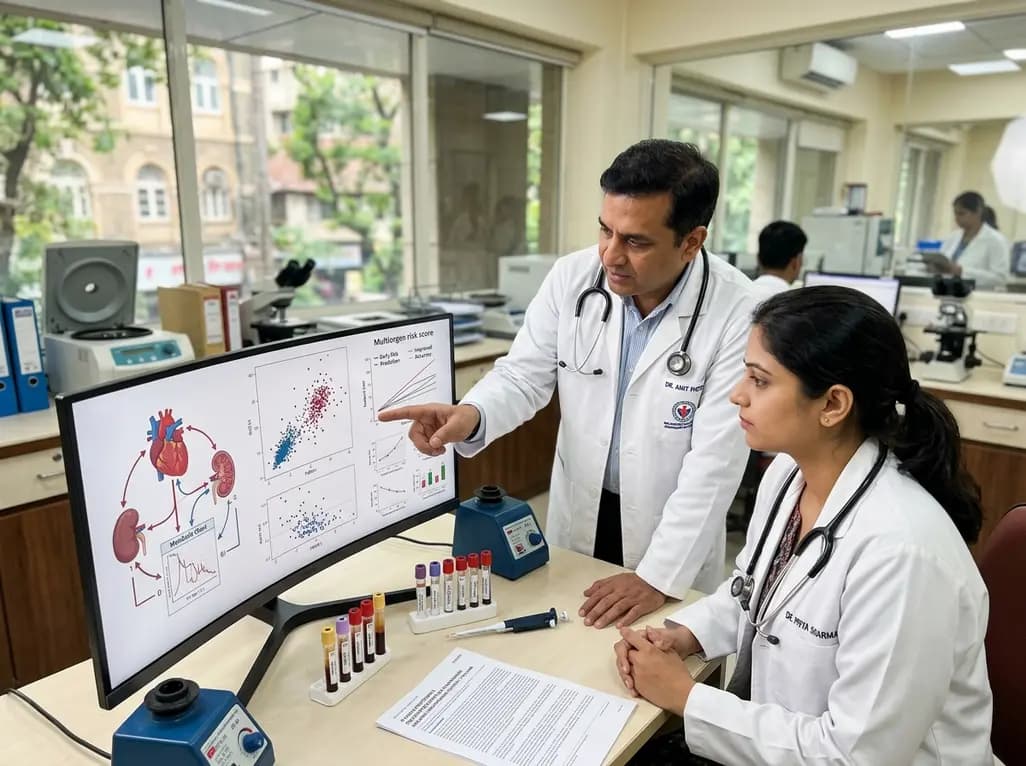
A large UK Biobank study reveals that plasma proteomic signatures capture preclinical organ damage and improve multiorgan risk prediction across early CKM syndrome stages 0 to 2 beyond traditional PREVENT clinical models.
Today
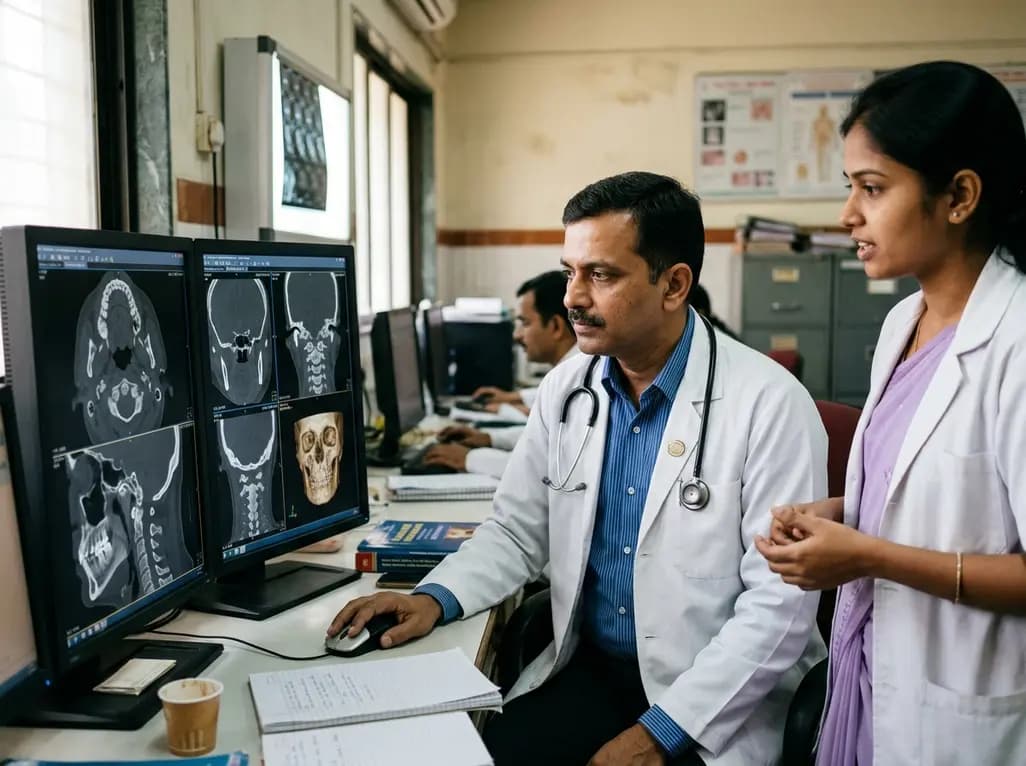
A retrospective CBCT study reveals that superior TMJ space asymmetry correlates moderately with occipital condyle-atlas-axis asymmetry in unilateral TMJ osteoarthritis, highlighting an imaging correlate between jaw biomechanics and upper cervical alignment rather than a standalone diagnostic marker.
Today

A Bayesian multilevel meta-analysis reveals that aerobic training combined with moderate carbohydrate restriction modestly lowers HbA1c in type 2 diabetes. However, sparse data and very low certainty leave incremental benefits over exercise or diet alone unproven, highlighting the need for individualized care.
Today
