.webp&w=384&q=75)

Loading, please wait...
Loading, please wait...
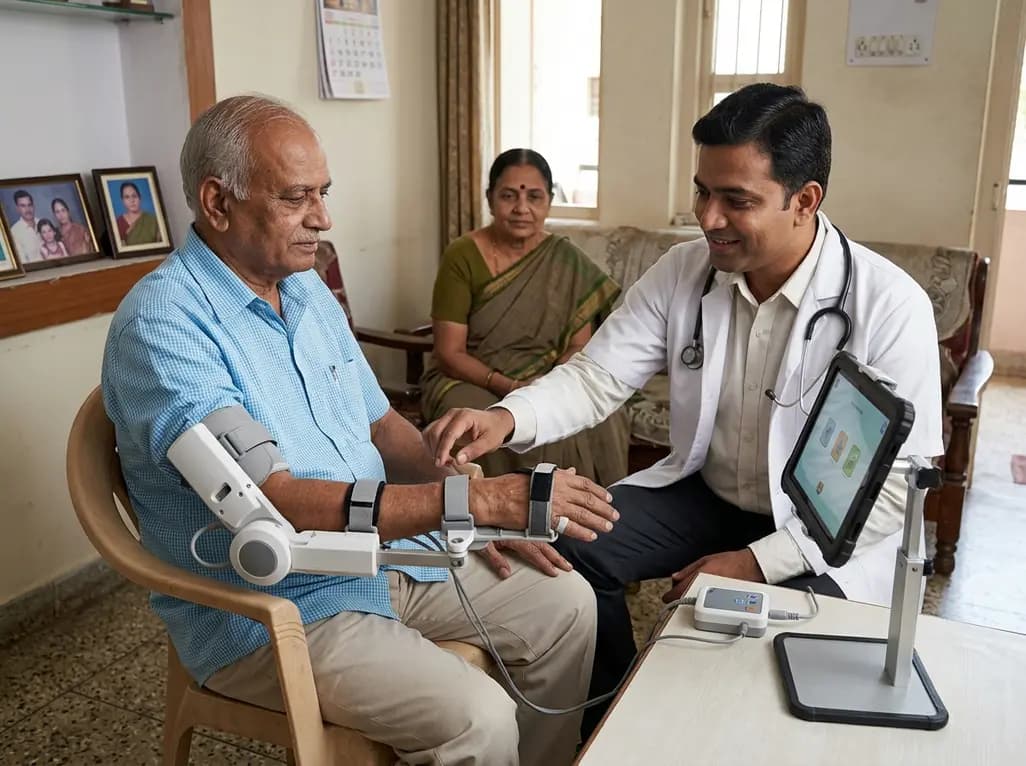
Stroke remains a predominant cause of acquired chronic adult disability across the world, leaving millions of individuals with severe neuromotor deficits. Clinical recovery depends on high-dose, repetitive, and task-specific movement practice. However, traditional outpatient healthcare models struggle to deliver these intensive therapy regimens at scale due to clinical resource constraints, geographical barriers, and staffing shortages. Consequently, rehabilitation robotics has emerged as a promising workforce multiplier capable of democratizing neurorehabilitation by delivering automated, high-repetition motor therapy directly inside patient households. While controlled laboratory trials show remarkable therapeutic potential, academic efficacy studies rarely mirror real-world consumer conditions. Understanding how home robotic interventions operate under commercial market conditions is therefore essential for clinicians designing modern telerehabilitation programs.
Academic investigations have consistently demonstrated that robot-assisted movement training drives neuroplasticity after stroke. These robotic devices facilitate high numbers of daily repetitions, which conventional one-on-one therapy sessions cannot easily match. Furthermore, modern telemonitored systems capture objective kinematic metrics and provide adaptive assistance or resistance based on user performance. Nevertheless, typical randomized clinical trials take place in well-controlled environments with high clinician supervision and selected patient populations. When devices transition to uncontrolled domestic environments, clinicians often observe variable adherence and distinct usage challenges. Therefore, analyzing direct-to-consumer deployment data provides indispensable insights into how stroke survivors truly engage with robotic therapy platforms in everyday life.
Recent long-term analyses evaluating thousands of home robotic device deployments across multiple years highlight substantial variations in patient compliance. Many stroke survivors achieve significant therapeutic volume, yet daily usage patterns fluctuate widely among individuals. In addition, rural and urban geographic classifications influence how consistently patients access remote technical support and clinical guidance. Furthermore, socioeconomic factors and domestic caregiving support heavily dictate whether a patient sustains high-intensity robotic training over multiple months. Consequently, clinicians must recognize that access to technology alone does not guarantee continuous therapeutic adherence. Structured onboarding, persistent remote engagement, and tailored behavioral coaching remain vital to prevent premature therapy dropouts.
Determining the optimal movement dosage represents a central question in neurological recovery. Clinical studies show that higher therapy volumes generally produce superior motor improvements in paretic limbs. However, real-world data demonstrate that more training is not always linearly correlated with better outcomes if patient fatigue or joint discomfort occurs. In home settings, robotic systems must titrate resistance and repetition speed dynamically to prevent overuse syndromes. Moreover, regular check-ins from telerehabilitation therapists help adjust therapy prescriptions appropriately. Thus, blending automated robotic guidance with regular clinician oversight optimizes the therapeutic dose while maintaining patient motivation and joint safety over prolonged recovery windows.
Translating rehabilitation technologies into consumer homes introduces complex economic and healthcare delivery dynamics. Commercial reimbursement models often influence which patient demographics can afford subscription or purchase costs for robotic hardware. In addition, digital literacy gaps can disproportionately hinder elderly stroke survivors from fully leveraging advanced touchscreen interfaces and gamified therapy modules. Therefore, medical technology developers and clinical teams must collaborate to build intuitive, user-friendly software that minimizes technical frustration. Furthermore, healthcare policymakers must create sustainable reimbursement frameworks so that transformative home-based robotic interventions reach underserved and lower-income populations who often face the greatest rehabilitation deficits.
The lessons learned from large-scale home deployments will directly inform the next generation of robotic neurorehabilitation. Future platforms will likely incorporate artificial intelligence algorithms to personalize movement exercises automatically in response to kinematic biofeedback. In addition, combining robotic actuators with functional electrical stimulation and virtual reality environments can enrich sensory input and motor learning. Clinicians must actively champion these integrated telerehabilitation ecosystems to bridge the gap between hospital discharge and long-term functional recovery. Consequently, decentralized robotic therapy will play an increasingly pivotal role in expanding global neurorehabilitation capacity.
Home-based robotic devices guide paretic extremities through repetitive, goal-oriented movement exercises. They use pneumatic or motorized actuators to provide adaptive assistance or resistance. This consistent, high-repetition practice stimulates cortical reorganization and promotes neuroplasticity, helping stroke survivors restore functional limb control without requiring continuous in-person physical therapy.
Patient adherence is primarily challenged by technical setup difficulties, digital literacy limitations, physical fatigue, and insufficient domestic caregiver support. In addition, the lack of immediate physical clinician supervision can reduce motivation over time. Structured remote monitoring, gamified exercise modules, and scheduled telehealth check-ins significantly improve long-term user compliance.
Robotic telerehabilitation is designed to complement rather than completely replace skilled physical and occupational therapists. While robotic devices excel at delivering repetitive mechanical training at home, skilled clinicians are essential for comprehensive assessment, spasticity management, functional mobility training, and customizing overall rehabilitation strategies to individual patient goals.
Disclaimer: This content is for informational and educational purposes only and does not constitute medical advice, diagnosis, or treatment. Always seek the advice of a qualified healthcare provider with any questions you may have regarding a medical condition. Never disregard professional medical advice or delay in seeking it because of something you have read here. The mentions of specific medications, interventions, or clinical tools are intended solely for academic discussion and do not imply endorsement. Refer to the latest local and national guidelines for clinical practice.
References

Read summarized clinical updates, watch expert medical content, and earn CME certifications right from your smartphone.
Open your smartphone camera to scan and install.





Explore real-world data from a nationwide deployment of home-based rehabilitation robotics in stroke recovery. Learn how compliance, socioeconomic factors, and dosage dynamics influence telerehabilitation outcomes.
last month
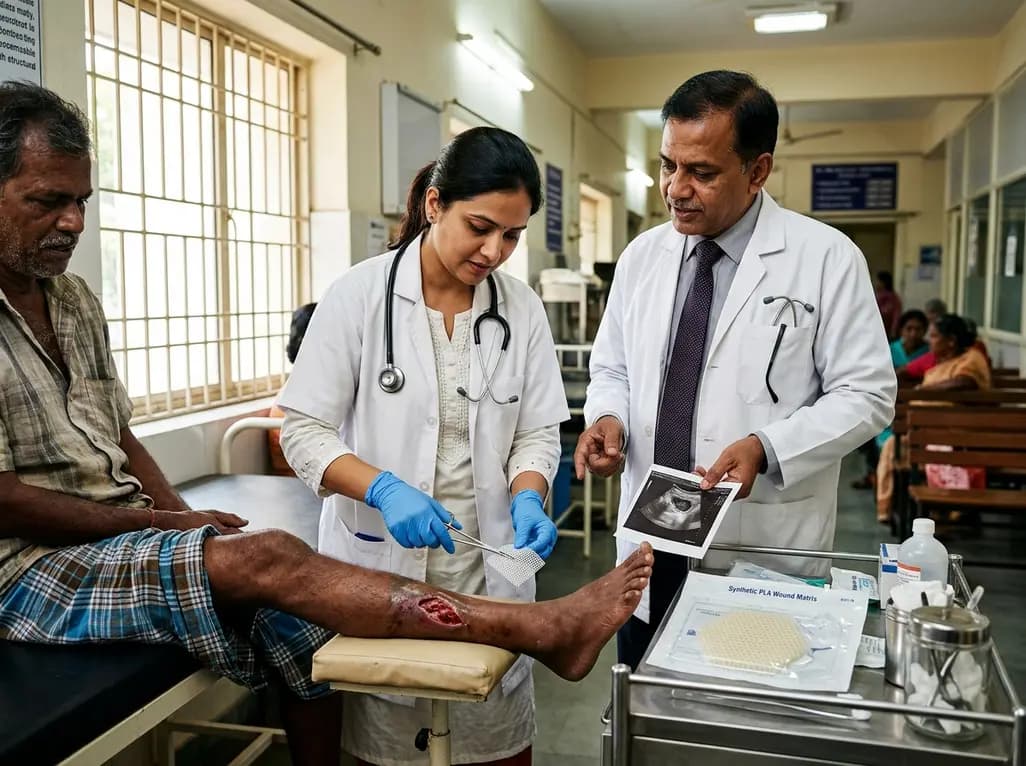
A recent clinical case series highlights the synthetic polylactic acid matrix as an innovative local therapy for refractory pyoderma gangrenosum. The bioresorbable scaffold demonstrated complete ulcer closure and favorable scar quality across chronic wounds, presenting a viable regenerative modality.
Today

A nationwide South Korean study shows underreporting of smoking among women dropped from 57.4% to 36.4% between 2008 and 2021. However, over one-third of female smokers still conceal their habit, highlighting the critical role of cotinine verification in clinical risk assessment.
Today

A scientific statement highlights the crucial role of nutrition in managing chronic heart failure. It emphasizes GLIM-based screening, individualized dietary patterns like the Mediterranean diet, appropriate protein and energy intake, avoiding unnecessary fluid restriction, and targeted iron supplementation.
Today

A new study evaluates the rheological stability of decellularized peripheral nerve matrix hydrogels under varied storage conditions. Findings show -80°C storage and freeze-drying preserve gelation kinetics and mechanical stiffness, offering key insights for shipping and translational clinical applications.
Today

A qualitative meta-synthesis highlights the complex interplay between gender dysphoria, minority stress, and eating disorders in transgender and gender-diverse individuals. Clinicians must recognize these distinct drivers to offer supportive, gender-affirming, and interdisciplinary eating disorder care.
Today
