.webp&w=384&q=75)

Loading, please wait...
Loading, please wait...
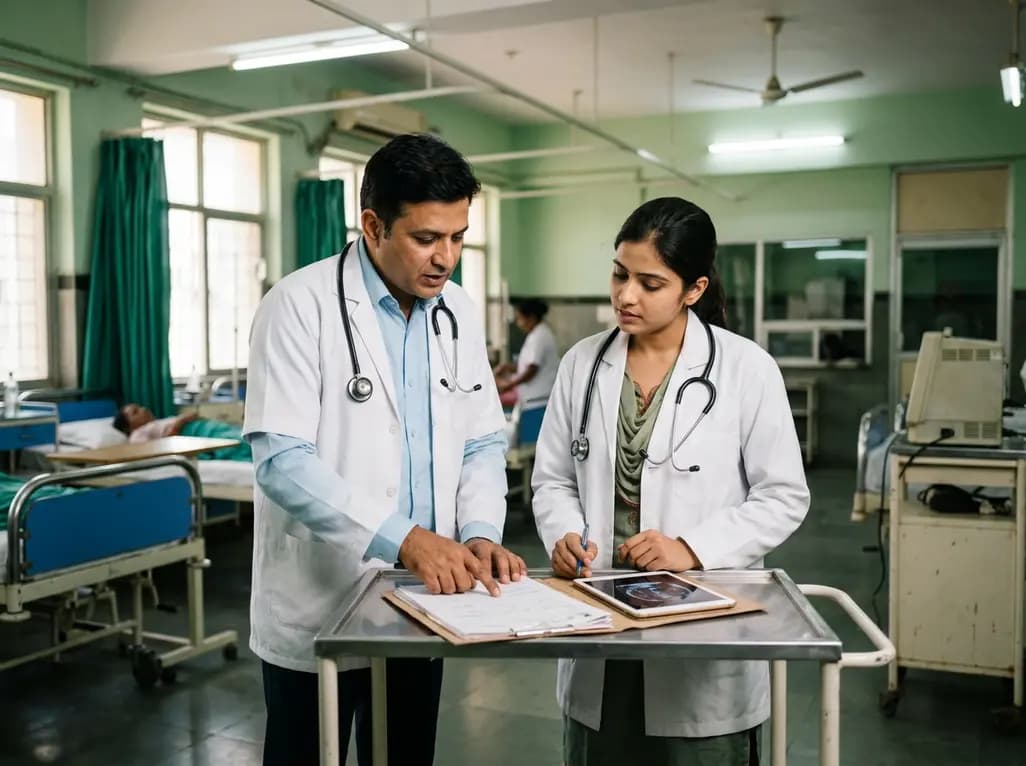
India is strategically planning to accelerate the local production of critical healthcare technology to reduce import reliance. Specifically, the Department for Promotion of Industry and Internal Trade (DPIIT) aims to fast-track high-value medical devices. Currently, the country relies heavily on foreign manufacturers for highly sophisticated equipment. Consequently, the government aims to support domestic medical technology companies to build self-reliance. This bold initiative marks a major shift from producing simple consumables to manufacturing advanced clinical systems. Ultimately, local production of these devices will benefit healthcare providers and patients across the nation.
For many years, India has faced a massive trade imbalance in the medical technology sector. Last year, medical device imports rose by 17% to reach an astronomical ₹89,000 crore. Previously, this import bill stood at ₹76,000 crore, showing a rapid upward trajectory. Therefore, the government must take immediate action to curb this financial drain. Currently, India imports nearly $8 billion worth of medical devices annually while exporting only about $4 billion. Analysis of trade data reveals that nearly 85% of this import bill comes from just forty product categories. Specifically, these categories represent highly complex electronic systems, diagnostic machinery, and cardiovascular implants. Furthermore, the top nineteen imported products alone represent nearly 30% of the total import expenditure. This heavy reliance on foreign markets exposes Indian healthcare to global supply chain vulnerabilities. Consequently, domestic manufacturing is no longer just a luxury economic goal but an urgent national security priority. By fostering local production of high-value medical devices, the government aims to stabilize healthcare costs and secure the supply of essential clinical equipment. Additionally, this initiative will establish a strong and sustainable foundation for the future export of advanced diagnostic tools to global markets.
To address this challenge, the Department for Promotion of Industry and Internal Trade (DPIIT) is designing targeted policy support. Several government ministries are collaborating closely with industry bodies like the Association of Indian Medical Device Industry (AiMeD). Specifically, the authorities are evaluating a comprehensive suite of financial and regulatory incentives. These measures include comprehensive tariff reviews and component indigenization strategies to lower production hurdles. Additionally, the government is considering public procurement incentives to guarantee a market for local manufacturers. Research and development support will also play a key and decisive role in helping companies innovate quickly. Moreover, targeted subsidies will assist manufacturers in setting up state-of-the-art facilities. Industry leaders expect these policies to complement the existing Production Linked Incentive (PLI) scheme. Many executives anticipate a major extension of the PLI scheme or a new PLI 2.0 program. This secondary program would focus entirely on high-tech medical products and diagnostic consumables. As a result, domestic firms will gain the confidence to invest heavily in advanced manufacturing. Ultimately, these concerted efforts will build a highly robust, self-sustaining, and competitive industrial ecosystem that attracts massive global investments.
The proposed priority list targets ten product categories that constitute the bulk of India's imports. Specifically, the list includes Magnetic Resonance Imaging (MRI) systems and their critical components. Furthermore, cardiac pacemakers and continuous glucose monitoring (CGM) systems are major focal points. These devices are essential for managing chronic cardiovascular conditions and diabetes nationwide. Additionally, the government wants to fast-track advanced ultrasound equipment and high-end diagnostic analysers. These analysers require high-throughput capabilities and specialized chemical reagents to function. Other critical categories include high-end ICU beds and sophisticated X-ray generators and detectors. Previously, domestic manufacturers faced massive technology barriers in producing these advanced tools. However, targeted policies will now incentivize local companies to develop proprietary designs. This shift will ensure that hospitals obtain reliable, locally made equipment at competitive rates. Consequently, Indian healthcare facilities can expand their diagnostic services without paying exorbitant import tariffs. Ultimately, this strategic focus will democratize access to life-saving medical devices across rural and urban clinics alike. Moreover, local manufacturing will dramatically reduce the turnaround time for servicing these complex systems in remote hospitals.
Manufacturing high-end medical machinery is fundamentally different from producing simple disposable supplies like syringes. Historically, Indian manufacturers have succeeded in scaling up basic healthcare consumables. However, complex diagnostic equipment requires advanced research, proprietary software, and complex clinical validation. Therefore, domestic companies must invest heavily in specialized engineering talent and state-of-the-art laboratory infrastructure. To bridge this technology gap, the government plans to offer robust research and development subsidies. Additionally, academic institutions must collaborate with private manufacturers to foster design innovation. This partnership will help develop indigenous components such as specialized imaging detectors and high-frequency X-ray generators. Furthermore, local companies must secure international quality certifications to compete with multinational brands. Consequently, the government is focusing on creating common testing facilities in dedicated medical device parks. These facilities will dramatically reduce the cost of compliance and quality testing for startups. Ultimately, overcoming these technical barriers will establish India as a reliable global hub for high-tech medical engineering. As a result, domestic medical enterprises will soon export sophisticated technology to highly demanding international medical markets. Additionally, this transition will foster deep tech entrepreneurship among young Indian scientists.
This strategic transition will directly influence clinical practice and hospital administration across the country. Currently, healthcare institutions pay premium prices for imported equipment and face prolonged delays for spare parts. However, local production will guarantee faster procurement and significantly lower maintenance costs. Consequently, hospitals can pass these savings to patients, reducing the overall cost of diagnostics. Additionally, the availability of affordable, high-quality medical devices will improve healthcare delivery in rural areas. Specifically, smaller diagnostic clinics can install advanced imaging and diagnostic tools that were previously too expensive. This expansion will facilitate early disease detection and timely interventions for critical medical conditions. Moreover, domestic innovation will ensure that devices are tailored to the specific demographic needs of Indian patients. For example, continuous monitoring systems can integrate advanced software features optimized for local metabolic profiles. Ultimately, this medical technology revolution will make healthcare delivery more equitable, sustainable, and resilient against future global crises. Furthermore, it will establish a solid foundation for robust clinical trials and collaborative academic partnerships in medical engineering. In addition, this progress aligns perfectly with the national digital health mission and long-term public health goals.
Q1: Which specific medical devices are being prioritized for local manufacturing under this new government initiative?
The government is currently prioritizing approximately ten major high-value categories of medical equipment. Specifically, these categories include Magnetic Resonance Imaging (MRI) systems, cardiac pacemakers, and continuous glucose monitoring (CGM) systems. Additionally, the priority list targets high-end diagnostic analyzers, advanced ultrasound equipment, ICU beds, and specialized X-ray components. Consequently, this targeted approach will help reduce imports for the most expensive clinical systems used in modern healthcare.
Q2: Why is the Indian government focusing on reducing its dependency on imported medical devices?
Currently, India relies on imports for nearly eighty percent of its advanced medical device requirements. Last year, these imports increased by seventeen percent, reaching a massive eighty-nine thousand crore rupees. This heavy reliance exposes the domestic healthcare sector to supply chain bottlenecks and high prices. Therefore, the government is promoting local manufacturing to lower overall diagnostic costs and ensure long-term clinical security across all medical specialties.
Q3: What specific policy measures is the government considering to support domestic MedTech manufacturers?
The authorities are evaluating several supportive mechanisms to bolster the domestic medical technology sector. Specifically, these measures include comprehensive tariff reviews, component indigenization plans, and public procurement incentives. Furthermore, the government intends to offer targeted research and development subsidies. Many industry leaders also expect the extension of the current Production Linked Incentive (PLI) scheme or the launch of a new PLI 2.0 program focused on high-end devices.
Disclaimer: This content is for informational and educational purposes only. It does not constitute medical advice or replace professional judgment. Refer to the latest local and national guidelines for clinical practice.
References

Read summarized clinical updates, watch expert medical content, and earn CME certifications right from your smartphone.
Open your smartphone camera to scan and install.





The Indian government is collaborating with the medical technology industry to fast-track the indigenous manufacturing of critical, high-value medical equipment. By targeting key diagnostic and therapeutic systems, this strategic shift aims to curb import reliance while lowering healthcare delivery costs.
3 months ago

Following Nigeria's first recorded Ebola case linked to regional travel, the Africa CDC has convened an emergency ministerial summit. This alert underscores critical clinical priorities for healthcare professionals, including differentiating early viral infection from malaria, implementing barrier nursing, and triage.
Today

Leucine Rich Bio has introduced South Asia's first comprehensive vaginal microbiome test, BugSpeaks. By profiling microbial dysbiosis, pathogens, and antimicrobial resistance, this next-generation diagnostic platform provides clinicians with deeper insights into recurrent infections, fertility, and reproductive health.
Today

Review how tailored exercise programs benefit frail older patients with heart failure. Explore pathophysiological mechanisms, individualized training prescriptions, and strategies to overcome adherence barriers in clinical practice.
Today

This comparative study evaluates posterior labral tears with and without glenohumeral instability, highlighting distinct demographic patterns, MRI underestimation in stable shoulders, and successful arthroscopic repair outcomes.
Today

A clinical study demonstrates that early intervention with tocilizumab, either as monotherapy or bridged with corticosteroids, achieves significant proptosis reduction and resolves active inflammation in treatment-naive thyroid eye disease.
Today
