.webp&w=384&q=75)

Loading, please wait...
Loading, please wait...
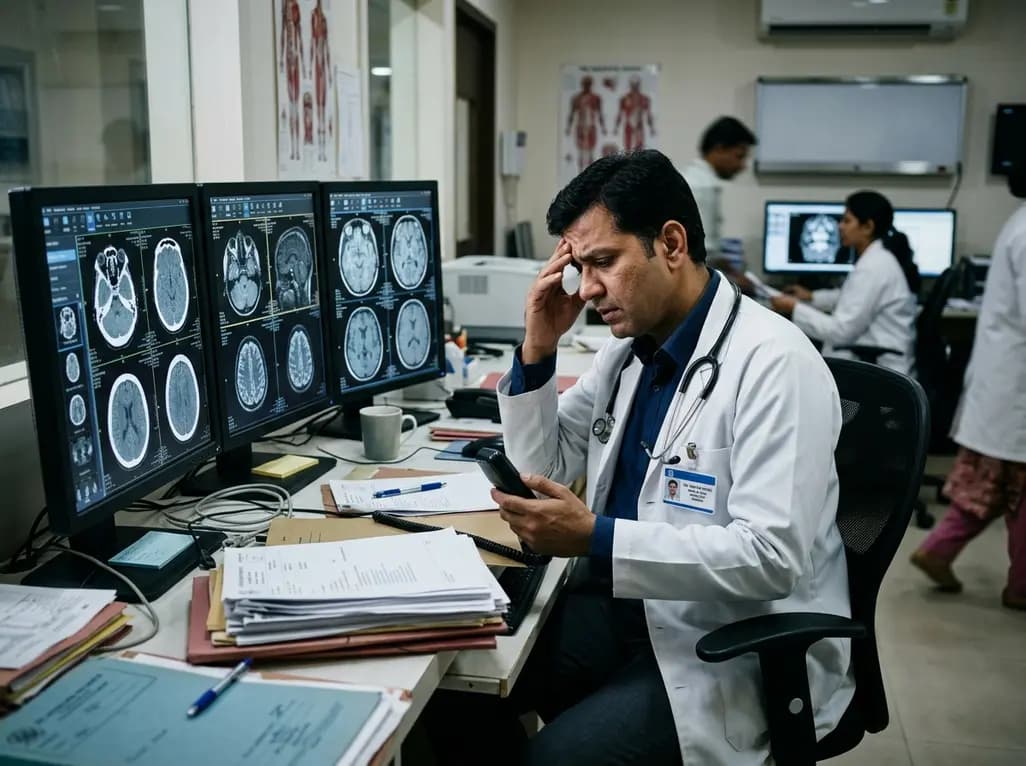
Modern medical imaging has achieved unprecedented technological sophistication and diagnostic throughput over recent decades. Advances in digital archiving, picture archiving and communication systems, and high-resolution cross-sectional modalities have transformed patient care. However, rapid technological progress has created an unsustainable operational imbalance across healthcare systems. As examination volumes escalate and imaging complexity grows, hidden labor in radiology has expanded substantially beyond routine diagnostic interpretation. These essential yet unmeasured responsibilities consume immense cognitive bandwidth, time, and emotional energy. Consequently, healthcare leaders and radiology administrators must re-evaluate contemporary workload models to ensure long-term clinical excellence and physician well-being.
Modern diagnostic imaging encompasses far more than simply interpreting cross-sectional scans and dictating diagnostic reports. Radiologists routinely manage intricate imaging protocols, provide urgent interdepartmental clinical consultations, prepare multidisciplinary tumor boards, and coordinate emergency patient care. Furthermore, supervising resident trainees, troubleshooting image quality issues, and managing constant electronic medical record notifications demand significant daily time. These non-interpretive tasks remain indispensable for patient safety, accurate diagnostic triage, and smooth hospital operations. Unfortunately, conventional healthcare tracking systems and workload metrics rarely capture these essential responsibilities. Radiologists frequently perform this invisible clinical work between complex study reviews or after scheduled shifts. In addition, frequent interruptions fragment mental concentration, which substantially elevates cognitive fatigue and diagnostic stress. As clinical teams increase their reliance on immediate imaging results, clinicians demand continuous availability for phone and in-person discussions. Therefore, this continuous availability transforms structured reading shifts into chaotic multitasking environments. Consequently, the ongoing accumulation of unrecorded tasks erodes personal recovery time and accelerates professional exhaustion across diverse clinical practices.
Traditional healthcare productivity models primarily rely on work relative value units and gross study counts to measure clinical output. While these numerical metrics measure diagnostic volume, they fail to account for escalating case complexity and cognitive intensity. For instance, reviewing a complex multi-phase oncologic scan with extensive prior comparisons requires detailed synthesis that simple unit metrics cannot reflect. Moreover, traditional accounting systems completely ignore the hours spent conferring with surgical colleagues, reviewing technical parameters with radiographers, attending safety audits, and refining clinical protocols. When healthcare administrators evaluate departmental success solely through interpretation volume, they inadvertently devalue non-interpretive clinical excellence. Consequently, practitioners feel intense systemic pressure to prioritize reporting speed over comprehensive patient evaluation and holistic consultation. This metric-driven pressure incentivizes high-volume reporting while penalizing the collaborative interactions that enhance overall clinical outcomes. In addition, productivity metrics often penalize academic physicians who dedicate substantial effort to teaching medical students, conducting clinical research, and guiding institutional committees. Therefore, relying exclusively on volume-based scorecards creates a distorted view of true physician contribution and long-term departmental health.
The persistent accumulation of unmeasured labor directly threatens the foundational capital of modern radiology practices. Professional capital comprises individual clinical mastery, mentorship capacity, educational innovation, and departmental leadership. When excessive diagnostic volumes consume all available working hours, radiologists lose the recovery time necessary to sustain these higher-order professional endeavors. Consequently, physicians gradually withdraw their discretionary professional effort, participating less in departmental governance, teaching conferences, clinical trials, and quality improvement initiatives. Furthermore, this depletion severely weakens institutional capital, which represents the collective reputation, academic prestige, and operational resilience of an organization. Radiology departments that ignore hidden labor risk transforming into transactional reporting factories rather than thriving centers of clinical excellence. Over time, experienced specialists leave for less demanding practice environments or choose early retirement to avoid chronic overwork. As a result, healthcare institutions lose institutional memory, specialized subspecialty expertise, and vital leadership pipelines. This erosion ultimately compromises the future stability, recruitment appeal, and innovative capacity of the medical specialty.
Radiologists manage extraordinary volumes of visual, cognitive, and clinical information during every work shift. When unmeasured administrative duties and continuous workplace interruptions compound this visual demand, severe cognitive overload inevitably develops. Consequently, chronic mental fatigue impairs diagnostic vigilance, which directly increases the risk of perceptual errors, missed findings, and reporting delays. Furthermore, chronic cognitive overload fosters emotional exhaustion, depersonalization, and reduced professional fulfillment among diagnostic specialists. High burnout rates subsequently trigger severe staffing shortages, placing heavier workloads on remaining department colleagues. This vicious cycle destabilizes clinical workflows, prolongs turnaround times, and compromises patient safety. Therefore, workforce sustainability requires urgent structural interventions that protect physician focus and mental resilience. Healthcare organizations must recognize that human cognitive capacity is inherently finite and cannot expand indefinitely through speed alone. Protecting radiologists from excessive multitasking is essential for preserving diagnostic precision, reducing preventable medical errors, and maintaining long-term physician retention across healthcare networks.
Addressing hidden labor requires comprehensive structural changes in healthcare management, departmental policy, and technological design. First, healthcare organizations must implement modernized productivity scorecards that explicitly credit non-interpretive clinical contributions. Time spent consulting with referring clinicians, tailoring complex protocols, supervising trainees, and leading multidisciplinary conferences deserves formal institutional recognition. In addition, hospitals should leverage advanced artificial intelligence and intelligent workflow automation to filter non-urgent notifications and streamline routine documentation. Dedicated administrative coordinators and specialized imaging technologists can also absorb operational tasks, allowing radiologists to focus on complex image interpretation and critical decision-making. Furthermore, departmental leaders must establish protected non-clinical time for educational pursuits, research projects, and institutional wellness initiatives. Providing adequate staffing buffers and flexible scheduling models will restore individual recovery capacity and prevent attrition. Ultimately, building a sustainable radiology ecosystem demands an enduring institutional commitment that balances diagnostic productivity with physician well-being and long-term quality care.
Hidden labor encompasses essential non-interpretive duties that traditional productivity metrics overlook. These responsibilities include protocoling complex scans, consulting with referring physicians, preparing tumor board presentations, and communicating urgent critical findings. Furthermore, supervising trainees, resolving technical imaging errors, participating in quality improvement committees, and managing continuous electronic inbox alerts represent substantial unmeasured cognitive work that consumes significant clinical time each day.
Unmeasured work forces radiologists to multitask constantly while managing high diagnostic interpretation volumes. Because conventional metrics only reward report generation, physicians often complete administrative tasks, protocol reviews, and interdepartmental consultations during personal time. Consequently, this persistent work compression limits mental recovery, accelerates chronic cognitive fatigue, reduces professional fulfillment, and leads to severe emotional exhaustion across academic and private practice environments.
Healthcare organizations must redesign productivity models to formally capture and credit non-interpretive clinical duties. Additionally, institutions should deploy intelligent workflow management tools to minimize non-urgent interruptions during image interpretation. Providing protected non-clinical time for research, teaching, and administrative governance is equally crucial. Ultimately, optimizing auxiliary staffing and investing in automated workflow systems helps restore balance, preserving long-term workforce sustainability.
Disclaimer: This content is for informational and educational purposes only and is not intended to serve as professional medical advice, diagnosis, or treatment. Medical knowledge constantly evolves, and clinical practices may vary based on regional regulations, patient populations, and institutional protocols. Healthcare professionals should exercise their independent clinical judgment and consult official medical guidelines, institutional standards, and peer-reviewed literature before making diagnostic or therapeutic decisions. Patients must always seek the advice of a qualified physician or healthcare provider regarding any medical condition or treatment plan. Refer to the latest local and national guidelines for clinical practice.
References

Read summarized clinical updates, watch expert medical content, and earn CME certifications right from your smartphone.
Open your smartphone camera to scan and install.





A critical review of hidden labor in radiology, examining how unmeasured clinical duties, cognitive overload, and outdated productivity metrics erode professional capital and workforce sustainability across modern healthcare systems.
last month

A nationwide multicenter study identified three COPD clinical phenotypes, finding that mild smoking males experience the highest rate of rapid lung function decline. A CatBoost model using six routine clinical and socioeconomic variables accurately stratifies high-risk patients for early therapeutic intervention.
Today
Discover the crucial distinctions between mesonephric and mesonephric-like proliferations of the female genital tract. Learn the key histomorphologic, immunohistochemical, and molecular differences essential for accurate diagnosis and clinical management.
Today
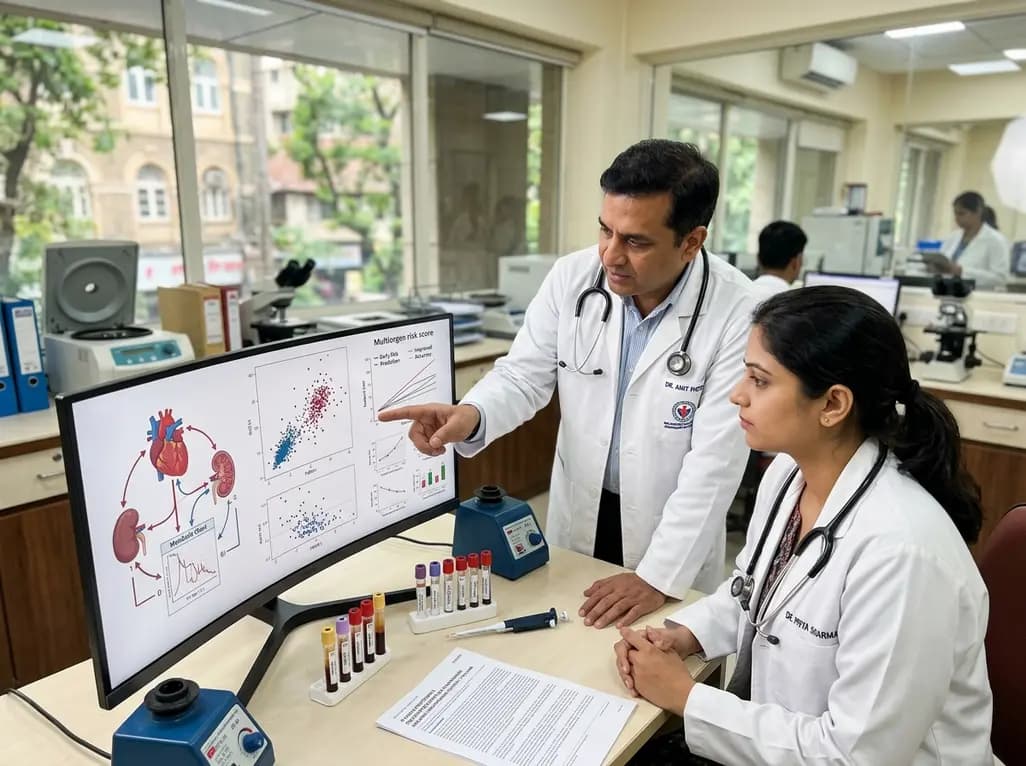
A large UK Biobank study reveals that plasma proteomic signatures capture preclinical organ damage and improve multiorgan risk prediction across early CKM syndrome stages 0 to 2 beyond traditional PREVENT clinical models.
Today
A narrative review investigates whether the articularis genus muscle functions as an independent anatomical entity or blends with the vastus intermedius. We evaluate its morphology, role in retracting the suprapatellar bursa, and direct clinical significance in anterior knee pain and arthroplasty.
Today
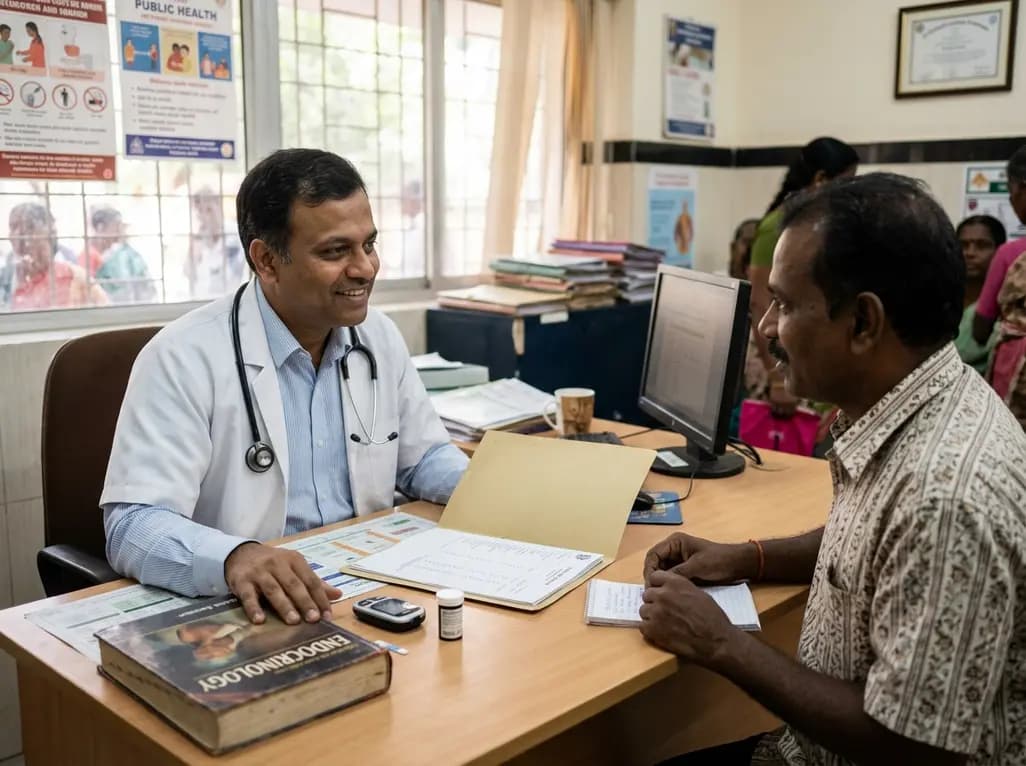
A Bayesian multilevel meta-analysis reveals that aerobic training combined with moderate carbohydrate restriction modestly lowers HbA1c in type 2 diabetes. However, sparse data and very low certainty leave incremental benefits over exercise or diet alone unproven, highlighting the need for individualized care.
Today
