.webp&w=384&q=75)

Loading, please wait...
Loading, please wait...

The global landscape of immunization has evolved significantly since the endorsement of the Global Vaccine Action Plan. Under the continued emphasis of the Immunization Agenda 2030, the number of functional National Immunization Technical Advisory Groups (NITAGs) has expanded rapidly. This growth creates a substantial demand for specialized training in evidence-informed policy development. To support timely national decisions, healthcare leaders now require innovative and flexible training approaches. One critical area of focus involves hexavalent vaccine decision making, as countries evaluate the transition from pentavalent combinations plus inactivated polio vaccine (IPV) to fully combined hexavalent vaccines. Consequently, technical advisory bodies must possess the skills to navigate complex clinical data and programmatic logistics. This transition is not merely a product swap; it represents a strategic shift in how national immunization programs deliver essential antigens to infants. Therefore, robust educational frameworks are necessary to ensure that these policy shifts are backed by solid evidence. By strengthening the capacity of NITAGs, the global community can ensure more resilient immunization systems that adapt to new technological advancements while maintaining high population coverage.
The Evidence-to-Recommendation (EtR) framework serves as the cornerstone for modern vaccine policy development. This structured approach allows advisory groups to move transparently from raw data to actionable national recommendations. The framework typically covers several critical domains, including the burden of the disease, vaccine safety, immunogenicity, and cost-effectiveness. Additionally, it incorporates considerations regarding values, preferences, and equity within the population. During the recent webinar series, participants focused on identifying evidence across these specific domains to support the move toward hexavalent vaccines. Because the EtR process is comprehensive, it helps minimize bias during the deliberation phase. Furthermore, it provides a standardized language for various stakeholders to discuss the merits of a new vaccine introduction. NITAG members who master this framework can better justify their recommendations to Ministry of Health officials and external funding partners like Gavi. Ultimately, the systematic use of the EtR framework ensures that vaccine policies are not only scientifically sound but also socially acceptable and economically feasible for the specific country context.
When considering hexavalent vaccine decision making, NITAGs must weigh several programmatic advantages. One of the most significant benefits is the reduction in the total number of injections required during an infant's primary series. Fewer injections generally lead to higher caregiver acceptance and reduced distress for the child. Moreover, this consolidation simplifies the immunization schedule, which can decrease the workload for frontline healthcare workers. From a logistical perspective, hexavalent vaccines can reduce the requirements for cold chain storage space, as one vial replaces two separate products. This efficiency is particularly valuable in resource-limited settings where refrigerator capacity is often at a premium. Furthermore, the transition can improve IPV coverage by ensuring that the polio antigen is administered alongside other routine vaccines in a single shot. This integration supports the global goal of polio eradication by closing immunity gaps in hard-to-reach populations. Consequently, the transition to hexavalent formulations is often viewed as a vital step in modernizing national immunization programs and achieving higher overall coverage rates.
To address the training needs of various countries, a novel five-part webinar series was implemented between January and June 2025. This series primarily targeted the WHO African Region, focusing on countries qualifying for financial and technical support from Gavi. The evaluation of this initiative utilized electronic surveys and virtual key informant interviews to measure effectiveness. NITAGs from 32 different countries participated in the training, demonstrating a high level of interest in combination vaccine strategies. Participants consistently rated the webinars as highly useful, especially highlighting the value of practical guidance. Interestingly, qualitative feedback identified peer learning as the most valuable component of the entire series. By utilizing a cohort-based model, the training facilitated regional collaboration and the sharing of real-world experiences. This peer-to-peer exchange allowed members of different NITAGs to discuss shared challenges, such as data limitations and resource constraints. Such collaborative learning environments are essential for building the confidence of advisory members when they are faced with making complex, high-stakes public health recommendations.
Despite the clear benefits of hexavalent vaccines, several implementation barriers remain for many nations. NITAGs frequently express concerns regarding the feasibility of the transition and the necessary resource considerations. For instance, the switch requires updated training for healthcare providers to ensure they understand the new scheduling and administration techniques. Additionally, national data systems must be adjusted to track the new vaccine formulation accurately. During the training sessions, participants voiced a strong interest in continued technical support and operational guidance. They specifically requested detailed frameworks for monitoring vaccine safety and managing potential supply chain disruptions. Furthermore, the concept of "twinning" or formal partnerships between more experienced and newly formed NITAGs was highlighted as a promising strategy. By addressing these operational hurdles through structured guidance, countries can mitigate the risks associated with the vaccine switch. Consequently, the focus must remain on providing practical tools that go beyond theoretical knowledge to support the day-to-day realities of immunization program management.
The successful implementation of the webinar-based EtR training marks a significant milestone in global health education. As vaccine technology continues to advance, the need for flexible, virtual learning platforms will only increase. Future initiatives should continue to emphasize the importance of regional peer learning to foster sustainable capacity building. Moreover, expanding these training models to include other emerging vaccines, such as those for RSV or malaria, will be crucial. The commitment to evidence-informed decision making ensures that national health priorities remain aligned with global immunization goals. Therefore, the continued evolution of NITAG support will play a pivotal role in the success of the Immunization Agenda 2030 and beyond.
The EtR framework includes several key domains designed to ensure comprehensive decision-making. These domains typically encompass the public health problem and disease burden, the benefits and harms of the vaccine, and the certainty of available evidence. Additionally, the framework requires experts to evaluate the values and preferences of the target population, resource use, cost-effectiveness, health equity, and the overall acceptability and feasibility of the proposed vaccine intervention.
Many advisory groups prioritize the transition to hexavalent vaccines because it simplifies the childhood immunization schedule by combining six essential antigens into one injection. This consolidation reduces the number of visits and needles required, which can significantly improve parental compliance and reduce healthcare provider burden. Furthermore, it helps integrate the inactivated polio vaccine into routine schedules more effectively, supporting global polio eradication efforts while optimizing cold chain logistics and storage requirements.
Peer learning allows members of National Immunization Technical Advisory Groups to share practical insights and lessons learned from their own country contexts. This exchange of information helps colleagues identify common implementation risks and successful mitigation strategies that may not be covered in standard academic literature. By discussing real-world challenges like vaccine hesitancy or supply chain management, NITAG members can develop more realistic, robust, and effective recommendations that are tailored to their specific regional needs.
Disclaimer: This content is for informational and educational purposes only and does not constitute medical advice or a professional recommendation. The information provided is based on recent research and global experience with immunization programs. Healthcare professionals and policymakers should always refer to the latest local and national guidelines for clinical practice and vaccine administration within their respective jurisdictions.
References
Torre L et al. Innovative webinar-based training to support evidence-to-recommendation decision-making by national immunization technical advisory groups: multi-country experience with hexavalent vaccines. Vaccine. 2026 Jun 28. doi: undefined. PMID: 42365745.
World Health Organization. Hexavalent vaccines - NITAG Resource Center. Available at: https://www.nitag-resource.org/resources/hexavalent-vaccines.
Sabin Vaccine Institute. Hexavalent Switch Evidence-to-Recommendation Framework. Available at: https://www.sabin.org/resources/hexavalent-switch-etr-framework/.
"
Read summarized clinical updates, watch expert medical content, and earn CME certifications right from your smartphone.
Open your smartphone camera to scan and install.





Recent multi-country experience shows that innovative webinar-based training and the Evidence-to-Recommendation (EtR) framework are essential for supporting NITAGs in the complex transition to hexavalent vaccines, enhancing global immunization policy and peer learning.
3 months ago

A retrospective cohort study reveals that frailty quadruples the odds of pressure injuries in hospitalized older adults. Integrating the Clinical Frailty Scale with comprehensive geriatric care is crucial for identifying vulnerability early and implementing targeted multidisciplinary prevention.
Today

Occult maternal malignancy accounts for 3.82% of persistent unreportable NIPT results with genomic noise. Multiple chromosomal aberrations, notably on chromosome 18, warrant thorough oncological evaluation and whole-body MRI to ensure timely maternal diagnosis while preserving fetal care.
Today

This article reviews the forensic and clinical complexities of acute myocarditis arising on left ventricular hypertrophy in children, highlighting early diagnostic red flags and multidisciplinary postmortem autopsy protocols.
Today
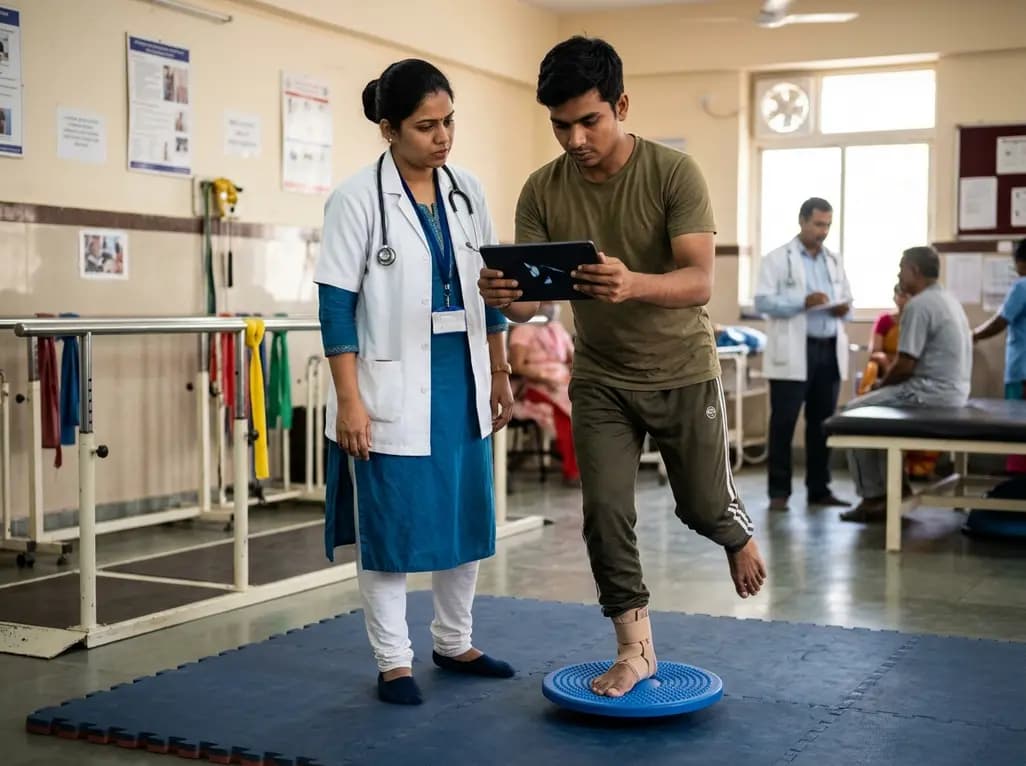
A randomized controlled trial demonstrates that an eight-week dual-task training intervention significantly improves static and dynamic postural control over standard balance exercises in individuals with chronic ankle instability, addressing critical neurocognitive deficits during athletic and daily activities.
Today

A retrospective cohort study of 7,716 ICU patients from the MIMIC-IV database demonstrates that Gradient Boosting Decision Trees significantly outperform traditional SOFA scores in predicting in-hospital mortality among patients with sepsis and diabetes, with SHAP analysis providing clinical interpretability.
Today
