.webp&w=384&q=75)

Loading, please wait...
Loading, please wait...

Hereditary vestibular dysfunction represents a complex group of genetic disorders that significantly impair balance and spatial orientation. These conditions often present alongside sensorineural hearing loss, creating a dual sensory burden for affected patients. Although clinical phenotypes vary widely, researchers are increasingly utilizing mouse models to bridge the gap between basic genetics and clinical application. These biological platforms allow for a deeper understanding of molecular mechanisms and the testing of novel therapeutic interventions.
Modern genetic engineering has revolutionized our ability to study hereditary vestibular dysfunction. Specifically, CRISPR-Cas9 technology enables the precise replication of human mutations in murine subjects. Consequently, scientists can now observe the progression of vestibular decay in a controlled environment. Spontaneous mutation models, such as the Myo6 and Cdh23 mutant mice, have already provided invaluable insights into cytoskeletal integrity. Furthermore, these models demonstrate how specific ion channel defects, such as those involving SLC26A4, disrupt the delicate homeostatic balance within the inner ear.
Transitioning from diagnosis to treatment, researchers have achieved remarkable success with gene therapy in these models. For instance, AAV-mediated gene replacement has successfully restored balance functions in mice with Usher syndrome. Similarly, single-dose genome editing has rescued both auditory and vestibular responses in adult models of progressive deafness. However, several challenges remain before these techniques can move to human trials. Specifically, the therapeutic window for intervention appears narrow, and species-specific differences in inner ear anatomy require careful consideration. Despite these hurdles, the integration of multi-omics techniques and nano-delivery systems offers a promising pathway toward personalized medicine.
The International Mouse Phenotyping Consortium (IMPC) continues to expand its library of knockout models. This global effort helps identify previously unknown genes linked to vestibular phenotypes. Additionally, the development of new biomarkers, such as BDNF and Slc17a6, may soon enhance early diagnostic accuracy. Ultimately, the synergy between advanced gene editing and translational research provides a foundation for curing vestibular deficits that were once considered irreversible.
Mouse models mirror human genetic mutations, allowing researchers to test the safety and efficacy of gene therapies and drugs like α1-antitrypsin before clinical trials begin.
CRISPR-Cas9 allows for the rapid and precise creation of genetic models. This technology accelerates the study of specific mutations found in syndromic and non-syndromic vestibular diseases.
Recent studies in adult mice with DFNA41 mutations have shown that single-dose genome editing can restore vestibular function, suggesting that the treatment window may be broader than previously thought.
Disclaimer: This content is for informational and educational purposes only. It does not constitute professional medical advice, diagnosis, or treatment. Always seek the advice of your physician or other qualified healthcare provider with any questions you may have regarding a medical condition. Refer to the latest local and national guidelines for clinical practice.
References
Si N et al. Mouse models and translational research progress of hereditary vestibular dysfunction. J Vestib Res. 2026 May 30. doi: 10.1177/09574271261453788. PMID: 42216666.
Wei W et al. Single-dose genome editing therapy rescues auditory and vestibular functions in adult mice with DFNA41 deafness. J Clin Invest. 2025 Oct 15. doi: 10.1172/JCI187872.
Safieddine S. Extended time frame for restoring inner ear function through gene therapy in Usher1G preclinical model. JCI Insight. 2024 Jan 09. doi: 10.1172/jci.insight.169504.
"
Read summarized clinical updates, watch expert medical content, and earn CME certifications right from your smartphone.
Open your smartphone camera to scan and install.





A comprehensive review of how mouse models and CRISPR technology are advancing diagnostic and therapeutic strategies for hereditary vestibular dysfunction....
4 months ago
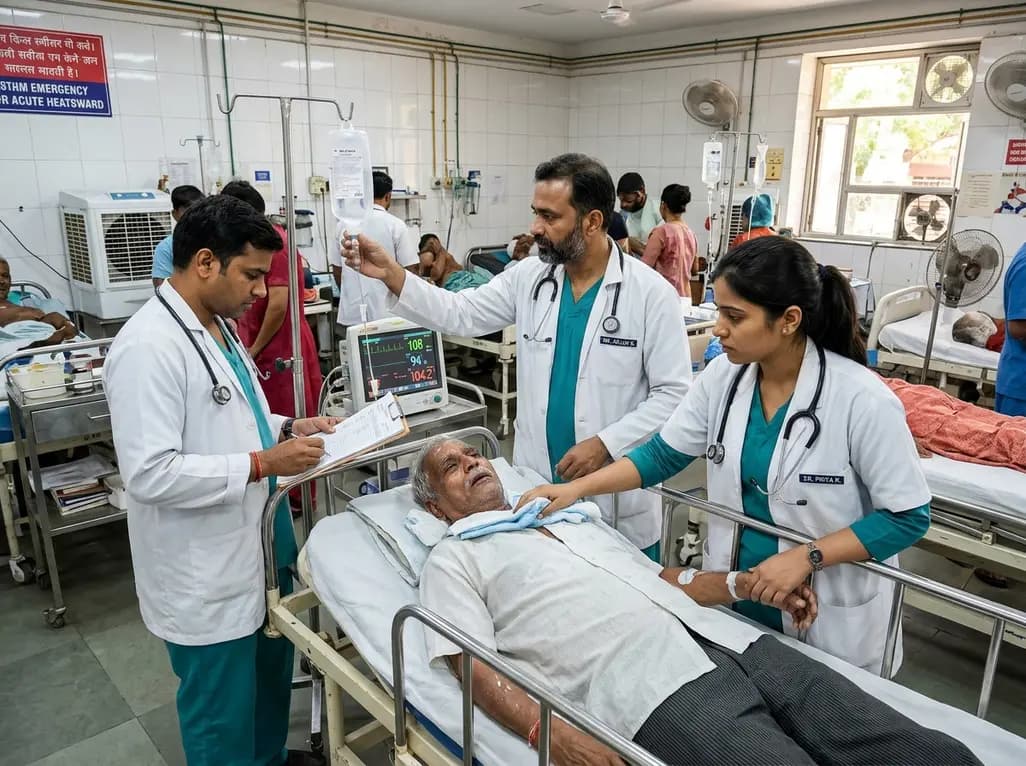
Recent epidemiological data reveals a dramatic surge in summer heat mortality driven by human-induced climate warming. This analysis explores the pathophysiological impacts on cardiac and renal systems, diagnostic dilemmas in death certification, and essential emergency cooling protocols for acute clinical care.
Today

Odisha has established India's first state-level clinical protocol specifically tailored for pregnant women with sickle cell disease. Developed with NHM and UNICEF, the framework provides structured antenatal screening, crisis mitigation, standardized referral pathways, and specialized interdisciplinary care.
Today

India is advancing preventive healthcare by integrating genomics, artificial intelligence, and quantum technologies. With the SANGAM programme sequencing one million Indian genomes, clinicians can unlock personalized therapies, detect cardiometabolic risks early, and curb the burden of diabetes and heart disease.
Today

A randomized controlled trial demonstrates that an eight-week dual-task training intervention significantly improves static and dynamic postural control over standard balance exercises in individuals with chronic ankle instability, addressing critical neurocognitive deficits during athletic and daily activities.
Today

A retrospective cohort study of 7,716 ICU patients from the MIMIC-IV database demonstrates that Gradient Boosting Decision Trees significantly outperform traditional SOFA scores in predicting in-hospital mortality among patients with sepsis and diabetes, with SHAP analysis providing clinical interpretability.
Today
