.webp&w=384&q=75)

Loading, please wait...
Loading, please wait...
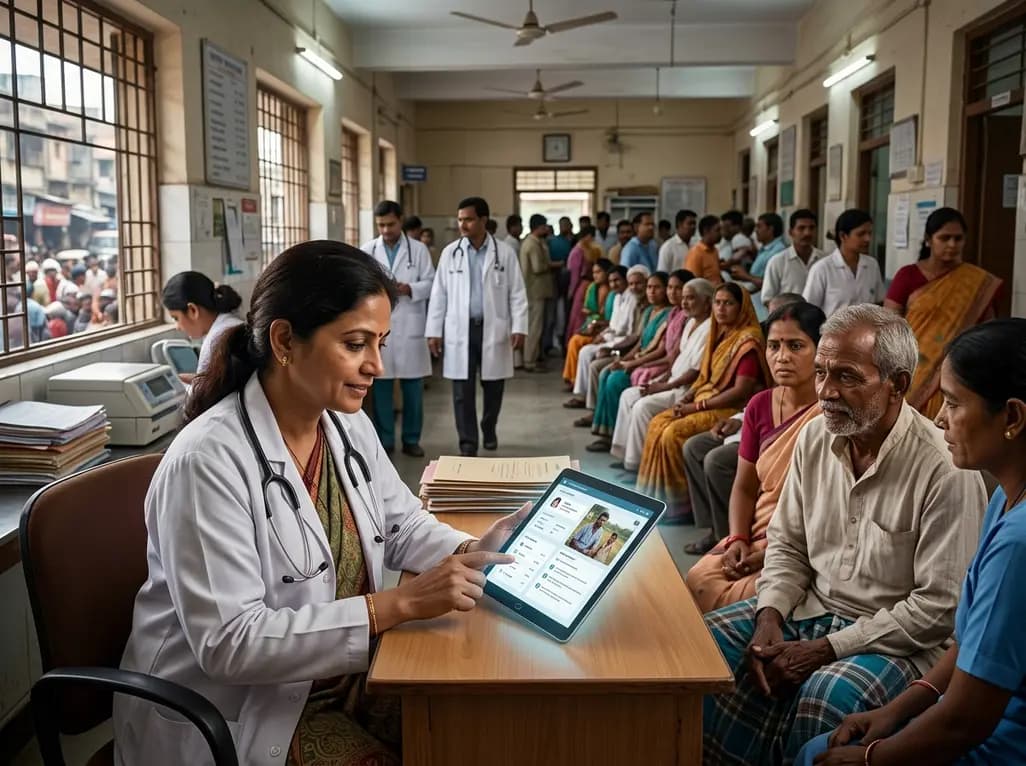
The landscape of public health is constantly evolving, particularly concerning the Hepatitis B vaccination policy. Recently, the medical community has observed a significant shift in how neonatal immunization is approached. In 2025, the CDC and the Advisory Committee on Immunization Practices (ACIP) transitioned from a universal birth-dose recommendation to a model centered on shared clinical decision-making (SCDM). This change comes at a time when adult vaccination rates for Hepatitis B Virus (HBV) in the United States have remained stubbornly low, often hovering between 30% and 32%. Such stagnant figures highlight a systemic failure in healthcare delivery that complicates the management of infectious diseases. Consequently, there is an urgent need to quantify the long-term impact of this policy shift on perinatal outcomes and chronic infection rates. Researchers have now utilized complex modeling to predict how these changes will ripple through the population over the next decade.
Moving away from universal mandates represents a fundamental change in the Hepatitis B vaccination policy. Under the new shared clinical decision-making model, the administration of the birth dose is no longer a standard automatic procedure but a choice discussed between providers and parents. While this aims to personalize care, it introduces significant variability into a previously streamlined system. Historically, universal vaccination served as a safety net, ensuring that even children born to mothers with unknown or missed HBV status received protection. However, the SCDM model relies heavily on the provider's ability to communicate risks and the parent's willingness to accept the intervention. This transition risks creating gaps in coverage, especially in high-volume or under-resourced clinical settings. Furthermore, without the structural mandate of a universal policy, the burden of ensuring immunization shifts to individual clinical encounters. Consequently, healthcare systems must now grapple with how to maintain high coverage rates while adhering to these less prescriptive guidelines. If the healthcare infrastructure does not adapt, the move away from universal protection could inadvertently lead to a resurgence of preventable infections.
To understand the potential consequences of the 2025 policy shift, researchers developed a robust Monte Carlo simulation involving 50,000 iterations. This study projected outcomes from 2025 to 2035, comparing the policy change against several intervention scenarios. The results under the \"Policy-Only\" scenario were particularly concerning for public health advocates. Projections indicated that birth-dose coverage could plummet from a robust 91.8% to just 75.7% within ten years. This decline in coverage is not merely a statistical variation; it translates to real-world morbidity. Specifically, the model suggests that this policy shift alone could lead to over 19,000 perinatal HBV infections and more than 17,000 chronic cases over the decade. These findings underscore the fragility of current vaccination gains. Moreover, the simulation highlights that when a system relies on individual decisions without structural support, the most vulnerable populations often experience the sharpest declines in care quality. The 95% Credibility Intervals provided by the study offer a sobering look at the range of potential harm, suggesting that the actual number of infections could even exceed current predictions if systemic failures persist.
The simulation did not only focus on the negative impacts of policy changes; it also explored potential solutions through multi-level interventions. The study analyzed several specific strategies, including hospital standing orders, EHR-driven workflow optimization, and community health worker (CHW) outreach. Standing orders are particularly effective because they allow nurses to administer vaccines without a direct physician order for every single case, thereby reducing delays. Similarly, optimizing Electronic Health Record (EHR) workflows ensures that vaccination prompts are integrated naturally into the clinical path, minimizing human error. In addition to these clinical tools, CHW outreach serves to bridge the gap between the healthcare system and the community, addressing vaccine hesitancy and logistical barriers. When these interventions were combined into a comprehensive package, the results were transformative. This multi-level approach was able to maintain birth-dose coverage at nearly 90% and push adult vaccination series completion to 95%. By implementing these structural safeguards, the system can offset the risks introduced by the SCDM model and protect those who might otherwise be missed by a purely decision-based approach.
A critical revelation from the simulation was the overwhelming importance of maternal screening sensitivity. In fact, maternal screening was identified as the strongest predictor of perinatal outcomes, with a remarkably high correlation. When screening is missed or the results are not communicated effectively to the delivery team, the birth dose becomes the last line of defense. Therefore, any Hepatitis B vaccination policy must be integrated with rigorous prenatal testing protocols. If screening sensitivity is low, the birth-dose becomes even more vital to prevent mother-to-child transmission. The simulation demonstrated that the comprehensive intervention package, which includes improved screening and follow-up, could reduce perinatal infections to under 2,000 cases. This represents a massive reduction compared to the policy-only scenario. Consequently, clinicians must prioritize the accuracy and timeliness of prenatal HBV testing. Furthermore, healthcare systems should invest in automated alerts that link maternal HBsAg status directly to the newborn's medical record. Without these technical links, the risk of a systems failure remains high, potentially leading to lifelong chronic illness for the affected infants.
The findings of this simulation serve as a call to action for medical educators and policy makers alike. It is clear that the 2025 SCDM policy, while well-intentioned, requires a fundamental redesign of healthcare delivery to prevent a decline in population health. Relying solely on clinical decision-making without structural support is a recipe for increased health disparities and rising infection rates. However, by adopting a multi-level strategy that combines technological solutions like EHR optimization with human-centered care like CHW outreach, we can maintain high levels of protection. The goal must be to create a system where the default path leads to vaccination, even when the policy itself is no longer a universal mandate. Additionally, the study proves that substantial gains in adult vaccination are possible if systemic barriers are addressed. As we move toward 2035, the focus must remain on strengthening the infrastructure of our immunization programs. Only through a comprehensive and integrated approach can we hope to eliminate Hepatitis B as a public health threat and ensure that every child begins life with the protection they deserve.
The shared clinical decision-making model for Hepatitis B vaccination involves a collaborative discussion between the healthcare provider and the patient or guardian. Instead of a universal recommendation for everyone in a specific age group, the decision to vaccinate is based on individual risk assessment, clinical judgment, and the patient's preferences. This approach requires clinicians to be well-informed about risk factors and necessitates effective communication to ensure that high-risk individuals do not miss out on necessary immunization.
Hospital standing orders are evidence-based protocols that authorize qualified healthcare professionals, such as nurses or pharmacists, to assess a patient's immunization status and administer vaccines without a specific physician's order for each patient. This streamlines the process, reduces missed opportunities for vaccination, and ensures that the Hepatitis B vaccination policy is implemented efficiently. By removing the need for a direct order in every case, standing orders help maintain high coverage rates even in busy clinical environments.
Maternal screening is the first and most critical step in preventing perinatal Hepatitis B transmission. Identifying HBsAg-positive mothers allows healthcare teams to administer both the HBV vaccine and Hepatitis B Immune Globulin (HBIG) to the newborn immediately after birth. If screening is inaccurate or missed, the delivery team may not realize the infant is at high risk, making the birth-dose vaccine the only remaining safeguard. Therefore, high screening sensitivity ensures that the entire prevention protocol is triggered for the most vulnerable infants.
Disclaimer: This content is for informational and educational purposes only. It is not intended to provide medical advice or to be a substitute for professional medical advice, diagnosis, or treatment. Always seek the advice of your physician or other qualified health provider with any questions you may have regarding a medical condition. Refer to the latest local and national guidelines for clinical practice.
References
Gandhi V et al. Under-vaccination as a systems failure: A Monte Carlo simulation of the 2025 CDC/ACIP hepatitis B birth-dose policy shift and multi-level intervention packages, 2025-2035. Vaccine. 2026 Jun 28. doi: undefined. PMID: 42365679.
"
Read summarized clinical updates, watch expert medical content, and earn CME certifications right from your smartphone.
Open your smartphone camera to scan and install.





A recent Monte Carlo simulation study evaluates the 2025 CDC/ACIP shift in Hepatitis B birth-dose policy. It highlights how moving from universal vaccination to shared decision-making may increase perinatal infections and suggests that multi-level interventions are essential to safeguard public health.
3 months ago

Review how tailored exercise programs benefit frail older patients with heart failure. Explore pathophysiological mechanisms, individualized training prescriptions, and strategies to overcome adherence barriers in clinical practice.
Today

Leucine Rich Bio has introduced South Asia's first comprehensive vaginal microbiome test, BugSpeaks. By profiling microbial dysbiosis, pathogens, and antimicrobial resistance, this next-generation diagnostic platform provides clinicians with deeper insights into recurrent infections, fertility, and reproductive health.
Today

In high-risk pulmonary embolism complicated by severe anemia and active uterine bleeding, systemic thrombolysis is contraindicated. Large-bore aspiration thrombectomy provides rapid hemodynamic rescue without fibrinolysis, supported by inferior vena cava filter placement and multidisciplinary critical care.
Today

This comparative study evaluates posterior labral tears with and without glenohumeral instability, highlighting distinct demographic patterns, MRI underestimation in stable shoulders, and successful arthroscopic repair outcomes.
Today

A clinical study demonstrates that early intervention with tocilizumab, either as monotherapy or bridged with corticosteroids, achieves significant proptosis reduction and resolves active inflammation in treatment-naive thyroid eye disease.
Today
