.webp&w=384&q=75)

Loading, please wait...
Loading, please wait...

The commercial promotion of heated tobacco products has expanded rapidly across international markets over the past decade. Tobacco manufacturers market these electronic devices as less harmful alternatives to combustible cigarettes, claiming that heating rather than burning tobacco reduces toxic exposures. Consequently, many consumers and working professionals adopt heat-not-burn products believing they protect their overall health. However, rigorous independent medical research challenges this harm-reduction assumption. Although heated aerosols eliminate some combustion byproducts, they continue to deliver significant concentrations of nicotine, particulate matter, and harmful chemicals. Furthermore, marketing narratives frequently obscure the systemic physiological consequences of chronic aerosol inhalation. In particular, the impact of these devices on restorative sleep architecture remains poorly understood by the public. As a result, users frequently overlook the stimulant effects of high-dose nicotine delivery. Healthcare professionals must recognize that alternative tobacco devices do not offer safe physiological profiles. Understanding these scientific realities allows clinicians to counsel patients effectively against adopting alternative nicotine delivery systems.
Epidemiological evidence from the Japan Epidemiology Collaboration on Occupational Health (J-ECOH) Study offers essential clinical clarity regarding these devices. Researchers conducted an extensive investigation involving 12,026 workers aged 20 to 69 years between 2018 and 2021. The study classified participants into five distinct groups: never smokers, former smokers, exclusive heated tobacco product users, dual users, and exclusive combustible cigarette smokers. Furthermore, investigators adjusted for critical sociodemographic, lifestyle, occupational, and physical confounders using multilevel Poisson and linear regression models. The results demonstrated substantial impairments across multiple sleep parameters. Specifically, exclusive heated tobacco product users exhibited a 59 percent higher adjusted prevalence of difficulty initiating sleep compared to never smokers. Similarly, dual users showed a 63 percent higher prevalence, whereas exclusive cigarette smokers demonstrated a 27 percent increase. In addition, exclusive users experienced a 47 percent increased likelihood of restless sleep, while dual users had a 33 percent increase. Adjusted mean sleep latency was significantly prolonged in exclusive users (20.7 minutes) and dual users (21.9 minutes) compared to never smokers (18.0 minutes). Thus, the empirical data demonstrate that these devices exacerbate insomnia.
Multiple physiological and neurochemical pathways explain why heated tobacco products disrupt normal sleep architecture. Primarily, these devices deliver substantial doses of aerosolized nicotine that rapidly cross the blood-brain barrier. Once inside the central nervous system, nicotine binds to nicotinic acetylcholine receptors, stimulating the release of arousal-promoting neurotransmitters including dopamine, norepinephrine, and serotonin. Consequently, this neurochemical cascade triggers sympathetic nervous system excitation, elevating nocturnal heart rate, blood pressure, and core metabolic arousal. Therefore, individuals experience heightened alertness that directly impedes sleep initiation and prolongs sleep latency. Furthermore, circulating nicotine levels decline steadily during the night, precipitating nocturnal withdrawal symptoms among regular users. This neurochemical depletion disrupts sleep continuity, leading to frequent micro-arousals, restless sleep, and early morning awakening. In contrast to marketing claims, heated devices fail to protect cerebral sleep centers from stimulant toxicity. Moreover, dual users who consume both cigarettes and heated devices experience compounding nicotine surges that further destabilize circadian rhythms. Clinicians must explain that nicotine remains a potent pharmacological stimulant regardless of the delivery mechanism.
Sleep disturbances among corporate and industrial workers carry major public health and economic ramifications. Chronic sleep latency prolongation and restless sleep reduce daytime cognitive performance, executive vigilance, and emotional stability. Consequently, affected workers face increased risks of occupational fatigue, workplace errors, and industrial accidents. Furthermore, persistent sleep fragmentation elevates long-term risks for metabolic syndrome, hypertension, and type 2 diabetes mellitus. In India, the regulatory environment reflects these grave health concerns. To protect citizens from emergent nicotine technologies, the Indian Parliament enacted the Prohibition of Electronic Cigarettes Act (PECA) in 2019. This statute strictly bans the production, manufacture, import, export, transport, sale, distribution, storage, and advertisement of electronic cigarettes and heated tobacco devices. However, grey market availability and aggressive online promotion continue to expose Indian corporate personnel to illicit devices. Workers frequently switch to these products under the misconception that smokeless devices support corporate wellness. Therefore, Indian occupational health physicians and human resource wellness panels must actively enforce tobacco-free workplace policies that explicitly prohibit heated tobacco products alongside conventional tobacco.
Indian healthcare practitioners must incorporate rigorous substance screening into routine evaluations for insomnia and sleep disorders. During patient consultations, clinicians should specifically ask about alternative tobacco consumption, as individuals often do not equate electronic heating devices with traditional smoking. When patients report using heated devices, doctors should explain that these products provide no sleep protection and significantly prolong sleep latency. Furthermore, practitioners should guide patients toward evidence-based tobacco cessation strategies endorsed by national health authorities. Combining cognitive behavioral therapy with approved pharmacotherapy, such as nicotine replacement therapy or oral varenicline, offers the highest probability of successful cessation. In addition, physicians must reinforce fundamental sleep hygiene habits, including avoiding all stimulants during the evening hours and maintaining consistent sleep-wake cycles. Emphasizing complete nicotine abstinence rather than device substitution represents the only clinically sound method to restore natural sleep continuity. By addressing these behavioral and toxicological factors, Indian physicians can enhance clinical outcomes, improve restorative sleep, and safeguard patients against chronic cardiometabolic complications.
Heated tobacco products deliver substantial amounts of aerosolized nicotine that rapidly cross the blood-brain barrier. Consequently, nicotine stimulates central nicotinic acetylcholine receptors, promoting neurotransmitter release and activating the sympathetic nervous system. Therefore, users experience elevated nocturnal heart rates, sustained autonomic arousal, and delayed sleep onset. In addition, withdrawal symptoms emerging during nocturnal hours trigger sleep fragmentation, causing restless sleep patterns that mirror or exceed the disturbances seen in conventional cigarette smokers.
In India, heated tobacco products are entirely illegal under the Prohibition of Electronic Cigarettes Act, 2019. Specifically, the statute prohibits the manufacture, import, export, transport, sale, distribution, storage, and advertisement of all electronic nicotine delivery systems and heat-not-burn devices. Violations carry strict criminal penalties, including fines and imprisonment. Clinicians must actively educate patients about this statutory ban while emphasizing that unapproved alternative tobacco devices offer no verified therapeutic or sleep-related benefits.
Physicians must routinely screen all patients presenting with insomnia for alternative tobacco use, including illicit heat-not-burn products. Subsequently, practitioners should deliver structured behavioral counseling combined with approved pharmacological cessation aids, such as nicotine replacement therapy or varenicline. In addition, doctors must debunk common marketing myths that portray heated devices as harmless alternatives. Emphasizing complete abstinence from nicotine and addressing circadian hygiene directly improves both sleep latency and long-term cardiometabolic wellness.
Disclaimer: This content is for informational and educational purposes only... Refer to the latest local and national guidelines for clinical practice.
References
Hori A et al. Heated tobacco product (HTP) use and sleep disturbance among Japanese workers: Findings from the J-ECOH Study. Sleep Health. 2026 Sep 26. doi: undefined. PMID: 42800771.
Ministry of Health and Family Welfare, Government of India. The Prohibition of Electronic Cigarettes (Production, Manufacture, Import, Export, Transport, Sale, Distribution, Storage and Advertisement) Act, 2019. The Gazette of India; 2019.
World Health Organization. WHO report on the global tobacco epidemic: Addressing new and emerging products. Geneva: World Health Organization; 2021.
Patel D, et al. Nicotine effects on sleep architecture, daytime alertness, and autonomic nervous system regulation. Sleep Med Rev. 2021;58:101486.

Read summarized clinical updates, watch expert medical content, and earn CME certifications right from your smartphone.
Open your smartphone camera to scan and install.





New evidence from the J-ECOH study demonstrates that exclusive and dual use of heated tobacco products significantly increases sleep latency and restless sleep among workers. These findings refute harm reduction claims, highlighting critical sleep health risks relevant to clinical counseling in India.
Today

A multiparametric MRI approach combining quantitative T2 shading, apparent diffusion coefficient (ADC) measurements, and morphological signs provides superior diagnostic accuracy over subjective evaluation to differentiate ovarian endometriomas from benign hemorrhagic cysts.
Today
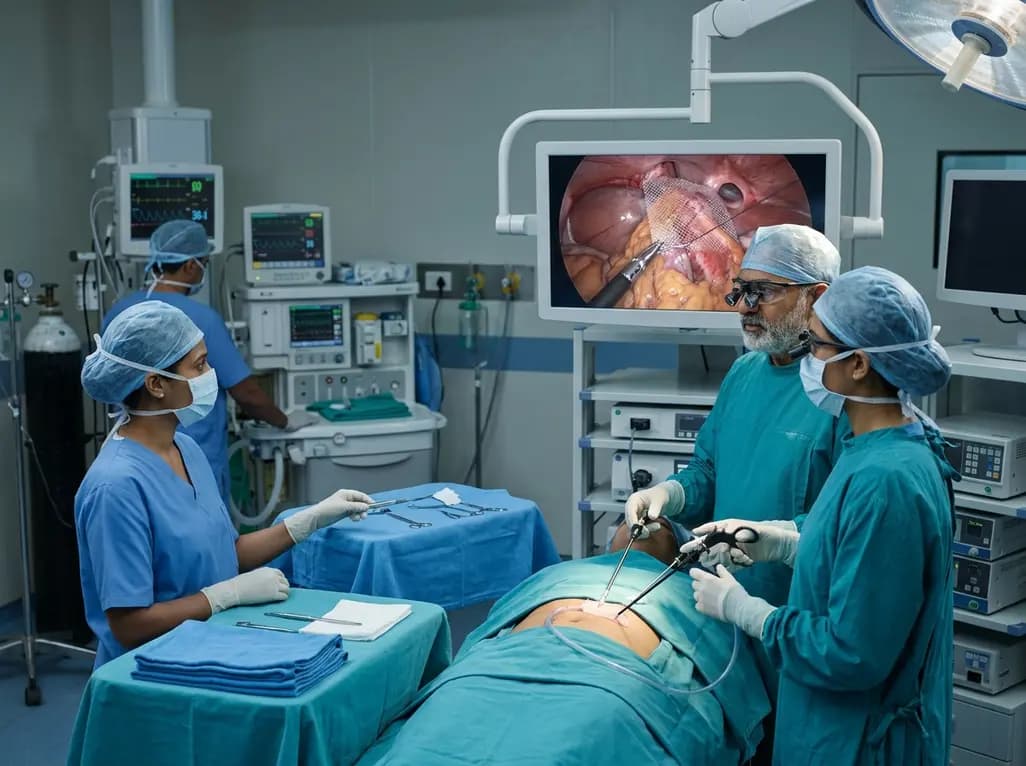
Discover a novel laparoscopic approach for iatrogenic diaphragmatic hernia repair following pedicled omentoplasty. This modified Sugarbaker technique integrates dorsal pedicle lateralization and round ligament reinforcement to secure the diaphragmatic defect while preserving vital omental vascularity.
Yesterday
A new randomized crossover trial reveals that a hinged ulnar gutter orthosis significantly improves hand function and weight-bearing tolerance compared to standard volar splints in patients with degenerative triangular fibrocartilage complex lesions, supporting functionally permissive orthotic designs.
Today
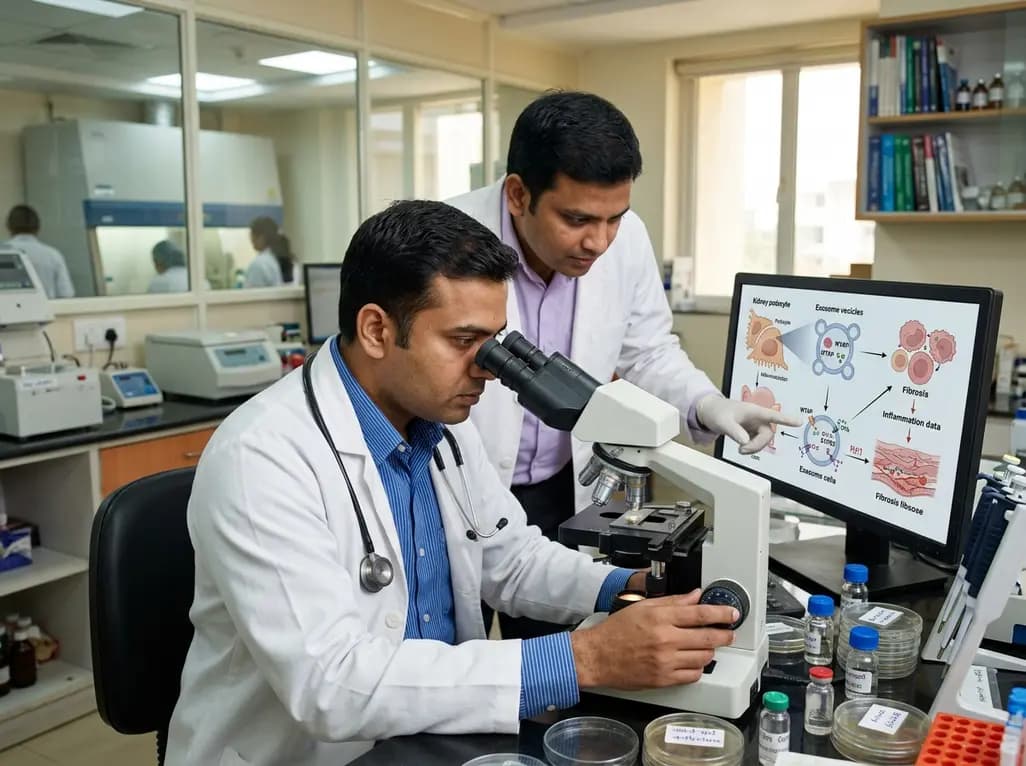
New research reveals that M1 macrophage-derived exosomes aggravate diabetic nephropathy by transferring WTAP to stabilize S1PR2 mRNA. Silencing WTAP in these vesicles attenuates endothelial injury and renal fibrosis, pointing toward innovative nanomedicine therapies.
Today
