.webp&w=384&q=75)

Loading, please wait...
Loading, please wait...

Rising temperatures are creating significant heat-related livability limits for populations worldwide. Furthermore, a recent study indicates that older adults are particularly vulnerable to these environmental changes. Researchers analyzed data from the Copernicus Climate Change Service to estimate these impacts. Consequently, the findings suggest that seniors now face nearly 900 hours of severe limitations annually. In contrast, younger adults experience about 50 hours of similar constraints. This discrepancy highlights the physiological challenges faced by the aging population during extreme weather events.
The study defines livability as the capacity to perform daily physical activities without suffering ill effects. However, extreme humidity and temperature now restrict even basic movements in many regions. Younger adults typically face fewer hours of limitation. Nevertheless, the situation for those over age 65 is increasingly dire. Specifically, over 78 percent of the global population resides in areas where heat severely restricts senior activity. Moreover, these limitations are not restricted to just the single hottest hour of the day. This data highlights a growing public health crisis that requires urgent attention from the medical community.
Notably, the most severe limitations appear in Southwest and South Asia. Countries like India, Pakistan, and Bangladesh are at the forefront of this climate challenge. In these locations, high humidity and heat levels make it dangerous to be active during peak hours. Furthermore, climate models suggest these trends will continue as the globe warms. Therefore, clinicians must advise elderly patients on specific heat safety protocols. Consequently, identifying high-risk periods becomes essential for preventing heatstroke and cardiovascular stress. In tropical regions, some hours are so intense that they limit livability to merely sitting or lying down.
Q1: What defines a heat-related livability limit?
A heat-related livability limit refers to environmental conditions where a person cannot perform everyday physical activities requiring elevated heat production without suffering adverse health effects.
Q2: Why are older adults seeing more limited hours than younger adults?
Older adults typically have a lower physiological tolerance for heat and humidity. Therefore, environmental conditions that are manageable for younger individuals can become unsafe for seniors much faster.
Disclaimer: This content is for informational and educational purposes only. It does not constitute medical advice or replace professional judgment. Refer to the latest local and national guidelines for clinical practice.
References

Read summarized clinical updates, watch expert medical content, and earn CME certifications right from your smartphone.
Open your smartphone camera to scan and install.





New study shows older adults face 900 hours of severe heat limitations annually, significantly impacting physical activity and health, especially in India....
7 months ago
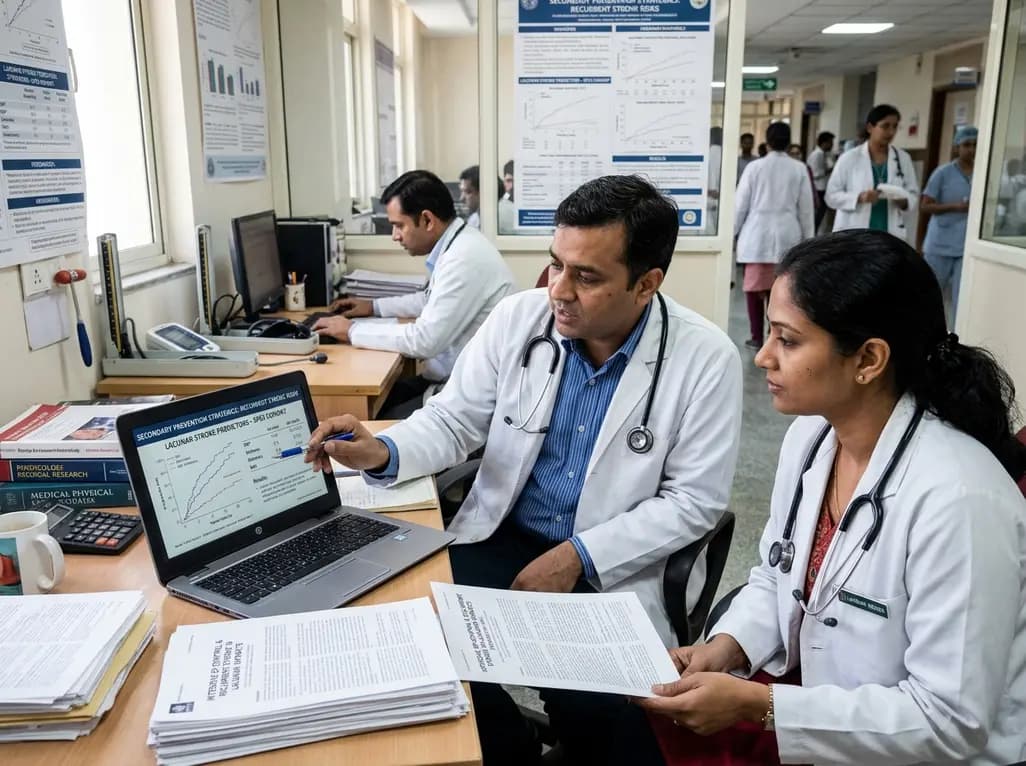
Explore vital recurrent stroke predictors in lacunar stroke patients managed with intensive blood pressure lowering. This analysis examines trial findings from SPS3 to uncover residual vascular risks, metabolic factors, and targeted secondary prevention strategies for high-risk neurological patients.
Today

A comprehensive scoping review synthesises evidence linking prenatal maternal mental health to long-term offspring neurodevelopment, evaluating neuroendocrine, inflammatory, and epigenetic pathways while highlighting clinical screening and future research priorities.
Today

The Directorate General of Health Services directs Indian states to halt the hazardous reuse and reprocessing of single-use medical devices. Discover regulatory implications under the Drugs and Cosmetics Act, critical infection risks, legal liabilities, and operational changes required across clinical specialties.
Today
Mitochondria-targeted nanoparticles self-assembled from EGCG and L-glutamic acid effectively restore mitochondrial homeostasis, suppress synovial inflammation, and attenuate chondrocyte senescence in osteoarthritis, offering a promising disease-modifying nanotherapy.
Today

India is advancing preventive healthcare by integrating genomics, artificial intelligence, and quantum technologies. With the SANGAM programme sequencing one million Indian genomes, clinicians can unlock personalized therapies, detect cardiometabolic risks early, and curb the burden of diabetes and heart disease.
Today
