.webp&w=384&q=75)

Loading, please wait...
Loading, please wait...

India is currently undergoing a massive healthcare transformation. As the nation moves toward the goals of Viksit Bharat 2047, healthcare quality accreditation has emerged as a non-negotiable requirement. While universal access is vital, it must be paired with reliable and safe care to be truly effective.
Reliable diagnostics are the backbone of modern medicine. In fact, nearly 70% of all clinical decisions rely on test results. However, quality remains inconsistent across India's fragmented market. Therefore, mandatory standards like NABL and ISO are necessary to ensure accountability. These frameworks help eliminate errors and provide equitable health outcomes for everyone.
Furthermore, accreditation strengthens the battle against non-communicable diseases (NCDs). These conditions now cause approximately 63% of deaths in India. Since NCD management starts in the laboratory, early and accurate diagnosis is essential. Consequently, standardized testing allows clinicians to move from late-stage treatment to proactive prevention.
Healthcare innovation often focuses on affordability. Nevertheless, true value lies in accuracy and reproducibility. Quality frameworks act as guardrails for new technologies like AI-assisted reporting. While automation can reduce human error, it must follow transparent protocols. This ensures that digital transformation consistently leads to better clinical outcomes and safer patient care.
Q1: Why is NABL accreditation important for Indian laboratories?
NABL accreditation provides a uniform benchmark for quality and ethical compliance. It ensures that diagnostic results are reliable, which is critical since most medical decisions depend on these tests.
Q2: How does accreditation support public health initiatives like Ayushman Bharat?
Accreditation ensures that expanded coverage under schemes like PM-JAY translates into safe care. It reinforces patient confidence in the rapidly growing healthcare ecosystem by meeting defined performance standards.
Disclaimer: This content is for informational and educational purposes only. It does not constitute medical advice or replace professional judgment. Refer to the latest local and national guidelines for clinical practice.
References

Read summarized clinical updates, watch expert medical content, and earn CME certifications right from your smartphone.
Open your smartphone camera to scan and install.





Understand why mandatory quality accreditation and NABL standards are the foundation of patient safety and clinical trust in India's healthcare system....
7 months ago

A retrospective cohort study of 7,716 ICU patients from the MIMIC-IV database demonstrates that Gradient Boosting Decision Trees significantly outperform traditional SOFA scores in predicting in-hospital mortality among patients with sepsis and diabetes, with SHAP analysis providing clinical interpretability.
Today
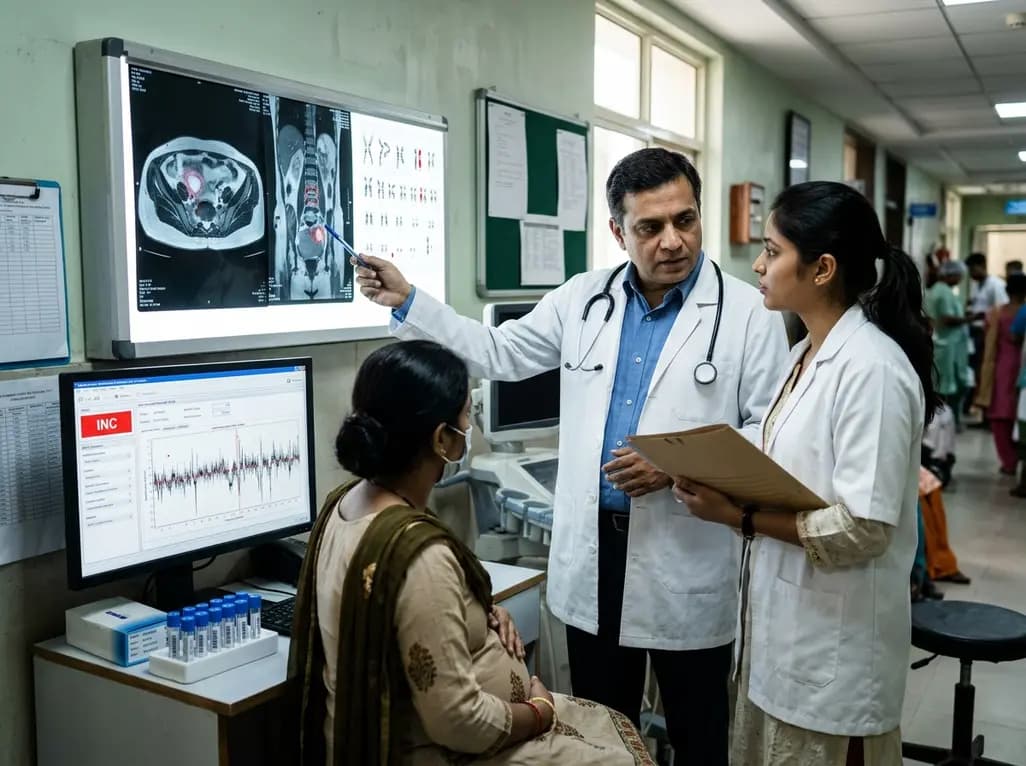
Occult maternal malignancy accounts for 3.82% of persistent unreportable NIPT results with genomic noise. Multiple chromosomal aberrations, notably on chromosome 18, warrant thorough oncological evaluation and whole-body MRI to ensure timely maternal diagnosis while preserving fetal care.
Today

This article reviews the forensic and clinical complexities of acute myocarditis arising on left ventricular hypertrophy in children, highlighting early diagnostic red flags and multidisciplinary postmortem autopsy protocols.
Today

This comparative study evaluates posterior labral tears with and without glenohumeral instability, highlighting distinct demographic patterns, MRI underestimation in stable shoulders, and successful arthroscopic repair outcomes.
Yesterday

A clinical study demonstrates that early intervention with tocilizumab, either as monotherapy or bridged with corticosteroids, achieves significant proptosis reduction and resolves active inflammation in treatment-naive thyroid eye disease.
Yesterday
