

Loading, please wait...
Loading, please wait...

The third quarter of 2026 marked a transformative milestone for India's healthcare delivery system as capital inflows reached historic levels. According to the latest EY-IVCA monthly roundup, healthcare private equity and venture capital investments surged 621 percent year on year to 3.1 billion dollars. Consequently, healthcare emerged as the second-largest sector by investment value nationwide, trailing only infrastructure. Deal activity expanded vigorously, recording 28 transactions during the quarter compared to 19 in the second quarter. Furthermore, monthly momentum accelerated sharply, registering 11 deals in September alone. This rapid financial influx highlights significant structural consolidation across the country's hospital networks and diagnostic ecosystems.
Several structural factors are driving this massive reallocation of private capital into Indian clinical services. First, patient demand for tertiary and quaternary care is accelerating rapidly across tier-two and tier-three cities. Rising non-communicable disease burdens and expanding insurance coverage actively support this clinical demand. Therefore, specialized hospital operators are expanding their bed capacities to capture regional market share. In addition, private equity investors recognize that organized hospital networks offer resilient cash flows and defensible operating margins. Institutional funds are consequently moving away from speculative assets and focusing on mature healthcare providers. Furthermore, macroeconomic stability in India has attracted international buyout funds seeking dependable, long-term returns. Domestic regulatory reforms and digital health adoption have also made multi-hospital operations significantly more efficient. As a result, healthcare valuations have reached historic highs during recent funding cycles. Global institutional funds now view Indian multi-specialty care platforms as indispensable portfolio assets. Thus, funding rounds are growing substantially larger, enabling rapid consolidation of regional hospital chains across the country. Ultimately, this sustained momentum reflects deep confidence in India's medical service delivery model.
The landmark acquisition of Medicover India by global investment firm KKR highlights this expanding consolidation trend. Notably, KKR completed a 1.4 billion dollar buyout of the hospital chain during the quarter. This transaction represented the single largest private equity deal across all Indian industries during that period. Medicover India operates a network of 24 hospitals encompassing approximately 4,800 operational beds across southern and western India. Moreover, the transaction reflects a strategic migration toward dominant, platform-scale healthcare enterprises. Through this substantial capital injection, hospital operators can modernize intensive care units and install advanced robotic surgery systems. Similarly, large hospital platforms can streamline their pharmaceutical procurement and negotiate better pricing on expensive medical hardware. Healthcare private equity sponsors actively promote standardized clinical governance across acquired facilities. Consequently, affiliated physicians gain access to superior diagnostic equipment and enhanced clinical research resources. However, institutional ownership also introduces stringent performance metrics and cost-containment mandates. Clinicians must adapt to standardized electronic health records and outcome-based care protocols. Additionally, patient outcomes often benefit from centralized specialty training and enhanced cross-departmental coordination within these expanding hospital systems. Ultimately, hospital consolidation transforms standalone facilities into integrated regional healthcare networks with expanded medical capabilities.
For medical practitioners in India, massive capital deployment brings tangible operational changes. On one hand, institutional backing provides doctors with world-class operating theaters and cutting-edge imaging technologies. Facilities can readily purchase high-field MRI units, next-generation linear accelerators, and digital surgical suites. Therefore, specialists can perform complex quaternary interventions that standalone clinics could rarely support. Furthermore, hospital groups frequently establish formal clinical research boards and offer lucrative multi-center trial opportunities. In addition, physicians often receive institutional support for continuous medical education and international fellowship training. On the other hand, corporate hospital stewardship modifies clinical independence and daily administrative workflows. Management teams frequently implement structured key performance indicators regarding patient turnover and diagnostic throughput. As a result, senior clinicians must balance clinical judgment with institutional operational priorities. Physicians may face rigorous audits regarding antimicrobial stewardship, laboratory ordering patterns, and length-of-stay metrics. Moreover, hospital consolidation can alter physician compensation models by linking incentives to standardized patient satisfaction scores. Thus, modern clinicians must develop strong operational literacy alongside their clinical expertise to thrive in corporate hospital environments. Ultimately, doctors who embrace digital documentation and collaborative governance will find immense professional growth within these well-capitalized institutions.
Historically, private equity investments concentrated almost exclusively on premier tertiary hospitals in major metropolitan areas. However, the current investment surge clearly demonstrates an aggressive expansion into tier-two and tier-three cities. Operators recognize that metropolitan markets are reaching saturation, leading to intense competition and escalating real estate costs. Consequently, healthcare platforms are channeling fresh capital into emerging urban centers like Nagpur, Coimbatore, Bhubaneswar, and Indore. These regional cities possess large, underserved populations seeking quality subspecialty care closer to home. In addition, state-sponsored health insurance schemes and higher disposable incomes have made private treatment accessible to millions. Therefore, hospital chains are establishing specialized cancer centers, cardiac institutes, and trauma facilities in non-metro regions. Local patients no longer need to travel hundreds of kilometers for routine organ transplants or advanced chemotherapy. Furthermore, this decentralized infrastructure helps retain talented medical professionals within their home states. Regional hospitals offer competitive salary packages, modern housing assistance, and advanced clinical equipment to attract top specialists. As a result, healthcare disparities between major metros and regional hubs are gradually narrowing across the subcontinent. Meanwhile, this geographic redistribution creates strong referral networks that enhance emergency response times throughout regional hinterlands.
Sustainable capital cycles depend heavily on viable exit routes for early investors. The EY-IVCA report indicates that healthcare recorded the third-highest exit value in the third quarter of 2026. Specifically, healthcare exits generated 1.4 billion dollars during this three-month window. Although healthcare ranked fifth by total deal volume among public listings since 2021, its overall realization values remain exceptionally robust. Investors frequently achieve exits through public equity listings, secondary sales to larger buyout funds, and strategic mergers. Moreover, strong retail and institutional demand for domestic healthcare initial public offerings demonstrates robust market liquidity. However, healthcare leaders must ensure that short-term financial considerations do not undermine clinical ethics and patient trust. Aggressive margin optimization could lead to inflated procedural billing or unnecessary diagnostic interventions if left unchecked. Therefore, regulatory oversight from authorities such as the National Medical Commission and the Competition Commission remains essential. Institutional investors increasingly adopt Environmental, Social, and Governance frameworks that prioritize patient safety and clinical transparency. Consequently, healthcare operators that combine financial discipline with ethical clinical care will dominate India's healthcare landscape over the next decade. Ultimately, the future of private healthcare depends on maintaining an uncompromised balance between shareholder returns and equitable clinical delivery.
Q1: Why did healthcare private equity investments in India surge so dramatically in Q3 2026?
The dramatic 621 percent surge was primarily driven by high-conviction hospital buyouts across the country. Notably, KKR completed a 1.4 billion dollar acquisition of Medicover India during the quarter. Furthermore, growing patient demand for specialized tertiary care and expanding insurance coverage encouraged global funds to deploy large cheques. Investors recognize that organized hospital networks offer dependable cash flows and steady long-term financial growth.
Q2: How does the acquisition of hospital chains by private equity funds affect patient care?
Private equity investments generally improve patient care by infusing substantial capital into hospital infrastructure and diagnostic equipment. Furthermore, institutional ownership often strengthens clinical governance protocols and expands subspecialty services across non-metro regions. However, hospital administrators must carefully monitor billing practices and resource utilization. This continuous vigilance ensures that corporate profit goals never compromise treatment affordability or clinical integrity. Ultimately, standardized clinical pathways help elevate overall care standards for communities.
Q3: What opportunities and challenges do practicing physicians face under private equity ownership?
Physicians gain access to modern facilities, advanced medical technology, standardized clinical pathways, and funded opportunities for clinical research. In contrast, corporate ownership often brings standardized performance evaluations, strict productivity metrics, and mandatory electronic health record compliance. Clinicians must balance institutional targets with patient-centric ethical care during daily practice. Therefore, doctors must develop administrative literacy alongside their specialized medical expertise to excel within these large networks.
Disclaimer: This content is for informational and educational purposes only. It does not constitute medical advice or replace professional judgment. Refer to the latest local and national guidelines for clinical practice.
References

Read summarized clinical updates, watch expert medical content, and earn CME certifications right from your smartphone.
Open your smartphone camera to scan and install.





Private equity and venture capital investments in India's healthcare sector reached $3.1 billion in Q3 2026. Driven by hospital consolidations like KKR's acquisition of Medicover, this influx is set to reshape tertiary care infrastructure, clinical technology adoption, and medical practitioner opportunities.
Today

A systematic review and meta-analysis evaluated salivary metabolomics in primary Sjögren disease. Although disease is linked to a metabolic shift, specific markers like glycine, pyruvic acid, and succinic acid showed no significant pooled difference, indicating the need for standardized diagnostic studies.
Today
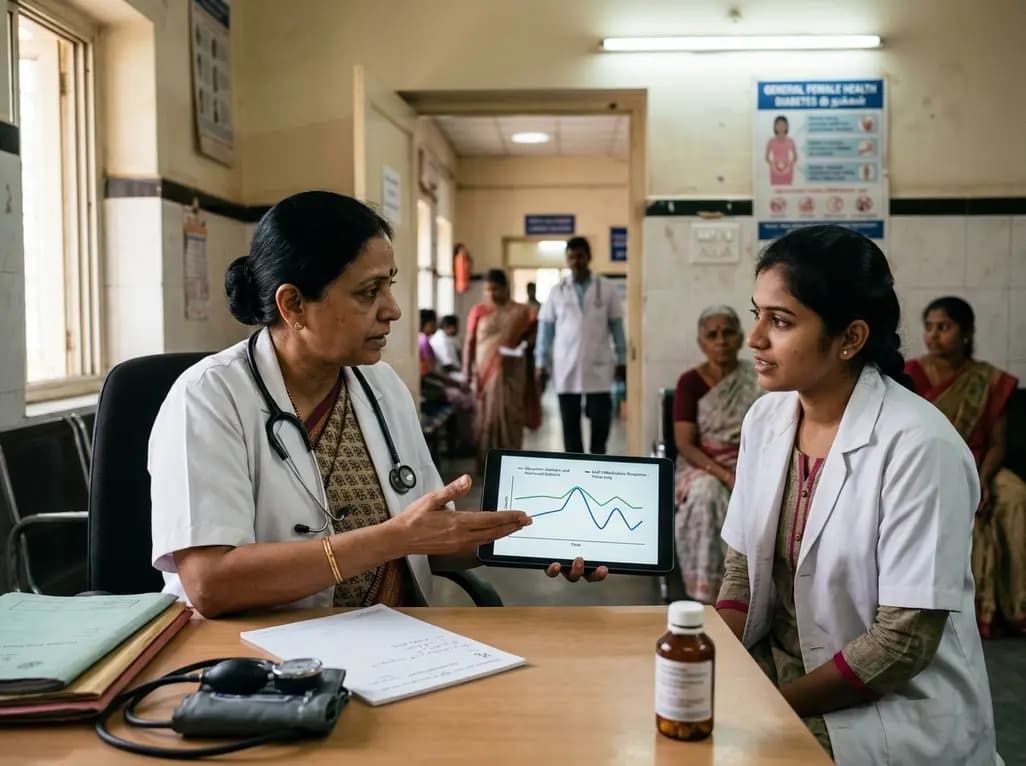
Medical experts caution that GLP-1 receptor agonists offer metabolic support rather than a curative answer for polyendocrine metabolic ovarian syndrome. Clinicians must evaluate glycemic markers, reproductive plans, and lifestyle interventions while discouraging unsupervised medication use among female patients.
Today
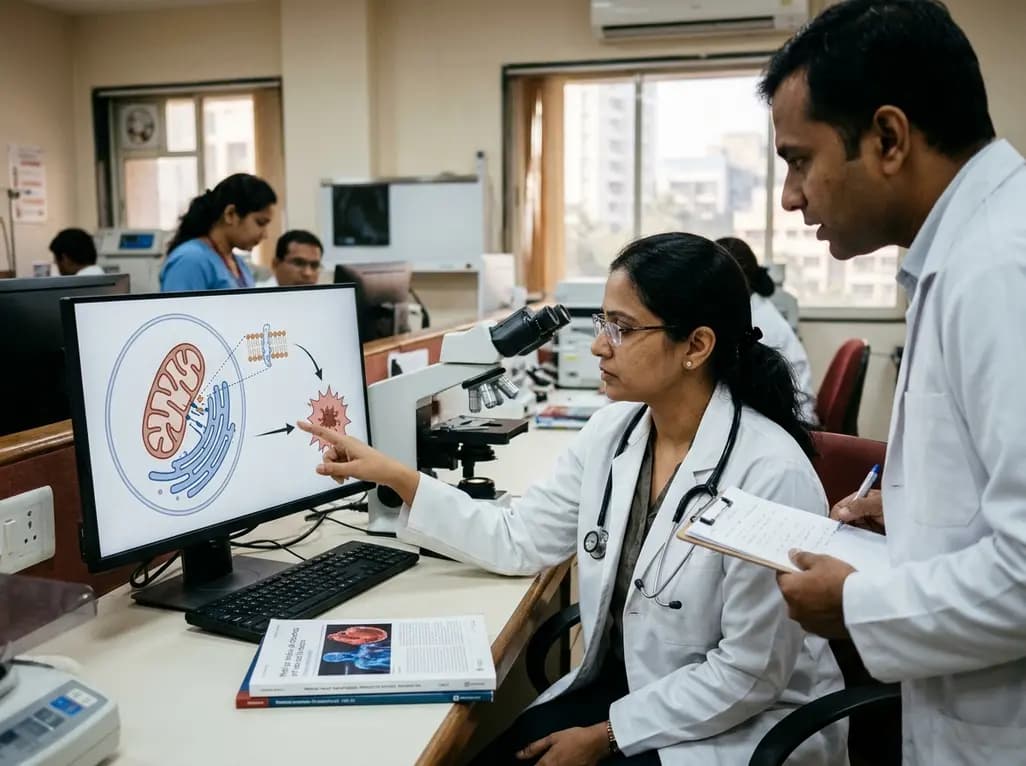
Recent research highlights how endoplasmic reticulum and mitochondrial interactions at contact sites regulate ferroptosis in cardiovascular diseases. This article explores lipid peroxidation, organelle crosstalk, and potential therapeutic strategies for ischemic heart disease and heart failure.
Today
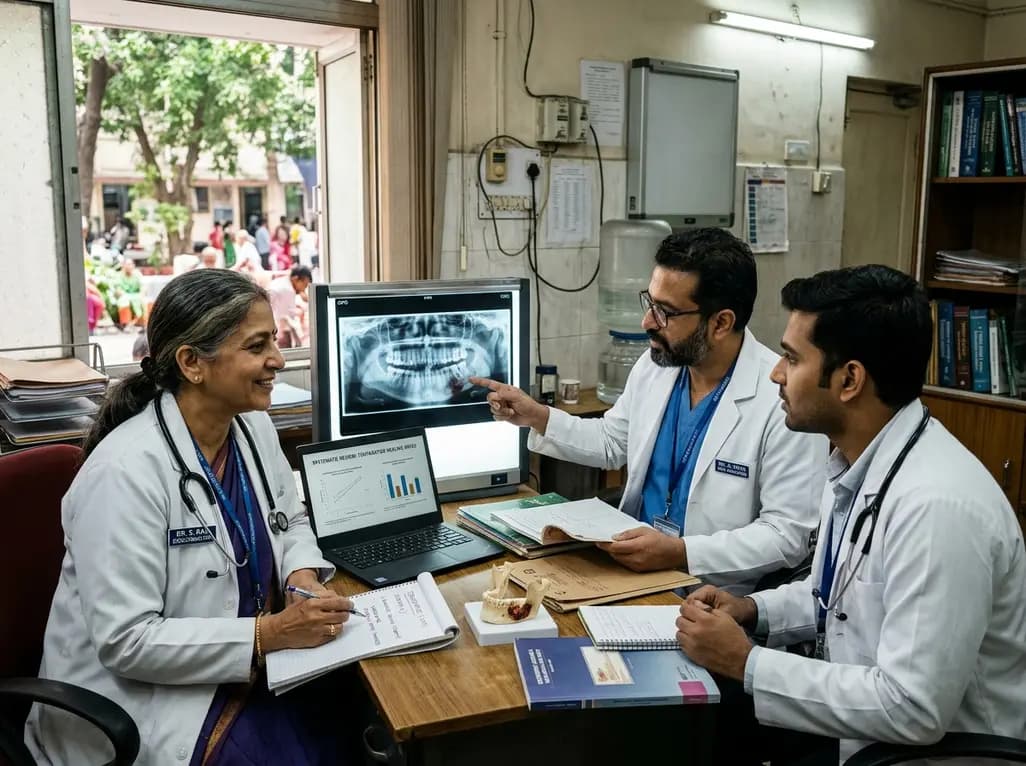
A systematic review demonstrates that teriparatide significantly improves healing in medication-related osteonecrosis of the jaw (MRONJ), especially when combined with surgical and non-surgical therapies. This review explores clinical evidence, biological mechanisms, and treatment protocols for clinicians.
Today

Groundbreaking research from Indian scientists shows that acute high glucose environments can metabolically rejuvenate cytotoxic T cells via the IGF1-mTOR axis. While this explains reduced malignancy rates in certain diabetic models, experts caution against altering glycemic management in routine clinical practice.
Today
