.webp&w=384&q=75)

Loading, please wait...
Loading, please wait...
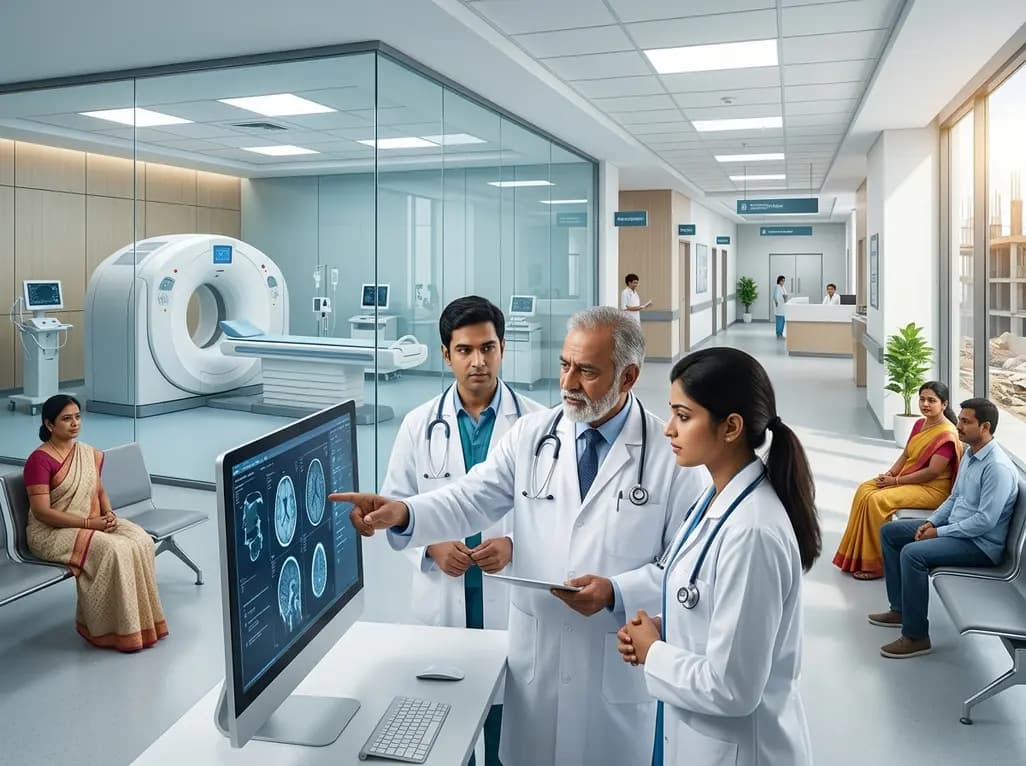
The landscape of healthcare private equity India is shifting dramatically as global investors aggressively broaden their horizons beyond traditional hospitals. Historically, institutional capital focused heavily on metropolitan multi-specialty chains. However, a major transformation is underway today, with capital moving deeper into diagnostics, localized specialty care, and medical technology. Consequently, India's medical ecosystem is witnessing unprecedented financial backing that promises to reshape healthcare delivery.
A decade ago, institutional investors in the Indian medical space primarily sought majority control transactions or distressed hospital assets. Today, the investment landscape displays a highly sophisticated willingness to compete aggressively for minority stakes in quality platforms. For instance, global buyout giants are currently bidding competitively for a minority 25% stake in Cloudnine. This pediatric and maternity chain has established a highly reputable brand across major metropolitan regions. This transaction, expected to value the company at around Rs 11,000 crore, exemplifies premium valuations. Investors are highly eager to secure exposure to India’s resilient healthcare growth. Because medical demand remains remarkably insulated from economic cycles, clinical revenue maintains steady, predictable trajectories. Consequently, global private equity firms find this predictability incredibly valuable for capital deployment. Furthermore, the focus has shifted from mere cost-cutting to genuine operational value creation. Ultimately, this paradigm shift elevates patient care while establishing highly robust operational frameworks across the entire private healthcare ecosystem.
One of the clearest trends emerging in recent years is the rapid rise of highly focused, single-specialty clinical platforms. Instead of building massive, capital-intensive multi-specialty complexes, modern operators are successfully establishing businesses centered on specific clinical niches. Specifically, sectors like oncology, ophthalmology, nephrology, and fertility are attracting substantial institutional attention. Private equity firms favor these single-specialty platforms because they combine robust growth with exceptionally clear market positioning. Consequently, these focused clinics build stronger patient trust, command better margins, and expand far more efficiently. Moreover, this specialized approach allows clinical teams to deliver highly standardized medical outcomes through dedicated protocols. For instance, dedicated eye-care networks are now attracting institutional capital that historically was reserved only for large hospital groups. Because these niche centers require lower capital expenditure, they can scale rapidly into underserved regions. As a result, patients gain access to specialized therapies closer to home, which actively democratizes modern clinical delivery across various emerging markets.
For many years, discussions regarding healthcare investment in India revolved almost exclusively around hospital beds and doctor networks. However, the diagnostic segment has recently emerged as a highly critical frontier for global investment. The global pandemic fundamentally transformed public perception of diagnostic services, making testing central to preventive medicine and clinical decisions. Today, routine health screenings are growing rapidly as awareness of preventive wellness rises among patients. Chronic diseases demand continuous monitoring, which drives consistent diagnostic testing volumes. Furthermore, advanced genetic testing and precision oncology are becoming routine clinical requirements. These powerful trends are expanding the diagnostics market far beyond simple pathology chains. Consequently, capital is actively seeking opportunities in laboratory technology, diagnostic consumables, and in-vitro diagnostics manufacturing. The ongoing discussions of major private equity firms to buy a stake in Kerala-based Agappe Diagnostics clearly reflect this major trend. Ultimately, this shift provides investors with stable, recurring revenue streams without some of the intense operational complexities associated with managing large physical hospitals.
Historically, foreign investors hesitated to enter the Indian healthcare market due to concerns over complex exit timelines. However, the current investment cycle is vastly different, primarily because the industry now offers highly visible monetization pathways. A major catalyst is the rapid maturation of modern public markets, which show a strong willingness to absorb large-scale healthcare initial public offerings. For example, Manipal Health Enterprises is progressing toward one of India’s largest hospital listings, having received critical regulatory approvals. The successful execution of such large-scale public offerings dramatically improves the sector's overall liquidity and attractiveness. Investors now clearly see multiple avenues to realize returns, whether through public listings or strategic secondary sales. Consequently, capital is flowing much more freely into early-stage medical ventures and mid-market hospital networks. This fluid movement of capital directly benefits the entire medical ecosystem by ensuring that successful clinical platforms always receive continuous funding. Ultimately, a healthy IPO pipeline creates a virtuous cycle of investment, raising clinical standards across the country.
Another compelling factor drawing private equity into healthcare is the massive growth potential within India's tier-2 and tier-3 cities. Previously, premium healthcare services were heavily concentrated in major metropolitan hubs, leaving semi-urban populations severely underserved. Today, organized hospital chains, diagnostics companies, and specialty clinics are aggressively expanding their footprints into smaller cities. This geographic expansion is heavily supported by rising regional incomes, growing health insurance penetration, and a higher awareness of modern clinical treatments. Private equity firms are actively funding these expansion plans, recognizing that demand in smaller cities dramatically outpaces current supply. Consequently, local populations gain access to high-quality healthcare, reducing the painful need to travel long distances for complex medical procedures. Furthermore, this decentralized growth model helps lower overall operational costs for healthcare providers, as land and labor remain far more affordable. Ultimately, this capital-led geographic expansion plays a vital role in democratizing quality clinical care, effectively bridging the historically wide healthcare gap across India.
Q1: What factors drive the expansion of healthcare private equity India into diagnostics?
Several factors accelerate this shift, notably rising preventive health awareness and consistent demand for screenings. Unlike hospital management, diagnostics and in-vitro diagnostics manufacturing involve lower capital overhead and operational complexity. Consequently, domestic medical equipment manufacturers offer investors highly stable, recurring revenue streams, capitalizing on India's strong push for localized clinical production.
Q2: Why do single-specialty healthcare networks attract significant private equity investments?
Single-specialty platforms, including oncology or maternity clinics, deliver focused clinical care and clear brand positioning. They often command superior operating margins due to streamlined protocols and reduced overhead. Furthermore, investors favor these models because they scale much faster into secondary regional markets, bringing high-quality clinical care to underserved populations without requiring massive initial capital.
Q3: How do successful IPOs improve private equity liquidity in healthcare?
Historically, uncertain exit timelines deterred long-term healthcare investments. Today, the successful progression of major networks like Manipal Health Enterprises toward landmark public listings proves public markets can absorb large healthcare offerings. This reliable IPO pipeline provides private equity firms with highly visible monetization pathways, thereby facilitating a freer, more confident flow of global capital.
Disclaimer: This content is for informational and educational purposes only. It does not constitute medical advice or replace professional judgment. Refer to the latest local and national guidelines for clinical practice.
References

Read summarized clinical updates, watch expert medical content, and earn CME certifications right from your smartphone.
Open your smartphone camera to scan and install.





An in-depth analysis of how healthcare private equity India is evolving beyond traditional hospitals. Discover how global capital is flowing into specialized niches, diagnostics, and tier-2/3 cities, transforming clinical infrastructure and access.
3 months ago

As monsoon seasons elevate arboviral disease threats, Tamil Nadu has initiated an ICMR-monitored evaluation of the tetravalent dengue vaccine in Tenkasi district. Clinicians emphasize clinical monitoring, public prevention, and high-quality early pediatric care to reduce disease morbidity across endemic regions.
Today

Leucine Rich Bio has introduced South Asia's first comprehensive vaginal microbiome test, BugSpeaks. By profiling microbial dysbiosis, pathogens, and antimicrobial resistance, this next-generation diagnostic platform provides clinicians with deeper insights into recurrent infections, fertility, and reproductive health.
Today

Review how tailored exercise programs benefit frail older patients with heart failure. Explore pathophysiological mechanisms, individualized training prescriptions, and strategies to overcome adherence barriers in clinical practice.
Today

This comparative study evaluates posterior labral tears with and without glenohumeral instability, highlighting distinct demographic patterns, MRI underestimation in stable shoulders, and successful arthroscopic repair outcomes.
Today

A clinical study demonstrates that early intervention with tocilizumab, either as monotherapy or bridged with corticosteroids, achieves significant proptosis reduction and resolves active inflammation in treatment-naive thyroid eye disease.
Today
