.webp&w=384&q=75)

Loading, please wait...
Loading, please wait...

During the Swachhata Pakhwada 2026 event, Union Health Secretary Punya Salila Srivastava conducted a comprehensive review of AIIMS Mangalagiri. This high-level visit focused on evaluating healthcare infrastructure readiness across essential medical departments. Specifically, the Secretary inspected the oncology, radiology, and emergency medicine wings. Additionally, she reviewed the implementation of ABHA registration to ensure seamless digital health integration. The Ministry of Health emphasized that these visits aim to enhance the overall patient experience and care quality.
The Swachhata Pakhwada initiative is a fortnight-long cleanliness drive inspired by the Prime Minister's vision. Consequently, the review prioritized sanitation and sustainable work environments within the hospital premises. Healthcare infrastructure readiness involves more than just equipment; it requires a clean and organized clinical setting. Furthermore, the Secretary noted that maintaining high hygiene standards is crucial for preventing hospital-acquired infections. Therefore, the Ministry continues to monitor these facilities to ensure they meet national healthcare benchmarks.
Beyond physical infrastructure, the government is also strengthening the Integrated Disease Surveillance Program (IDSP). This initiative provides early warnings for potential outbreaks and public health crises. To support this, the National Disaster Management Authority (NDMA) has issued strict guidelines regarding biological disasters. Meanwhile, the National Disaster Response Force (NDRF) has trained specialized battalions to manage bio-emergencies efficiently. These protocols outline epidemiological clues for early detection and provide clear treatment pathways for clinicians across India.
Q1: What was the primary purpose of the Health Secretary's visit to AIIMS Mangalagiri?
The visit aimed to review key hospital facilities, including OPD and radiology, while promoting cleanliness and quality healthcare delivery during Swachhata Pakhwada 2026.
Q2: What is the Integrated Disease Surveillance Program (IDSP)?
The IDSP is a health ministry initiative designed to provide early warning signals and ensure prompt responses to bio-emergencies and disease outbreaks.
Q3: How is the NDRF involved in healthcare preparedness?
NDRF battalions have been specifically trained to manage bio-emergencies and biological threats to ensure a coordinated nationwide response.
Disclaimer: This content is for informational and educational purposes only. It does not constitute medical advice or replace professional judgment. Refer to the latest local and national guidelines for clinical practice.
References

Read summarized clinical updates, watch expert medical content, and earn CME certifications right from your smartphone.
Open your smartphone camera to scan and install.





Union Health Secretary Punya Salila Srivastava reviews AIIMS Mangalagiri facilities and IDSP initiatives during Swachhata Pakhwada 2026 for improved care....
6 months ago

A retrospective cohort study of 7,716 ICU patients from the MIMIC-IV database demonstrates that Gradient Boosting Decision Trees significantly outperform traditional SOFA scores in predicting in-hospital mortality among patients with sepsis and diabetes, with SHAP analysis providing clinical interpretability.
Today
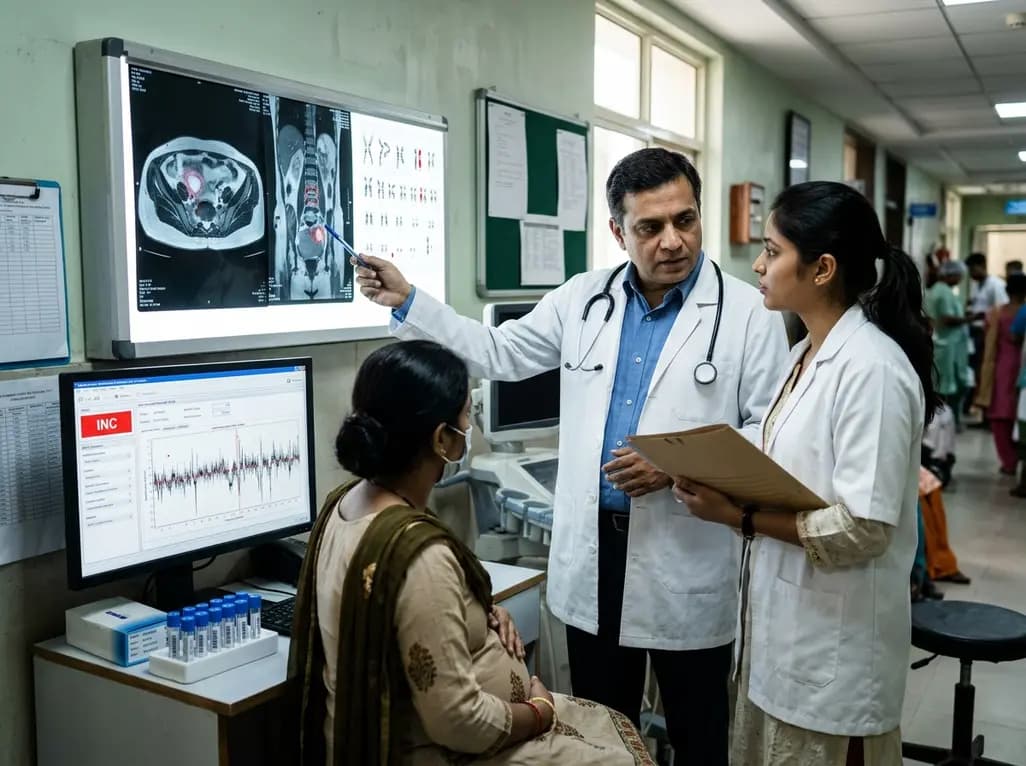
Occult maternal malignancy accounts for 3.82% of persistent unreportable NIPT results with genomic noise. Multiple chromosomal aberrations, notably on chromosome 18, warrant thorough oncological evaluation and whole-body MRI to ensure timely maternal diagnosis while preserving fetal care.
Today
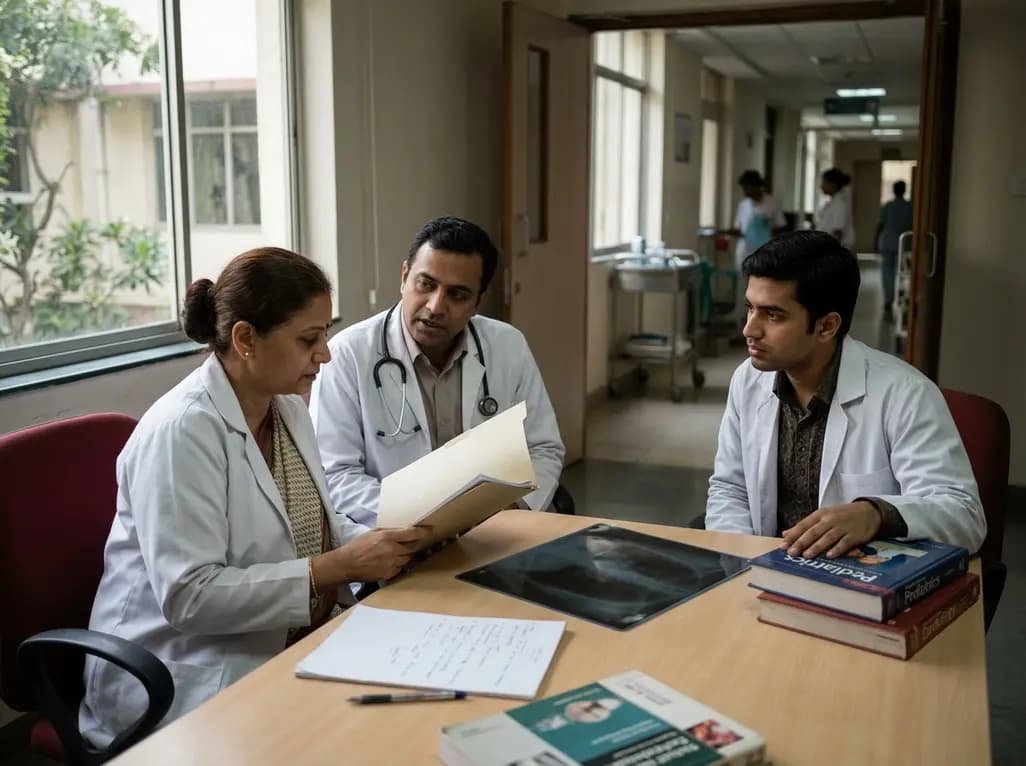
This article reviews the forensic and clinical complexities of acute myocarditis arising on left ventricular hypertrophy in children, highlighting early diagnostic red flags and multidisciplinary postmortem autopsy protocols.
Today

This comparative study evaluates posterior labral tears with and without glenohumeral instability, highlighting distinct demographic patterns, MRI underestimation in stable shoulders, and successful arthroscopic repair outcomes.
Yesterday

A clinical study demonstrates that early intervention with tocilizumab, either as monotherapy or bridged with corticosteroids, achieves significant proptosis reduction and resolves active inflammation in treatment-naive thyroid eye disease.
Yesterday
