.webp&w=384&q=75)

Loading, please wait...
Loading, please wait...
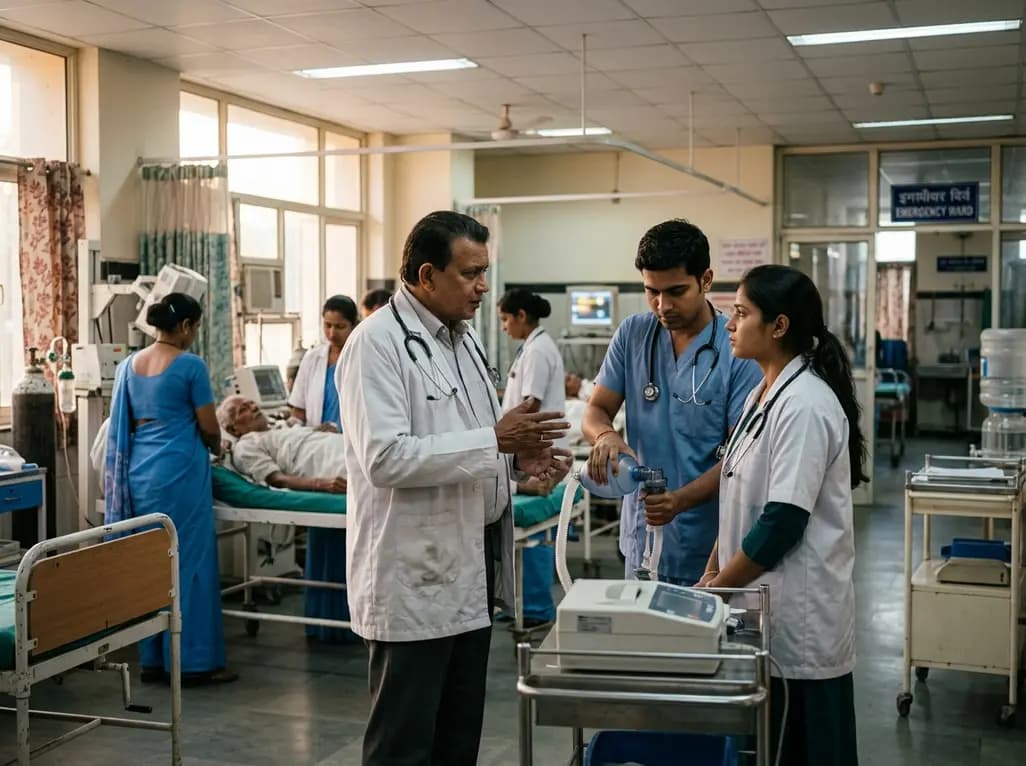
Union Health Minister J P Nadda recently conducted a comprehensive review of key health sector budget projects announced for the 2026-27 fiscal year. The review focused on translating fiscal allocations into measurable clinical outcomes, modernizing institutional frameworks, and ensuring time-bound execution across states. Consequently, senior health officials presented structured roadmaps to upgrade secondary and tertiary healthcare, expand clinical research networks, and build a resilient allied health workforce nationwide.
A primary highlight of the ministerial review is the targeted 50 percent expansion of emergency and trauma care capacity in district hospitals across India. Following post-budget deliberations, three dedicated committees conducted a nationwide gap analysis against the Indian Public Health Standards. As a result, the ministry categorized 613 district hospitals into three distinct phases based on patient caseload, geographic vulnerability, and infrastructure readiness.
During the initial phase, authorities will comprehensively upgrade 160 district hospitals by March 2027. Subsequently, Phase II will cover 203 hospitals, while Phase III will incorporate the remaining 250 healthcare facilities. These upgrades focus on establishing dedicated resuscitation bays, advanced diagnostic integration, structured pre-hospital triage protocols, and continuous medical supply chains. Furthermore, the specialized committees are standardizing digital workflow architectures to streamline pre-hospital communication between emergency ambulances and hospital trauma units.
To address persistent workforce shortages, the health ministry is advancing an ambitious strategy to add 100,000 Allied Health Professionals over the next five years across 10 specialized disciplines. Officials have prepared an Expenditure Finance Committee note following consultations with state governments, industry stakeholders, and academic institutions. Moreover, inter-ministerial discussions chaired by the Union Finance Ministry are exploring public-private partnership models to finance state-of-the-art training institutions.
In parallel, the Department of Health and Family Welfare is collaborating with the Ministry of Skill Development and Entrepreneurship to train 150,000 multi-skilled caregivers within the coming year. This curriculum aligns strictly with the National Skills Qualifications Framework, combining essential nursing support with wellness, yoga, and medical device operation. Initial caregiver cohorts have already commenced training, ensuring skilled support for geriatric care, postoperative recovery, and community-level rehabilitation.
The review thoroughly assessed research initiatives led by the Department of Health Research, spotlighting the 500-crore rupee Biopharma SHAKTI programme. This strategic initiative establishes a hub-and-spoke clinical trial network comprising more than 1,000 accredited sites across medical colleges and tertiary hospitals. Consequently, the government aims to boost domestic biopharmaceutical innovation, accelerate global clinical trials, and reinforce biological manufacturing capabilities.
Under Biopharma SHAKTI, authorities are deploying centralized trial-facilitation agencies, standardized digital registries, and rigorous site-accreditation frameworks. Additionally, the ministry reviewed the development of five Regional Medical Hubs designed to foster evidence-based integrative treatment protocols. In collaboration with the Indian Council of Medical Research and CCRAS, working groups are focusing on five priority conditions: dyslipidemia, generalized anxiety disorder, cardiovascular diseases, insomnia, and osteoarthritis to bolster India's medical value tourism.
Enhancing drug regulatory standards formed another crucial component of the high-level review meeting. The Central Drugs Standard Control Organisation is undergoing substantial structural modernization to align approval timelines and scientific evaluation with international benchmarks. An expert committee has submitted recommendations to institute a dedicated scientific review cadre, adjust pay structures, and deploy specialized technical experts across regulatory verticals.
Simultaneously, the ministry reviewed significant mental health infrastructure expansions, most notably the establishment of NIMHANS-II as a 1,000-bed apex neuropsychiatric center. In addition, the Central Institute of Psychiatry in Ranchi and the Lokopriya Gopinath Bordoloi Regional Institute of Mental Health in Tezpur are undergoing upgrades to serve as regional apex institutions. NIMHANS Bengaluru will mentor both centers, providing technical and administrative guidance to enhance psychiatric residency training, neurosurgical capabilities, and community mental health outreach.
The successful execution of these diverse health sector budget projects relies on robust inter-ministerial coordination and regular progress auditing. Minister Nadda reiterated that departments must adhere strictly to implementation milestones to deliver tangible healthcare improvements to citizens. By bridging infrastructural gaps in district hospitals and modernizing apex research bodies, the government seeks to establish an integrated healthcare continuum spanning primary emergency response, advanced pharmacotherapy, and specialized neuropsychiatric intervention.
Q1: What is the primary objective of the district hospital trauma care initiative?
The initiative aims to expand emergency and trauma care capacity by 50 percent across 613 district hospitals in India. By implementing Indian Public Health Standards, improving pre-hospital integration, and modernizing resuscitation infrastructure, the project ensures rapid, life-saving emergency medical interventions for critical patients, starting with 160 hospitals in Phase I by March 2027.
Q2: How does Biopharma SHAKTI impact clinical research in India?
Biopharma SHAKTI is a dedicated initiative that establishes a nationwide network of over 1,000 accredited clinical trial sites using a hub-and-spoke model. Supported by a central trial-facilitation agency and robust digital systems, the project strengthens domestic drug development, enhances regulatory compliance, and positions India as a premier global clinical research destination.
Q3: What key expansions are planned for national mental healthcare infrastructure?
The government is establishing NIMHANS-II as a 1,000-bed premier neuropsychiatric institute. Furthermore, the Central Institute of Psychiatry in Ranchi and LGBRIMH in Tezpur are being upgraded to regional apex institutions. Mentored directly by NIMHANS Bengaluru, these facilities will provide advanced neurology, psychiatry, and neurosurgery services while expanding academic and clinical research capacities.
Disclaimer: This content is for informational and educational purposes only. It does not constitute medical advice or replace professional judgment. Refer to the latest local and national guidelines for clinical practice.
References

Read summarized clinical updates, watch expert medical content, and earn CME certifications right from your smartphone.
Open your smartphone camera to scan and install.





Union Health Minister J P Nadda reviewed major health budget initiatives, including boosting emergency care across 613 district hospitals, training 1.5 lakh caregivers, establishing NIMHANS-II, and advancing Biopharma SHAKTI to strengthen India's clinical research and healthcare delivery ecosystem.
4 weeks back

A systematic review of 41 preclinical studies reveals that baicalin dampens systemic inflammation, inhibits NF-κB and NLRP3 pathways, and improves organ preservation in sepsis models. However, substantial study heterogeneity and a complete lack of human clinical trials highlight the need for further translational research.
Today
Discover the crucial distinctions between mesonephric and mesonephric-like proliferations of the female genital tract. Learn the key histomorphologic, immunohistochemical, and molecular differences essential for accurate diagnosis and clinical management.
Today
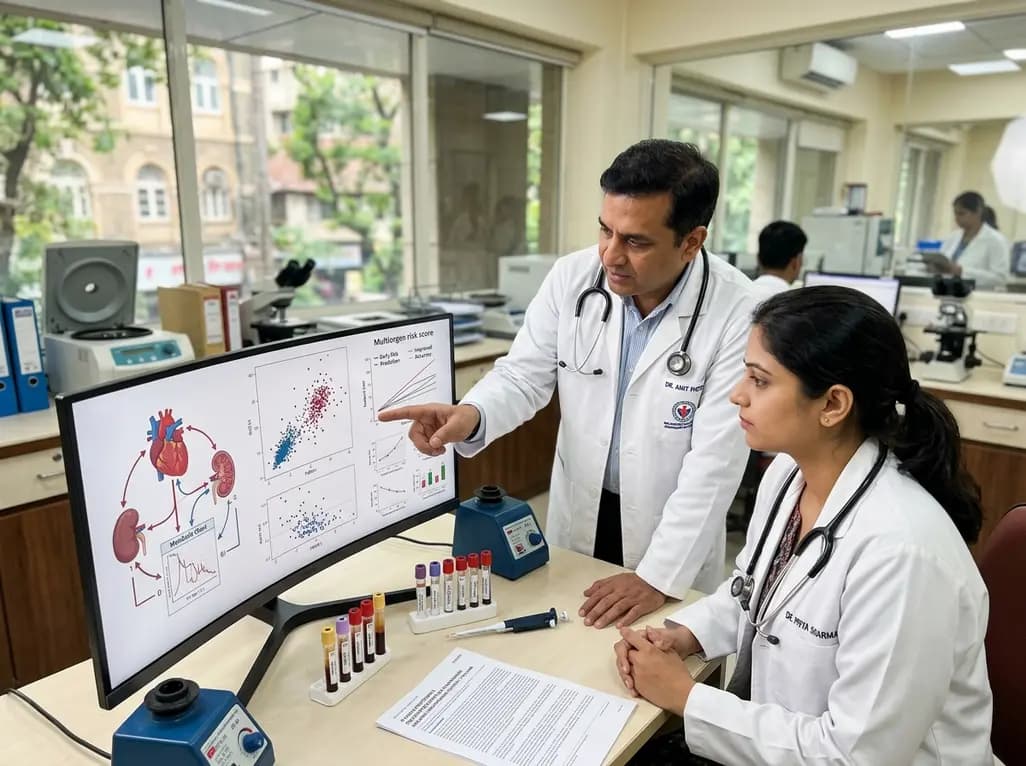
A large UK Biobank study reveals that plasma proteomic signatures capture preclinical organ damage and improve multiorgan risk prediction across early CKM syndrome stages 0 to 2 beyond traditional PREVENT clinical models.
Today
A narrative review investigates whether the articularis genus muscle functions as an independent anatomical entity or blends with the vastus intermedius. We evaluate its morphology, role in retracting the suprapatellar bursa, and direct clinical significance in anterior knee pain and arthroplasty.
Today
A Bayesian multilevel meta-analysis reveals that aerobic training combined with moderate carbohydrate restriction modestly lowers HbA1c in type 2 diabetes. However, sparse data and very low certainty leave incremental benefits over exercise or diet alone unproven, highlighting the need for individualized care.
Today
