

Loading, please wait...
Loading, please wait...

India is currently reshaping its public healthcare delivery mechanisms through major financial restructuring. For years, the National Health Mission served as the primary funding channel for community clinics and district hospitals. However, the disbursement of these resources often faced bureaucratic bottlenecks and delayed clinical interventions. Modern health financing reforms aim to fix these structural hurdles. Policymakers are shifting their attention away from mere fund allocation toward swift implementation. Consequently, healthcare providers and administrators must understand how these financial changes alter day-to-day service delivery across the public health ecosystem.
Historically, central funding flowed through complex institutional layers before reaching peripheral clinics. The central government initially disbursed allocations to state treasuries. Next, state treasuries distributed funds to various administrative bodies, blocks, and individual facilities. Consequently, thousands of decentralized bank accounts held public money. This fragmentation created massive unspent balances known as idle floats. Furthermore, these intermediate delays meant that critical operational resources took months to reach healthcare institutions.
To solve this inefficiency, the Central government launched the Single Nodal Agency system in 2021. This sweeping reform abolished peripheral accounts and consolidated funding into a single state-level account. For instance, authorities consolidated over 1.5 million implementation accounts into approximately 4,500 centrally visible accounts. In addition, this restructuring recovered nearly 11,000 crore rupees in idle capital across the country. States like Bihar and Odisha witnessed dramatic improvements in operational efficiency. Bihar recovered 675 crore rupees, while Odisha reclaimed 270 crore rupees. Moreover, fund release timelines dropped from multiple months to under fifteen days. These digital mechanisms significantly enhanced transaction transparency across the entire healthcare delivery chain.
Financial efficiency at central levels does not automatically guarantee superior patient care at the facility level. Although consolidated bank accounts simplify fiscal auditing, clinicians on the ground often confront unexpected liquidity hurdles. In particular, frontline primary health centers need immediate petty cash to maintain routine clinic functionality. Medical officers must purchase emergency medications, pay sanitation workers, and repair diagnostic machines. However, rigid electronic drawing limits can impede these rapid expenditures.
Furthermore, modern health financing reforms increasingly demand strict proof of utilization before releasing subsequent tranches. While this requirement prevents corruption, it inadvertently penalizes facilities operating in resource-constrained environments. For example, remote clinics frequently struggle with vendor payments when centralized digital approvals stall. As a result, healthcare workers occasionally divert attention from clinical duties to administrative paperwork. In addition, localized stockouts of essential surgical gloves and diagnostic kits may occur during lengthy approval cycles. To safeguard patient care, health authorities must balance fiscal discipline with functional autonomy. Facilities require protected contingency funds so local doctors can resolve emergencies promptly without administrative disruption.
A persistent hurdle in healthcare execution involves the gap between paper approvals and actual funds. In recent years, administrative approvals for scheme expenditures have significantly outpaced real fiscal resources. Across eighteen major Indian states, approval ratios expanded from roughly 90 percent to 153 percent over eight years. Consequently, state healthcare administrators operate under unrealistic budgetary expectations. When actual revenue envelopes fall short, health departments must make painful operational compromises.
Inevitably, authorities prioritize fixed statutory commitments over discretionary clinical investments. States routinely channel available funds toward regular staff salaries and direct beneficiary transfers. Meanwhile, secondary operational priorities experience severe austerity. Essential allocations for medical equipment maintenance, surgical consumables, and facility upgrades often suffer deep cuts. In addition, community outreach camps and preventive diagnostic screenings frequently face sudden cancellations due to resource shortfalls. Therefore, high fund utilization figures can present a misleading narrative of health system robustness. True budget credibility requires aligning administrative authorizations directly with realistic fiscal resources. Without this financial alignment, peripheral hospitals will continue to face unpredictable supply shortages despite record scheme allocations.
The transition to electronic expenditure management introduces pronounced infrastructural disparities between districts. Well-connected urban health departments can navigate digital portals rapidly and draw scheme allocations efficiently. In contrast, remote rural facilities frequently struggle with unstable internet connectivity and erratic power supplies. Furthermore, many primary clinics lack trained accountants to manage sophisticated financial software. Consequently, poorly resourced peripheral districts spend their allocated budgets far more slowly than technologically advanced urban centers.
This technological gap creates perverse operational incentives for local health managers. Frontline staff face intense bureaucratic pressure to demonstrate compliance with spending targets. As a result, administrators occasionally adopt risky workarounds, such as recording operational advances as completed expenditures. These artificial accounting maneuvers inflate utilization statistics without delivering real medical services. Moreover, such practices obscure operational bottlenecks from public health supervisors. In addition, rural clinical staff spend excessive clinical hours attempting to rectify software synchronization errors. Addressing these systemic inequities requires targeted investments in local administrative training. Ultimately, governments must reinforce rural digital infrastructure before imposing punitive compliance metrics on underserved healthcare facilities.
India is now advancing its public financial management reforms through the SNA-SPARSH framework. This advanced system enforces just-in-time treasury transfers, preventing capital from idling in intermediary accounts. Starting in late 2025, authorities made this model mandatory for all Centrally Sponsored Schemes. Although just-in-time payments optimize government cash management, they continue to reflect input-focused governance. Tracking financial disbursements confirms where money moves, but it fails to evaluate clinical outcomes.
To achieve genuine Universal Health Coverage, financial systems must merge with health data platforms. For example, central software should link expenditure records directly to immunization coverage, maternal health metrics, and patient survival rates. In addition, public health monitoring must evaluate disease reduction rather than mere ledger depletion. When policymakers evaluate schemes solely on fund utilization percentages, they overlook clinical quality. In contrast, integrating epidemiological registries with fiscal monitoring provides actionable insights into community health gains. Therefore, future public health governance must establish performance-linked incentives tied to measurable community wellness. Only by measuring clinical achievements can India transform financial efficiency into meaningful patient outcomes.
Q1: What is the main objective of the Single Nodal Agency reform in health financing?
The Single Nodal Agency reform primarily aims to consolidate thousands of fragmented public bank accounts into a single state-level repository. By replacing decentralized accounts with unified oversight, the system eliminates unspent idle balances known as floats. Consequently, both central and state finance departments can track public expenditures on real-time digital dashboards. This transparent mechanism ensures that subsequent financial disbursements strictly align with verified operational requirements across peripheral healthcare facilities.
Q2: How does SNA-SPARSH differ from previous public financial management systems?
Previous funding models transferred bulk financial installments into state accounts months in advance, leaving large cash floats unutilized across commercial bank accounts. In contrast, the SNA-SPARSH framework implements a just-in-time disbursement mechanism. Government funds move from central and state treasuries only when a health agency processes an actual vendor or payroll transaction. Therefore, this modern architecture prevents fiscal hoarding, decreases borrowing needs, and improves overall financial discipline.
Q3: Why must health financing reforms look beyond fund utilization metrics?
Standard fund utilization metrics confirm that an administrative agency spent its allotted money, but they provide zero insight into service quality. For example, an urban clinic might spend its entire procurement budget while clinical outcomes remain completely unchanged. Linking public financial systems with electronic health databases enables governments to monitor maternal survival rates, immunization milestones, and infection reductions. Consequently, policymakers can verify that public healthcare investments produce tangible clinical value for communities.
Disclaimer: This content is for informational and educational purposes only. It does not constitute medical advice or replace professional judgment. Refer to the latest local and national guidelines for clinical practice.
References

Read summarized clinical updates, watch expert medical content, and earn CME certifications right from your smartphone.
Open your smartphone camera to scan and install.





India's health sector has witnessed sweeping public financial management overhauls, consolidating bank accounts and introducing just-in-time fund releases. While the Single Nodal Agency framework curbed idle cash floats, future progress demands aligning financial monitoring with tangible patient health outcomes.
Today
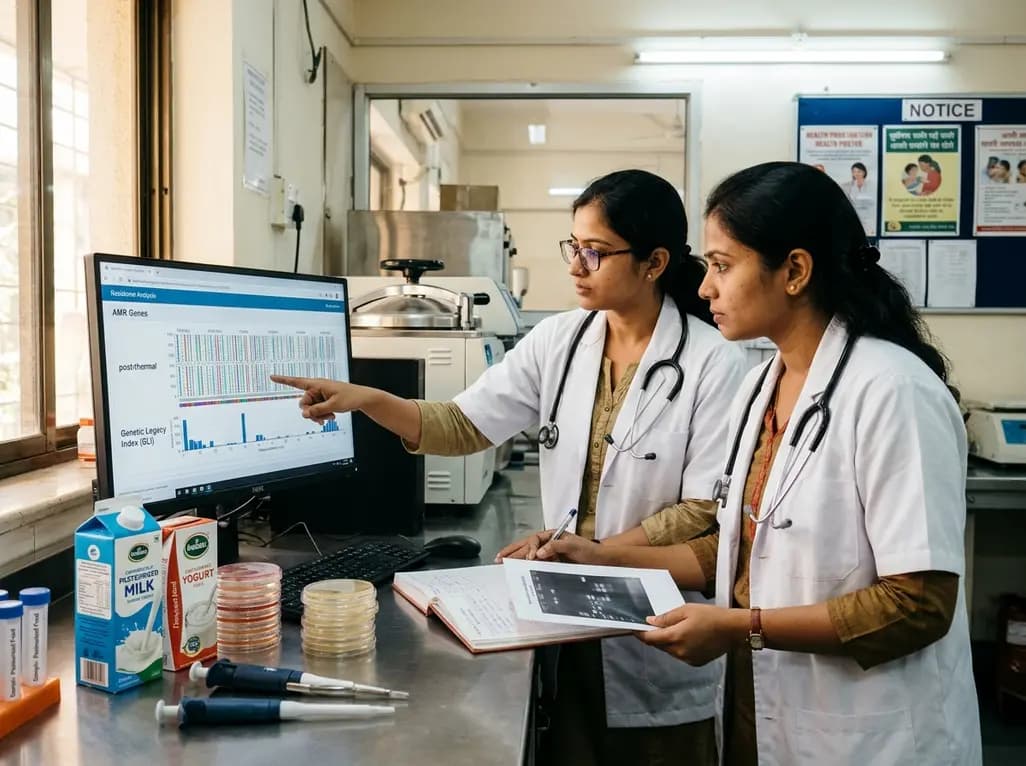
While thermal pasteurization effectively eliminates viable bacteria, antimicrobial resistance genes and cellular debris persist in food products. A newly proposed Genetic Legacy Index provides an innovative surveillance framework to quantify post-thermal resistomes and guide One Health antimicrobial policies.
Today
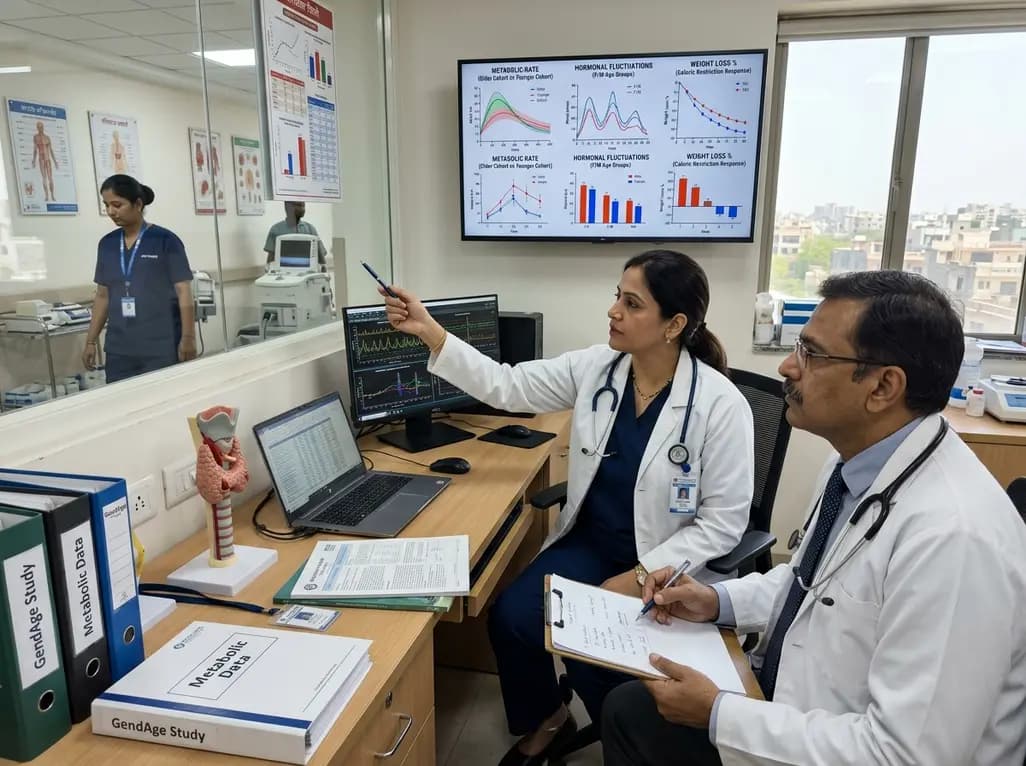
The GendAge weight loss study investigates how sex hormones, age, and menopausal status modulate caloric restriction response. By comparing metabolic adaptations across younger and older cohorts, this controlled feeding trial aims to refine precision dietary guidance for effective obesity management.
Today
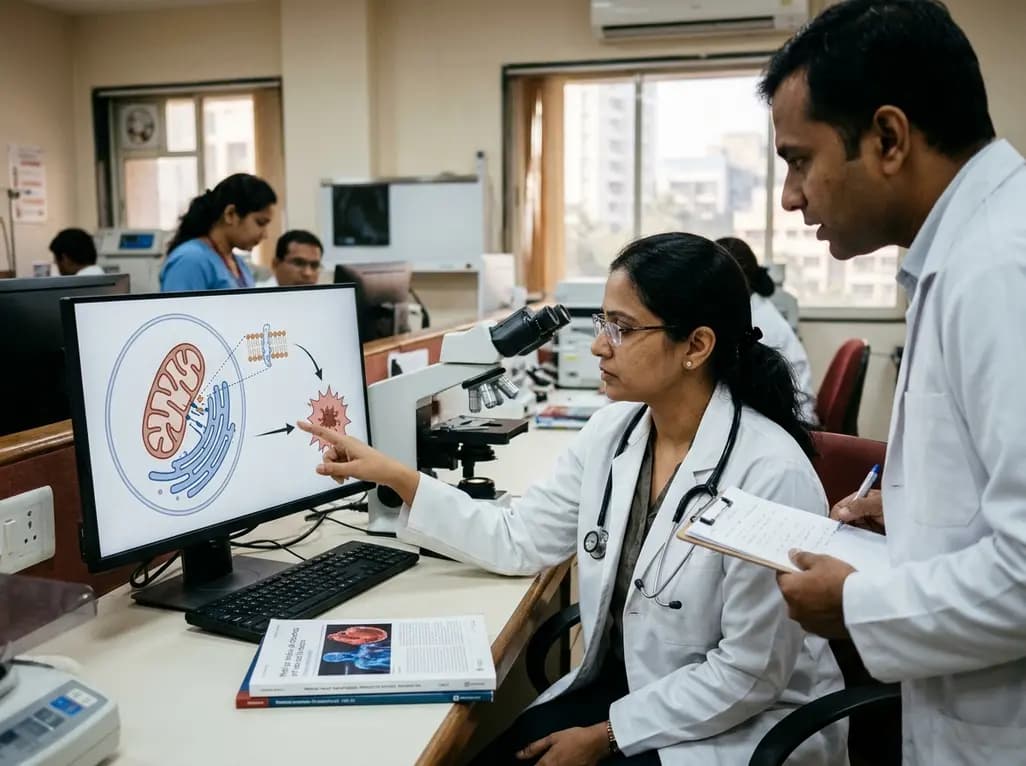
Recent research highlights how endoplasmic reticulum and mitochondrial interactions at contact sites regulate ferroptosis in cardiovascular diseases. This article explores lipid peroxidation, organelle crosstalk, and potential therapeutic strategies for ischemic heart disease and heart failure.
Today

A systematic review demonstrates that teriparatide significantly improves healing in medication-related osteonecrosis of the jaw (MRONJ), especially when combined with surgical and non-surgical therapies. This review explores clinical evidence, biological mechanisms, and treatment protocols for clinicians.
Today

A recent investigation reveals that GLP-1 induces IL-27 synthesis in macrophages via the PI3K/AKT signaling cascade. This axis regulates immune polarization and contextual inflammation, offering valuable perspectives for managing obesity-induced metabolic disease and chronic systemic inflammation.
Today
