.webp&w=384&q=75)

Loading, please wait...
Loading, please wait...
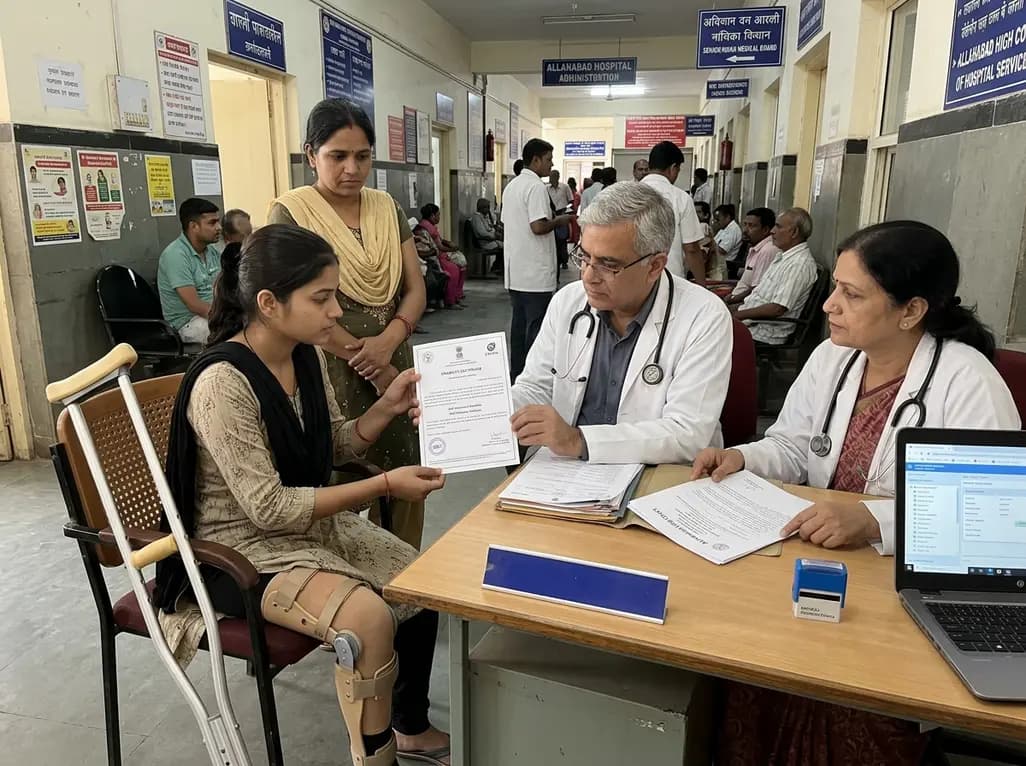
A crucial legal precedent has emerged regarding medical admissions in India. The Lucknow bench of the Allahabad High Court recently delivered an authoritative ruling on admission quotas. Specifically, the court held that a medical board cannot alter an authentic NEET disability certificate issued by a competent government authority. This decision protects the constitutional and statutory rights of candidates seeking reservation under the Persons with Benchmark Disabilities quota.
The division bench comprised Justice Shekhar B Saraf and Justice Abdhesh Kumar Chaudhary. They examined whether medical boards under the National Medical Commission possess the legal authority to redetermine disability percentages. The court delivered a firm negative answer. Furthermore, the bench clarified the explicit statutory boundaries assigned to medical assessment boards during counselling.
The court declared that an assessment board must only decide if a candidate can complete the MBBS curriculum. In addition, evaluators must consider reasonable accommodation and modern assistive devices during their assessment. Consequently, medical boards cannot recalculate permanent disability percentages that authorized medical officers have already finalized. Therefore, the court quashed the contrary findings issued by both the initial assessment board and the appellate body. The judges instructed admission authorities to include the affected candidates in remaining NEET-UG 2026 counselling rounds immediately.
The court placed strong emphasis on statutory provisions outlined in national legislation. Specifically, Sections 56 and 57 of the Rights of Persons with Disabilities Act govern disability certification across India. Competent district medical authorities issue these certificates after comprehensive clinical evaluations. Consequently, these documents possess statutory finality that administrative committees cannot casually discard.
The bench observed that a valid NEET disability certificate and its corresponding UDID card remain binding on all public bodies. Thus, an administrative or medical board cannot unilaterally rewrite certified impairment metrics. Only an established judicial forum or competent statutory appellate authority can nullify or alter such certifications. Furthermore, the court noted that the NMC guidelines dated July 27, 2026, safeguard candidates possessing 40 percent or higher benchmark disability. Therefore, attempts by counselling boards to dilute these official certifications violate both legislative intent and established administrative law.
The bench resolved three consolidated petitions filed by Shubham Mishra, Saurabh Rana, and Gulfam Ahmed. Each candidate held a valid certificate issued by competent district health authorities. For example, Shubham Mishra presented an authentic certificate confirming 45 percent permanent disability from the Chief Medical Officer of Sultanpur. His condition stemmed from Bell's palsy, a chronic neurological facial nerve condition. Mishra had secured an impressive All India Rank of 948 in the NEET-UG PwBD category.
However, the designated Medical Assessment Board reduced his documented disability from 45 percent to 20 percent on August 11. Subsequently, the Appellate Medical Board affirmed this reduction on August 21, stripping him of reservation benefits. Similarly, Saurabh Rana held certification for 50 percent disability, while Gulfam Ahmed held documentation for 40 percent. In all three instances, boards had acknowledged their practical ability to pursue medical training. Nevertheless, the boards unlawfully lowered their percentages, creating unjust barriers to medical seats.
A central tenet of modern disability rights is the principle of reasonable accommodation. The high court reiterated that functional ability must take precedence over arbitrary medical reassessments. Notably, in all three contested matters, the assessment panels had already determined that the petitioners were functionally capable of pursuing medicine. Hence, the candidates possessed the required motor, intellectual, and clinical capacity to undertake an MBBS curriculum.
Because the candidates met all functional standards, reducing their percentage of impairment lacked lawful justification. The court reiterated that regulatory bodies must not exclude eligible candidates merely because of administrative prejudice. Instead, institutions must support students by providing assistive technology, adaptive equipment, and necessary environmental modifications. Moreover, the bench emphasized that medical education should promote inclusivity rather than erect systemic roadblocks. Therefore, penalizing qualified applicants who meet functional requirements represents a direct violation of statutory protections.
This landmark ruling carries profound implications for undergraduate and postgraduate medical admissions nationwide. Historically, candidates with benchmark disabilities have faced recurring friction during counselling. State medical boards frequently subjected students to arbitrary second assessments, often overturning established district medical records. Thus, this judicial clarification provides much-needed relief and administrative consistency.
Moving forward, designated NEET assessment centres must align their institutional evaluations with established judicial doctrine. The court clarified that its judgment does not dispense with functional evaluations. Medical boards retain the legal power to conduct personalized assessments of physical capabilities. However, their inquiry begins and ends with whether a candidate can safely perform core clinical duties with assistive aids. Consequently, assessment boards cannot dispute certified impairment percentages. This judgment strengthens transparency, minimizes stressful litigation, and secures equal opportunities for aspiring healthcare professionals with disabilities across India.
Q1: Can an NMC medical board reduce a candidate's certified disability percentage?
No, the medical assessment board cannot alter or reduce the certified disability percentage. The Allahabad High Court ruled that valid disability certificates issued under Sections 56 and 57 of the RPwD Act remain binding. Designated boards only hold the jurisdiction to assess practical functional capacity and reasonable accommodation needs for medical studies.
Q2: What is the primary role of designated NEET medical assessment boards?
The primary role of the board is to conduct an individualized functional assessment of the applicant. Evaluators must verify whether the candidate can complete the academic and clinical rigours of the MBBS program. Furthermore, boards must evaluate whether assistive technology and reasonable accommodation can help the candidate succeed safely.
Q3: What qualifies a candidate for the PwBD reservation quota in NEET-UG counselling?
A candidate qualifies for PwBD reservation if they possess a valid disability certificate showing at least 40 percent benchmark disability. District medical authorities issue these certificates alongside official UDID cards. Additionally, the candidate must qualify NEET-UG and demonstrate the functional competency required to pursue medical education effectively.
Disclaimer: This content is for informational and educational purposes only. It does not constitute medical advice or replace professional judgment. Refer to the latest local and national guidelines for clinical practice.
References

Read summarized clinical updates, watch expert medical content, and earn CME certifications right from your smartphone.
Open your smartphone camera to scan and install.





The Allahabad High Court ruled that medical assessment boards cannot modify disability percentages recorded by competent authorities under the RPwD Act for NEET-UG aspirants. Boards can only evaluate functional fitness and reasonable accommodations, ensuring fair seat allocation for benchmark disability candidates.
Today

An FDA advisory committee has unanimously affirmed the safety of Grail's Galleri multi-cancer early detection blood test while offering split support on clinical efficacy. Here is an in-depth clinical analysis of the panel vote, trial evidence, diagnostic accuracy, and prospective implications for oncology practice.
Today

The ClinGen Prenatal Gene Curation Expert Panel evaluated 63 disease relationships across 61 genes, establishing clinical validity for severe fetal phenotypes like hydrops and stillbirth to enhance prenatal genomic interpretation and clinical care.
Today
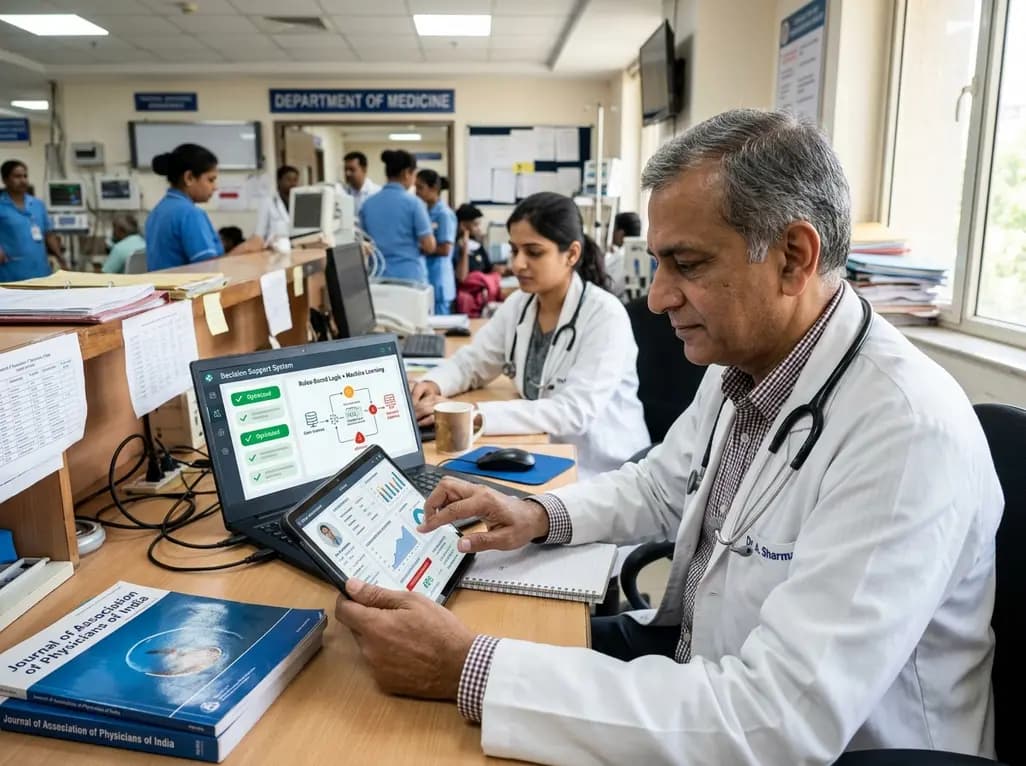
A multicenter study validates a hybrid clinical decision support system combining rule-based logic and machine learning to optimize anticoagulant prescription reviews, reducing alert fatigue and intercepting prescribing errors.
Today
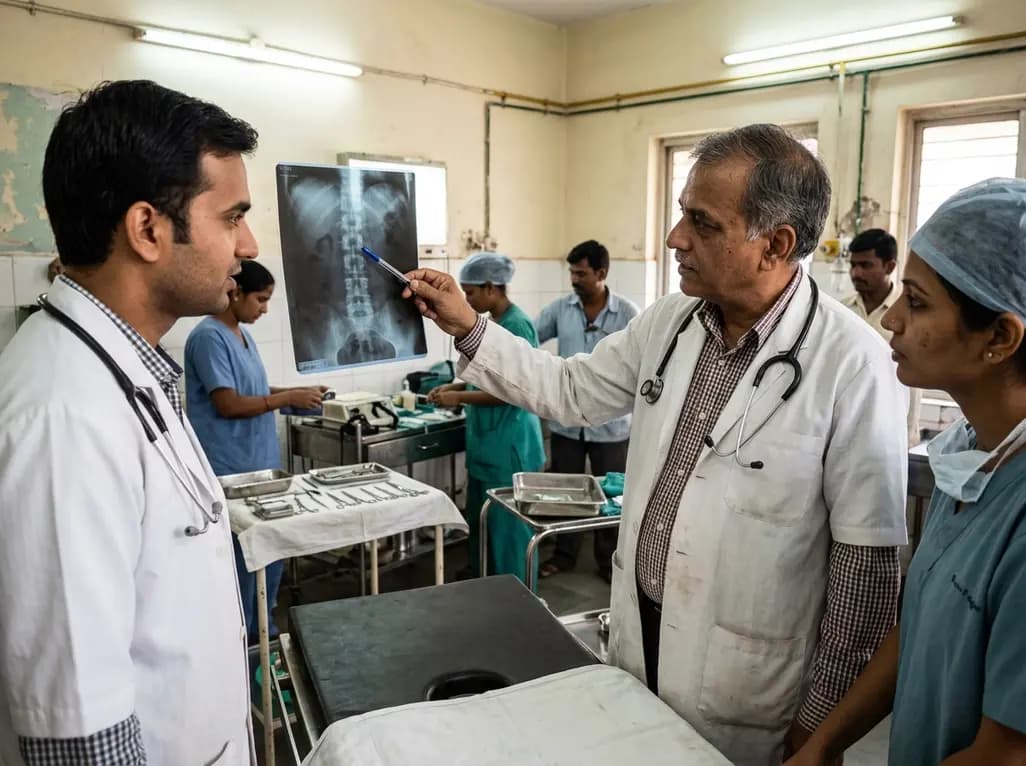
Spine surgery missions in low-resource settings bridge global healthcare gaps when executed with ethical rigor, meticulous logistics, and sustained local partnerships. Learn key practical strategies for financial planning, equipment procurement, patient selection, and bilateral surgical education.
Today

Clinical guidelines rely heavily on isolated biomarkers like IGF-1 and HbA1c. However, portal insulin delivery fundamentally gates hepatic growth hormone sensitivity. This physiological continuum unites type 1 and type 2 diabetes, obesity, cirrhosis, and acromegaly, challenging conventional treatment strategies.
Today
