.webp&w=384&q=75)

Loading, please wait...
Loading, please wait...

Evaluating physical resilience in very old adults remains a central challenge in modern geriatric medicine. Clinicians frequently encounter frail elderly individuals who face repeated acute admissions and prolonged hospital stays. Recent longitudinal evidence demonstrates that assessing baseline hand grip strength provides significant prognostic value for identifying vulnerable octogenarians. Consequently, simple bedside dynamometry serves as a powerful biomarker to forecast long-term healthcare utilization, functional decline, and acute institutional admissions.
Age-related loss of skeletal muscle mass and function represents a major public health burden worldwide. Sarcopenia directly impairs mobility, increases fall risk, and elevates vulnerability to acute physiological stressors. Importantly, international consensus guidelines identify low muscle strength as the primary indicator of probable sarcopenia. Hand dynamometry offers an inexpensive, non-invasive, and highly reproducible method to assess total body muscular capacity. Clinicians can rapidly perform this measurement in outpatient clinics, community health centers, and inpatient wards.
Moreover, muscle strength deteriorates more rapidly than muscle mass during advanced ageing. Therefore, measuring isometric force provides earlier detection of physical vulnerability than standard anthropometric calculations alone. When clinicians detect diminished force generation, they can promptly initiate comprehensive geriatric assessments. Thus, dynamometry acts as a vital screening gateway in preventive primary care.
A comprehensive longitudinal investigation evaluated the relationship between baseline physical strength and future hospital admissions over thirteen years. The study monitored 421 Indigenous Māori and 516 non-Māori New Zealanders entering their ninth decade of life. Investigators defined probable chronic sarcopenia using established dynamometric thresholds of 27 kilograms or less for men and 16 kilograms or less for women.
At recruitment, male participants demonstrated higher mean strength than female participants across both ethnic groups. Furthermore, the analysis revealed distinct sex- and ethnicity-specific associations with healthcare utilization. Baseline strength significantly predicted future admission rates among Māori women and non-Māori men. Similarly, baseline force generation demonstrated a strong inverse association with total cumulative time spent in the hospital for men across both ethnic cohorts. Consequently, individuals with probable chronic sarcopenia experienced a 44 percent higher rate of future hospital admissions among non-Māori men, alongside extended bed occupancy.
Multiple physiological mechanisms explain why reduced muscle strength precipitates frequent and prolonged hospital admissions. Skeletal muscle functions as an essential endocrine and metabolic organ, serving as the primary reservoir for systemic amino acids. During acute illness, infection, or surgical stress, the body demands rapid protein mobilization to sustain immune defenses and tissue repair.
Patients with preexisting muscle depletion cannot mount an adequate metabolic defense during acute illness. Consequently, these individuals suffer from delayed recovery, higher rates of secondary nosocomial complications, and persistent functional disability. Furthermore, poor strength compromises respiratory muscle performance and increases the risk of aspiration pneumonia. Weakness also impairs balance and gait stability, leading to injurious falls that mandate orthopedic surgery and prolonged inpatient rehabilitation. Therefore, dynapenia directly amplifies both acute admission vulnerability and overall length of stay.
Proactive clinical interventions can mitigate sarcopenia progression and reduce downstream acute admissions. Progressive resistance training represents the gold-standard therapy for restoring muscle strength in older adults. Even frail nonagenarians demonstrate meaningful neuromuscular adaptations when participating in structured, individualized resistance exercise programs.
In addition, nutritional optimization plays an indispensable role in maintaining functional skeletal muscle tissue. Clinicians should ensure adequate daily dietary protein intake, targeting 1.2 to 1.5 grams per kilogram of body weight in older adults without severe renal impairment. Supplementation with leucine-enriched amino acids and vitamin D further enhances muscle protein synthesis. Multidisciplinary care teams should also review chronic medications to deprescribe drugs that induce sedation, muscle catabolism, or anorexia. By implementing these combined strategies, clinicians can effectively bolster physical resilience and preserve functional independence.
Incorporating objective strength testing into routine primary care workflows improves risk stratification for elderly patients. Busy practitioners can administer a calibrated handgrip dynamometer test within two minutes during standard annual wellness exams. Because the technique requires minimal training, nursing staff or medical assistants can perform the assessment before the physician consultation.
Identifying weak grip strength enables early referral to physiotherapy, occupational therapy, and clinical dietetics before major adverse events occur. Furthermore, tracking annual strength trajectories helps physicians monitor chronic disease burden and treatment response. When clinicians identify rapid functional decline, they can reevaluate care goals and establish preventive home support systems. Ultimately, proactive screening alleviates systemic healthcare strain and promotes healthy longevity across diverse elderly populations.
Clinicians diagnose probable sarcopenia by measuring low muscle strength using a calibrated Jamar dynamometer or a pneumatic vigorimeter. International consensus guidelines define low grip strength as less than 27 kilograms for men and less than 16 kilograms for women. Alternatively, clinicians evaluate physical performance through the five-times chair stand test when grip dynamometers are unavailable in the clinic.
Low grip strength reflects systemic physical frailty, depleted metabolic reserves, and impaired immune resilience. When elderly patients develop acute illnesses, diminished muscle reserves impede physiological recovery and prolong bed rest dependency. Consequently, these vulnerable individuals face higher rates of inpatient complications, including hospital-acquired infections, delirium, pressure ulcers, and severe deconditioning, which significantly lengthen their total hospital stay.
Octogenarians can safely and effectively build muscular capacity through supervised progressive resistance training. Clinical trials confirm that structured strength training enhances muscle fiber recruitment and improves balance even in very old individuals. When clinicians combine tailored resistance exercises with adequate protein nutrition and appropriate supervision, elderly patients experience improved mobility and a reduced risk of recurrent falls.
Disclaimer: This content is for informational and educational purposes only and does not constitute medical advice. Healthcare professionals should rely on their clinical judgment and refer to the latest local and national guidelines for clinical practice.
References
Moyes SA et al. Hand grip strength and future hospitalisations in Māori and non-Māori New Zealand octogenarians: the LiLACS NZ cohort study. N Z Med J. 2026 Aug 14. doi: 10.26635/6965.7454. PMID: 42594368.
Cruz-Jentoft AJ et al. Sarcopenia: revised European consensus on definition and diagnosis. Age Ageing. 2019 Jan 1;48(1):16-31. doi: 10.1093/ageing/afy169.
Chen LK et al. Asian Working Group for Sarcopenia: 2019 Consensus Update on Sarcopenia Diagnosis and Treatment. J Am Med Dir Assoc. 2020 Mar;21(3):300-307. doi: 10.1016/j.jamda.2019.12.012.

Read summarized clinical updates, watch expert medical content, and earn CME certifications right from your smartphone.
Open your smartphone camera to scan and install.





New cohort data reveals that hand grip strength and probable chronic sarcopenia predict long-term hospitalisation rates and hospital days in octogenarians. Early dynamometric screening can optimize geriatric outcomes.
last month
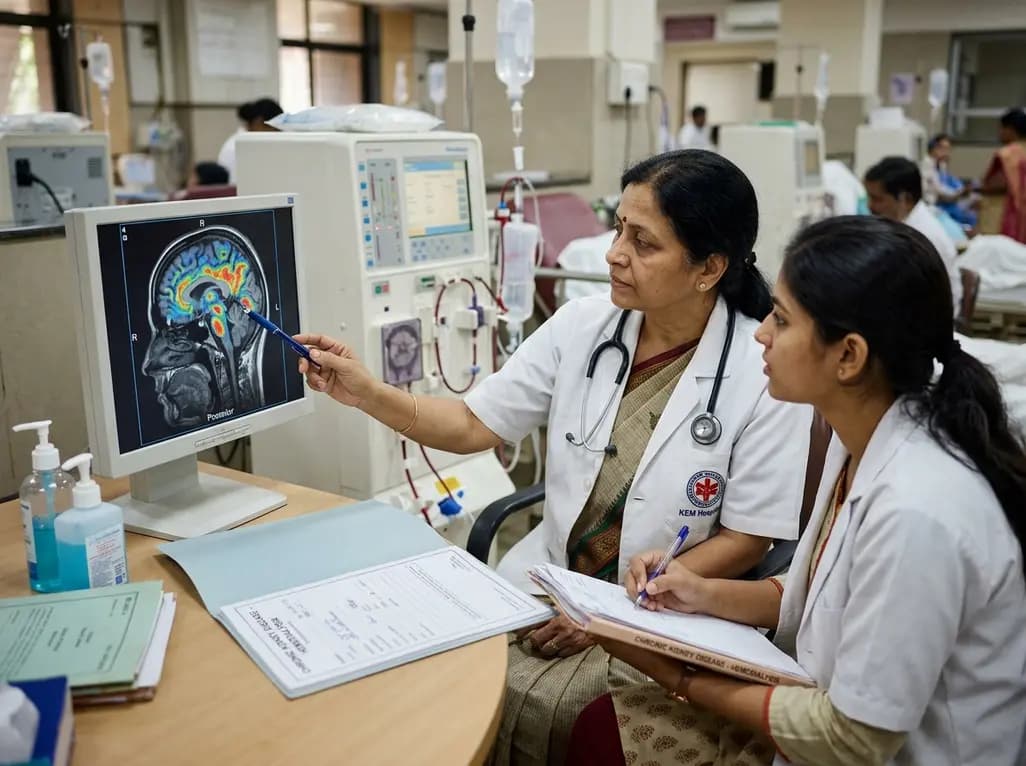
A retrospective clinical analysis reveals that hemodialysis-associated cognitive dysfunction arises from synergistic pathological mechanisms, including severe chronic anemia, worsening renal clearance, abnormal regional brain iron deposition, and an imbalance between neuroinflammatory and neurotrophic factors.
Today

A multiparametric MRI approach combining quantitative T2 shading, apparent diffusion coefficient (ADC) measurements, and morphological signs provides superior diagnostic accuracy over subjective evaluation to differentiate ovarian endometriomas from benign hemorrhagic cysts.
Today

Discover a novel laparoscopic approach for iatrogenic diaphragmatic hernia repair following pedicled omentoplasty. This modified Sugarbaker technique integrates dorsal pedicle lateralization and round ligament reinforcement to secure the diaphragmatic defect while preserving vital omental vascularity.
Today
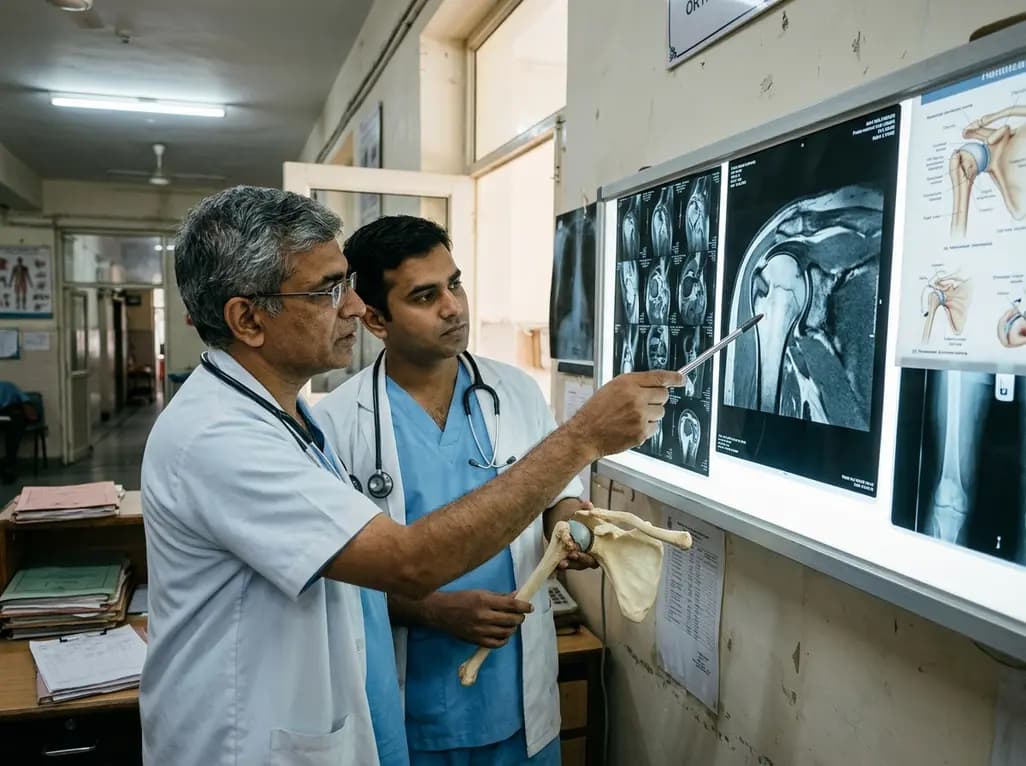
Evaluating Hill-Sachs lesion size and the distance to dislocation is critical in recurrent shoulder instability. As bone loss concepts shift from binary on-track classifications to continuous risk assessment, clinicians must identify when isolated Bankart repair is insufficient and supplementary procedures are needed.
Today

New research reveals that M1 macrophage-derived exosomes aggravate diabetic nephropathy by transferring WTAP to stabilize S1PR2 mRNA. Silencing WTAP in these vesicles attenuates endothelial injury and renal fibrosis, pointing toward innovative nanomedicine therapies.
Today
