.webp&w=384&q=75)

Loading, please wait...
Loading, please wait...

Hyperuricemia and gout represent escalating metabolic challenges that affect millions of patients globally. Standard urate-lowering therapies remain clinical cornerstones, yet many individuals experience treatment intolerance, renal limitations, or residual systemic inflammation. Consequently, investigators are exploring the crucial role of the gut microbiota in hyperuricemia to develop innovative complementary solutions. The human intestinal tract processes nearly one-third of daily uric acid elimination alongside renal clearance. When intestinal dysbiosis disrupts this delicate equilibrium, purine accumulation and impaired excretion accelerate disease progression. Understanding host-microbiome crosstalk offers novel therapeutic avenues for optimizing long-term metabolic health.
The gastrointestinal microbiome acts as an active metabolic organ that directly influences purine metabolism. Healthy gut flora maintains a rich diversity of commensal bacteria that express specialized nucleoside hydrolases and deaminases. However, patients with chronic hyperuricemia frequently exhibit profound microbial dysbiosis. Clinical studies demonstrate a marked depletion of beneficial taxa, particularly within the Bifidobacterium genus and the updated Lactobacillaceae family. Concurrently, opportunistic pro-inflammatory species expand and alter luminal biochemistry. This microbial imbalance significantly impairs the direct enzymatic breakdown of purine nucleosides within the intestinal lumen. Consequently, excess purine precursors cross the intestinal epithelium into portal circulation, driving hepatic xanthine oxidase activity and accelerating uric acid synthesis. Furthermore, microbial dysbiosis reduces mucosal immunity and elevates circulating endotoxins. As a result, chronic low-grade inflammation aggravates joint pathology and lowers the activation threshold for acute gout flares. Therefore, correcting microbial dysbiosis provides an innovative path to restore metabolic equilibrium and prevent recurrent crystal deposition.
Dietary purines substantially drive postprandial uric acid spikes in susceptible individuals. Commensal gut bacteria intercept and degrade these purine compounds before intestinal enterocytes can absorb them. Keystone strains within the genera Bifidobacterium and Lactobacillus express specific functional enzymes, including purine nucleosidase, adenosine deaminase, and guanine deaminase. These bacterial enzymes convert adenine, guanine, and their respective nucleosides into less absorbable metabolites or directly degrade them into harmless intermediates. Additionally, certain specialized microorganisms produce uricase-like enzymes that facilitate the direct breakdown of intestinal uric acid into soluble allantoin. This enzymatic scavenging mechanism effectively reduces the total purine load delivered to the liver. As a result, hepatic xanthine oxidase encounters fewer substrates for conversion into uric acid. Preclinical trials demonstrate that oral administration of high-purine-degrading probiotic strains significantly decreases postprandial hyperuricemia. Consequently, nutritional interventions that enhance bacterial purine-degrading capacity offer a practical non-pharmacological strategy to dampen systemic purine influx and protect against metabolic overload.
Urate homeostasis depends on a coordinated network of specialized transport proteins located in renal tubules and intestinal enterocytes. The gut microbiome actively modulates the expression and activity of these critical transporters across the gut-kidney axis. In particular, microbial metabolites upregulate ATP-binding cassette superfamily G member 2 (ABCG2), a primary urate secretory transporter located on the apical membrane of intestinal epithelial cells. Increased intestinal ABCG2 activity promotes extra-renal uric acid excretion directly into the feces. Simultaneously, beneficial gut microbes downregulate renal urate reabsorption transporters, such as urate transporter 1 (URAT1) and glucose transporter 9 (GLUT9). As a result, the kidneys excrete more uric acid while reabsorbing less into systemic circulation. Furthermore, systemic inflammation triggered by gut-derived endotoxins normally suppresses intestinal ABCG2 and exacerbates renal urate retention. When healthy commensal bacteria suppress mucosal inflammation, they preserve physiological transporter function across both organ systems. Therefore, microbiome-mediated transporter reprogramming favors systemic urate clearance and prevents pathological accumulation.
Microbiome-derived metabolites serve as potent signaling molecules that regulate systemic inflammation and maintain intestinal barrier integrity. Commensal bacterial fermentation of dietary fibers generates short-chain fatty acids (SCFAs), notably acetate, propionate, and butyrate. These SCFAs bind to G-protein-coupled receptors, including GPR41 and GPR43, on enterocytes and immune cells. Consequently, SCFA signaling strengthens epithelial tight junctions by upregulating zonula occludens-1 and occludin proteins. This robust structural barrier prevents the translocation of bacterial endotoxins into systemic circulation. In contrast, a compromised gut barrier allows lipopolysaccharide to enter the bloodstream and trigger toll-like receptor 4 activation. This pro-inflammatory cascade primes circulating monocytes and joint-resident macrophages, increasing their reactivity to monosodium urate crystals. Additionally, gut microbes metabolize dietary tryptophan into indole derivatives like indole-3-propionic acid. These indole metabolites activate the aryl hydrocarbon receptor pathway, promoting mucosal healing and suppressing inflammatory cytokines. Thus, SCFA- and tryptophan-derived metabolites establish a protective immunometabolic environment that mitigates hyperuricemia and gouty inflammation.
Translating microbiome science into actionable clinical therapies represents an exciting frontier in metabolic medicine. Researchers are currently evaluating several microbiome-directed modalities, including functional probiotics, targeted synbiotics, engineered food-grade bacteria, and fecal microbiota transplantation (FMT). Next-generation probiotic formulations utilize specific strains such as Lacticaseibacillus paracasei and Bifidobacterium longum selected for proven purine-degrading efficacy. Synbiotic formulations combine these live microorganisms with prebiotic fibers to enhance bacterial colonization and boost luminal SCFA production. Furthermore, synthetic biology enables the creation of food-grade engineered probiotics that express hyper-efficient uricase enzymes to neutralize purines directly within the digestive tract. In severe refractory cases, fecal microbiota transplantation demonstrates preclinical potential by resetting dysbiotic ecosystems and restoring physiological urate excretion pathways. However, clinical translation requires overcoming challenges such as strain-specific functional heterogeneity, variable colonization durability, and host dietary variability. As multiomics technologies and artificial intelligence modeling advance, clinicians will soon access precision microbiome interventions designed to complement standard urate-lowering therapies safely.
The future management of hyperuricemia and gout will increasingly leverage precision microbiome analytics to tailor individualized nutritional regimens. High-throughput metagenomic sequencing allows clinicians to map patient-specific microbial enterotypes and identify distinct enzymatic deficiencies in purine handling. By integrating strain-resolved multiomics with artificial intelligence predictive algorithms, researchers can identify the exact bacterial consortia required to optimize urate excretion in individual patients. Moreover, causal inference frameworks will help establish definitive mechanistic relationships between specific microbial metabolites and clinical gout flare frequency. Clinical trials are now transitioning from broad-spectrum probiotics toward targeted, multi-strain consortia designed to act synergistically across the gut-liver-kidney axis. In addition, regulatory frameworks are evolving to standardize quality benchmarks and viability standards for live biotherapeutic products. Ultimately, combining traditional pharmacological urate-lowering agents with validated microbiome-directed nutritional interventions will provide a multi-targeted therapeutic paradigm. This integrative strategy holds tremendous potential to reduce medication dosages, minimize adverse drug events, and significantly improve long-term outcomes for patients.
Specific probiotic strains, particularly from the Bifidobacterium and Lactobacillus genera, lower serum uric acid through multiple complementary actions. They directly degrade dietary purines within the intestinal lumen using nucleosidases, preventing intestinal absorption. Additionally, these strains generate short-chain fatty acids that upregulate intestinal ABCG2 transporters to enhance urate excretion. Furthermore, they inhibit hepatic xanthine oxidase activity and strengthen the gut barrier, reducing systemic inflammation.
Microbiome-directed therapies currently serve as adjunctive strategies rather than complete replacements for standard urate-lowering drugs like allopurinol or febuxostat. While probiotics and dietary modifications effectively lower intestinal purine absorption and reduce systemic inflammation, high-risk patients with severe gout or tophi still require proven pharmacological agents. Therefore, clinicians recommend combining microbiome-targeted nutritional interventions with guideline-directed pharmacotherapy for optimal, synergistic disease control.
Short-chain fatty acids, including butyrate, acetate, and propionate, act as critical immunometabolic modulators in gout. They bind to GPR41 and GPR43 receptors on immune cells, directly suppressing the NLRP3 inflammasome cascade. Consequently, this suppression reduces the release of interleukin-1 beta in response to monosodium urate crystals. Moreover, short-chain fatty acids reinforce intestinal tight junctions, preventing endotoxin leakage that otherwise worsens systemic inflammation.
Disclaimer: This content is for informational and educational purposes only. It is not intended to substitute professional medical advice, diagnosis, or treatment. Always consult a qualified healthcare provider with questions regarding a medical condition. Refer to the latest local and national guidelines for clinical practice.
References

Read summarized clinical updates, watch expert medical content, and earn CME certifications right from your smartphone.
Open your smartphone camera to scan and install.





Explore how gut microbiota and microbial metabolites modulate purine metabolism, urate transporters, and systemic inflammation in hyperuricemia and gout, highlighting translational opportunities for probiotics and microbiome-directed nutritional interventions.
last month

A systematic review of 41 preclinical studies reveals that baicalin dampens systemic inflammation, inhibits NF-κB and NLRP3 pathways, and improves organ preservation in sepsis models. However, substantial study heterogeneity and a complete lack of human clinical trials highlight the need for further translational research.
Today
Discover the crucial distinctions between mesonephric and mesonephric-like proliferations of the female genital tract. Learn the key histomorphologic, immunohistochemical, and molecular differences essential for accurate diagnosis and clinical management.
Today
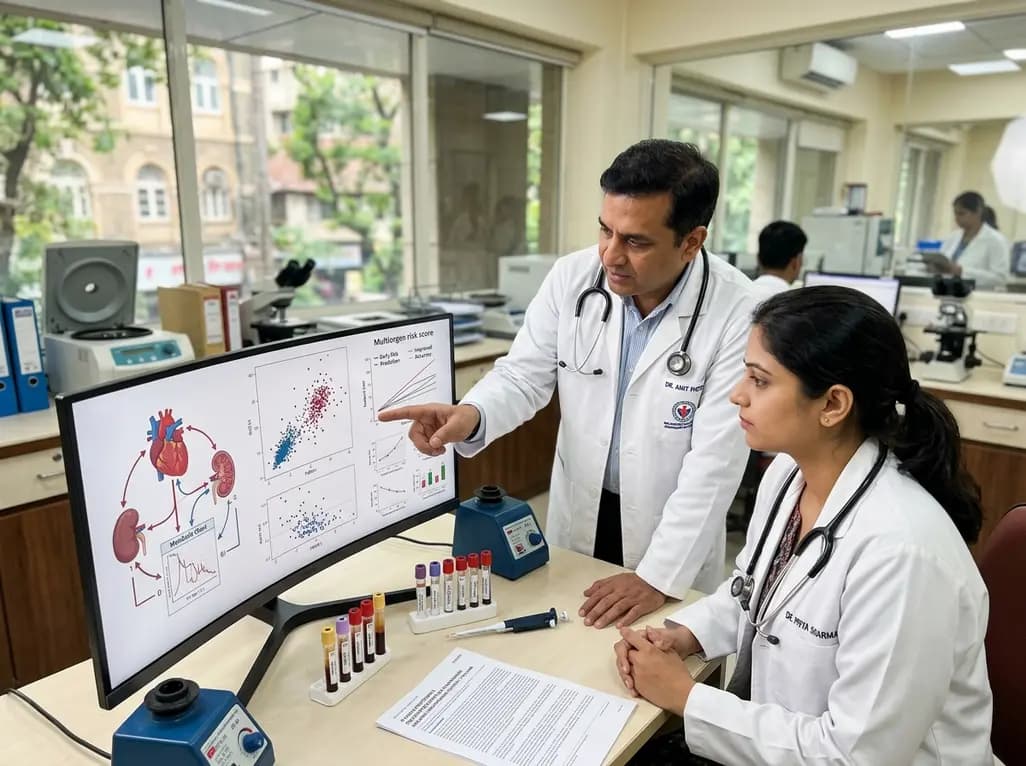
A large UK Biobank study reveals that plasma proteomic signatures capture preclinical organ damage and improve multiorgan risk prediction across early CKM syndrome stages 0 to 2 beyond traditional PREVENT clinical models.
Today
A narrative review investigates whether the articularis genus muscle functions as an independent anatomical entity or blends with the vastus intermedius. We evaluate its morphology, role in retracting the suprapatellar bursa, and direct clinical significance in anterior knee pain and arthroplasty.
Today

A Bayesian multilevel meta-analysis reveals that aerobic training combined with moderate carbohydrate restriction modestly lowers HbA1c in type 2 diabetes. However, sparse data and very low certainty leave incremental benefits over exercise or diet alone unproven, highlighting the need for individualized care.
Today
